
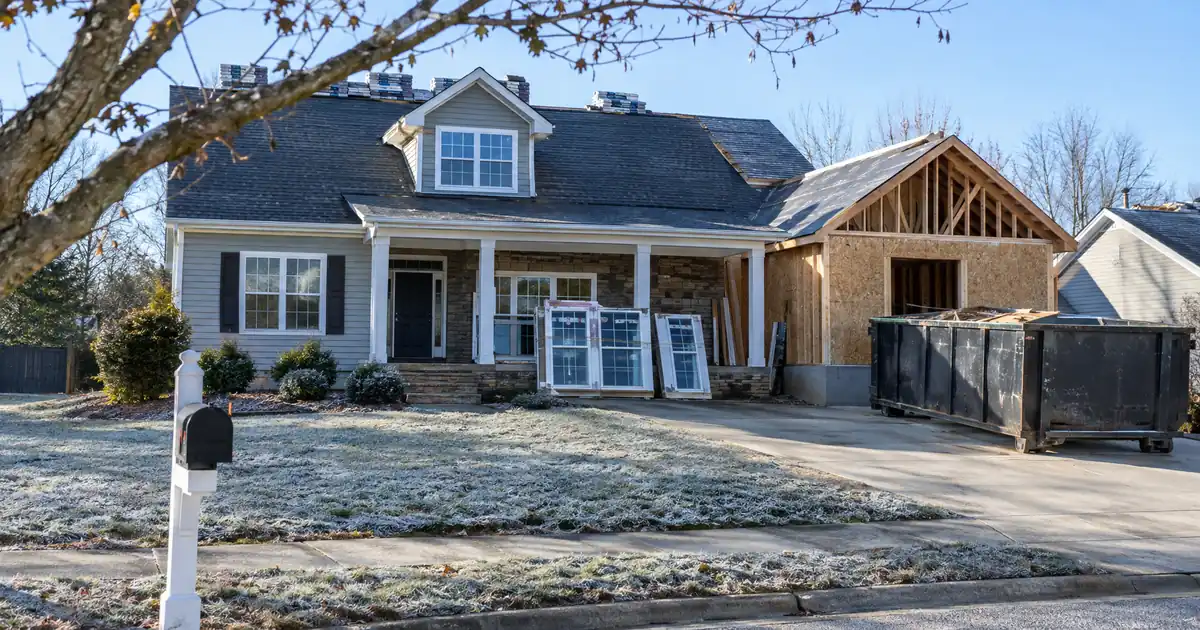
The Quick Read: Usually yes, as long as the new lender’s appraisal, at the loan-to-value cap, covers your hard money payoff plus closing costs and the rent covers the new payment, because an overspent rehab raises what you owe but never raises what the property appraises for or what a DSCR lender will lend against value.
- A DSCR loan sizes on the new appraisal and the rent. Outside the seasoning window, your total spend does not size it.
- On a standard rental, a DSCR cash-out refinance tops out around 75% LTV, with about 6 months of seasoning from title recording. A payoff-only DSCR refinance can reach 85% LTV with no cash back (subject to lender guidelines).
- Break-even appraisal equals your payoff plus exit costs, divided by the LTV cap.
- If the numbers fall short, you have four fallbacks: a lender-submitted appraisal review, cash to close, a smaller payoff-only loan, or a longer bridge.
What an Overspent Rehab Changes (and What It Doesn’t)
An overrun changes your payoff and your cushion. It does not change the value. Extra draws, extension fees, and added interest push the amount you owe up. If you paid the overage from your own pocket, the payoff stays put but your total cost climbs. Either way, the property appraises for what comparable sales support.
DSCR Cash-Out Calculator
Run the cash-out numbers in your market
Rate source: Freddie Mac 30-yr average via FRED® — Federal Reserve Bank of St. Louis · effective Oct 15, 2026
Prefilled with starting assumptions — enter your property’s value, balance, taxes, and insurance for a more accurate picture.
Program parameters update from Lendmire’s centralized guideline source. Taxes and insurance are editable estimates.
As of Oct 15, 2026 · General Freddie Mac market benchmark, not a Lendmire loan offer. Property value, balance, taxes, and insurance are editable estimates. Maximum loan-to-value varies by lender, program, property type, and seasoning. Not a Loan Estimate, approval, or commitment to lend. Program availability and eligibility are subject to lender guidelines, credit approval, property review, and underwriting.
Hard money is built for a short run: terms of 6-18 months, interest-only, and no prepayment penalty. Leverage varies by lender, property, and experience. Fix-and-flip loans typically run 85% to 93% of project cost, always capped at 75% of after-repair value (ARV). Funding up to 100% of the rehab budget comes in draws against finished work.
Here is the catch. If your bridge was sized at that 75% ARV cap, you started the project with no cushion. Every dollar of overrun now has to be absorbed by equity you may not have.
DSCR loans are designed for non-owner-occupied investment properties. Because they are business-purpose investor loans, they are reviewed differently from a standard owner-occupied mortgage. That helps you here, since the lender cares about the property’s value and rent, not your renovation story.
Key Terms Defined
Payoff: The full amount to retire the hard money loan: principal drawn, accrued interest, extension fees, and any exit fee.
ARV (after-repair value): Your projection of what the finished property is worth. It is a planning number, not an appraisal.
Cost basis: Purchase price plus documented rehab spend.
Seasoning: The waiting period a lender wants between buying a property and refinancing it. It is lender policy, not law.
Rate-and-term refinance: A refinance that pays off the old loan and closing costs with no cash back to you.
Cash-out refinance: A refinance that returns cash to you. It carries stricter rules.
Break-even appraisal: The lowest appraised value at which the new loan still covers your payoff and costs.
DSCR: Debt service coverage ratio. Monthly rent divided by the full monthly obligation (principal, interest, taxes, insurance, and any HOA dues).
The Two Tests That Size Your Exit
Your exit loan must clear a value test and a rent test, and the lower result controls. Across the wholesale network, most DSCR programs run both checks on every file. Strong rent will not rescue thin value. Strong value will not rescue thin rent.
The value test. The new lender orders its own appraisal. Your ARV is not an input. A DSCR cash-out refinance on a standard rental caps around 75% LTV. A payoff-only DSCR refinance goes up to 85% LTV, and the loan is sized to the payoff and closing costs rather than returning cash. Many programs also want about 6 months of ownership, counted from title recording rather than from rehab completion. Terms vary by lender guidelines, property type, leverage, credit profile, and full file review.
The rent test. Lenders typically look at the signed lease and the appraiser’s market rent. A lease well above market may not be counted in full. Coverage of 1.00 is where many select DSCR programs start. A separate select-lender path takes coverage below 1.00, with leverage and terms adjusted. Stronger ratios generally open better leverage and pricing.
One warning. DSCR compares rent to the payment only. Repairs, vacancy, management, utilities, and capex sit outside the ratio. Clearing 1.00 does not mean the property cash flows.
A bigger payoff also means a bigger new loan, and a bigger loan means a larger payment. An overspent job can pass the value test and still wobble on coverage.
Run the Break-Even
The formula is simple: break-even appraisal equals (payoff + exit costs) ÷ LTV cap. Cash back equals the new loan minus payoff minus closing costs. A negative number means you write a check at closing.
Run the numbers on a modeled project, indexed so your planned ARV equals 100. Assume a payoff of 75 and exit costs of 3. These are illustrative assumptions, not market data, and the 75% cap is the DSCR cash-out ceiling on a standard rental.
| Scenario (index units) | Appraisal | Max loan at 75% | Payoff + costs | Cash back |
|---|---|---|---|---|
| On plan, appraisal hits ARV | 100 | 75 | 78 | -3 |
| Overspent by 5 in payoff | 100 | 75 | 83 | -8 |
| Overspent, appraisal 10% above plan | 110 | 82.5 | 83 | -0.5 |
| Overspent, appraisal 10% below plan | 90 | 67.5 | 83 | -15.5 |
Even the on-plan row is short, because 78 divided by 0.75 is 104. At the cap, the appraisal must land 4% above your own ARV just to retire the loan. That is why aiming a few points under the cap matters.
Now notice the last row. A 10% miss in value does not cost you a matching 10% of loan. It costs the cap times the miss, while the payoff stays fixed. Cash back falls faster than value does.
Payoff-only changes the picture. At the 85% rate-and-term ceiling on a DSCR loan, the same overspent payoff of 83 divides out to a break-even appraisal near 98. The tradeoff is that you take no cash out. For an overspent job, that is often the realistic exit. For the full cash-back math, see Lendmire’s piece How Much a BRRRR Cash-Out Refinance Returns After Hard Money Payoff.
Payoff-Only or Cash-Out: What Flips the Label
If any cash returns to you at closing, the loan is a cash-out refinance, and the 75% LTV ceiling applies. If the new loan only retires the bridge and closing costs, it is a payoff-only refinance with the higher ceiling. Exact terms depend on the lender’s guidelines, property type, leverage, and a full review of the borrower’s file.
This matters most when you are close. Say your payoff plus costs lands just under the cash-out cap. You may be tempted to borrow a bit more for working capital. Skip it. Crossing into cash-out can pull in the seasoning requirement and the lower leverage cap on the same file.
Reserves also vary by lender, leverage, and loan size. They commonly run around 6 months of PITIA, and loans above $1,500,000 typically step up to about 9 months. Credit floors start near 620 in parts of the network. Most programs want around 660, and 700+ unlocks the strongest leverage tiers. Everything here is subject to lender guidelines.
Seasoning, and Which Value the Lender Uses
Ask each lender how it counts title history. Do not assume rehab completion starts the clock.
Inside the seasoning window, many programs size the loan on cost basis, meaning purchase price plus documented rehab, instead of the appraisal. This is the one place your spend matters to the loan amount, and it is where receipts earn their keep on an overspent job. The tradeoff is real. Value you created stays stranded until seasoning ends, because the lender will not lend against it yet.
After seasoning, the appraisal usually governs. That is better when your rehab moved the value and worse when the comps do not show it.
One edge case trips people up. The agency-style delayed financing exception lets all-cash buyers skip the waiting period. It does not rescue a hard money purchase, because financing secured by the property after purchase generally makes you ineligible. DSCR loans are not agency products anyway.
What If the Appraisal Comes In Low?
A low appraisal is not final. But you cannot argue it yourself.
A reconsideration of value (ROV) is a formal request that the appraiser take another look. Only the lender can submit it. HelpWithMyBank.gov says the borrower cannot request one directly. The FDIC advises asking early whether the lender has an ROV process and what it needs from you.
Strong support is closed comparable sales, not listings. Class Valuation makes that point about what moves an appraiser. Disagreement alone is not grounds. Definitive Valuations notes the issue should be an error or omission in the report, such as wrong square footage or missed renovations.
Those ROV guides are written for consumer appraisals. Whether they apply to a business-purpose investor loan varies, so treat an ROV as something to ask about, not a right.
Picture a duplex whose neighborhood has no renovated sales. The appraiser has nothing to anchor a higher number, so the report lands near pre-rehab comps. Your rehab invoices do not fix that. Better comps, or a corrected fact in the report, might.
Ways to Close the Gap
Pick the fix by how far short you are and how much cash you hold. The first and fourth rows below are a genuine toss-up. Bringing cash to close keeps the project moving, but extending the bridge can preserve cash if the carry is manageable.
| Option | Fits you when | Tradeoff |
|---|---|---|
| Bring cash to close | The gap is small and you hold reserves | Cash is tied up again |
| Payoff-only DSCR loan | Value covers payoff at the higher ceiling | No cash back |
| Lender-submitted ROV | The report has a clear error or omission | Not guaranteed to move |
| Extend the bridge | Value or rent is still catching up | More carry, more exit costs |
| Sell to a buyer | Numbers will not work on any loan | Ends the hold strategy |
Leaving equity in and refinancing later is a legitimate path, not a failure. A payoff-only exit keeps the property rented and covering its payment. Many investors who finish stabilizing a property refinance out of hard money into long-term DSCR financing, and Lendmire brokers that path through its hard money exit refinance program, subject to lender guidelines.
Which Situation Are You In?
- Rehab finished, over budget, lease in place. Run the break-even at the payoff-only ceiling first, then the cash-out ceiling.
- Rehab unfinished. Stay in hard money and finish scope and draws. A lender will not refinance a half-done property.
- Finished but vacant. Lease first, or extend the bridge. Rent needs support, whether a signed lease or the appraiser’s market rent.
- Coverage below the program floor. Ask a broker about a sub-1.00 path, which select lenders in the network offer with leverage and terms adjusted. Or ask your hard money lender about an extension.
- Bridge maxed at the ARV cap. Expect cash to close if the appraisal lands even slightly low.
Paperwork That Proves the Overrun
Cost documentation matters most inside seasoning. Gather the hard money note and extensions, the recorded deed and original settlement statement, rehab invoices and draw records, the lease or rent evidence, and entity papers if the property sits in an LLC (subject to program terms). Add change orders for any scope you expanded. Clean records support a cost-basis sizing and answer questions fast.
Start before maturity. Ask your current lender for a written payoff statement and extension terms first. Then ask the new lender what it needs on seasoning, appraisal review, and rent.
Mistakes to Avoid
- Treating ARV as the new value. It is a projection.
- Assuming overspend adds value. Cost and value are separate tests. Cost basis only matters inside seasoning, and only when documented.
- Trusting the 70% rule as an exit guarantee. It is a purchase screen.
- Chasing cosmetics over function. Rental-grade materials hold up better than finishes a tenant will scuff.
- Skipping the back-solve. Work the break-even from the low end of the comps, and add extension costs.
Tax treatment varies; consult a qualified professional.
Frequently Asked Questions
Will a new lender count my extra rehab spending?
Only inside seasoning, and only when documented. Many programs size on cost basis (purchase plus documented rehab) during that window. After seasoning, the appraisal usually governs and the spend counts only through the value it supports.
Can I argue a low appraisal myself?
No. Only the lender can submit a reconsideration of value to the appraiser. Your job is to hand the lender strong closed comps or a documented factual error, early.
Does clearing 1.00 coverage mean the deal cash flows?
No. DSCR compares rent to the payment only. Repairs, vacancy, management, utilities, and capex sit outside it. Select programs start at 1.00, and a separate select-lender path goes below 1.00 with leverage and terms adjusted.
Do I need to wait for seasoning before I refinance?
On a cash-out DSCR refinance, about 6 months from title recording is the common expectation. Programs differ on how they count it. Ask each lender before you plan the exit.
What if the appraisal cannot cover my payoff?
You can bring cash, shrink the ask to a payoff-only loan, extend the bridge, or sell. Which one fits depends on your cash, the gap, and the lease. Any DSCR exit is subject to lender guidelines and is not a commitment to lend.
Next Step
If you are buying or refinancing a rental property and want to see how the numbers work, Lendmire can help you compare DSCR loan options based on the property income, credit profile, leverage, and investor goals. For the full picture of how these loans work, read Lendmire’s complete DSCR loans guide.
About Lendmire
As a non-QM mortgage broker (NMLS# 2371349), Lendmire facilitates DSCR investor loans across 41 markets, including Washington, D.C. DSCR eligibility is generally reviewed around property-level rental income instead of personal income documentation, subject to lender guidelines, serving LLC-structured portfolios and self-employed borrowers who don’t fit conventional boxes. A two-time Scotsman Guide Top Mortgage Workplace (2025, 2026).
Get Started
Ready to find the right loan for you?
In about 30 seconds you can review financing options available for your investment property. No commitment required.
Informational only. Not a Loan Estimate, approval, or commitment to lend. Program availability and eligibility are subject to lender guidelines, credit approval, property review, and underwriting.
References
1. HelpWithMyBank.gov — Reconsideration of Value
2. FDIC — What Is a Reconsideration of Value?
3. Class Valuation — Reconsideration of Value
4. Definitive Valuations — Can You Challenge an Appraisal?
This article is part of Lendmire’s hard money loan program — full qualification details, guidelines, and scenarios live on the program page.
Related reading: Can Hard Money Pay for Fix and Flip Rehab Through Draws? · Do You Need Flip Experience for a Hard Money Loan? · Should You Send a Hard Money Lender a Deal Summary First?
Brandon Miller
Founder & CEO, Mortgage Loan Originator, Lendmire LLC
- Mortgage Loan Originator · NMLS# 1129696 · Verify on NMLS Consumer Access
- North Carolina Real Estate Broker · License# 343312 · Verify on NCREC
- North Carolina Insurance Producer · License# 19053198 · Property, Casualty, Life, Health · Verify on NAIC SBS
- Lendmire LLC · Firm NMLS# 2371349 · Verify firm licensure
Important disclosures. Lendmire (NMLS# 2371349) is a licensed mortgage brokerage. Lendmire is not a direct lender, depository institution, or financial advisor. All loan inquiries are subject to lender underwriting; this article does not constitute a commitment to lend. Rates, terms, and program guidelines are subject to change without notice and vary by borrower profile, property type, and state. Information in this article is general in nature and is not financial, legal, or tax advice. Equal Housing Opportunity. NMLS Consumer Access: nmlsconsumeraccess.org.