
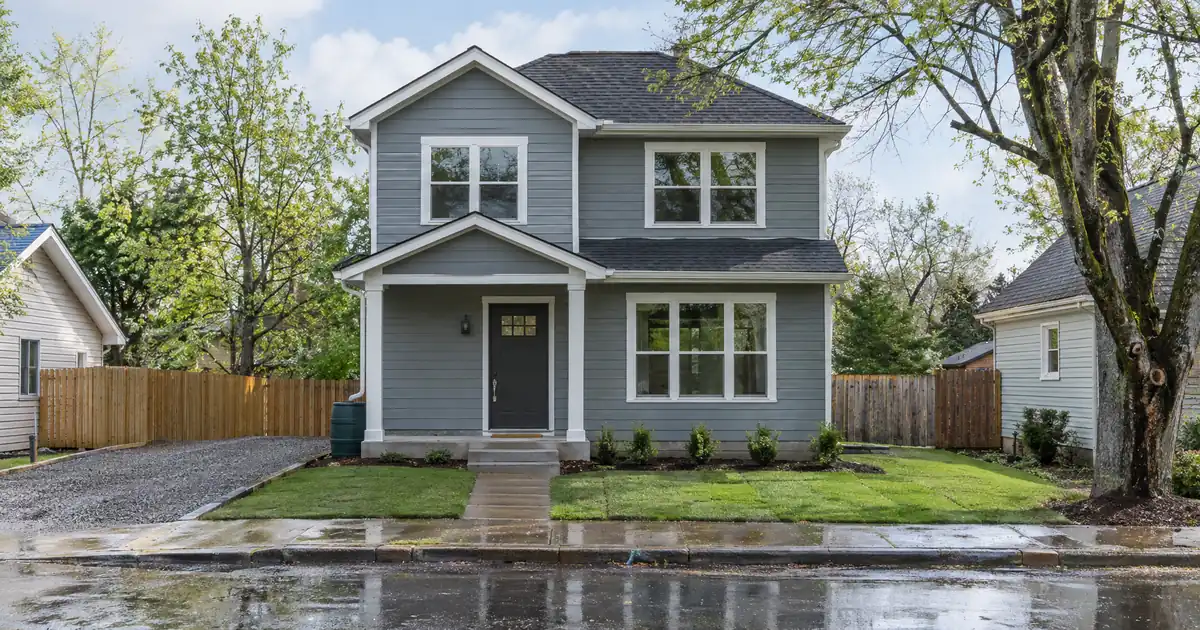
The Quick Read: Hard money funds a project that still needs work, and DSCR financing sits on a property that is finished and rentable. For most first-time flippers, these are two steps in one plan, not two rival choices. Rehab dollars released in draws do not set the value a DSCR lender will use later. The DSCR appraisal sets that, along with a separate opinion of market rent.
- Hard money underwrites the project: purchase, rehab budget, and the finished value. It releases rehab money in draws against completed work.
- A DSCR loan underwrites a rentable property. It does not fund repairs.
- The DSCR appraisal does two jobs: it opines on value and on market rent. Your rehab receipts are not the value.
- A hard money loan is repaid by a sale or a refinance, so the exit has to work before you buy.
- Every figure here varies by lender, property, and experience, and none of it is a commitment to lend.
The Honest Answer: Who Each Loan Is Really For
Hard money is for the investor who is buying a property that needs work and has to carry it through the rehab. A DSCR loan is for the investor who owns, or is buying, a property that already rents. A first-time flipper who keeps the house as a rental will often use both, one after the other.
What this loan actually costs to carry.
Hard money is sized against the project and priced by time. Enter the deal and see how much the program will lend, the cash required at closing, the carry while you hold it, and what is left at the exit.
Leverage tiers on the current program: 85% with fewer than 2, 90% with 2 or more, 93% with 5 or more completed projects — every tier capped at 75% of after-repair value. Loan amounts up to $5,000,000, larger by exception; terms of 6 to 18 months, interest-only, no prepayment penalty. The rehab portion funds in draws against completed work, not at closing.
Program parameters shown update from Lendmire’s centralized guideline source. Rate, points, and months are editable assumptions, not quoted terms.
Cost cap sets the loan · positive spread
Illustrative estimate only — not a quote, Loan Estimate, approval, or commitment to lend. Rate, points, and months are editable assumptions. Hard money is business-purpose financing for real estate investors, not a consumer mortgage. Leverage on the current program tops out at 93% of project cost for investors with a documented track record, capped at 75% of after-repair value, with rehab funding up to 100% of the documented budget released in draws; actual terms vary by lender, borrower experience, property, and exit. Lendmire is a mortgage broker, not a lender.
The mistake new flippers make is treating the choice as either/or. They budget the rehab on hard money, then assume the DSCR lender will honor their spending dollar for dollar. It does not work that way. The bridge lender looks at your projected finished value. The DSCR lender orders its own appraisal and forms its own view.
Lendmire is a broker. Its wholesale network places both kinds of loans, so this comparison is not a pitch for one side. It is a map of where each one fits. The complete DSCR loans guide covers the long-term side in more depth.
Side-by-Side
The hard money column below reflects Lendmire’s wholesale network guidelines for this business-purpose product. The DSCR column reflects published industry norms plus network guidelines. Every item varies by lender, property, and experience.
| Factor | Hard Money (Fix-and-Flip) | DSCR Loan |
|---|---|---|
| What it underwrites | Purchase, rehab plan, finished value | Rent against the full housing payment |
| Review basis | Asset-based: property, plan, exit | Property-level rental income, subject to lender guidelines |
| Property condition | Needs work is fine | Must be rent-ready |
| Rehab funding | Held back, released in draws | None |
| Value used | Projected after-repair value | Lender-ordered appraisal |
| Term structure | 6-18 months, interest-only | 30-year fixed spine; other structures via select lenders |
| Prepayment | No prepayment penalty on the hard money program | Varies by program |
| Entity vesting | LLC common, subject to program terms | LLC common, subject to program terms |
| Reserve expectations | Varies; cash needed to front early work | Commonly about 6 months of PITIA, varies |
| Exit | Sale or refinance | Hold the property |
The takeaway: the two loans use different values, different property conditions, and different tests. They answer different questions.
How Hard Money Rehab Spending Actually Works
Hard money rehab money is not handed over at closing. It sits in a holdback and comes out in draws as work is finished and checked.
For a first-timer, three things matter.
First, draws reimburse. You usually front the early work from your own cash, then wait for the inspection and the release. A slow inspection means you carry the cost.
Second, inspections cost money. Each draw typically triggers an inspection, and those fees come out of your budget, so plan for them alongside the construction costs.
Third, your draw records double as your proof of spend. Invoices, draw requests, inspection reports, and before-and-after photos will matter again at the refinance.
On the Lendmire hard money program, leverage on a fix-and-flip is tiered by completed projects: 85% of project cost with fewer than two, 90% at two or more, and 93% at five or more, always capped at 75% of after-repair value. Up to 100% of the rehab budget funds in draws against completed work. That is a rehab-budget figure, not a purchase LTV. Credit starts at a 620 minimum, with extra conditions below 660. First-time investors qualify at the lower leverage tiers.
What the DSCR Appraisal Does and Does Not Credit
The DSCR appraisal does not credit your spending. It credits what the market would pay for the finished property and what the market would rent it for.
It does two jobs. It sets value, which drives loan-to-value. It also sets market rent, which drives coverage. For the rent side, appraisers commonly use the single-family comparable rent schedule, Form 1007, which the appraiser attaches to the appraisal. Fannie Mae’s Appraiser Update describes it as documenting estimated monthly market rent on a single-family investment property. For two to four units, practitioners commonly use a different form, Form 1025. That is common practice, not a rule. These are appraisal forms only. DSCR loans are not agency products, and agency selling rules do not govern them.
Here is why that matters for a flipper.
- Cost is not value. A kitchen that cost a lot may or may not move the appraiser. Improvements may support a higher appraised value, depending on comps and underwriter review.
- Your ARV is a planning number. The bridge lender’s after-repair value helped size the hard money loan. The exit lender builds its own opinion from its own comps.
- Rent is a separate test. Even if value comes in on plan, a market rent that comes in low drops the ratio.
- Short-term rental math does not carry over. Fannie Mae’s appraiser guidance treats Form 1007 as a monthly market rent form. A nightly rate times 30 is not a market rent figure. Short-term rental income is underwritten under separate programs.
One more point on coverage. DSCR compares rent to the full housing payment: principal, interest, taxes, insurance, and any HOA dues. Clearing 1.00 does not mean positive cash flow. Repairs, vacancy, management, utilities, and capex sit outside the calculation. Most programs in the network start at 1.00 for select products. A separate select-lender path goes below 1.00 with leverage and terms adjusted.
When Hard Money Is the Better Fit
Hard money is the better fit when the property cannot rent yet.
- The house is vacant, distressed, or mid-rehab. A half-finished rehab does not fit a DSCR loan because the rent schedule depends on finished condition.
- You need rehab money in the structure. A DSCR loan has none.
- You plan to sell. A flip exits by sale, so a long-term rental loan solves a problem you do not have.
- You are short on seasoned rental history. Hard money underwriting stays asset-based: property, plan, and exit.
- You want room to move. The 6-18 month interest-only term with no prepayment penalty suits a project that may finish early or late.
The trade-off is cash discipline. You front early work, pay for inspections, and carry the risk that the exit comes in thinner than the plan. A first-timer also sits at the lower leverage tiers, so the cash needed at closing is higher than an experienced investor’s would be.
For flippers whose budget is already stretching, Lendmire’s article on whether a first-time flipper can get a hard money rehab budget increase covers that situation.
When a DSCR Appraisal Path Is the Better Fit
A DSCR loan is the better fit when the work is done and you want to hold.
- The property is finished and rent-ready. Lenders generally review the condition of the major systems, including the roof, HVAC, electrical, and plumbing, so confirm the specific program requirements.
- You want long-term financing under a business-purpose structure. DSCR loans are designed for non-owner-occupied investment properties. Because they are business-purpose investor loans, they are reviewed differently from a standard owner-occupied mortgage.
- You want to qualify primarily on property-level rental income covering the payment, subject to lender guidelines, rather than on a personal-income package.
- You are paying off a bridge. Many investors refinance out of hard money into long-term DSCR financing once the property is stabilized, and Lendmire brokers that path.
Typical DSCR numbers from the wholesale network: purchase files commonly land at 75%-80% LTV, and a cash-out refinance tops out around 75% LTV, with about six months of seasoning the common expectation. A 620 credit floor exists in parts of the network, most programs want around 660, and 700 or higher opens the strongest leverage tiers. Reserves are commonly around 6 months of PITIA, but they vary by lender, leverage, loan size, and transaction type. All of it is subject to lender guidelines.
The catch for a flipper is that equity is not enough. A bigger down payment lowers the payment and can lift coverage, but it does not erase leverage caps, credit floors, reserve rules, or property eligibility. The strongest files clear both tests: enough equity and enough rental coverage.
Break-Even Thinking: A Modeled Scenario in Percentages
Run the numbers on a modeled flip held as a rental. These are assumptions, not market data.
Say the plan assumes a finished value of 100 index points. The hard money loan stacks purchase and rehab well under that, capped at 75% of after-repair value. At refinance, the DSCR lender orders its own appraisal.
- Appraisal at plan (100): a cash-out refinance at the 75% ceiling sizes to 75 points. The payoff to the bridge lender is drawn principal plus interest, draw fees, and any extension fees. If that payoff sits under 75, you walk away with cash back.
- Appraisal 5% under plan (95): the same ceiling sizes to roughly 71 points. A thin cushion can flip this from cash back to a payoff-only refinance.
- Appraisal 10% under plan (90): the new loan sizes to 67.5 points. If the payoff is above that, you bring cash to closing, take a smaller loan, wait, or challenge the appraisal.
- Overrun case: if rehab runs over, the DSCR lender does not fund the overrun and does not raise the appraisal for it. The overrun hits your cash.
On the rent side, run the same stress. If the appraiser’s market rent comes in under the rent you modeled, the coverage ratio drops. Depending on the program floor, that can cut leverage or limit eligibility. Some select lenders in the network will go below 1.00 coverage, with leverage and terms adjusted.
The lesson: back-solve from a conservative appraisal, not an optimistic one.
Back-Solve Your Budget Before You Buy
A first-timer should size the exit before signing the purchase contract.
1. Start with a conservative finished value. Use the low end of what comparable sold properties support, not the high end.
2. Apply the exit ceiling. For a standard rental cash-out, the network tops out around 75% LTV. For short-term rental collateral, the cash-out ceiling is 70%, and the program expects a 640+ score and about 12 months of hosting history. These specifics are subject to lender guidelines and a full review of property, leverage, and credit.
3. Add the full payoff. Drawn principal, interest through the whole hold, points, draw fees, inspection fees, and extension fees. Do not use purchase plus rehab alone. The payoff grows while you wait.
4. Check the gap. If the payoff exceeds the refinance proceeds, you need cash at the exit. Decide now whether you have it.
5. Run the rent test separately. Compare a conservative market rent to the full payment. A property that fits on value can still fail on coverage.
6. Confirm seasoning and lease rules early. Early exits may size on documented cost rather than appraised value, which can strand created equity. Ask the program where the clock starts before you start the rehab.
Overruns, Documentation, and a Low Appraisal
Keep everything. Invoices, draw requests, inspection reports, scope changes, and photos prove cost basis and support a challenge if the appraisal misses. Get scope changes approved by the bridge lender before the work starts.
If the appraisal comes in low, diagnose it first. A factual error, such as wrong square footage or a missed improvement, is fixable through appraisal reconsideration with a documented packet. An omission can be fixed the same way. A comps issue may be fixable if you can supply stronger recent sales. A plain lower opinion is not an error, and you are left with the options above: bring cash, take a smaller loan, wait, or challenge.
Sell, Hold, or Refinance on a First Flip?
Selling is simpler when the margin is thin or the exit math needs a perfect appraisal. Holding and refinancing makes sense when the property rents well and the refinance recycles real capital. If the numbers only work at plan, that is a sign to sell.
If you sell to a buyer using FHA financing, a federal property-flipping rule can come into play. Check it before you list.
Both products are business-purpose loans. Under Regulation Z, credit to acquire, improve, or maintain non-owner-occupied rental property is treated as business purpose, with an exception if the owner expects to occupy the property more than 14 days in the coming year. That is why property facts and a documented exit drive both files, not consumer-style income tests. Whether a given loan is exempt is fact-specific.
Tax treatment varies; consult a qualified professional.
Key Terms Defined
After-repair value (ARV): the projected value of the property once the rehab is done, used to size a hard money loan.
Holdback: the part of the loan kept back to pay for rehab and released in draws.
Seasoning: the ownership period a lender expects before sizing a refinance on appraised value.
Contributory value: what the market will pay for an improvement, which can differ from what it cost.
Payoff-only refinance: a refinance that repays the bridge loan and returns no cash to you.
The Verdict
Hard money wins when the property is not ready to rent and you need rehab money in the structure. A DSCR loan wins when the property is finished and you want to hold it. For a first flip kept as a rental, plan both: bridge first, DSCR second, with the exit sized on a conservative appraisal and a separate rent test.
If you are buying, rehabbing or refinancing an investment property on a short timeline and want to see how the numbers work, Lendmire can help you compare hard money options based on the project, the exit plan, leverage, and your goals. Call 828-256-2183 or request a quote.
Frequently Asked Questions
Does the DSCR lender use my ARV?
No. The ARV helped size your hard money loan. The DSCR lender orders its own appraisal and builds its own value and market rent opinion from its own comps. Treat your ARV as a planning number only.
Does a DSCR refinance need an appraisal?
Plan on yes. The appraisal supplies both value for loan-to-value and market rent for coverage. Programs vary, so confirm with the lender before you start the rehab.
Do my rehab dollars equal appraised value?
Not necessarily. Early in seasoning, some programs may size on documented cost, which is why receipts matter.
Can I use a DSCR loan to fund the rehab?
No. DSCR loans are permanent financing for rentable property and carry no rehab holdback. Hard money covers the work, and up to 100% of the rehab budget funds in draws against completed work.
Can a first-timer do this?
Yes, at lower leverage tiers. On the hard money program, leverage is 85% of project cost with fewer than two completed projects, capped at 75% of after-repair value, and varies by lender, property, and experience. The exit then depends on the appraisal, rent, and the credit and reserve rules of the DSCR program.
About Lendmire
Lendmire is a non-QM mortgage brokerage (NMLS# 2371349) arranging DSCR investor loans in 41 markets, including Washington, D.C., through wholesale and investor-lending channels. DSCR loans are evaluated by the lender on rental income rather than personal income, subject to lender guidelines — a fit for LLC-owned portfolios, self-employed investors, and operators scaling beyond conventional loan caps. Recognized as a Scotsman Guide Top Mortgage Workplace in 2025 and 2026.
Get Started
Ready to find the right loan for you?
In about 30 seconds you can review financing options available for your investment property. No commitment required.
Informational only. Not a Loan Estimate, approval, or commitment to lend. Program availability and eligibility are subject to lender guidelines, credit approval, property review, and underwriting.
References
1. Fannie Mae Appraiser Update (June 2024)
This article is part of Lendmire’s hard money loan program — full qualification details, guidelines, and scenarios live on the program page.
Related reading: Seasoning Rules for a Two-Step DSCR Cash-Out After Hard Money · How to Handle a Low Purchase Appraisal on a DSCR Loan · Second Appraisal vs Price Cut for a First-Time DSCR Rental Buyer
Brandon Miller
Founder & CEO, Mortgage Loan Originator, Lendmire LLC
- Mortgage Loan Originator · NMLS# 1129696 · Verify on NMLS Consumer Access
- North Carolina Real Estate Broker · License# 343312 · Verify on NCREC
- North Carolina Insurance Producer · License# 19053198 · Property, Casualty, Life, Health · Verify on NAIC SBS
- Lendmire LLC · Firm NMLS# 2371349 · Verify firm licensure
Important disclosures. Lendmire (NMLS# 2371349) is a licensed mortgage brokerage. Lendmire is not a direct lender, depository institution, or financial advisor. All loan inquiries are subject to lender underwriting; this article does not constitute a commitment to lend. Rates, terms, and program guidelines are subject to change without notice and vary by borrower profile, property type, and state. Information in this article is general in nature and is not financial, legal, or tax advice. Equal Housing Opportunity. NMLS Consumer Access: nmlsconsumeraccess.org.