
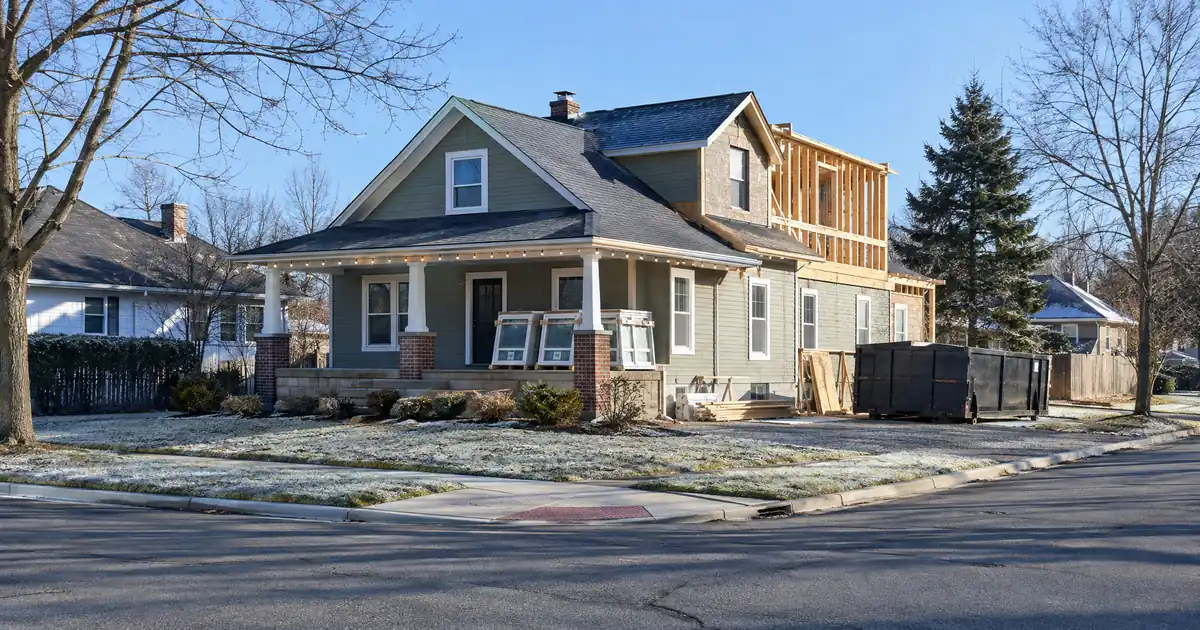
The Quick Read: Usually, yes, but “no personal income documentation” does not mean “no paperwork.” A bridge loan for a rental or flip is a business-purpose loan that is reviewed on the property, the project plan, and the exit, not on your W-2s or debt-to-income ratio, subject to lender guidelines. Expect a credit review, entity documents, and proof of cash to close.
- Underwriting centers on the property’s value, the plan, and how you repay.
- Hard money and bridge loans through Lendmire’s network start at a 620 credit score, with extra conditions below 660.
- Leverage is tiered by experience and capped at 75% of after-repair value on fix-and-flips.
- Terms run 6-18 months, interest-only, so your exit is the whole game.
- Investors often refinance out into long-term DSCR financing once the property is leased.
What Is a Bridge Loan for an Investor?
A bridge loan is short-term, interest-only financing that carries you from purchase (or rehab) to a sale or a refinance. Investors use it when a property needs work, when a seller wants speed, or when the property has no rent yet and long-term financing does not fit.
What this loan actually costs to carry.
Hard money is sized against the project and priced by time. Enter the deal and see how much the program will lend, the cash required at closing, the carry while you hold it, and what is left at the exit.
Leverage tiers on the current program: 85% with fewer than 2, 90% with 2 or more, 93% with 5 or more completed projects — every tier capped at 75% of after-repair value. Loan amounts up to $5,000,000, larger by exception; terms of 6 to 18 months, interest-only, no prepayment penalty. The rehab portion funds in draws against completed work, not at closing.
Program parameters shown update from Lendmire’s centralized guideline source. Rate, points, and months are editable assumptions, not quoted terms.
Cost cap sets the loan · positive spread
Illustrative estimate only — not a quote, Loan Estimate, approval, or commitment to lend. Rate, points, and months are editable assumptions. Hard money is business-purpose financing for real estate investors, not a consumer mortgage. Leverage on the current program tops out at 93% of project cost for investors with a documented track record, capped at 75% of after-repair value, with rehab funding up to 100% of the documented budget released in draws; actual terms vary by lender, borrower experience, property, and exit. Lendmire is a mortgage broker, not a lender.
Terms through the network run 6-18 months with no prepayment penalty, on non-owner-occupied 1-4 unit residential property. Loan sizes go up to $5,000,000, with larger by exception. Smaller balances vary by lender. All of this varies by lender, property, and experience, and nothing here is a commitment to lend.
Does a Bridge Lender Verify Personal Income?
Mostly no. These lenders underwrite the asset. They ask what the property is worth today, what it will be worth after the work, and how you will repay the loan. Your pay stubs and debt-to-income ratio are not the deciding test.
That is a different animal from a standard owner-occupied mortgage. Business-purpose investor loans are reviewed differently because the property, not your household budget, is the repayment story.
Here is the catch. Skipping income review is not skipping underwriting. A lender still wants to know you are real, solvent, and able to carry the project if it slips. Many lenders pull credit, ask for bank statements, and want a real-estate schedule or a track record. Credit often does not decide approval, but it commonly sets your leverage tier.
Conventional vs. Investor Bridge: What Gets Underwritten
| Factor | Conventional mortgage | Investor bridge loan |
|---|---|---|
| Main test | Your income and DTI | Property, plan, exit |
| Typical term | Long, amortizing | 6-18 months, interest-only |
| Borrower documents | Pay stubs, traditional personal-income documentation | Entity papers, bank statements, experience |
| Credit | Central | Sets leverage tier |
| Best fit | Primary residence | Acquisition and rehab |
What Lenders Check Instead of Income
Five things carry the file.
The property. The lender establishes as-is value and, for rehabs, the after-repair value (ARV), the projected value once work is finished. Expect an appraisal, a broker price opinion, or the lender’s own comps.
The leverage math. Across our network, fix-and-flip leverage is based on loan-to-cost and tiered by documented completed projects. It runs 93% of project cost at 5+ completed projects, 90% at 2+, and 85% with fewer than two. Every tier is capped at 75% of ARV. Bridge purchases without rehab go up to 80% of purchase price. Cash-out and rate/term refinances go up to 65% of value. Up to 100% of the rehab budget funds in draws as completed work is inspected. That is a budget figure, not a purchase LTV. There is no true 100% purchase program. The top tier is reserved for experienced investors.
The exit. A vague plan is not an exit. “Maybe rent it, maybe sell it” will not carry a file. A strong one names the exit, backs it with comps or a rent estimate, and carries a second option.
Credit. The network’s floor is a 620 score, with additional conditions below 660. First-time investors qualify at the lower leverage tiers.
Your liquidity. Cash for the down payment, the carry, and a cushion matters more than income. Thin experience is usually offset by more equity and more cash in the deal.
Documents You Will Probably Still Provide
- Government ID and credit authorization
- Entity documents if you borrow through an LLC, subject to program eligibility
- Bank statements showing cash to close and reserves
- A scope of work and rehab budget for any renovation
- A real-estate schedule or track record
- A business-purpose certification and occupancy affidavit confirming you will not live there
That last item matters. These loans fit non-owner-occupied investment property only. If you plan to move in, you are in a different product, and lenders may review income and debt in full. A cash-out used for personal expenses can also change how a loan is treated. The CFPB’s Regulation Z commentary makes the lender decide, case by case, whether a loan is primarily for a business purpose. The Federal Register text of the ability-to-repay rule says investment-purpose loans are treated as business-purpose loans.
Two Different Products Share the Name
Some “bridge loans” are consumer products. A homeowner buys a new house before selling the old one. Those are a separate case, and lenders often review income and debt on them. The same Federal Register rule describes a consumer bridge exemption for terms of 12 months or less. This article covers the investor version only.
Who Benefits Most
Self-employed investors whose traditional personal-income documentation shows heavy write-offs often look weak on paper to a bank. A bridge lender cares less about taxable income and more about the deal. The same goes for investors who hit conventional DTI limits with a growing portfolio, or buyers of vacant or distressed property with no rent to underwrite.
Picture a self-employed contractor with low taxable income buying a dated duplex. The lender looks at the purchase price, the rehab budget, the after-repair value, and her track record. Her credit lands her in a leverage tier. She shows cash for the down payment and carry. The deal, not her tax return, drives the file.
Our experience across comparable files: the ones that stall rarely stall on income. They stall on a thin scope of work, an ARV that comps do not support, or an entity that is not cleaned up before application.
Plan the Exit Before You Apply
With 6-18 month terms and interest-only payments, the loan ends in one of two ways: you sell, or you refinance.
Selling works when your ARV is supported by recent comparable sales. Refinancing works when the property can carry long-term debt. This is where income rules return. The bridge lender skipped your personal income, but the next lender may not.
Many investors refinance out of hard money into long-term DSCR financing once the property is leased and stabilized, and Lendmire brokers that path. A DSCR loan compares the property’s rent to its full monthly obligation, so it qualifies primarily on property-level rental income covering the payment, subject to lender guidelines. Our complete DSCR loans guide walks through how that works. Clearing 1.00 on coverage is not the same as positive cash flow, since repairs, vacancy, and management sit outside the ratio. Check refinance seasoning and the cost of any extension before you commit, because there are no multi-year options on the bridge side.
Bridge vs. Hard Money vs. DSCR
| Loan | Role | What gets underwritten |
|---|---|---|
| Bridge | Short-term gap financing | Property and exit |
| Hard money | Acquisition and rehab | Property, plan, ARV |
| DSCR | Long-term rental hold | Rent versus full payment |
In practice, bridge and hard money overlap heavily. DSCR is the long-term take-out for a leased property.
Risks and When This Is Not a Fit
Short terms push the refinance or sale onto a clock. If a contractor runs late or comps soften, you carry interest with little personal income to absorb it. Carry more than one exit and enough cash to cover interest if the plan slips.
It is not a fit if you plan to live in the property, if the project is anything other than a 1-4 unit residential property (only ground-up construction extends to 10 units), or if you have no cash behind the deal. Commercial, industrial, land, lots, and hospitality are not offered, and neither are owner-occupied homes.
Red Flags in Marketing That Skips the Details
- Promises of approval with no credit review
- A pitch that never mentions a credit review, when a 620 score is the floor in this network, with added conditions below 660
- Pricing quoted before anyone has seen the property
- No mention of the exit, the budget, or the appraisal
- A consumer bridge loan pitched to an investor, or the reverse
Honest lenders say plainly what they review. Anyone who says nothing is needed is selling something.
Key Terms Defined
ARV (after-repair value): The projected value of the property once renovations are finished.
Loan-to-cost: The loan amount as a share of total project cost, including purchase and rehab.
Exit strategy: The plan to repay the loan, by sale or refinance.
DSCR: Debt service coverage ratio, which compares a property’s rent to its full monthly obligation.
Draws: Rehab funds released in stages as completed work is inspected.
Frequently Asked Questions
Is traditional personal-income documentation ever required?
For many bridge and hard money files, traditional income documentation is not the deciding document. Some lenders still ask for it or for bank statements to confirm liquidity. It varies by lender, property, and experience.
Is my credit checked?
Usually yes. Credit often sets your leverage tier rather than deciding approval alone, and the network’s floor is a 620 score.
Can an LLC borrow?
Often yes, subject to lender program eligibility. Expect entity documents and, commonly, a personal guarantee from the owners.
Does the property need rental income?
No. Bridge and hard money loans fund properties that are vacant or under renovation. Rental income matters later, when you refinance into a DSCR loan.
What if my exit relies on a refinance?
Plan for it early. The refinance lender will review the property’s rent coverage, so confirm that the finished property can support long-term debt before you start the bridge.
If you are buying, rehabbing, or refinancing an investment property on a short timeline and want to see how the numbers work, Lendmire can help you compare hard money options based on the project, the exit plan, leverage, and your goals. Reach the team at 828-256-2183 or request a quote.
For current guidelines and terms, see Lendmire’s DSCR loan programs page.
About Lendmire
Lendmire — NMLS# 2371349 — is a mortgage brokerage specializing in DSCR investor loans, helping arrange financing across 41 markets, including Washington, D.C., through wholesale and investor-lending channels. The model centers on property-level rental income reviewed by the lender rather than W-2 documentation, subject to lender guidelines, suiting entity-owned and multi-property investors. Lendmire holds Scotsman Guide Top Mortgage Workplace recognition for 2025 and 2026.
Get Started
Ready to find the right loan for you?
In about 30 seconds you can review financing options available for your investment property. No commitment required.
Informational only. Not a Loan Estimate, approval, or commitment to lend. Program availability and eligibility are subject to lender guidelines, credit approval, property review, and underwriting.
References
2. Federal Register, ATR/QM final rule (CFPB)
This article is part of Lendmire’s hard money loan program — full qualification details, guidelines, and scenarios live on the program page.
Related reading: Should an Investor Choose a Hard Money Loan or a Flip Loan? · Can You Get a Hard Money Loan Without Owning a Business? · How to Put Rentals in Three Southeastern States Under One DSCR Loan
Brandon Miller
Founder & CEO, Mortgage Loan Originator, Lendmire LLC
- Mortgage Loan Originator · NMLS# 1129696 · Verify on NMLS Consumer Access
- North Carolina Real Estate Broker · License# 343312 · Verify on NCREC
- North Carolina Insurance Producer · License# 19053198 · Property, Casualty, Life, Health · Verify on NAIC SBS
- Lendmire LLC · Firm NMLS# 2371349 · Verify firm licensure
Required disclosures. Lendmire (NMLS# 2371349) operates as a licensed mortgage broker, not a direct lender or depository. The discussion in this article is general in nature and should not be relied upon as financial, legal, or tax advice — every investment scenario is unique and should be reviewed by a qualified professional. Any loan inquiry is subject to lender underwriting, and this article is not a commitment to lend or a guarantee of approval. Mortgage rates, loan terms, and program guidelines vary by borrower, property, and state, and may change without notice. Equal Housing Opportunity. Verify licensure at NMLS Consumer Access.