
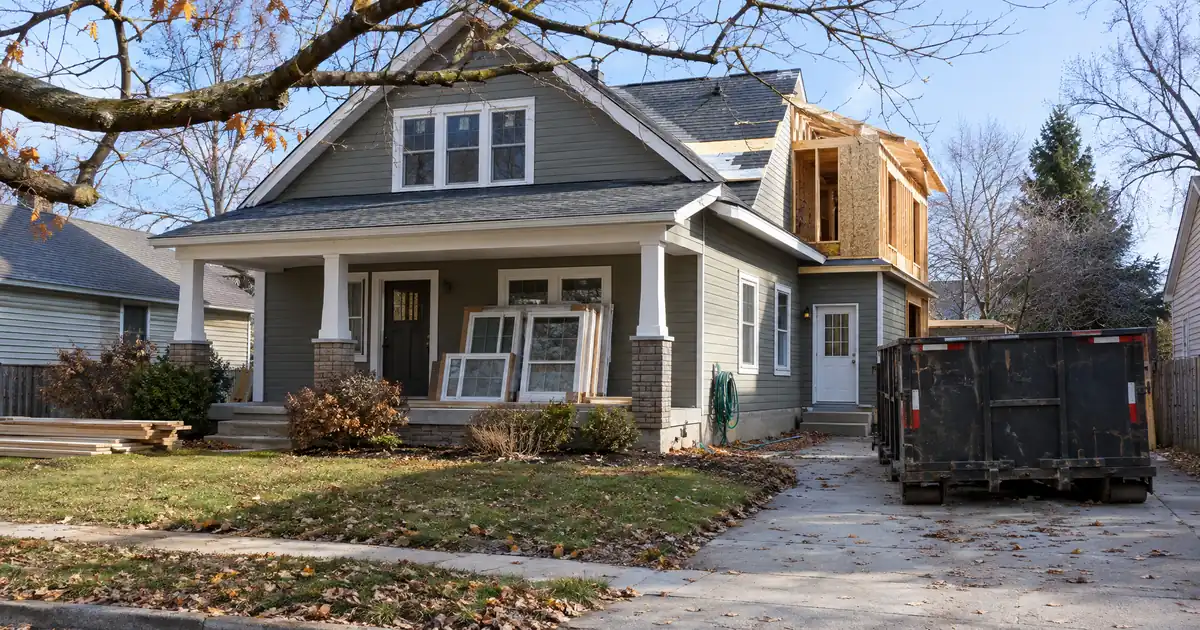
The Quick Read: Only when the first-lien lender agrees, because most hard money lenders want to be the sole lien holder, and a second loan that surfaces on title or in a draw review can freeze your rehab money until it is fixed or removed. Where it works, it usually takes one of two forms: a second lien the first lender has approved, or an unsecured note with no lien at all. Either way, the sale has to pay off both layers.
- The first lender’s written consent is the gate. Ask before you apply to any gap source.
- Gap money does not remove reserve requirements. First lenders commonly verify interest reserves.
- A second lien is not invisible. Title searches and draw-time lien checks find it.
- Often the cleaner fixes are a partner, a smaller deal, or a higher-leverage first loan.
Key Terms Defined
After-repair value (ARV) is what the property should be worth once the rehab is finished. Wall Street Prep’s ARV explainer shows how it is calculated, and hard money lenders use it to size flip loans.
Loan-to-cost (LTC) is the loan amount as a share of purchase price plus rehab budget.
Gap funding is extra money, usually from a private lender or investor, that covers the cash you still owe after the first loan is sized.
Junior lien is a loan recorded behind the first loan, so it gets paid second. Senior lien is the first loan in line.
Subordination is a written agreement that confirms one lien sits behind another. Nolo’s subordination overview covers the basics.
Draw is a release of rehab money after the lender sees completed work.
Combined loan-to-value (CLTV) measures all the secured debt on a property against its value. Wall Street Prep’s CLTV page explains why more liens mean more lender risk.
What this loan actually costs to carry.
Hard money is sized against the project and priced by time. Enter the deal and see how much the program will lend, the cash required at closing, the carry while you hold it, and what is left at the exit.
Leverage tiers on the current program: 85% with fewer than 2, 90% with 2 or more, 93% with 5 or more completed projects — every tier capped at 75% of after-repair value. Loan amounts up to $5,000,000, larger by exception; terms of 6 to 18 months, interest-only, no prepayment penalty. The rehab portion funds in draws against completed work, not at closing.
Program parameters shown update from Lendmire’s centralized guideline source. Rate, points, and months are editable assumptions, not quoted terms.
Cost cap sets the loan · positive spread
Illustrative estimate only — not a quote, Loan Estimate, approval, or commitment to lend. Rate, points, and months are editable assumptions. Hard money is business-purpose financing for real estate investors, not a consumer mortgage. Leverage on the current program tops out at 93% of project cost for investors with a documented track record, capped at 75% of after-repair value, with rehab funding up to 100% of the documented budget released in draws; actual terms vary by lender, borrower experience, property, and exit. Lendmire is a mortgage broker, not a lender.
Why Does the First Lender Get a Say?
The first lender gets a say because its loan documents control what else can be recorded against the property. Lien priority works on a simple idea: the older lien gets paid first. Nolo describes it as first in time, first in right. A senior lender knows a second lien sits right behind it. If the deal goes bad, that second creditor competes for the same collateral.
So many first lenders either prohibit junior debt or count it against a combined-leverage limit. Some allow it with a signed acknowledgment. A few don’t care if the second loan is unsecured. You will not know which kind you have until you read the documents or ask.
uslawexplained walks through why a senior lender resists sitting in second position and how payoff order works at a sale or foreclosure. The short version: the senior lender is paid in full before the junior sees a dollar.
No federal rule decides this. It is a contract question between you and the first lender. That is why the answer is “it depends” and why the depends is worth learning.
How Much Gap Do You Actually Need?
Less than most flippers assume. Run the first loan before you hunt for gap money.
Across the wholesale network Lendmire works with, fix-and-flip leverage is tiered by documented completed projects. It runs 93% of project cost at 5 or more completed projects, 90% of project cost at 2 or more, and 85% with fewer than 2. Every tier is capped at 75% of ARV. The lower of the two limits controls. All of this varies by lender, property, and experience, and none of it is a commitment to lend.
Here is a modeled illustration using index points instead of dollars. These are assumptions, not market data.
- Project cost (purchase plus rehab): 100 points.
- Modeled ARV: 115 points.
- 90% of cost: 90 points.
- 75% of ARV: 86.25 points.
- The ARV cap controls, so the first loan lands at 86.25 points, and you owe about 13.75% of cost.
Notice what happened. The experience tier said 90%, but a thin spread between cost and ARV pulled the loan lower. Thin deals create the biggest gaps. They are also the deals where extra debt does the most damage.
Next, remember that the first loan funds rehab in draws. Up to 100% of the rehab budget can fund against completed work, but that is reimbursement after inspected progress. It is not day-one cash. Your real out-of-pocket buckets are the down payment, lender fees, title and closing charges, interest reserves, and whatever you front on the first stretch of work. Gap money is trying to fill those buckets.
(Many flippers size the gap against the whole rehab budget and end up borrowing more than they need.)
Can a Second Lien Sit Behind a Hard Money Loan?
Yes, if the first lender approves it in writing. Without that approval, a recorded second lien is the version most likely to cause trouble.
Here is how it plays out. Before each draw, the first lender checks the title for new liens. A second mortgage shows up. The lender may pause the draw until the junior lien is released or the lender gives consent. You are mid-rehab, the contractor wants payment, and the money is frozen. That is the failure that hurts.
Do not try to keep a junior loan out of sight. Hiding it can breach your loan documents and expose you to serious legal consequences. It also rarely works, because the same title work that protects the lender finds it.
Approved second liens usually involve a subordination or similar acknowledgment. The first lender confirms it knows about the junior loan, and the gap lender accepts that it is behind. That paperwork takes effort from both sides. Plenty of lenders skip the effort and simply say no.
What Are the Options Besides a Recorded Second Lien?
Several structures avoid the lien conflict, though each carries its own catch. This table ranks them by how friendly they usually are to a first lender.
| Structure | Lien on property? | First-lender friction | Main catch |
|---|---|---|---|
| Equity partner | None | Lowest | You share the profit |
| Lower-leverage first loan | None | Lowest | More cash from you |
| Seller carryback | Varies | Moderate | Seller must agree |
| Unsecured note | None | Moderate | Still may need disclosure |
| Recorded second lien | Yes | Highest | Needs written consent |
An unsecured note is a personal or entity obligation. It puts no encumbrance on title, so the draw-time lien check comes up clean. But the first lender can still care about where your closing funds came from. Lenders want to see your own money in the deal, and a borrowed down payment can raise questions. Disclose it.
A gap lender with no lien is also taking real risk. Money wired to your bank account is effectively an unsecured personal loan, which is why those loans cost a lot and why many private lenders want a personal guaranty. A gap lender with a second lien has its own problem: that lien can be wiped out in a foreclosure.
An equity partner swaps debt for a share of profit. It avoids the consent problem entirely, and Lendmire’s piece Hard Money Gap Funding vs Partner for a First-Time Flipper compares the two trade-offs in detail.
What Does the Payoff Look Like at Sale?
Every layer gets paid, in order, and your profit comes last. The first lender’s payoff comes first. Then the gap lender. Then closing costs. What remains is yours.
| Payoff order | Who gets paid | What it means for you |
|---|---|---|
| 1 | First lender | Must be paid in full |
| 2 | Gap lender | Paid from what remains |
| 3 | Closing and selling costs | Reduce your net |
| 4 | You | Residual profit |
Stacked debt does two things to your margin. It adds a second cost stream, and it makes the break-even sale price higher. If the sale lands near ARV, your profit shrinks. If it lands below, your equity disappears first, then the gap lender is hit, and only then is the first lender at risk. That is exactly why first lenders hate being second-guessed by junior debt: more leverage, less cushion.
Gap money is the most expensive layer in the stack. It is more costly than the first loan and often more costly than your own cash. So test it before you use it. Ask whether the deal still makes sense if it sells for less than planned. If the answer is no, a gap loan does not rescue it. It just makes the loss bigger.
How Do You Get Your First Lender’s Consent?
Get it in writing, before you sign with any gap provider. Treat it as a short checklist.
1. Ask whether junior liens are allowed at all.
2. Ask whether an unsecured loan is allowed.
3. Ask whether junior debt counts toward a combined-leverage limit, using the CLTV logic described above.
4. Ask whether a borrowed down payment is acceptable, or whether they require your own funds.
5. Ask what paperwork they want: a subordination agreement, a copy of the gap note, or both.
6. Ask how they verify reserves, because gap funding generally does not remove that requirement.
Then give the gap lender a copy of the first loan’s terms. If the first loan bars additional borrowing, a breach could put it in default. A careful gap lender also records its note so a contractor lien cannot jump ahead of it, and may ask for a personal guaranty. If you sign through an entity, subject to lender program eligibility, expect both loans to cross-reference who guarantees what.
Match the vesting and the names across both sets of documents. Mismatches create delay at the worst time.
One practical note from the broker’s chair: files stall most often because the order was backwards. The borrower signed a gap term sheet first, then asked the first lender, then heard no. Reverse it. Always ask the senior lender first.
What Can Go Wrong?
Four failure modes show up repeatedly.
- Frozen draws. A lien check finds an unapproved junior loan, and the first lender pauses funding.
- Cross-default. The gap note breaches a covenant in the first loan, which can trigger default on both.
- A sale that lands below ARV. Your equity is gone first, and the gap lender may not get repaid in full.
- Running out of money mid-rehab. The property never reaches its ARV, and the exit math breaks.
The mitigation for all four is boring but effective: get consent early, keep a cash cushion, and run the exit math at a lower sale price before you commit.
Doing two rehabs at once multiplies the risk. Size the gap for each project separately. Use a gap source that does not put the other property’s collateral at risk, and plan a separate exit for each.
Does Gap Funding Mean Zero Money Down?
No. People hear “gap funding” and assume a free ride. It is not.
There is no true 100% purchase program in the hard money network. The top leverage tier is reserved for experienced investors with documented completed projects, and first-time investors qualify at the lower tiers. Credit matters too: a 620 minimum score applies, with additional conditions below 660. Underwriting stays asset-based, focused on the property, the plan, and the exit. All of this varies by lender, property, and experience.
First lenders also commonly verify interest reserves after closing. And because lenders want to see your own capital in the deal, a stack that leaves you with nothing at risk is the stack most likely to get refused.
When Should You Skip Gap Funding?
Skip it when a cleaner structure exists. Often one does.
- Put in more cash. Smaller deal, smaller gap, less risk.
- Pick a higher-leverage first loan. If you qualify for a higher tier based on completed projects, you may not need gap money at all.
- Bring in a partner. No lien, no consent problem, shared upside.
- Mix paths. Partial cash with a smaller bridge, or cash first and a later refinance to pull capital back out.
- Treat seller financing as a normal acquisition. If the seller carries part of the price, you may not need a gap layer. You just need a first lender comfortable with the seller’s position.
Think of the decision this way. Gap funding makes sense when the margin is wide, the first lender has consented in writing, and the exit does not depend on a perfect sale. It makes less sense when the deal only works with the last dollar of leverage. This one is a genuine judgment call, and the strongest flippers lean toward more cash and fewer layers.
How Does This Change If You Plan to Rent the Property?
If your exit is a rental instead of a sale, the gap debt still has to go somewhere. Many investors refinance out of hard money into long-term DSCR investor loans once the property is stabilized, and Lendmire brokers that path.
A DSCR loan is a long-term rental loan, not a flip loan. It qualifies primarily on property-level rental income covering the payment, subject to lender guidelines. Most files land at 75% to 80% LTV on an investment-property purchase, with leverage caps, credit floors, and reserve rules still applying. Using gap funding to finance the down payment on a DSCR purchase is a different problem, because a financed down payment squeezes the coverage ratio and lenders still want to see your own capital. Clearing a 1.00 coverage ratio also does not mean positive cash flow, since repairs, vacancy, and management sit outside the calculation. The complete DSCR loans guide explains how the pieces fit.
For the flip itself, the first lender’s hard money terms come first: 6 to 18 months, interest-only, no prepayment penalty. There are no multi-year options on the current program, so investors who need longer runway plan a refinance into long-term rental financing.
Frequently Asked Questions
Can I use gap funding to cover my down payment on a flip?
Sometimes, but only if the first lender allows it. Some lenders want the down payment to come from your own funds. Others accept a lender-approved note. Ask in writing before you sign anything, and disclose the source of the funds. A borrowed down payment that surprises the first lender is the version most likely to cause trouble.
Is gap funding secured by the property?
It can be either. A recorded second lien is secured and needs first-lender approval. An unsecured note carries no lien and avoids title conflicts, but the gap lender takes more risk and usually charges more. Either way, the first lender may still want to know about it.
Does my hard money lender have to approve the gap loan?
In practice, yes. Their loan documents control what else can be recorded against the property, and many prohibit additional liens or count them toward combined leverage. Even where the documents are silent, a lien check before each draw can reveal an undisclosed loan. Consent in writing is the safe path.
What happens to the gap loan when I sell?
It gets paid after the first lender and before you. The first lien is paid in full, then the gap lender, then selling costs. Your profit is what remains. If the sale lands below plan, your equity disappears first, so run the exit at a lower price before you commit.
What if my first lender says no?
Move to a structure that does not need consent. Bring in an equity partner, put in more cash, shrink the project, or look for a higher-leverage first loan based on your completed projects. The first lender’s answer tells you which deals fit that loan, and the right fix is usually a different structure rather than a workaround.
Run the Numbers Before You Stack Anything
If you are buying, rehabbing, or refinancing an investment property on a short timeline and want to see how the numbers work, Lendmire can help you compare hard money options based on the project, the exit plan, leverage, and your goals. Lendmire is a broker arranging financing through select lenders in its wholesale network, covering 41 markets, including Washington, D.C. Programs are subject to lender guidelines, and nothing here is a commitment to lend.
About Lendmire
Lendmire, NMLS# 2371349, is a non-QM mortgage broker serving real estate investors in 41 markets, including Washington, D.C., through DSCR investor loan programs. Qualification is generally reviewed around the subject property’s rental income, not the borrower’s W-2 history — a practical fit for LLC-titled portfolios and self-employed investors. All scenarios remain subject to lender review and program guidelines. Two consecutive Scotsman Guide Top Mortgage Workplace recognitions (2025, 2026).
Get Started
Ready to find the right loan for you?
In about 30 seconds you can review financing options available for your investment property. No commitment required.
Informational only. Not a Loan Estimate, approval, or commitment to lend. Program availability and eligibility are subject to lender guidelines, credit approval, property review, and underwriting.
References
1. Wall Street Prep: After Repair Value (ARV)
2. Nolo: What Is a Subordination Agreement?
3. uslawexplained: Subordination of Lien
This article is part of Lendmire’s hard money loan program — full qualification details, guidelines, and scenarios live on the program page.
Related reading: Hard Money Draw Process Checks for a Remote Out-of-State Investor · Hard Money Loan ARV Requirements in a Small Town With No Comps · Is a DSCR Loan the Usual Permanent Financing After a Flip You Keep?
Brandon Miller
Founder & CEO, Mortgage Loan Originator, Lendmire LLC
- Mortgage Loan Originator · NMLS# 1129696 · Verify on NMLS Consumer Access
- North Carolina Real Estate Broker · License# 343312 · Verify on NCREC
- North Carolina Insurance Producer · License# 19053198 · Property, Casualty, Life, Health · Verify on NAIC SBS
- Lendmire LLC · Firm NMLS# 2371349 · Verify firm licensure
Legal disclosures. Lendmire (NMLS# 2371349) is a state-licensed mortgage brokerage that arranges financing through wholesale lender relationships. Lendmire is not a direct lender, depository institution, or registered financial advisor. The discussion above is general informational content about real estate financing — it is not financial, legal, or tax advice, and readers should consult licensed professionals for guidance on their individual circumstances. Loan inquiries are subject to lender underwriting; this article does not represent a commitment to lend. Loan terms, rates, and qualification standards vary by borrower, property, and state, and are subject to change at any time. Equal Housing Opportunity. NMLS Consumer Access: nmlsconsumeraccess.org.