
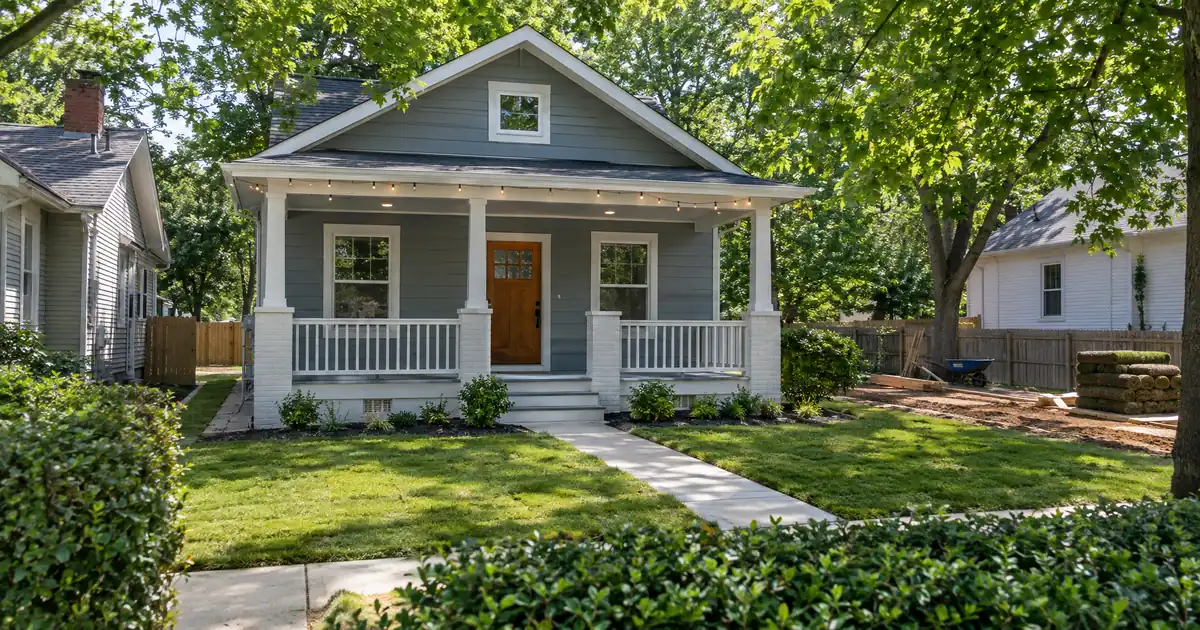
The Quick Read: Yes, but only when the property is already rent-ready or close to it, because the LLC is rarely the obstacle and the property’s condition is. A DSCR loan is reviewed primarily on property-level rental income covering the payment, subject to lender guidelines, and it does not fund a major rehab.
- An LLC can usually be the borrower, with the owners signing personal guarantees behind it.
- A property that needs heavy repairs generally needs short-term rehab financing first.
- Many investors refinance out of that short-term loan into DSCR financing once the property is leased.
- If the plan is to sell within months, DSCR is the wrong tool.
- Clearing 1.00 coverage is not the same as positive cash flow.
Can an LLC Be the Borrower on a DSCR Loan?
Yes. Across the wholesale network Lendmire works with, entity vesting is routine on DSCR files, and most investors buying rentals hold title in an LLC. Lenders generally let a borrower vest individually or through an entity, and the entity route is common because these are business-purpose investor loans.
What this loan actually costs to carry.
Hard money is sized against the project and priced by time. Enter the deal and see how much the program will lend, the cash required at closing, the carry while you hold it, and what is left at the exit.
Leverage tiers on the current program: 85% with fewer than 2, 90% with 2 or more, 93% with 5 or more completed projects — every tier capped at 75% of after-repair value. Loan amounts up to $5,000,000, larger by exception; terms of 6 to 18 months, interest-only, no prepayment penalty. The rehab portion funds in draws against completed work, not at closing.
Program parameters shown update from Lendmire’s centralized guideline source. Rate, points, and months are editable assumptions, not quoted terms.
Cost cap sets the loan · positive spread
Illustrative estimate only — not a quote, Loan Estimate, approval, or commitment to lend. Rate, points, and months are editable assumptions. Hard money is business-purpose financing for real estate investors, not a consumer mortgage. Leverage on the current program tops out at 93% of project cost for investors with a documented track record, capped at 75% of after-repair value, with rehab funding up to 100% of the documented budget released in draws; actual terms vary by lender, borrower experience, property, and exit. Lendmire is a mortgage broker, not a lender.
Business-purpose lending is the reason. DSCR loans are designed for non-owner-occupied investment properties. Because they are business-purpose investor loans, they are reviewed differently from a standard owner-occupied mortgage.
The LLC does not replace the owner’s credit, though. On most files the members who own the LLC sign a personal guarantee, and credit is pulled on them. Most programs in the network want a score around 660, a 620 floor exists in parts of the network, and 700+ unlocks the strongest leverage tiers. Acceptance of multi-member, series, and brand-new entities varies by program, so confirm entity type before you form anything. Subject to program terms, the usual paperwork is the articles of organization, the operating agreement, an EIN, a good standing certificate, and foreign registration if the LLC is formed in a different state than the property.
Why the Property, Not the LLC, Decides the Answer
A fix-and-flip loan and a DSCR loan answer different questions. Rehab financing is sized on project cost and after-repair value. A DSCR loan is sized on whether current or market rent covers the full payment, which is PITIA: principal, interest, taxes, insurance, and any HOA dues.
That difference sets the line. A DSCR lender wants a livable property that can be rented now. A house with a failed kitchen, open walls, or a missing roof has no rent to underwrite, and the loan does not release money in draws against a construction budget.
Think of three buckets:
| Property condition | Typical fit | Why |
|---|---|---|
| Turnkey, rent-ready | DSCR purchase | Rent is real, appraisal supports it |
| Light cosmetic work | Sometimes DSCR | Depends on the lender and appraisal |
| Heavy rehab | Short-term rehab loan first | No rent to underwrite yet |
The middle bucket is where lenders differ. Paint, flooring, and fixtures on a property that is otherwise habitable may work on a DSCR purchase, with the appraiser’s rent schedule setting market rent and no lease required. Anything that makes the home unrentable at closing usually pushes the file out of DSCR.
What a Fix-and-Flip Loan Does That DSCR Cannot
Short-term rehab financing is built for the construction phase. On the hard money side, leverage is based on project cost and capped against after-repair value, and up to 100% of the rehab budget funds in draws against completed work. Fix-and-flip leverage runs up to 93% of project cost at 5+ completed projects, 90% of project cost at 2+, and 85% of project cost with fewer than 2, with every tier capped at 75% of after-repair value. Terms run 6-18 months, interest-only, with no prepayment penalty. All of this varies by lender, property, and experience, and nothing here is a commitment to lend.
DSCR financing runs the other way. Purchase leverage on most files lands at 75%-80% LTV on an investment property, with select high-leverage programs reaching 85% LTV at roughly a 700+ score. There are no construction draws. The structure is long-term: a 30-year fixed spine, with extended terms and interest-only periods available through select lenders.
Cost structure differs too. Market surveys report that DSCR loans commonly carry prepayment penalties over multiple years, while short-term rehab loans usually do not. That matters for the next section.
The Strategy Question: What Is the Exit?
The real question is not “which loan is cheaper” but “what happens after the work is done.”
If you plan to sell: DSCR is the wrong tool. It underwrites ongoing rent, not resale proceeds, and a multi-year prepayment structure on a loan you intend to pay off in months works against you.
If you plan to hold: DSCR is the permanent exit. Rehab money funds the purchase and repairs. Once the property is leased, a DSCR refinance replaces the short-term note with long-term rental financing. Many investors run this sequence repeatedly, and Lendmire brokers that path for investors who want it.
If the plan is unclear: Decide before the short-term loan closes, not after. A bridge that matures before the refinance clears is the main risk in the whole sequence.
Walking One LLC Through Both Loans
Picture an LLC buying a dated single-family house that needs a full interior update. The LLC takes a short-term rehab loan for the purchase and repairs, with the members guaranteeing. Work finishes, the property is leased, and the LLC applies for a DSCR refinance.
Here is how the new lender looks at it:
1. A new appraisal sets value. The rehab loan’s after-repair value was a planning figure. The new lender relies on its own appraisal and a rent schedule (Form 1007 for single-family, Form 1025 for small residential income property).
2. Coverage is rent over PITIA. Say the appraised market rent runs 1.2 times the full monthly obligation. That is a coverage of roughly 1.2x. At 1.00, rent just covers the payment. Many select programs start at 1.00, a separate select-lender path takes coverage below 1.00 with leverage and terms adjusted, and stronger ratios open better pricing and leverage.
3. Leverage depends on the transaction. Cash-out refinances top out around 75% LTV across most of the network, with about 6 months of seasoning as the common expectation. Seasoning is lender policy, not law.
4. Paperwork follows the LLC. Title stays in the LLC, so the same entity documents carry through. Expect a lease and deposit proof, a payoff letter for the rehab loan, rehab records, an insurance quote, and reserve proof. Final terms depend on the lender’s guidelines, the property type, and the borrower’s complete credit picture.
One distinction matters for planning. A refinance that only pays off the short-term loan and closing costs is generally treated as rate-and-term. It becomes cash-out when money comes back to the investor, and the two carry different leverage and seasoning rules. That is why the refinance leverage you assumed at purchase can differ from what you get at exit.
Practitioner pattern: across files like this, the refinance most often stalls on one of three things. The appraisal comes in below the number the investor expected, the rent schedule lands below the rent the investor hoped for, or the property is not yet leased. A realistic rent estimate before you start the rehab prevents most of that.
What Can Go Wrong
Failures tend to repeat:
- The bridge matures early. If seasoning, lease-up, or appraisal drags, the short-term loan can come due first. Ask about extension terms before closing the rehab loan.
- Rent expectations outrun the market. The lender uses appraised market rent, not the number in your pro forma.
- The property does not appraise. A home still in poor condition may not support the value you need.
- Name mismatches. Title, insurance, bank account, and entity name should line up. Mismatched names are a common reason entity files stall.
- Guarantor changes. If the members guaranteeing the DSCR loan differ from those on the rehab loan, expect each to be reviewed on credit and reserves.
Reserves vary by lender, leverage, loan size, and transaction type. They commonly run around 6 months of PITIA, conservative rate-and-term files at modest leverage under $1,500,000 can see them waived, and loans above that size typically step up to about 9 months.
Also remember what DSCR measures. It compares rent to PITIA only. Repairs, vacancy, management, utilities, and capex sit outside the calculation, so clearing 1.00 does not mean the property cash flows. Loan sizes run up to $3,000,000 on standard programs (smaller balances available through select lenders), so very small purchases may not clear program minimums.
DSCR vs. conventional financing
There are two common ways to finance an investment property, and they qualify you differently — here’s how investors weigh them.
Why investors choose it
- Qualifies on the property’s rental income — no personal tax returns, W-2s, or pay stubs needed to document income.
- No personal debt-to-income ceiling to clear, so existing mortgages and obligations don’t cap your borrowing the same way.
- Can be closed in an LLC, keeping the property inside a business entity.
- Built for scaling — not held to the limit on number of financed properties that conventional financing applies.
- Underwriting centers on the deal: generally qualifies when the rent covers the payment, a 1.00x coverage ratio being a common baseline (confirmed in underwriting).
- Designed specifically for investment property, including long-term and, where the program allows, short-term rentals.
Where it’s strong
- Often the lowest ongoing financing cost for a buyer who fully qualifies on personal income — a fit for a first property or a cost-first purchase.
Trade-offs for investors
- Requires full personal income documentation and must fit within a debt-to-income limit — salary, existing debts, and other mortgages all count.
- Typically held in your personal name rather than a business entity.
- Caps how many financed properties you can carry, which can become a ceiling as a portfolio grows.
- Evaluates you as a borrower as much as the property, which usually means more paperwork.
How investors usually choose: a first or single property often optimizes for the lowest financing cost; portfolio builders often optimize for leverage, vesting in an LLC, and scaling past conventional caps. The right answer depends on your goals, the property, and current guidelines — both paths run through select lenders in Lendmire’s wholesale network, with eligibility and terms confirmed in underwriting.
Business Purpose Does Not Mean “No Rules”
DSCR and rehab loans to LLCs are generally business-purpose credit. The federal Truth in Lending framework exempts credit extended primarily for business purposes, and the FDIC Consumer Compliance Manual notes that for mixed-purpose loans the lender must look to the primary purpose of the credit. These are investor loans, not qualified mortgages.
An exemption is not a free pass, though. The Hunton Andrews Kurth analysis cautions that “business purpose” does not automatically mean “compliance exempt.” When an individual borrows and an LLC guarantees, the answer to whether the exemption applies depends on the purpose of the loan, per the ABA Banking Journal. Keep the loan’s purpose clearly business-oriented and the entity structure clean. Subject to program terms, the lender decides how a given file is classified.
Key Terms Defined
DSCR: Debt service coverage ratio, here the property’s monthly rent divided by its full monthly housing obligation.
PITIA: Principal, interest, taxes, insurance, and HOA dues, the payment DSCR compares against rent.
ARV: After-repair value, the projected value used to size rehab financing.
Seasoning: How long a lender wants to see ownership before it will refinance on current value.
Rent-ready: Livable and rentable now, with no major repairs outstanding.
Form 1007 / 1025: Appraisal forms that set market rent for single-family and small income properties.
A Short Decision Checklist
- Is the property livable and rentable today? If yes, DSCR may work from the start.
- Does the work go beyond cosmetic? If yes, plan short-term rehab financing first.
- Will you sell or hold? Selling points away from DSCR; holding points toward it as the exit.
- Does your realistic appraised rent cover PITIA with room above 1.00?
- Is the entity set up, with matching names and clear guarantor roles?
- Can the rehab loan’s term outlast seasoning and lease-up?
For deeper background, Lendmire’s complete DSCR loans guide walks through how these programs work.
This article is general information, not legal or tax advice. Consult a qualified attorney or CPA about your own entity structure and situation. Tax treatment can depend on how the funds are used and how the property is held; investors should keep clear records and speak with a qualified tax professional before relying on any deduction.
If you are buying, rehabbing or refinancing an investment property on a short timeline and want to see how the numbers work, Lendmire can help you compare hard money options based on the project, the exit plan, leverage, and your goals. Programs are arranged through select lenders across 41 markets, including Washington, D.C., and nothing here is a commitment to lend.
Frequently Asked Questions
Does my LLC have to exist before I apply?
Generally yes, because the entity signs the loan documents and must hold title at closing. Have the articles, operating agreement, EIN, and good standing ready.
Will I still sign a personal guarantee?
On most files, yes. The LLC is the borrower, but the members behind it typically guarantee the loan and have their credit reviewed. The entity limits how the property is held; it does not remove lender recourse to the guarantors.
Can a DSCR loan pay for my renovation?
Not for a major rehab. DSCR financing underwrites rent on a property that can be rented, with no construction draws. Short-term rehab financing can fund up to 100% of the rehab budget in draws against completed work, varying by lender, property, and experience.
Can I refinance a short-term rehab loan into a DSCR loan with the same LLC?
Yes, that is the common sequence, and title can stay in the LLC. The new lender relies on its own appraisal and rent schedule, and typically expects the property to be leased and seasoning requirements met. Plan the refinance before the short-term loan closes.
What if the property is only partly finished or partly vacant?
It depends on the lender and the property. Refinances generally favor a leased property, and on small multifamily some lenders accept a vacant unit if it is rent-ready. A property with unfinished major work usually has to wait.
About Lendmire
Lendmire (NMLS# 2371349), a non-QM mortgage broker serving investors in 41 markets including Washington, D.C., helps structure DSCR scenarios commonly evaluated around a property’s rental income rather than personal income paperwork, subject to lender guidelines. A Scotsman Guide Top Mortgage Workplace in 2025 and 2026, Lendmire places loans through wholesale investor lenders and is not a direct lender.
Get Started
Ready to find the right loan for you?
In about 30 seconds you can review financing options available for your investment property. No commitment required.
Informational only. Not a Loan Estimate, approval, or commitment to lend. Program availability and eligibility are subject to lender guidelines, credit approval, property review, and underwriting.
References
1. FDIC Consumer Compliance Manual – Truth in Lending Act
2. Hunton Andrews Kurth – Beware of “Business Purpose”
3. ABA Banking Journal – When the Loan Applicant Is an Individual but the Guarantor Is an LLC
This article is part of Lendmire’s hard money loan program — full qualification details, guidelines, and scenarios live on the program page.
Related reading: DSCR Loan Requirements for a Syndication or Multi-Member LLC · Can a 5-Unit Building Qualify for a DSCR Loan? · DSCR Loan Reassessment Rules for a Purchase or Refinance
Brandon Miller
Founder & CEO, Mortgage Loan Originator, Lendmire LLC
- Mortgage Loan Originator · NMLS# 1129696 · Verify on NMLS Consumer Access
- North Carolina Real Estate Broker · License# 343312 · Verify on NCREC
- North Carolina Insurance Producer · License# 19053198 · Property, Casualty, Life, Health · Verify on NAIC SBS
- Lendmire LLC · Firm NMLS# 2371349 · Verify firm licensure
Disclosures. The information presented in this article is general market commentary, not financial, legal, or tax advice. Lendmire is a mortgage brokerage (NMLS# 2371349) — not a direct lender or depository institution — and loan placement is subject to lender underwriting. Nothing in this content represents a commitment to lend. Loan terms, pricing, and program availability vary based on borrower qualifications, property characteristics, and state of subject property, and are subject to change at any time. Lendmire complies with Equal Housing Opportunity requirements. Consumer access: nmlsconsumeraccess.org.