
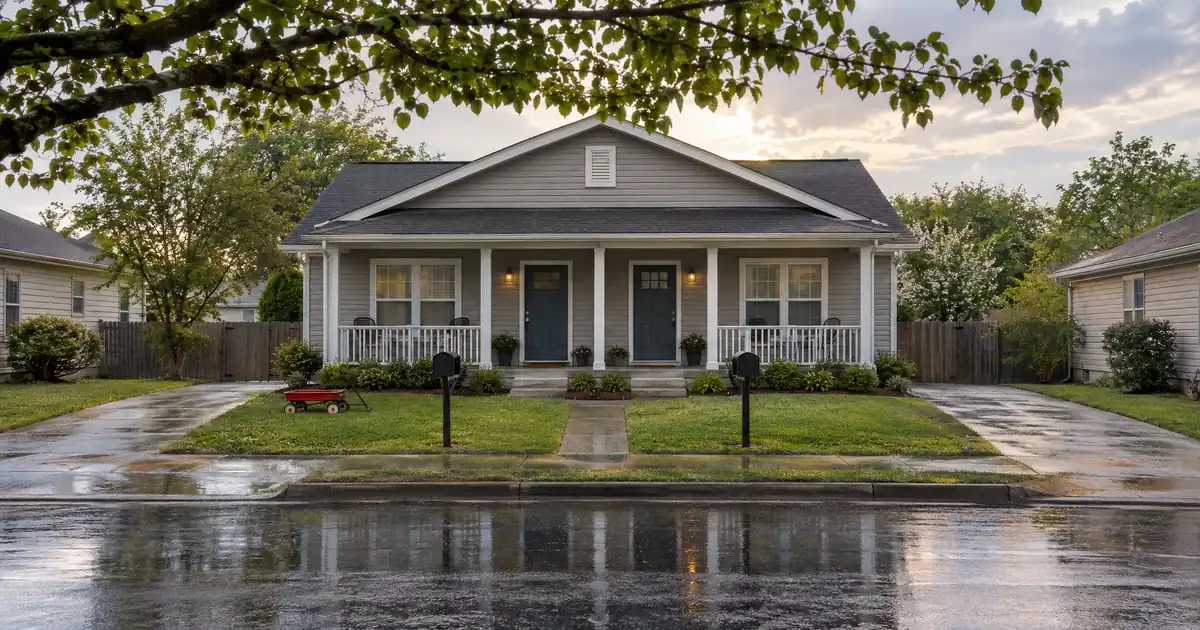
The Quick Read: Usually not by rule. A duplex, triplex or fourplex normally sits in the same 1-4 unit hard money product as a single-family flip, so experience and the deal’s numbers set your cash in more than the unit count does. Some lenders do tighten leverage on 3-4 units, and the after-repair value cap can shrink your loan on any building.
- Fix-and-flip leverage is typically tiered by completed projects and sized on project cost, with an after-repair value cap on top. It varies by lender, property, and experience.
- Experience moves your down payment more than property type does.
- Multi-unit buildings usually cost more, so the same percentage means more dollars out of pocket.
- Rehab money is typically released in draws, so you still front cash during the work.
- Owner-occupied low-down-payment programs do not apply to an investor flip.
Here is the longer version, with the mechanics, the exceptions, and the decisions that matter to you as the investor.
What this loan actually costs to carry.
Hard money is sized against the project and priced by time. Enter the deal and see how much the program will lend, the cash required at closing, the carry while you hold it, and what is left at the exit.
Leverage tiers on the current program: 85% with fewer than 2, 90% with 2 or more, 93% with 5 or more completed projects — every tier capped at 75% of after-repair value. Loan amounts up to $5,000,000, larger by exception; terms of 6 to 18 months, interest-only, no prepayment penalty. The rehab portion funds in draws against completed work, not at closing.
Program parameters shown update from Lendmire’s centralized guideline source. Rate, points, and months are editable assumptions, not quoted terms.
Cost cap sets the loan · positive spread
Illustrative estimate only — not a quote, Loan Estimate, approval, or commitment to lend. Rate, points, and months are editable assumptions. Hard money is business-purpose financing for real estate investors, not a consumer mortgage. Leverage on the current program tops out at 93% of project cost for investors with a documented track record, capped at 75% of after-repair value, with rehab funding up to 100% of the documented budget released in draws; actual terms vary by lender, borrower experience, property, and exit. Lendmire is a mortgage broker, not a lender.
How Does Hard Money Size a Flip Loan?
Hard money lenders size a flip loan on two tests, and the lower result wins. The first test is a percentage of your total project cost. The second is a cap tied to the after-repair value, or ARV, which is the lender’s estimate of what the finished property will be worth.
Across Lendmire’s wholesale network, the loan-to-cost tiers run on documented completed projects. Select lenders typically fund up to 93% of project cost at five or more completed projects. They fund up to 90% at two or more, and up to 85% with fewer than two. Every tier is capped at 75% of ARV. These are typical ranges that vary by lender, property, and experience, and nothing here is a commitment to lend.
Rehab funding works a little differently. Up to 100% of the rehab budget can be released in draws against completed work. That is a share of the rehab budget, not a purchase percentage. You pay a contractor, the work gets verified, and the lender reimburses you.
Surveys of the broader market describe a wider and looser picture. Financer’s hard money guide reports typical down payments of 25% to 35% of property value with loan-to-value of 65% to 75%. Those are market-wide figures. Lendmire’s network sizes flips on cost with the tiers above, so the two are not the same measuring stick.
Does a 2-4 Unit Flip Need a Bigger Down Payment Than a Single-Family Flip?
In most files, no. The network’s flip program covers non-owner-occupied residential property of one to four units. A duplex and a single-family home sit on the same tier chart. The tier you land on comes from how many projects you have completed, not how many front doors the building has.
Here is the same chart applied to both property types. The percentages are illustrative program ranges, not a quote.
| Completed projects | Loan-to-cost (any 1-4 unit) | Implied equity on cost | ARV cap |
|---|---|---|---|
| Fewer than 2 | Up to 85% | About 15% | 75% |
| 2 or more | Up to 90% | About 10% | 75% |
| 5 or more | Up to 93% | About 7% | 75% |
The implied equity is the part of project cost the loan does not cover. Your real cash at the table also includes closing costs and a rehab float, since draws reimburse work after it is done. The top tier is reserved for experienced investors, and every file is underwritten on its own facts.
So the short answer holds. The percentage on the page does not change because you bought four units instead of one.
Where Does the Unit Count Actually Bite?
It bites in three places: lender overlays, the appraisal, and the dollar size of the check. None of these is a universal rule, but each can raise the cash you bring.
Lender overlays. A network is many lenders, and each one adds its own preferences. In DSCR rental lending, we see some lenders hold 3-4 unit buildings a notch below single-family leverage while others do not. Hard money lenders can behave the same way. A lender that is comfortable with a single-family flip may cap a fourplex at a lower share of cost, or ask for more liquidity. That is a lender preference, not a rule across the market.
The appraisal and the ARV cap. The ARV cap is the number most likely to shrink your loan on a multi-unit deal. Small apartment buildings often get valued with an income-style approach. Appraisers typically use a different form for 2-4 units than for single-family homes. There can also be fewer sold comparables to lean on. A cautious ARV lowers the 75% cap, and that is where extra cash shows up.
The size of the check. Multi-unit buildings generally cost more than single-family homes in the same area. A 10% equity share is a bigger check on a fourplex than on a three-bedroom house. The percentage did not move. Your wallet feels it anyway.
There is also a hard edge at five units. Five or more units leave the 1-4 residential bucket, and the review moves toward commercial-style underwriting. The network’s flip program is built for one to four units.
Run the Math: When Does the ARV Cap Take Over?
The ARV cap takes over when your total cost is a high share of the finished value. Take a modeled flip where purchase plus rehab equals 80% of ARV. A 90% loan-to-cost tier gives a loan at 72% of ARV, which sits under the 75% cap. The cost test governs, and your equity is about 10% of cost.
Now change one input. Say purchase plus rehab equals 85% of ARV. A 90% loan-to-cost tier would be 76.5% of ARV, which breaks the cap. The cap governs, the loan stops at 75% of ARV, and your equity rises to about 12% of cost. Same tier, same lender, more cash from you.
Why does this matter on a 2-4 unit deal? A conservative appraisal pushes ARV down. That moves your cost share up, and the cap bites sooner. Nav’s explainer on 100% hard money financing makes the same point from the market side. Even a structure advertised as 100% financing must still fit inside the lender’s ARV cap, which Nav describes as typically 70% to 75%.
That leads to the biggest misconception on this topic. There is no true 100% purchase program. High-leverage structures exist, but they are built from a cost-based percentage, a draw schedule, and an ARV ceiling. What looks like zero down is usually a financing structure on a deal with strong margins or extra collateral. It is not free money.
Key Terms Defined
ARV (after-repair value): The estimated market value of the property once the renovation is finished. The lender’s ARV cap limits the loan to a share of that number.
Loan-to-cost: The loan amount as a percentage of your total project cost, which is the purchase price plus the rehab budget.
Draw: A release of rehab funds after a stage of work is completed and verified. You typically front the money first.
Personal guarantee: Your promise to repay if the borrowing entity cannot. Many lenders ask for one even when you buy through an LLC, subject to program terms.
Non-owner-occupied: A property you do not plan to live in. Hard money flips and DSCR rental loans both fall in this category.
DSCR (debt service coverage ratio): Monthly rent divided by the monthly payment covering principal, interest, taxes, insurance, and any HOA dues. A DSCR loan is the rental financing many investors move to after a flip.
What Cash Do You Need Beyond the Down Payment?
Plan for more than the equity line on the chart. A flip on any property type drains cash in several places, and the percentage on the term sheet only covers one of them.
- Closing costs and lender fees. These come due when you buy.
- Rehab float. Draws reimburse finished work. You pay the contractor first.
- Interest carry. Loans on the network are interest-only for terms of 6-18 months, so you pay as you go while the project runs. Prepayment penalties are not part of the program.
- Liquidity checks. Lenders may ask for proof of liquid funds. Practices differ on what counts, so ask before you assume a retirement or credit-line balance qualifies.
- Reserves for surprises. Multi-unit rehabs have more systems, more kitchens and more baths. Contingency matters more with four units than with one.
A larger building multiplies all of this. The percentages stay the same while the dollars grow. If you are stepping up from single-family to a fourplex, size your cushion before you size your offer.
How Does Your Experience Change the Ask?
Experience is the strongest lever in hard money. A flipper with five or more documented completed projects typically sits in the top loan-to-cost tier. A first-time investor typically qualifies at the lower tiers. The gap between the lowest and highest tiers is about eight points of project cost, and it applies equally to a duplex or a house.
Credit plays a role too. A 620 score is the typical minimum on the program, with additional conditions below 660. Underwriting stays asset-based, meaning the property, the plan and the exit carry the file. Credit is one input, not the whole decision.
The practical point for a newer investor: a first multi-unit flip is not harder to fund because it has four units. It is harder because it is your first flip, on a bigger dollar check. If the cash feels tight, a smaller building at the same tier is a cleaner way to build your track record.
Why Owner-Occupied Low-Down-Payment Rules Do Not Apply
Searchers often mix this up. Owner-occupied programs let a buyer put very little down on a duplex or fourplex. They do that because the buyer lives in one of the units. A flip is a non-owner-occupied business purchase, so those low down payments do not carry over.
Hard money for a flip is an investor product. It is built for non-owner-occupied property, and it is sized on cost and ARV rather than on your personal occupancy. If you plan to live in one unit and rehab the rest, you are shopping for a different loan type. That is a different conversation from this one.
Lendmire’s DSCR and hard money programs are designed for investment properties. Because they are business-purpose investor loans, they are reviewed differently from a standard owner-occupied mortgage.
How Do Quotes for the Same Deal Differ?
A lot, and that is the best reason to compare more than one. Two lenders can look at the same duplex and quote different structures. One may lead with a cost-based percentage and a draw schedule. Another may lead with a lower ARV cap but fund more of the rehab up front. Hard money is not one product with one price list.
Because Lendmire is a broker with access to many lenders in a wholesale network, it can compare those structures side by side. When you review quotes, look at these items together:
1. The loan-to-cost tier you are placed in.
2. The ARV cap and who orders the appraisal.
3. How rehab draws are released and verified.
4. Whether the lender wants a personal guarantee.
5. Total cash needed at the table, not just the down payment.
Loan sizes run up to $5,000,000 on the program, larger by exception. Smaller balances vary by lender, so confirm minimums early on a small building.
What Happens at Exit?
Plan the exit before you buy, because a 2-4 unit building gives you more than one door out. You can sell the finished property. You can also hold it as a rental. Many investors refinance out of hard money into long-term DSCR investor loans once the property is stabilized, and Lendmire brokers that path.
The rental exit has its own gate. For the refinance, a lender typically asks for 2-4 unit appraisal reports with a rent schedule. On the DSCR side, most files land at 75% to 80% loan-to-value on an investment-property purchase. A cash-out refinance tops out around 75% on most files, with about six months of seasoning as the common expectation. Select high-leverage programs reach 85% on a purchase with roughly a 700+ score.
Coverage is the second test. A DSCR of 1.00 is where many select programs start. A separate select-lender path takes coverage below 1.00, with leverage and terms adjusted. Clearing 1.00 only means rent covers the monthly payment on the loan. It does not mean positive cash flow, since repairs, vacancy, management, utilities and capex sit outside the calculation.
A multi-unit rent roll can lift coverage because several leases carry one payment. If you plan to run the property as a short-term rental instead, Lendmire’s piece How to Meet DSCR Loan Down Payment Requirements for a 2-4 Unit Vacation Rental covers that path.
For the broader picture, Lendmire’s complete DSCR loans guide walks through leverage, credit tiers, and reserves in plain English.
Ways to Reduce the Cash You Bring (and the Tradeoffs)
You have a few legitimate options. Each one shifts risk, so treat them as tradeoffs.
- Buy at a lower cost basis. Negotiating the purchase price or trimming the scope lowers your cost share and keeps you under the ARV cap.
- Build experience first. Moving from the lowest to the middle tier lowers your equity share on cost. It takes completed projects, which means time.
- Bring a partner. Partner capital can fill the equity gap. It also splits the profit, so run the returns with the split included.
- Add collateral. Some programs consider other equity to fill a gap. That adds risk to an asset you already own.
- Pick the right building. A strong-ARV duplex can beat a thin-margin fourplex on cash needed. The stronger play is often the deal with margin, not the largest building.
There is no combination that erases leverage caps, credit floors or lender review. Every structure remains subject to lender guidelines and underwriting. Tax treatment varies, so consult a qualified tax professional before relying on any deduction.
Frequently Asked Questions
Will a fourplex flip need more down payment than a duplex flip?
Not by program rule. The tier chart is the same for one to four units. A lender may add its own cap on 3-4 unit buildings, and a conservative appraisal can lower the ARV cap. Ask each lender about unit-count overlays up front.
Is the down payment a percentage of purchase price?
Typically no. Flip loans are sized on total project cost, then limited by an ARV cap, and the rehab portion funds in draws. The gap between the loan and the cost is your equity. Market surveys such as Financer’s guide describe the down payment as the share of value the loan does not cover. Flip structures split that between purchase and rehab.
Can a first-time flipper buy a duplex with hard money?
Often yes, at the lower leverage tiers, with a 620 score typically the minimum and extra conditions below 660. The loan is underwritten on the property, the plan and the exit. First-time investors typically carry more equity than experienced flippers. Every file varies by lender, property, and experience.
Do I need an LLC, and will the lender want a personal guarantee?
Many investors buy through an LLC, subject to lender program eligibility. Many lenders still ask for a personal guarantee, so expect it to be part of the discussion either way.
Does the 2-4 unit count affect the rental refinance later?
It can help. A multi-unit rent roll spreads income across several tenants, which can lift DSCR. The refinance has its own leverage cap, credit tier and reserve rules, so plan those numbers while you are still rehabbing.
Next Steps
If you are buying, rehabbing or refinancing an investment property on a short timeline and want to see how the numbers work, Lendmire can help you compare hard money options based on the project, the exit plan, leverage, and your goals. Call 828-256-2183 or request a quote to start.
Lendmire is a mortgage broker that arranges financing through select lenders in its wholesale network across 41 markets, including Washington, D.C. Programs change, every file is underwritten individually, and nothing here is a commitment to lend.
About Lendmire
Lendmire — NMLS# 2371349 — is a mortgage brokerage specializing in DSCR investor loans, helping arrange financing across 41 markets, including Washington, D.C., through wholesale and investor-lending channels. The model centers on property-level rental income reviewed by the lender rather than W-2 documentation, subject to lender guidelines, suiting entity-owned and multi-property investors. Lendmire holds Scotsman Guide Top Mortgage Workplace recognition for 2025 and 2026.
Get Started
Ready to find the right loan for you?
In about 30 seconds you can review financing options available for your investment property. No commitment required.
Informational only. Not a Loan Estimate, approval, or commitment to lend. Program availability and eligibility are subject to lender guidelines, credit approval, property review, and underwriting.
References
1. Financer: hard money loan guide
2. Nav: hard money loans and 100% financing
This article is part of Lendmire’s hard money loan program — full qualification details, guidelines, and scenarios live on the program page.
Related reading: How a Lender Reads a Seller-Carried Note on a Hard Money Loan · Can You Use a Hard Money Loan to Buy Out Siblings or a Partner? · Hard Money Loan ARV Requirements in a Small Town With No Comps
Brandon Miller
Founder & CEO, Mortgage Loan Originator, Lendmire LLC
- Mortgage Loan Originator · NMLS# 1129696 · Verify on NMLS Consumer Access
- North Carolina Real Estate Broker · License# 343312 · Verify on NCREC
- North Carolina Insurance Producer · License# 19053198 · Property, Casualty, Life, Health · Verify on NAIC SBS
- Lendmire LLC · Firm NMLS# 2371349 · Verify firm licensure
Compliance and disclosures. Lendmire (NMLS# 2371349) is a licensed mortgage broker and is not a direct lender, depository institution, financial advisor, or tax professional. Content in this article is general market analysis and educational information — not financial, legal, or tax advice for any specific situation. Lendmire does not guarantee loan approval; every transaction is subject to underwriting by the funding lender. Mortgage pricing and loan program guidelines are subject to change at any time without notice and vary by borrower characteristics, property type, and state regulations. Lendmire complies with Equal Housing Opportunity. Licensure verification: NMLS Consumer Access.