
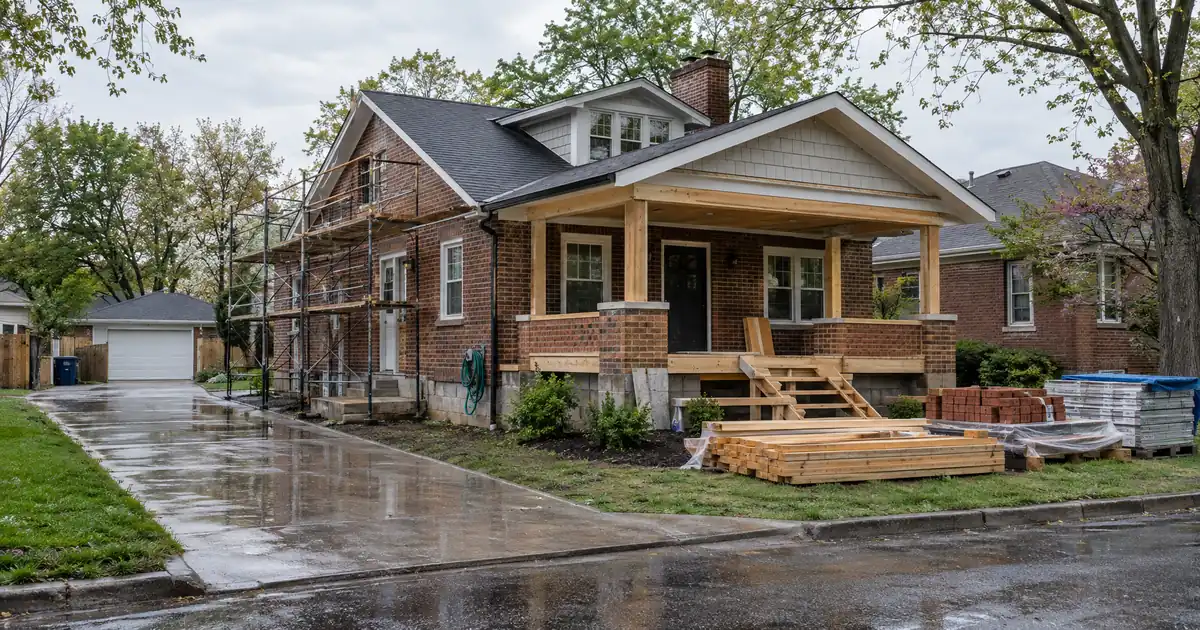
The Quick Read: Usually yes when the property is already leased, passes a rent-coverage test today, and stays in your portfolio for years, because a 40-year DSCR loan removes the maturity date a bridge loan puts in front of you, while a bridge fits only properties that cannot yet qualify on rent. The two loans solve different problems, and plenty of investors use them one after the other. The deciding question is whether the property can pass a rent test right now.
- A DSCR loan is reviewed primarily on property-level rental income covering the payment, subject to lender guidelines. A bridge loan is underwritten around the property, the plan, and the exit.
- “40-year” usually describes the loan’s term, not 40 years of interest-only payments. The common build is 10 interest-only years followed by 30 amortizing years, and some programs amortize over the full 40.
- A bridge has a maturity date, typically 6 to 18 months. A 40-year DSCR loan has no maturity pressure for decades.
- A longer term can lift your coverage ratio, but it never waives leverage caps, credit floors, reserves, or property eligibility.
- Use a bridge for vacant, unfinished, or unleased properties. Use the 40-year DSCR loan for stabilized rentals you plan to keep.
What Is Each Loan, in Plain Words?
A DSCR loan lends against a rental property based on whether its rent covers its monthly obligation. A bridge loan is short-term, interest-only money secured by the property, meant to carry you until a sale or a permanent loan. One is built around the rent; the other is built around the exit.
What this loan actually costs to carry.
Hard money is sized against the project and priced by time. Enter the deal and see how much the program will lend, the cash required at closing, the carry while you hold it, and what is left at the exit.
Leverage tiers on the current program: 85% with fewer than 2, 90% with 2 or more, 93% with 5 or more completed projects — every tier capped at 75% of after-repair value. Loan amounts up to $5,000,000, larger by exception; terms of 6 to 18 months, interest-only, no prepayment penalty. The rehab portion funds in draws against completed work, not at closing.
Program parameters shown update from Lendmire’s centralized guideline source. Rate, points, and months are editable assumptions, not quoted terms.
Cost cap sets the loan · positive spread
Illustrative estimate only — not a quote, Loan Estimate, approval, or commitment to lend. Rate, points, and months are editable assumptions. Hard money is business-purpose financing for real estate investors, not a consumer mortgage. Leverage on the current program tops out at 93% of project cost for investors with a documented track record, capped at 75% of after-repair value, with rehab funding up to 100% of the documented budget released in draws; actual terms vary by lender, borrower experience, property, and exit. Lendmire is a mortgage broker, not a lender.
DSCR stands for debt service coverage ratio. In the non-QM investor world (non-QM means the loan sits outside standard owner-occupied mortgage rules), the test is usually monthly rent divided by the full monthly payment, meaning principal, interest, taxes, insurance, and any association dues, known as PITIA. The Wikipedia entry on the debt service coverage ratio describes the formula in its commercial form, net operating income over debt service, and notes that traditional banks have historically wanted about 1.20 or higher. Investor-focused programs often use the gross-rent version instead, so confirm which convention your lender applies.
A bridge loan is short-term financing that covers a gap until a sale or permanent loan. On the programs Lendmire places files with, bridge terms run 6 to 18 months, interest-only, with principal due at the end. Amounts go up to $5,000,000, and the minimum credit score is 620 with extra conditions below 660. Everything varies by lender, property, and experience, and nothing here is a commitment to lend.
DSCR loans are designed for non-owner-occupied investment properties. Because they are business-purpose investor loans, they are reviewed differently from a standard owner-occupied mortgage.
What Does “40-Year” Actually Mean?
It usually describes the length of the loan’s note, and it does not promise 40 years of interest-only payments. Term length and the interest-only period are two separate choices. The most common build is 10 interest-only years followed by 30 amortizing years. A few programs fully amortize over 40 years from day one.
Here is how that plays out on the loan:
1. You choose a structure. You pick either full 40-year amortization or an interest-only window followed by amortization.
2. The lender tests coverage. Interest-only loans are generally tested on interest, taxes, insurance, and dues. Fully amortizing loans add principal to the test. Smart investors also run the numbers on the payment after the reset.
3. Leverage, credit, and reserves are tested separately. A longer term can improve coverage, and it waives none of those requirements.
4. At the reset, the payment is recalculated. The balance is unchanged, because interest-only years pay down nothing, and it is spread over the remaining months.
One availability note: extended terms and interest-only periods come through select lenders in the network, not every program. Above $2,500,000, the network generally holds to 30-year fixed structures, so a 40-year term mostly lives below that size.
Side by Side: 40-Year DSCR vs Bridge
| Factor | 40-Year DSCR | Bridge Loan |
|---|---|---|
| Best for | Leased, stable rentals | Vacant, unfinished, or transitional |
| Approval basis | Rent covering the payment | Property, plan, and exit |
| Term | Long runway, no near maturity | 6-18 months, then principal due |
| Payment shape | Interest-only window, then amortizing | Interest-only throughout |
| Purchase leverage | Typically 75%-80% LTV (85% select) | Up to 80% of purchase price |
| Refinance leverage | Cash-out around 75% LTV | Up to 65% of value |
| Prepayment | Often a step-down penalty | Typically none on these programs |
| Exit | None required; you hold | Sale or refinance, planned upfront |
Leverage labels matter. The DSCR purchase range is typically 75%-80% LTV (20%-25% down), and select high-leverage programs reach 85% LTV with roughly a 700+ score. For a bridge, the 80% figure applies to a purchase without rehab, while a bridge cash-out or rate-and-term refinance runs up to 65% of value. Fix-and-flip bridges are sized on project cost instead, and every tier is capped at 75% of after-repair value.
The Decision Test: Five Questions
Answer these in order. The first “no” usually points you to your loan.
1. Is the property leased and livable today? If it is vacant, mid-rehab, or has no rental history, a DSCR loan generally cannot be used yet. A bridge is the tool that fits.
2. Does market rent cover the full payment at roughly 1.00 or better? Here, 1.00 is where many select programs start. A separate select-lender path takes coverage below 1.00 with leverage and terms adjusted. Stronger ratios open better pricing and leverage.
3. Do you plan to hold for years? If yes, the long runway and the lack of a balloon favor the 40-year DSCR loan. If you plan to sell within a year or two, read the prepayment section below before you decide.
4. Does the loan size fit the leverage cap? A bridge payoff is a new origination, sized to the new lender’s caps rather than your old loan balance.
5. Is the exit already documented? A bridge needs a real exit. A plan to refinance counts only if the property can actually pass the takeout test when the bridge matures.
If you land on “stabilized, passes coverage, holding long,” the 40-year DSCR structure is the better pick. If you land on “not yet,” start with a bridge and plan the step after it.
When the 40-Year DSCR Loan Is the Better Pick
The 40-year DSCR loan wins when the property is already doing its job.
- The tenant is in place. A signed lease and a rent schedule from the appraisal are what the lender needs to see.
- You plan to keep it. There is no maturity date forcing a refinance, so you are not trading the property’s income for a deadline.
- You want portfolio room. DSCR underwriting does not rest on your personal income, so each new property is judged by its own coverage. That is how portfolios grow, and the guidance for larger holdings is covered in Lendmire’s piece How to Qualify for a 40-Year DSCR Loan for a Portfolio Investor With 10-Plus Doors.
- Coverage is tight on a 30-year payment. An interest-only window or a 40-year amortization lowers the payment that rent is measured against. That can turn a borderline file into a clean one.
Borrowing through an LLC is common on these files, subject to program terms.
Short-term rentals can use their own income under program rules, with purchase leverage up to 75% LTV and about 12 months of hosting history expected. Short-term rental rules can vary by city, county, HOA, and property type, so investors should confirm local rules before relying on projected rental income. Terms vary by lender guidelines, property type, leverage, credit profile, and full file review.
When a Bridge Loan Is the Better Pick
A bridge wins when the property cannot qualify today, and it deserves a fair hearing.
- Heavy rehab or a vacant building. Rent coverage cannot be tested on units that are not leasable. The bridge funds the purchase and the work, with up to 100% of the rehab budget released in draws against completed work.
- A property with no rental history. The lender needs a lease or market rent to test, and a bridge buys time to create one.
- A plan that ends in a sale. If you are flipping, a short interest-only loan without a long-term commitment fits the plan.
- A purchase where timing pressure is real. Bridge underwriting focuses on collateral and the exit rather than a long review of the borrower’s finances. That can matter when the seller will not wait for a rental to stabilize.
The cost of that flexibility is a maturity date. When it arrives, you sell, refinance, or negotiate. Using a bridge on a property that already passes a rent test is usually a mistake, because you pay for short-term money and still face a refinance later.
The Bridge-Then-DSCR Path
Many investors do not choose between the two at all. They buy and renovate with a bridge, lease the property, and then refinance into long-term DSCR financing. This is the engine behind BRRRR, which stands for buy, rehab, rent, refinance, repeat. Lendmire brokers that path where it fits.
Check three things before you take the bridge:
- Leverage gap. A bridge refinance runs up to 65% of value, while a DSCR cash-out generally allows less leverage than a purchase would on standard rentals, and the cost-based tiers some lenders quote apply to project cost, not to appraised value. The DSCR loan can usually pay off the bridge, but a bridge fixes a timing problem and does not fix an equity shortfall.
- Seasoning. A common expectation on a DSCR cash-out is about 6 months of ownership before the lender will use the new value. Try to line up your bridge term with that window.
- Appraiser rent versus lease rent. Lenders typically use the appraiser’s market-rent estimate, not the number on your lease. Fannie Mae’s Form 1007 market-rent schedule is the standard single-family form for that estimate, and small multifamily uses its sibling, Form 1025. A lease signed well above market can lower your coverage ratio.
The payoff is a brand-new origination, so the new loan’s prepayment clock starts from that day.
Prepayment: The Quiet Deciding Factor
A prepayment penalty is a fee for paying off a loan early. The CFPB explains that it typically applies if you pay off or refinance within the first few years, commonly 3 to 5.
DSCR loans often carry a step-down version, with the fee shrinking each year you hold. Penalty-bearing loans often trade for better pricing, so the penalty is a choice rather than a trap. A bridge on the programs Lendmire places files with typically has none, though that varies by lender.
The rule of thumb: match the penalty window to your planned hold. If you will keep the property past the step-down, the penalty never costs you anything. If a sale or refinance is likely early, either choose a structure with a lighter penalty or accept that a bridge may fit the plan better. Some states restrict prepayment penalties on small investment properties, so confirm the rules for your property before you commit.
Risks of the 40-Year Path
The 40-year structure is built for cash flow, and it carries trade-offs that many investors skip.
The payment reset. When an interest-only window ends, the payment steps up on the same balance over fewer months. Underwrite that payment before you sign, not when the reset arrives.
No equity from paydown. Interest-only years do not reduce principal. Your equity grows only from appreciation and what you pay in, so a cash-out refinance in the first decade starts from the original balance.
Higher lifetime interest. A longer schedule pays down slower, so total interest over the life of the loan is greater. That is the price of a lower payment.
Coverage is not cash flow. DSCR compares rent to PITIA only. A property can clear 1.00 and still lose money after repairs, vacancy, management, utilities, and capital expenses. Treat the ratio as a lender test, never a profit guarantee.
Requirements stay in place. Credit usually needs to be around 660 on most programs, with a 620 floor in parts of the network and 700+ unlocking the strongest tiers. Reserves vary by lender, leverage, loan size, and transaction type, commonly around 6 months of PITIA. Conservative rate-and-term files under $1,500,000 can see reserves waived, and larger loans typically step up to about 9 months. A larger down payment lowers the payment and can lift your coverage, but the strongest files clear both tests: enough equity and enough rent.
Tax treatment varies; consult a qualified professional.
DSCR vs. conventional financing
There are two common ways to finance an investment property, and they qualify you differently — here’s how investors weigh them.
Why investors choose it
- Qualifies on the property’s rental income — no personal tax returns, W-2s, or pay stubs needed to document income.
- No personal debt-to-income ceiling to clear, so existing mortgages and obligations don’t cap your borrowing the same way.
- Can be closed in an LLC, keeping the property inside a business entity.
- Built for scaling — not held to the limit on number of financed properties that conventional financing applies.
- Underwriting centers on the deal: generally qualifies when the rent covers the payment, a 1.00x coverage ratio being a common baseline (confirmed in underwriting).
- Designed specifically for investment property, including long-term and, where the program allows, short-term rentals.
Where it’s strong
- Often the lowest ongoing financing cost for a buyer who fully qualifies on personal income — a fit for a first property or a cost-first purchase.
Trade-offs for investors
- Requires full personal income documentation and must fit within a debt-to-income limit — salary, existing debts, and other mortgages all count.
- Typically held in your personal name rather than a business entity.
- Caps how many financed properties you can carry, which can become a ceiling as a portfolio grows.
- Evaluates you as a borrower as much as the property, which usually means more paperwork.
How investors usually choose: a first or single property often optimizes for the lowest financing cost; portfolio builders often optimize for leverage, vesting in an LLC, and scaling past conventional caps. The right answer depends on your goals, the property, and current guidelines — both paths run through select lenders in Lendmire’s wholesale network, with eligibility and terms confirmed in underwriting.
A Worked Example
These ratios are modeled assumptions, not market data. Picture a leased duplex held in an LLC, with rent that covers a fully amortizing 30-year payment at about 1.05x. That is borderline, and it leaves little room for error.
Now run the same property through a 40-year structure with a 10-year interest-only window. Tested on interest, taxes, insurance, and dues, coverage might read near 1.25x. That clears most select programs with room to spare.
Then test the reset. After 10 years, the payment returns to a fully amortizing amount on the unchanged balance. The rent would need to have grown enough by then, or you would need a refinance or sale planned, for coverage to hold near that 1.05x range. That is the question to ask on day one.
Compare the bridge path for a vacant version of the same duplex. A bridge can buy it and fund the work, but the property cannot pass the rent test until a tenant is in place. The exit then depends on stabilizing and refinancing before the maturity date. A calculator can show an illustrative estimate for each structure, but treat it as a starting point, not a quote.
Four Investor Profiles
The keeper. You own a leased fourplex and want to pull out cash and keep it. The 40-year DSCR loan, or a standard DSCR cash-out around 75% LTV, fits. Exact terms depend on the lender’s guidelines, property type, leverage, and a full review of the borrower’s file.
The value-add buyer. The building is vacant and needs real work. Start with a bridge, lease it, and plan the DSCR takeout before the bridge matures.
The expiring note. A private or hard-money loan is maturing on a property that is now leased and passes coverage. A DSCR refinance is the cleaner exit, since there is no sale deadline attached.
The short-horizon investor. You will probably sell in a year or two. A DSCR penalty may cost more than a bridge, so price both before choosing.
Mistakes to Avoid
- Paying twice. Using a bridge on a property that already passes coverage means two sets of closing costs and a second maturity date.
- Skipping the reset math. The interest-only payment is the introductory price, not the long-term number.
- Assuming the lease sets rent used for lender review. The appraiser’s market rent often controls, as covered above.
- Treating a bridge exit as a hope. The exit is the underwriting question. Know the takeout loan’s leverage cap and seasoning rules before you borrow.
- Confusing term with interest-only. A 40-year term does not mean 40 years of interest-only payments.
For the underlying mechanics of how these loans fit together, Lendmire’s complete DSCR loans guide is the place to start.
Key Terms Defined
DSCR (debt service coverage ratio): the rent a property earns divided by its monthly loan obligation; a result above 1.00 means rent exceeds the payment.
PITIA: principal, interest, taxes, insurance, and association dues, the full monthly cost of owning the loan.
Interest-only period: a stretch of the loan where you pay interest and no principal, so the balance stays flat.
Amortization: the schedule that pays the balance down to zero over time.
LTV (loan-to-value): the loan amount as a percentage of the property’s value.
Bridge loan: short-term, interest-only financing secured by property, used until a sale or permanent loan.
Prepayment penalty: a fee charged if you pay off a loan early.
Seasoning: the waiting period a lender wants between two events, such as buying a property and cashing out on it.
Frequently Asked Questions
Is a 40-year DSCR loan always interest-only?
No. Some programs fully amortize over the entire 40 years, while others use an interest-only window, commonly 10 years, followed by 30 amortizing years. Availability depends on the lender, since extended terms and interest-only periods come through select lenders in the network rather than on every program.
What happens when the interest-only period ends?
The payment is recalculated on the unchanged balance over the remaining months, so it usually steps up. Rent coverage on that higher payment is worth modeling before you commit, because you will either need rent growth, a refinance, or a sale to keep the numbers working.
Can I use a DSCR loan on a vacant property?
Generally no. The test relies on rent, and a vacant or unfinished property has no lease and no rent history for the lender to test. A bridge is the usual tool for that stage, followed by a DSCR refinance once the property is leased.
Can I refinance a bridge into a 40-year DSCR loan?
Yes, where the property qualifies, though the 40-year structure is available only through select lenders. The refinance is a new origination, so it must meet the new loan’s leverage cap, credit floor, reserves, and seasoning expectations, and its prepayment clock starts fresh.
Do I need personal income documentation?
A DSCR loan is reviewed primarily on property-level rental income covering the payment, subject to lender guidelines. Credit and reserves are still reviewed. A bridge stays asset-based as well, looking at the property, the plan, and the exit, though experience level affects the leverage tier.
Where This Leaves You
If you are buying, rehabbing or refinancing an investment property on a short timeline and want to see how the numbers work, Lendmire can help you compare hard money options based on the project, the exit plan, leverage, and your goals. The brokerage arranges DSCR and bridge financing through select lenders in its wholesale network, across 41 markets including Washington, D.C. Investors can reach out at 828-256-2183.
The property’s lease status, not the loan’s headline term, is what usually decides the answer.
About Lendmire
Lendmire (NMLS# 2371349) is a DSCR-focused mortgage broker that helps arrange investor financing across 41 markets, including Washington, D.C., through wholesale and investor-lending channels. DSCR eligibility is generally reviewed by the lender around the property’s rental income rather than personal income documentation, subject to lender guidelines — which works for self-employed investors, LLC operators, and portfolios above four financed properties. Scotsman Guide named Lendmire a Top Mortgage Workplace in both 2025 and 2026.
Get Started
Ready to find the right loan for you?
In about 30 seconds you can review financing options available for your investment property. No commitment required.
Informational only. Not a Loan Estimate, approval, or commitment to lend. Program availability and eligibility are subject to lender guidelines, credit approval, property review, and underwriting.
References
1. Wikipedia: Debt service coverage ratio
2. Fannie Mae: Appraiser Update
3. CFPB: What Is a Prepayment Penalty
This article is part of Lendmire’s hard money loan program — full qualification details, guidelines, and scenarios live on the program page.
Related reading: Is a DSCR Loan the Usual Permanent Financing After a Flip You Keep? · Can You Use One Super Jumbo DSCR Loan for 20 or More Rentals? · How to Structure a Trust With a Trustee Guarantor for a DSCR Loan
Brandon Miller
Founder & CEO, Mortgage Loan Originator, Lendmire LLC
- Mortgage Loan Originator · NMLS# 1129696 · Verify on NMLS Consumer Access
- North Carolina Real Estate Broker · License# 343312 · Verify on NCREC
- North Carolina Insurance Producer · License# 19053198 · Property, Casualty, Life, Health · Verify on NAIC SBS
- Lendmire LLC · Firm NMLS# 2371349 · Verify firm licensure
Compliance and disclosures. Lendmire (NMLS# 2371349) is a licensed mortgage broker and is not a direct lender, depository institution, financial advisor, or tax professional. Content in this article is general market analysis and educational information — not financial, legal, or tax advice for any specific situation. Lendmire does not guarantee loan approval; every transaction is subject to underwriting by the funding lender. Mortgage pricing and loan program guidelines are subject to change at any time without notice and vary by borrower characteristics, property type, and state regulations. Lendmire complies with Equal Housing Opportunity. Licensure verification: NMLS Consumer Access.