
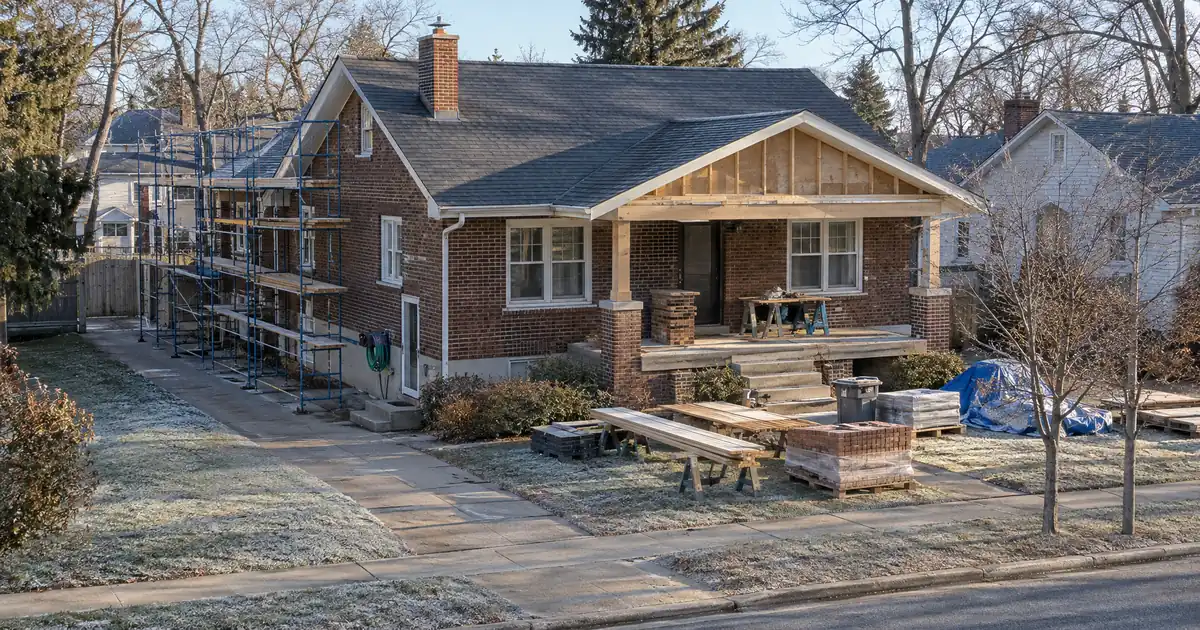
The Quick Read: Usually not with very little down. HousingWire reports that most hard money lenders ask for 20–30% down, and the strongest leverage tiers go to experienced investors. Across Lendmire’s wholesale network, a newcomer with fewer than two completed projects typically sees up to 85% of project cost, capped at 75% of after-repair value, and the exact figures vary by lender, property, and experience.
- A true 100% purchase program does not exist. Lenders fund up to 100% of the rehab budget in draws, which is a different thing.
- Your real cash need is the down payment plus closing costs, reserves, interest carry, and money to front contractors.
- A 620 credit score is the minimum, with added conditions below 660.
- The exit plan is underwritten as seriously as the deal itself.
- The best path to a low-cash first deal is a strong property, a tight budget, and a clear takeout, not a hunt for zero-down promises. Exact terms depend on the lender’s guidelines, property type, leverage, and a full review of the borrower’s file.
What Is a Hard Money Bridge Loan, Exactly?
A hard money bridge loan is short-term, interest-only financing secured by a non-owner-occupied investment property. “Bridge” describes the purpose: it carries you from the purchase to a sale or a longer-term loan. “Hard money” describes the underwriting: the lender leans on the property and your plan more than on your traditional personal-income documentation.
What this loan actually costs to carry.
Hard money is sized against the project and priced by time. Enter the deal and see how much the program will lend, the cash required at closing, the carry while you hold it, and what is left at the exit.
Leverage tiers on the current program: 85% with fewer than 2, 90% with 2 or more, 93% with 5 or more completed projects — every tier capped at 75% of after-repair value. Loan amounts up to $5,000,000, larger by exception; terms of 6 to 18 months, interest-only, no prepayment penalty. The rehab portion funds in draws against completed work, not at closing.
Program parameters shown update from Lendmire’s centralized guideline source. Rate, points, and months are editable assumptions, not quoted terms.
Cost cap sets the loan · positive spread
Illustrative estimate only — not a quote, Loan Estimate, approval, or commitment to lend. Rate, points, and months are editable assumptions. Hard money is business-purpose financing for real estate investors, not a consumer mortgage. Leverage on the current program tops out at 93% of project cost for investors with a documented track record, capped at 75% of after-repair value, with rehab funding up to 100% of the documented budget released in draws; actual terms vary by lender, borrower experience, property, and exit. Lendmire is a mortgage broker, not a lender.
Two kinds of files tend to get lumped together, and the leverage differs:
- Bridge purchase with no rehab: you buy a property that needs little work and plan to refinance or sell.
- Fix-and-flip or heavy rehab: the loan covers purchase plus a renovation budget released in stages.
In Lendmire’s network, terms run 6 to 18 months, interest-only, with no prepayment penalty. Properties are residential, 1 to 4 units. Loan amounts go up to $5,000,000, and larger by exception. Smaller balances vary by lender.
Lendmire is a mortgage broker. It arranges these loans through select lenders in its network across 41 markets, including Washington, D.C. Nothing here is a commitment to lend.
How Much Down Does a First-Timer Really Need?
Plan on roughly 15% of project cost at the friendliest end, and expect 20–30% in cash if you are borrowing from a typical lender. Market commentary and network guidelines point the same way. Leverage is tiered by how many projects you have finished.
The tiers we see across the network on fix-and-flip files look like this. Every figure varies by lender, property, and experience.
| Experience | Loan-to-cost | Value cap |
|---|---|---|
| Fewer than 2 completed projects | Up to 85% of project cost | 75% of ARV |
| 2+ completed projects | Up to 90% of project cost | 75% of ARV |
| 5+ completed projects | Up to 93% of project cost | 75% of ARV |
Two caps run side by side, and the lower one wins. Loan-to-cost is the loan as a share of what you spend on purchase plus rehab. ARV, or after-repair value, is what the property should be worth once the work is done.
Say the budget looks cheap against the purchase price, but the finished value is modest. The ARV cap then trims the loan and your cash requirement rises. A deal bought at a deep discount to its finished value is the one that supports the top of the range.
A bridge purchase with no rehab runs up to 80% of the purchase price. Cash-out and rate-and-term refinances run up to 65% of value. Those lower refinance caps surprise first-timers who assume a refinance is easier than a purchase.
HousingWire also notes that lower credit scores may require a bigger down payment or extra collateral. That matches what lenders do with newcomers: they price the risk of the unknown. The top tiers are reserved for borrowers who have proven they can finish a project.
Why Little Down Does Not Mean Little Cash
A low down payment is not the same as a low cash requirement, because the down payment is only one line in your cash-to-close. The rest is the part first-timers forget.
Here is the full picture of what you bring, with no dollar amounts because every deal differs:
| Cash item | Is it financed? |
|---|---|
| Down payment (purchase side) | No, this is your equity |
| Closing costs and lender fees | Generally not rolled in |
| Reserves the lender wants to see | Held in your account |
| Interest carry during the project | Paid monthly, interest-only |
| Rehab float between draws | You front it, then get reimbursed |
Rehab money deserves its own note. Up to 100% of the rehab budget funds in draws against completed work. That is a rehab-budget figure, never a purchase leverage figure. You pay the contractor for a phase, the lender verifies it, and the draw reimburses you. A first-timer without that float can stall a project mid-rehab.
Reserves vary by lender, leverage, and loan size.
Practitioners who place many of these files tend to see the same pattern. The first-time investors who run into trouble rarely missed the down payment. They underbudgeted the carry and the float.
What Lenders Look At in a First-Timer’s File
Hard money underwriting is asset-based. The lender studies the property, your plan, and your exit, but credit and reserves still set your tier.
- Credit: 620 is the minimum score in the network. Below 660, extra conditions apply. First-time investors qualify at the lower leverage tiers. Nobody gets a blanket promise of approval.
- The deal: purchase price, scope of work, budget, and ARV. Thin margins make for thin leverage.
- Your cash: a bank statement or proof of funds shows you can cover the down payment and closing costs.
- The property: non-owner-occupied, 1 to 4 units. Ground-up construction runs to 10 units. Commercial, industrial, land, hospitality, and owner-occupied properties are not offered.
- Exit: a sale or a refinance into long-term financing. Lenders want to see it written down.
A typical document package includes ID, the purchase contract, entity paperwork, a scope of work with a budget, and proof of funds. Some lenders also ask for a short experience summary, even if yours is blank.
How a First-Timer Offsets Inexperience
You cannot manufacture a track record, but you can borrow credibility. Lenders respond to evidence that the project will actually finish.
- Bring a contractor with a visible record. A named, licensed contractor and a line-item budget say more than a confident paragraph.
- Ask for less than the maximum. Borrowing below your cap often improves the file and the terms, and it builds a record for your second deal.
- Pick a plain first deal. A cosmetic rehab on a standard rental is easier to underwrite than a gut renovation.
- Show extra reserves. Cash left over after closing reassures a lender more than a high credit score does.
- Bring a partner who has finished projects. Subject to lender program eligibility, a partner can strengthen the file, though each lender reviews how ownership is structured.
Skip any pitch promising no cash in. Where low-cash structures exist, they usually rest on something extra, such as additional collateral, a deep discount, or strong experience behind the borrower.
The Exit Matters More Than the Down Payment
A short loan needs a takeout. Your exit is either a sale or a refinance into long-term rental financing, and the second lender sets its own rules.
Many investors refinance out of hard money into long-term DSCR investor loans once the property is stabilized, and Lendmire brokers that path. DSCR means debt service coverage ratio: the property’s rent compared with its full monthly obligation of principal, interest, taxes, insurance, and any HOA dues. The takeout lender runs its own appraisal and its own rent figure, so your renovation estimate does not size the refinance.
Here is what to check before you choose a bridge term:
- Seasoning: the waiting period a lender requires after purchase before refinancing. On cash-out DSCR files, about 6 months is the common expectation, and cash-out leverage tops out around 75% LTV across most of the network on standard rentals.
- Coverage: 1.00 is where many select programs start. A separate select-lender path takes coverage below 1.00 with leverage and terms adjusted. Stronger ratios open better pricing and leverage.
- Credit: most DSCR programs want around 660, and 700+ unlocks the strongest leverage tiers. Every figure here varies by lender and program — guidelines, property type, leverage, and credit profile all apply.
Clearing 1.00 is not the same as positive cash flow. Repairs, vacancy, management, utilities, and capital expenses sit outside the calculation.
Match the bridge term to the timeline of your rehab plus the seasoning your takeout needs. For a full tour of the long-term side, see Lendmire’s complete DSCR loans guide. If you already own the rental and want to compare options, read Lendmire’s piece Hard Money Bridge vs DSCR Loan for an Investor Stabilizing a Rental.
What Happens If the Plan Slips?
Hard money is unforgiving when a schedule slips, because the clock is the product. Terms of 6 to 18 months leave room, but a budget overrun or a permit delay eats that room fast.
Build in three safeguards. Add contingency to the budget. Pick a term longer than your base-case schedule. Line up a backup exit, such as selling at a discount or refinancing into long-term financing, before you sign. The loan is interest-only with no prepayment penalty, so you can pay off early if things go well. You are paying interest every month if they do not.
Is This Route Right for You?
A hard money bridge fits when the property needs work or the purchase has to move on a short timeline. It fits less well when the property is already rent-ready.
Hard money fits you if:
- You have meaningful liquid cash beyond the down payment.
- The deal has a real margin between total cost and finished value.
- You have a contractor, a budget, and a written exit.
Consider another route if:
- You are buying a turnkey rental. A DSCR purchase loan, with its own down payment rules, may fit better.
- You hope to put almost nothing in. Wait, partner up, or pick a cheaper first deal.
- You plan to live in the property. These loans are for non-owner-occupied investment property only.
These are business-purpose loans designed for investment properties, so they are reviewed differently from a standard owner-occupied mortgage. The CFPB’s published guide to the Truth in Lending Act notes that documenting your intended use of proceeds matters, so keep records of what the loan is for.
Tax treatment varies; consult a qualified professional.
Key Terms Defined
- Loan-to-cost (LTC): the loan as a percentage of purchase price plus rehab cost.
- After-repair value (ARV): the estimated value of the property once the renovation is complete.
- Draw: a release of rehab funds after the lender verifies finished work.
- Reserves: liquid cash a lender wants you to hold after closing.
- Seasoning: the waiting period before a lender will refinance a recently purchased property.
- Takeout: the sale or refinance that repays the bridge loan.
Frequently Asked Questions
Can a first-time investor get a hard money loan with 10% down?
Rarely. That works out to about 15% of project cost in equity, before closing costs and reserves. Expect the 10% scenario to need extra collateral or a very strong deal. Final terms depend on lender guidelines, property type, leverage, and the borrower’s complete credit picture.
Is there a no-money-down hard money bridge loan?
No, not as a standard program. The network funds up to 100% of the rehab budget in draws, but the purchase side still needs your equity. A low-cash claim usually depends on conditions such as added collateral or a deep discount.
Does bad credit disqualify a first-timer?
Not automatically, since underwriting is asset-based, but the floor is a 620 score. Below 660, additional conditions apply. A lower score also tends to mean more cash down or more collateral.
Are bridge loans and hard money the same thing?
They overlap. A bridge loan is defined by its purpose, which is spanning two financing events. Hard money is defined by its asset-based underwriting. Most investment-property bridge loans from private lenders are both.
How do I avoid getting stuck at the end of the term?
Choose a term longer than your realistic schedule, then check the takeout lender’s seasoning and coverage rules before you buy. Many investors refinance into long-term DSCR financing once the property is stabilized.
Next Steps
If you are buying, rehabbing or refinancing an investment property on a short timeline and want to see how the numbers work, Lendmire can help you compare hard money options based on the project, the exit plan, leverage, and your goals. Reach the team at 828-256-2183 or request a quote through the site.
For a first deal, the cash you can show on closing day often matters more than the leverage a lender advertises.
About Lendmire
Lendmire — NMLS# 2371349 — is a mortgage brokerage specializing in DSCR investor loans, helping arrange financing across 41 markets, including Washington, D.C., through wholesale and investor-lending channels. The model centers on property-level rental income reviewed by the lender rather than W-2 documentation, subject to lender guidelines, suiting entity-owned and multi-property investors. Lendmire holds Scotsman Guide Top Mortgage Workplace recognition for 2025 and 2026.
Get Started
Ready to find the right loan for you?
In about 30 seconds you can review financing options available for your investment property. No commitment required.
Informational only. Not a Loan Estimate, approval, or commitment to lend. Program availability and eligibility are subject to lender guidelines, credit approval, property review, and underwriting.
References
1. HousingWire – hard money explainer
2. CFPB – Truth in Lending Act guide
This article is part of Lendmire’s hard money loan program — full qualification details, guidelines, and scenarios live on the program page.
Related reading: Hard Money Overrun Documentation for a BRRRR Rehab Into a DSCR Loan · Hard Money Rehab Draw Inspections for a Full-Gut Rehab · Can a First-Time Airbnb Buyer Still Get a DSCR Loan After a Drop?
Brandon Miller
Founder & CEO, Mortgage Loan Originator, Lendmire LLC
- Mortgage Loan Originator · NMLS# 1129696 · Verify on NMLS Consumer Access
- North Carolina Real Estate Broker · License# 343312 · Verify on NCREC
- North Carolina Insurance Producer · License# 19053198 · Property, Casualty, Life, Health · Verify on NAIC SBS
- Lendmire LLC · Firm NMLS# 2371349 · Verify firm licensure
Legal disclosures. Lendmire (NMLS# 2371349) is a state-licensed mortgage brokerage that arranges financing through wholesale lender relationships. Lendmire is not a direct lender, depository institution, or registered financial advisor. The discussion above is general informational content about real estate financing — it is not financial, legal, or tax advice, and readers should consult licensed professionals for guidance on their individual circumstances. Loan inquiries are subject to lender underwriting; this article does not represent a commitment to lend. Loan terms, rates, and qualification standards vary by borrower, property, and state, and are subject to change at any time. Equal Housing Opportunity. NMLS Consumer Access: nmlsconsumeraccess.org.