
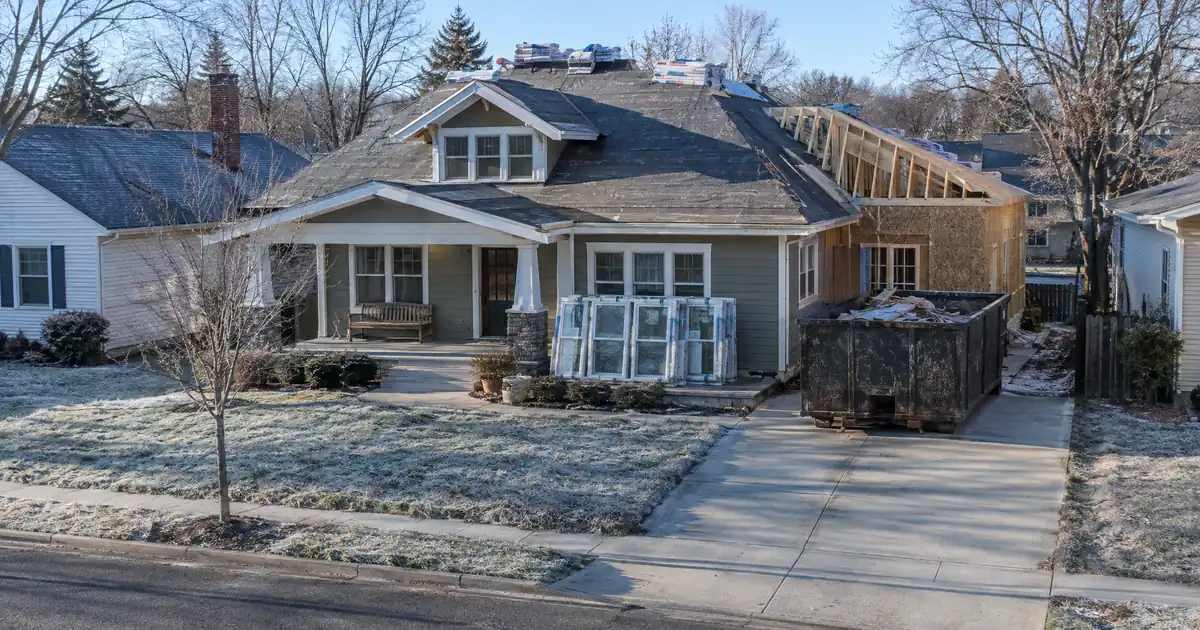
The Quick Read: A DSCR lender will not approve your overrun. It sizes the new loan on appraised value and rent, and it credits only the spending you can prove, so the paper trail you build during the rehab is what separates spending that counts from spending that does not.
- Hard money funds the rehab budget in draws, and the DSCR loan takes it out afterward. The DSCR loan does not fund the overrun.
- Overruns raise your cash in the deal and lengthen the bridge, but they do not raise the appraisal.
- Get lender approval for scope changes before the work starts, not after.
- Keep five documents current: original budget, revised budget, change order, variance log, and proof of payment.
- A larger payoff can push rent coverage below what a DSCR program needs, even when the value works.
Key Terms Defined
Overrun: Spending beyond the approved rehab budget that the hard money lender did not agree to fund.
Holdback: The part of the loan the lender keeps in escrow and releases as work is finished.
Change order: A written scope or price change, signed before the work begins.
Cost basis: Purchase price plus documented rehab spending, the figure some lenders use before seasoning is met.
Seasoning: The ownership period a lender wants to see, usually counted from the recorded deed. On cash-out DSCR files, about 6 months is the common expectation.
Variance log: A running table that compares each budget line against what was spent and explains the gap.
Payoff statement: The bridge lender’s statement of principal, accrued interest, fees, and per diem owed on a given date.
DSCR Calculator
Run the numbers in your market
Rate source: Freddie Mac 30-yr average via FRED® — Federal Reserve Bank of St. Louis · effective Oct 15, 2026
Prefilled with starting assumptions — enter your own rent or nightly figures, taxes, insurance, and HOA for a more accurate picture.
Program parameters update from Lendmire’s centralized guideline source. Taxes and insurance are editable estimates.
As of Oct 15, 2026 · General Freddie Mac market benchmark, not a Lendmire loan offer. Rent, nightly rate, occupancy, taxes, and insurance are editable estimates. Short-term rental figures are estimates only and vary significantly by season, property type, management approach, and local short-term-rental rules — confirm local regulations before relying on them. Qualifying income for short-term rentals varies by program — some use appraisal market rent, others use documented STR history or projections — and is confirmed in underwriting. Not a Loan Estimate, approval, or commitment to lend. Program availability and eligibility are subject to lender guidelines, credit approval, property review, and underwriting.
Why an Overrun Becomes a Paperwork Problem at the Exit
An overrun hurts at the exit because the DSCR lender looks at value and rent, not at your effort. The bridge ends, the DSCR loan pays it off, and the new lender wants to know what you owe, what the property is worth, and whether rent covers the new payment.
AdviceOnly’s BRRRR glossary makes the key point: the refinance is sized on appraised value, not money spent. Overruns and vacancy raise what you have invested while the appraisal stays where it is. US Realty Training calls a low appraisal the biggest BRRRR risk. It adds that overruns hit twice, once in cash and once in time, while the short-term debt keeps accruing.
So the paper does two jobs. It proves cost where cost matters, and it gives you evidence if the appraisal comes in light. Lendmire arranges these exits through a wholesale network of DSCR lenders, and the files that go smoothly are the ones where the numbers match across both sets of documents.
For the full picture of how these loans work, see Lendmire’s complete DSCR loans guide.
What the Hard Money Side Allows
Hard money is the first lender, so its terms set up everything the exit has to absorb. Across the network, fix-and-flip leverage runs up to 93% of project cost for investors with 5 or more completed projects, 90% of project cost at 2 or more, and 85% of project cost below that. Every tier is capped at 75% of after-repair value. Up to 100% of the rehab budget funds in draws against completed work. Terms run 6 to 18 months, interest-only. All of this varies by lender, property, and experience, and nothing here is a commitment to lend.
Two things follow from this. The budget is a fixed number the lender agreed to, so anything above it is yours to fund. And the maturity date is fixed too, so a slipped schedule can mean extension costs or a rushed exit.
How Draws Handle a Budget Gap
Draws work as reimbursement. The lender holds the rehab budget back at closing and releases it after inspected work. Here is the sequence.
1. Approved budget at closing. Lenders want an itemized scope by area and trade, and most supply their own template.
2. Work, then inspection. You complete a phase, the lender inspects, and funds are released from escrow.
3. You front early costs. Because payment follows the work, working capital matters. Several smaller draws keep you from carrying the whole budget.
4. An overrun is a gap. The lender pays only what sits in the approved budget. A scope change generally needs sign-off before the work starts. Anything above budget comes from your cash or your contingency.
Step 4 is where the paperwork is won or lost. A change order signed before the work shows the lender agreed to the scope. A change order dated after the work shows you spent first and asked later.
The Overrun File: Five Documents
Build one file as the rehab moves, and reuse it for both closings.
| Document | What it proves | Who produces it | When |
|---|---|---|---|
| Original budget | The baseline the lender approved | Borrower and lender | At closing |
| Revised budget | The new total after a scope change | Borrower, approved by lender | Before work |
| Change order | Agreed scope and price | Contractor and borrower | Before work |
| Variance log | Why actual differs from budget | Borrower | Weekly |
| Paid invoices and receipts | Spending actually occurred | Contractor and bank | At payment |
Around those five, the exit package also includes the purchase settlement statement, the note and full draw history, permit and final inspection records, dated before-and-after photos, the signed lease, an updated payoff statement, and the lien release at payoff. The DSCR lender will also ask for entity documents and proof of reserves.
How to run the variance log
Keep one row per budget line, with the same columns every time.
| Column | What goes in it |
|---|---|
| Budget line | Trade or area, such as roofing or kitchen |
| Original and revised | The approved figure, then the new one |
| Actual | What was paid, tied to an invoice |
| Reason | Hidden damage, price change, scope add |
| Approval date | When the lender signed off |
A log like this answers the question every reviewer asks: why does the final number differ from the plan?
The Ladder: Contingency, Reserves, Revision
Absorb an overrun in order. Start with the contingency you built into the budget. If that runs out, use your own cash reserves. If the gap is still open, ask the lender for a budget revision, and document the revision before spending against it.
Each step leaves different paper, so it matters which one you use.
- Own cash: Payment records and receipts that trace to your bank account.
- Gap loan or partner money: A junior note, any required lender consent, and a repayment record.
- Modification: A written amendment to the hard money loan, signed by the lender.
Undocumented funding sources are a problem at the exit, because the DSCR lender may ask where the money came from. A bridge extension adds interest and fees, so the updated payoff statement should reflect it.
How Underwriting Treats the Spend
Step by step, here is what the DSCR lender does with your file.
1. It orders its own appraisal, with a rent schedule.
2. It sizes the loan on the lower of what value allows and what rent supports.
3. It checks seasoning. Inside the window, lenders commonly size on the lower of appraisal or cost basis, and your receipts support that cost figure.
4. It calculates coverage as monthly rent divided by the full housing payment, meaning principal, interest, taxes, insurance, and any association dues.
5. It reviews reserves, credit, and property type.
Receipts are evidence of cost, not value. An improvement may support a higher appraised value, depending on comps and underwriter review, but the invoices themselves do not raise the number. Your own labor and cash paid without a record are generally not credited toward cost basis.
The DSCR loan program allows a cash-out refinance up to 75% LTV, with about 6 months of seasoning measured from title recording. A payoff-only refinance with no cash back goes up to 85% LTV under the DSCR loan program. A DSCR loan commonly needs about 6 months of PITIA in reserves, and about 9 months above $1,500,000. The DSCR loan floor on credit is 620, with 660, 680, and 700 as the tiers that open better terms.
On coverage, 1.00 is where many select DSCR programs start. A separate select-lender path takes coverage below 1.00, with leverage and terms adjusted. Clearing the ratio is not the same as positive cash flow, because repairs, vacancy, management, and utilities sit outside the calculation. All of this is subject to lender guidelines, and Lendmire’s hard money exit refinance program page covers the path out of the bridge.
DSCR vs. conventional financing
There are two common ways to finance an investment property, and they qualify you differently — here’s how investors weigh them.
Why investors choose it
- Qualifies on the property’s rental income — no personal tax returns, W-2s, or pay stubs needed to document income.
- No personal debt-to-income ceiling to clear, so existing mortgages and obligations don’t cap your borrowing the same way.
- Can be closed in an LLC, keeping the property inside a business entity.
- Built for scaling — not held to the limit on number of financed properties that conventional financing applies.
- Underwriting centers on the deal: generally qualifies when the rent covers the payment, a 1.00x coverage ratio being a common baseline (confirmed in underwriting).
- Designed specifically for investment property, including long-term and, where the program allows, short-term rentals.
Where it’s strong
- Often the lowest ongoing financing cost for a buyer who fully qualifies on personal income — a fit for a first property or a cost-first purchase.
Trade-offs for investors
- Requires full personal income documentation and must fit within a debt-to-income limit — salary, existing debts, and other mortgages all count.
- Typically held in your personal name rather than a business entity.
- Caps how many financed properties you can carry, which can become a ceiling as a portfolio grows.
- Evaluates you as a borrower as much as the property, which usually means more paperwork.
How investors usually choose: a first or single property often optimizes for the lowest financing cost; portfolio builders often optimize for leverage, vesting in an LLC, and scaling past conventional caps. The right answer depends on your goals, the property, and current guidelines — both paths run through select lenders in Lendmire’s wholesale network, with eligibility and terms confirmed in underwriting.
A Worked Example
Say an investor buys a distressed duplex with a hard money loan at 85% of project cost, with the rehab budget funded in draws. Halfway through, demolition reveals a failed roofing section and outdated wiring.
The investor does three things right. First, she gets a written change order and a revised budget approved before work starts. Second, she pays the added work from her own cash and keeps the bank records. Third, she logs each line with a reason and an approval date.
At the end, the bridge ran longer than planned, so the payoff includes extra accrued interest and fees. The appraisal comes in near the original projection, not higher. The result is that the DSCR loan has a larger payoff to cover, and rent coverage lands closer to 1.0x than the original plan showed.
Her outcomes depend on which numbers moved. If value held and rent covers the payoff, the file works. If the payoff plus costs pushes past the cash-out ceiling, a payoff-only refinance may be the route, and she leaves more capital in the property. If rent coverage falls short, a larger down payment may help, but it never erases leverage caps, credit floors, or reserve rules. For the mechanics of the exit itself, Lendmire’s piece How to Take a BRRRR Rehab From Hard Money Into a DSCR Refinance walks through it.
Where the Rule Breaks
A maxed-out bridge. If the hard money loan was sized near its cap, accrued interest and fees can lift the payoff above what a cash-out refinance allows. A payoff-only refinance may be the only route.
Early exit. Some lenders review early files on cost basis, which returns less cash. Others require the full seasoning period. Treatment is lender-specific.
Informal budgets. A simple line-item budget may pass with a private lender or a strong track record. Larger loans and formal draw processes call for more detail.
Delayed financing is a contrast, not a fix. The Fannie Mae Selling Guide lists delayed financing as an exception to the ownership wait on cash-out refinances. It was built for cash purchases, so a hard-money-financed purchase generally does not fit it. DSCR lenders set their own seasoning rules, so do not plan around it.
Ineligible property types. The DSCR programs in this network do not offer financing on manufactured homes, log homes, or barndominiums, so a rehab on one of those has no DSCR exit here.
Common Mistakes and Fixes
| Problem | Consequence | Fix |
|---|---|---|
| Scope change with no approval | Spending not recognized | Get written sign-off, then document |
| Contractor paid in cash | No proof of payment | Pay by traceable method; get a signed receipt |
| Missing lien waivers | Title delays at payoff | Collect partial and final waivers |
| Budget never updated | Numbers do not reconcile | Keep a live revised budget |
| Spend assumed to raise value | Appraisal gap | Plan cash for a low appraisal |
A Document Calendar
- Before purchase: Itemized scope, contractor bids in writing, proof of funds, entity documents.
- During rehab: Change orders, variance log, invoices, receipts, dated photos.
- Before appraisal: Final inspection records, permits, signed lease, photo set.
- Before the exit: Updated payoff statement, draw history, reconciled spend, reserves.
Reconcile total spend, meaning draws plus out-of-pocket payments, to the settlement statement and the payoff. The numbers should match across both closings.
Tax treatment varies; consult a qualified professional.
Frequently Asked Questions
What happens if my rehab goes over budget?
Contingency absorbs it first, then your own reserves, then a lender-approved revision. The lender funds only what is in the approved budget. At the exit, the overrun raises your cash in the deal and may lengthen the bridge, but it does not raise the appraisal.
Do I need lender approval for a change order?
Generally yes, and before the work starts. A signed change order shows the lender agreed to the scope. Approval after the fact may not be honored, and the spending may not be credited as cost.
Do receipts raise the appraisal?
No. Receipts show what you spent. The appraiser values the property from comparable sales, and an improvement may support a higher value depending on comps and underwriter review.
What if I paid a contractor in cash?
Cash payments without a record are generally not credited toward cost basis. Get a signed receipt that states the amount, date, and work performed. Where you can, move payments through a traceable bank account.
Can a DSCR loan fund my overrun?
No. The hard money loan funds the rehab in draws, and the DSCR loan takes it out afterward. Any overrun comes from your cash or another funding source before the exit.
If You Are Rehabbing and Planning the Exit
If you are buying, rehabbing, or refinancing an investment property on a short timeline and want to see how the numbers work, Lendmire can help you compare hard money options based on the project, the exit plan, leverage, and your goals. A clean overrun file is what lets the spending show up as documented cost when the DSCR lender reviews the refinance.
About Lendmire
Lendmire is a non-QM mortgage brokerage (NMLS# 2371349) arranging DSCR investor loans in 41 markets, including Washington, D.C., through wholesale and investor-lending channels. DSCR loans are evaluated by the lender on rental income rather than personal income, subject to lender guidelines — a fit for LLC-owned portfolios, self-employed investors, and operators scaling beyond conventional loan caps. Recognized as a Scotsman Guide Top Mortgage Workplace in 2025 and 2026.
Get Started
Ready to find the right loan for you?
In about 30 seconds you can review financing options available for your investment property. No commitment required.
Informational only. Not a Loan Estimate, approval, or commitment to lend. Program availability and eligibility are subject to lender guidelines, credit approval, property review, and underwriting.
References
2. US Realty Training BRRRR explainer
3. Fannie Mae Selling Guide B2-1.3-03
This article is part of Lendmire’s hard money loan program — full qualification details, guidelines, and scenarios live on the program page.
Related reading: How to Document a Lease to a Relative on a Portfolio DSCR Loan · Hard Money vs DSCR Refinance for a BRRRR Land Contract Payoff · Hard Money vs DSCR Refinance for a Land Contract Balloon Due
Brandon Miller
Founder & CEO, Mortgage Loan Originator, Lendmire LLC
- Mortgage Loan Originator · NMLS# 1129696 · Verify on NMLS Consumer Access
- North Carolina Real Estate Broker · License# 343312 · Verify on NCREC
- North Carolina Insurance Producer · License# 19053198 · Property, Casualty, Life, Health · Verify on NAIC SBS
- Lendmire LLC · Firm NMLS# 2371349 · Verify firm licensure
Disclosure information. Lendmire is a state-licensed mortgage brokerage under NMLS# 2371349. Lendmire is not a depository institution, direct lender, or financial advisor — all loans referenced are placed through wholesale lender partners and are subject to each lender's underwriting standards. This article is provided for general informational purposes and is not a commitment to lend, nor does it constitute financial, legal, or tax advice. Loan programs, terms, rates, and qualification standards change without notice and depend on borrower profile, property type, and the state in which the subject property is located. Equal Housing Opportunity provider. NMLS Consumer Access: nmlsconsumeraccess.org.