
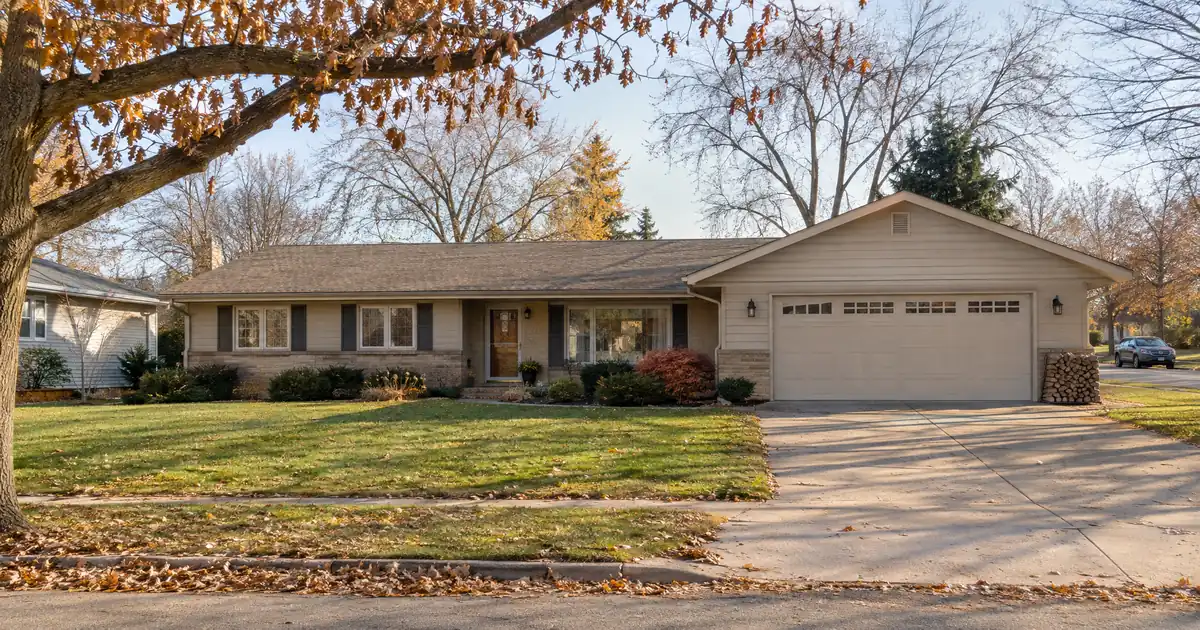
The Quick Read: Yes, loan to value is capped on a rental cash-out refinance. Across most of the wholesale lender network Lendmire places files with, the ceiling is about 75% of appraised value on a standard rental, below purchase leverage, and rent coverage, credit, reserves, and property type can pull your loan under that cap. No law sets the number. It is a lender guideline, and it protects the lender when equity leaves the property. Cash-out files are reviewed on two tests at once: enough equity and enough rent.
- Standard rentals: about 75% LTV on a cash-out, subject to lender guidelines.
- Short-term rentals: about 70% on a cash-out.
- Seasoning: about 6 months of ownership is the common expectation.
- Coverage: the new, larger payment must still pass the rent-coverage test.
- Real proceeds: the cap is a maximum, not a promise of cash.
What Does “Loan to Value” Mean on a Rental?
Loan to value (LTV) is the new loan balance divided by the property’s appraised value. A 75% LTV means the lender stands behind three-quarters of the value, and you keep the other quarter as equity. Combined loan to value (CLTV) adds any second mortgage to the first, so a second lien counts against the same ceiling. These specifics are subject to lender guidelines and a full review of property, leverage, and credit.
DSCR Cash-Out Calculator
Run the cash-out numbers in your market
Rate source: Freddie Mac 30-yr average via FRED® — Federal Reserve Bank of St. Louis · effective Oct 15, 2026
Prefilled with starting assumptions — enter your property’s value, balance, taxes, and insurance for a more accurate picture.
Program parameters update from Lendmire’s centralized guideline source. Taxes and insurance are editable estimates.
As of Oct 15, 2026 · General Freddie Mac market benchmark, not a Lendmire loan offer. Property value, balance, taxes, and insurance are editable estimates. Maximum loan-to-value varies by lender, program, property type, and seasoning. Not a Loan Estimate, approval, or commitment to lend. Program availability and eligibility are subject to lender guidelines, credit approval, property review, and underwriting.
The cap is a ceiling on the new loan, not on what you walk away with. Your cash out is the capped loan minus your existing payoff and closing costs. A rental with a lot of equity can still return less than you expect, because the lender requires you to leave a cushion in the property.
Why Is Cash-Out Capped Lower Than a Purchase?
Cash-out leverage sits below purchase leverage because pulling equity out is riskier for a lender than financing an acquisition. On a purchase, you put your own money in at the start. On a cash-out, money leaves the property, and the owner’s stake shrinks.
That is why most files in the network land at 75% to 80% LTV on a purchase but top out around 75% on a cash-out. Select high-leverage purchase programs reach 85% with a score around 700 or higher. Cash-out has no equivalent bump. A rate-and-term refinance, where no cash comes back to you, can run higher, up to 85% through select programs, because the loan balance isn’t growing.
Agencies draw the same line. Agency lenders cap investment-property cash-out below primary-residence cash-out, as Fortune’s investor explainer confirms. The Fannie Mae Eligibility Matrix shows the same step-down by occupancy and transaction type. Those limits apply only to loans sold to that agency. DSCR loans are business-purpose investor loans, reviewed differently from a standard owner-occupied mortgage, and each lender in the network sets its own ceiling.
Which Two Tests Set Your Maximum Loan?
Your loan is sized to the lower of two limits: the LTV ceiling and the amount your rent can support. Most investors only think about the first.
Test one is equity. Multiply the appraised value by the cap. For a standard rental, that is about 75%. Subtract your current payoff and closing costs, and what remains is the most the equity test allows.
Test two is coverage. The debt service coverage ratio (DSCR) is the property’s monthly rent divided by its monthly PITIA. PITIA means principal, interest, taxes, insurance, and any HOA dues. Arrived’s explainer gives the general definition. A bigger cash-out raises the payment, and a higher payment lowers coverage.
The math runs in reverse, too. Say your coverage is comfortable at today’s balance. If the new loan is 25% larger, the payment rises by roughly a quarter, and coverage falls by about a fifth. A file that clears at a modest cash-out can fail at the full ceiling.
Investor-education sites often cite 1.25 as a good benchmark. That is a general investor benchmark, not a program rule. In the network, 1.00 is where many select programs start. A separate select-lender path takes coverage below 1.00 with leverage and terms adjusted. Stronger coverage opens better pricing and leverage.
One caution on language. Clearing 1.00 is not the same as positive cash flow. DSCR counts rent against PITIA only, so repairs, vacancy, management, utilities, and capital expenses sit outside the calculation.
Worked Example: Equity Versus Accessible Cash
Run the numbers on a standard rental using percentages of value. These inputs are modeled assumptions, not market data.
1. The property appraises at 100% of value. 2. Your current loan balance is 45% of value. 3. The cash-out ceiling is 75% of value, so the equity test allows up to 30% of value in new money before costs. 4. Closing costs come out of that 30%, and the remainder is your estimated proceeds. 5. The coverage test then checks whether rent supports the larger loan. 6. Reserves, commonly around 6 months of PITIA, must be on hand. Larger loans can require more.
Appraisal movement matters more than most investors expect. The balance you owe does not change, so a lower value hits your proceeds harder than it hits the loan. If the appraisal comes in 5% lower, the maximum loan falls by 5% of itself, but your cash out shrinks by a larger share. Lendmire’s piece Appraisal Came In Low on a Rental Property Refinance: Rate-and-Term vs Cash-Out at the Lower Value walks through the rate-and-term versus cash-out choice at the lower value.
How Cash-Out Size Changes Your Coverage
Here is a modeled illustration. It assumes a rental with a starting coverage of about 1.50x at a 55% loan. Taxes and insurance don’t change with loan size, so the real drop is a little gentler than shown.
| Loan as % of value | Modeled coverage | Read |
|---|---|---|
| 55% | About 1.50x | Strong cushion, modest proceeds |
| 65% | About 1.27x | Solid, meaningful proceeds |
| 75% | About 1.10x | At the cap, thin cushion |
| 75% with weaker rent | Below 1.00x | Select-lender path, adjusted terms |
The last row matters. Coverage below 1.00 is available through select lenders in the network, with leverage and terms adjusted. Eligibility still depends on credit approval, property review, and lender guidelines.
Where Does the General Rule Bend?
The 75% figure applies to a standard rental held in good standing. Several situations move it.
| Situation | What changes |
|---|---|
| 2–4 units | Ceilings often step lower than single-family |
| Short-term rental | Cash-out sits at about 70% |
| Recent purchase | Cost basis can limit proceeds |
| Free and clear | Any new loan counts as cash-out |
| Second lien | Combined LTV counts against the cap |
| Very large loan | Reserves and term structure tighten |
Short-term rentals. The cash-out ceiling is about 70% on short-term-rental collateral, versus about 75% on standard rentals. Expect a score of 640 or higher, about 12 months of hosting history, and a 1.00 coverage floor on the refinance. Short-term rental rules can vary by city, county, HOA, and property type, so investors should confirm local rules before relying on projected rental income.
Recent purchases. Inside the seasoning window, usually about 6 months from title recording, many lenders size the loan on the lower of cost or appraisal. After that, they use appraised value. Seasoning is lender policy and varies, so a file with a bridge or hard-money loan can often refinance right away. Pulling extra cash inside the window depends on the lender.
Delayed financing for cash buyers. Some lenders waive the waiting period, not the underwriting. Coverage, appraisal, reserves, and credit still apply, and proceeds are capped near documented cost. Whether it is offered, and on what terms, is up to the lender.
Free and clear. A rental with no mortgage feels like it should qualify for the higher no-cash-back ceiling. It doesn’t. Any new loan on an unencumbered property returns cash, so the cash-out cap governs.
Large loans. Standard programs run up to $3,000,000. Above $2,500,000, the network generally holds to 30-year fixed structures, and reserves commonly step up to about 9 months above $1,500,000.
Manufactured homes (single- and double-wide), log homes, and barndominiums are not offered in the network’s DSCR programs, regardless of leverage.
Does a Higher Credit Score Raise the Cap?
A higher score can unlock the top of the range, though it won’t push the cash-out cap past about 75%. A 620 floor exists in parts of the network. Most programs want around 660. A score of 700 or higher opens the strongest leverage tiers.
In practice, a weaker score more often lowers your ceiling or adjusts terms than it ends the file. A stronger score gets you the full cap. Nothing gets you past it.
Broker experience adds one pattern. Investors often focus on the appraisal and overlook the coverage line, then discover the lender sized the loan below the LTV ceiling. Running coverage at the full cash-out amount before ordering the appraisal usually shows which test will bind first. Lendmire’s article Rental Cash-Out Refinance for Investors Testing the Loan-to-Value Ceiling goes deeper on that approach.
Key Terms Defined
LTV (loan to value): the loan balance divided by the property’s appraised value.
CLTV (combined loan to value): the total of all liens divided by value.
Seasoning: the waiting period a lender wants after you acquire a property before cash-out leverage is measured on full appraised value.
PITIA: principal, interest, taxes, insurance, and association dues, the full monthly housing obligation.
DSCR: monthly rent used for lender review divided by PITIA, the rent-to-payment test used on investor loans.
Rate-and-term refinance: a refinance that changes the loan’s terms without returning cash at closing.
How Much Should You Pull?
The cap tells you the most you can borrow. It doesn’t tell you what you should borrow. A few questions help.
- What will the money earn? If the next property doesn’t clearly beat the cost of the new loan, a smaller cash-out may leave you better off.
- How thin is coverage at the cap? A file at 1.10x has little room for a rent dip or a payment increase.
- What are you giving up? Closing costs and a likely prepayment penalty reduce net proceeds.
- Are reserves intact? Proceeds don’t usually count toward the reserve requirement, so plan for it separately.
- Is a different structure better? Rate-and-term at higher leverage can fit an investor who needs no cash.
Many investors use the cash-out as the release valve in a buy, rehab, rent, refinance cycle.
For more on how these loans fit together, see the complete DSCR loans guide.
Common Mistakes
1. Assuming purchase leverage applies. Cash-out usually sits below it.
2. Treating the appraisal as the answer. A high value doesn’t help if coverage fails at the larger loan size.
3. Expecting full appreciation immediately. Inside seasoning, cost can govern.
4. Equating 1.00 coverage with profit. DSCR ignores repairs, vacancy, and management.
5. Forgetting the second lien. Combined leverage counts against the cap.
Frequently Asked Questions
Is there a hard cap on cash-out LTV for a rental?
Yes, though it is a lender guideline, not a law. On most files in the network, the ceiling is about 75% for a standard rental cash-out and about 70% for short-term-rental collateral. Programs change, and every file is underwritten individually.
Can I borrow more than the cap?
Not through the standard programs in the network. Some portfolio or proprietary products elsewhere may go higher, usually with different pricing and terms. Treat those as exceptions, because they depend on the lender.
Does owning the property free and clear change the cap?
No. A new loan on a property with no mortgage still returns cash, so the cash-out ceiling applies. The higher rate-and-term ceiling is reserved for refinances that return no cash.
What if my rent is low for the loan size I want?
Your loan gets sized down to what the rent supports. You can pull less, improve the rent, or look at a sub-1.00 path. Coverage below 1.00 is available through select lenders in the network, with leverage and terms adjusted, subject to credit approval and property review.
How long do I have to own the property first?
About 6 months is the common expectation across the network, measured from title recording. Inside that window, loans are generally sized on the lower of cost or appraisal. Some lenders accept shorter periods and some want longer, so seasoning varies by lender.
Next Steps
If you are buying or refinancing a rental property and want to see how the numbers work, Lendmire can help you compare DSCR loan options based on the property income, credit profile, leverage, and investor goals. Lendmire is a mortgage broker that arranges DSCR financing through select lenders in its wholesale network, across 41 markets, including Washington, D.C. Every figure here is subject to lender guidelines and full file review, and nothing here is a commitment to lend.
Investors weighing their equity options can start with Lendmire’s guide to cash-out refinance on an investment property.
About Lendmire
Lendmire is a non-QM mortgage brokerage (NMLS# 2371349) arranging DSCR investor loans in 41 markets, including Washington, D.C., through wholesale and investor-lending channels. DSCR loans are evaluated by the lender on rental income rather than personal income, subject to lender guidelines — a fit for LLC-owned portfolios, self-employed investors, and operators scaling beyond conventional loan caps. Recognized as a Scotsman Guide Top Mortgage Workplace in 2025 and 2026.
Get Started
Ready to find the right loan for you?
In about 30 seconds you can review financing options available for your investment property. No commitment required.
Informational only. Not a Loan Estimate, approval, or commitment to lend. Program availability and eligibility are subject to lender guidelines, credit approval, property review, and underwriting.
References
1. Fortune, Cash-out refi on investment property
2. Fannie Mae Eligibility Matrix
3. Arrived, Debt Service Coverage Ratio
This article is part of Lendmire’s investment property cash-out refinance program — full qualification details, guidelines, and scenarios live on the program page.
Related reading: How to Fund a Rental Remodel With a HELOC and Refinance to DSCR · DSCR Cash-Out Documentation After an Insurance Claim on a Rental · How Much Equity a DSCR Cash-Out Releases on a Newly Leased Rental
Brandon Miller
Founder & CEO, Mortgage Loan Originator, Lendmire LLC
- Mortgage Loan Originator · NMLS# 1129696 · Verify on NMLS Consumer Access
- North Carolina Real Estate Broker · License# 343312 · Verify on NCREC
- North Carolina Insurance Producer · License# 19053198 · Property, Casualty, Life, Health · Verify on NAIC SBS
- Lendmire LLC · Firm NMLS# 2371349 · Verify firm licensure
Compliance and disclosures. Lendmire (NMLS# 2371349) is a licensed mortgage broker and is not a direct lender, depository institution, financial advisor, or tax professional. Content in this article is general market analysis and educational information — not financial, legal, or tax advice for any specific situation. Lendmire does not guarantee loan approval; every transaction is subject to underwriting by the funding lender. Mortgage pricing and loan program guidelines are subject to change at any time without notice and vary by borrower characteristics, property type, and state regulations. Lendmire complies with Equal Housing Opportunity. Licensure verification: NMLS Consumer Access.