
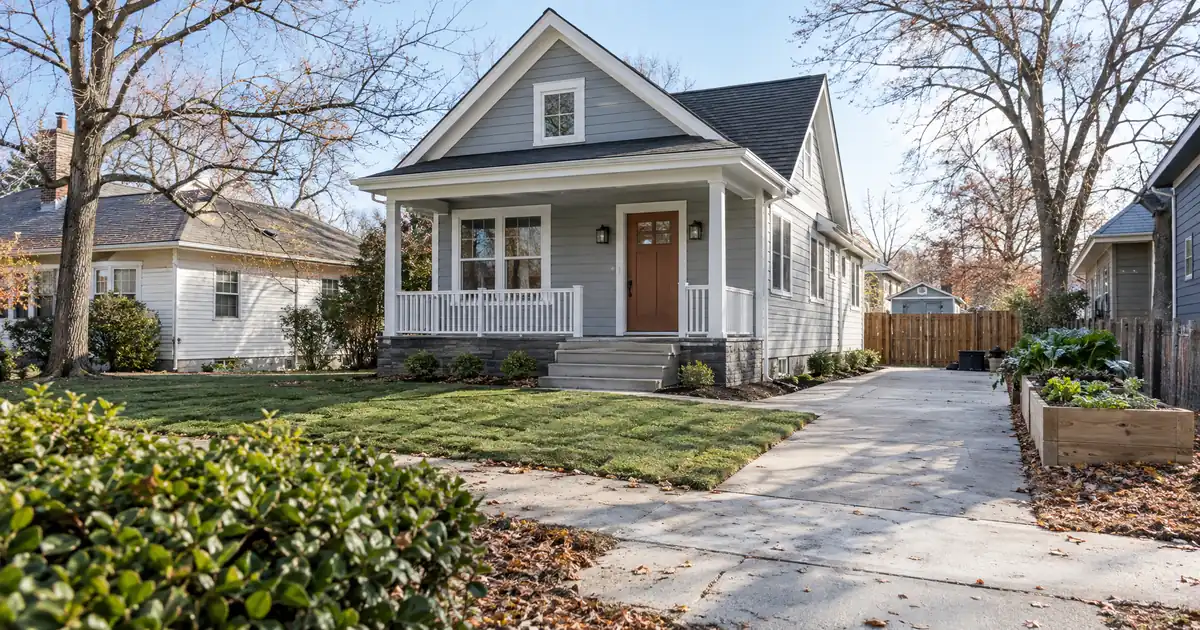
The Quick Read: Yes, usually, because hard money is a short-term, asset-based bridge loan that can fund both the purchase and the rehab of a rental property, as long as you have a refinance exit into long-term short-term-rental financing and the lender allows your planned use. Hard money is the bridge, not the permanent loan. You buy and renovate with it, then refinance once the property can show income.
- Typical leverage on a rehab deal is measured against project cost, tiered by completed projects, and always capped against after-repair value.
- Terms run 6-18 months, interest-only, so the renovation and your launch both have to fit inside that window.
- The permanent lender’s rules on hosting history, appraisal, and reserves decide whether the exit works.
- Confirm local short-term rental rules and your bridge lender’s stance on an operating Airbnb before you commit.
How Hard Money Works on an Airbnb Project
Hard money is a loan secured by the property itself. The lender cares most about the collateral, the rehab plan, and how you will pay it off. Your credit still matters, and a 620 minimum score is typical on the program we place files with, with extra conditions below 660. Underwriting stays asset-based, though. The lender looks at the property, the plan, and the exit.
What this loan actually costs to carry.
Hard money is sized against the project and priced by time. Enter the deal and see how much the program will lend, the cash required at closing, the carry while you hold it, and what is left at the exit.
Leverage tiers on the current program: 85% with fewer than 2, 90% with 2 or more, 93% with 5 or more completed projects — every tier capped at 75% of after-repair value. Loan amounts up to $5,000,000, larger by exception; terms of 6 to 18 months, interest-only, no prepayment penalty. The rehab portion funds in draws against completed work, not at closing.
Program parameters shown update from Lendmire’s centralized guideline source. Rate, points, and months are editable assumptions, not quoted terms.
Cost cap sets the loan · positive spread
Illustrative estimate only — not a quote, Loan Estimate, approval, or commitment to lend. Rate, points, and months are editable assumptions. Hard money is business-purpose financing for real estate investors, not a consumer mortgage. Leverage on the current program tops out at 93% of project cost for investors with a documented track record, capped at 75% of after-repair value, with rehab funding up to 100% of the documented budget released in draws; actual terms vary by lender, borrower experience, property, and exit. Lendmire is a mortgage broker, not a lender.
The loan usually comes in two pieces. One piece funds the purchase. The other funds the rehab budget, released in draws as work gets completed. A draw is a payout against finished work, often after an inspection. You front the early costs and get reimbursed as each stage is done.
Here is how the main pieces line up. Every figure varies by lender, property, and experience, and nothing here is a commitment to lend.
| Piece | Typical structure |
|---|---|
| Fix-and-flip purchase plus rehab | 85% to 93% of project cost, tiered by completed projects |
| Hard cap on any rehab tier | 75% of after-repair value |
| Bridge purchase, no rehab | Up to 80% of purchase price |
| Rehab budget | Up to 100% funded in draws against completed work |
| Term | 6-18 months, interest-only, no prepayment penalty |
The top tier, 93% of project cost, goes to investors with 5 or more completed projects. Two or more completed projects reach 90%. Fewer than two lands at 85%. Those are loan-to-cost figures, not purchase LTVs. The 100% rehab figure applies to the rehab budget only. Nothing in the network is a true 100% purchase program.
Key Terms Defined
Hard money: a short-term, interest-only loan secured by real estate, sized mostly on the property and the plan.
After-repair value (ARV): what the property is expected to be worth once the renovation is finished.
Loan-to-cost: the loan as a share of the total project cost, meaning purchase plus rehab.
Draw: a release of rehab funds after a stage of work is completed.
DSCR: the debt service coverage ratio, meaning the property’s rent divided by its full monthly obligation.
PITIA: principal, interest, taxes, insurance, and any association dues, which together form the payment in that ratio.
Seasoning: the waiting period or track record a lender wants before it will refinance a property.
When Hard Money Fits an Airbnb, and When It Doesn’t
Hard money fits when the property needs real work and a permanent lender won’t fund it as-is. It also fits when you need to move on a deal that standard financing can’t handle. It does not fit when the property is already furnished and operating. In that case a short-term-rental DSCR purchase can skip the bridge entirely.
| Situation | Better route |
|---|---|
| Heavy rehab, vacant or dated property | Hard money, then DSCR refinance |
| Light cosmetic updates | Often a DSCR purchase directly |
| Turnkey, already operating | Short-term-rental DSCR purchase |
| Thin reserves, no exit plan | Neither. Wait or choose a different deal |
Hard money is also a poor fit if the numbers only work at best-case occupancy. A bridge loan has a maturity date. Weak income at that date turns a project into a problem.
One more caution. Some bridge products are written for vacant properties and don’t allow an active, operating Airbnb during the loan. Others restrict certain locations. Ask your hard money lender in writing how it treats short-term rental use before you sign.
Check the Rules Before You Borrow
Short-term rental rules can vary by city, county, HOA, and property type, so investors should confirm local rules before relying on projected rental income. A property that can’t legally host guests has no exit. That is true even if the bridge loan closes without a hitch.
Do this before you submit an offer. Confirm whether short-term rentals are permitted. Ask what licensing or registration applies. Then ask your insurance agent whether the property can be covered for the way you plan to use it.
The Exit Is the Real Decision
The refinance is where these deals succeed or stall. Most investors plan the purchase carefully and the exit loosely, and it works better to do the opposite.
Start with how the permanent lender views income. Across our wholesale network, short-term-rental programs generally expect about 12 months of hosting history. On a purchase, select programs allow projected income. On a refinance, they usually want actual history, although how it is documented varies by program. Common documents are bank statements showing deposits, a management statement, or a platform income report. Some lenders will use an appraiser’s short-term-rental analysis instead.
An investor on a public BiggerPockets forum thread described exactly this squeeze. The buyer had purchased with hard money, rehabbed, and hosted for two months. The permanent lender wanted 12 months of rental history to use actual rent, or it would lean on the appraiser’s short-term-rental value. That is one investor’s account, not a rule. It shows why you ask the DSCR lender about history requirements before you pick the bridge.
Now the arithmetic of timing. A hard money term of 6-18 months has to cover the renovation, furnishing, listing, and any hosting history your permanent program wants. If the program asks for 12 months of hosting and your rehab takes half the term, the clock gets tight. There are no multi-year options on the current hard money program. Investors who need longer runway refinance into long-term rental financing.
Here is what the permanent short-term-rental program looks like on the network. All of it varies by lender, property, and borrower.
| Item | Typical range |
|---|---|
| Purchase leverage, short-term rental | Up to 75% LTV |
| Rate-and-term refinance, short-term rental | Around 70% LTV |
| Cash-out, short-term-rental collateral | 70% LTV |
| Credit score | About 640 or higher |
| Hosting history | About 12 months |
On a purchase, select programs start at 1.00 coverage. On a refinance, 1.00 is again where select programs start. A separate select-lender path takes coverage below 1.00, with leverage and terms adjusted. Stronger ratios open better pricing and leverage. Reserves commonly run around 6 months of PITIA, but they vary by lender, leverage, and loan size.
Clearing 1.00 is not the same as positive cash flow. DSCR compares rent to PITIA only. Repairs, vacancy, management, utilities, and furnishing replacement sit outside the ratio. That gap is bigger on short-term rentals, where cleaning and platform fees take a real bite.
Many investors refinance out of hard money into long-term DSCR financing once the property is stabilized, and Lendmire brokers that path. The complete DSCR loans guide covers how those loans are built.
A Worked Scenario
Picture an investor with two completed projects buying a dated cabin-style rental that needs a full rehab. The program sizes the loan at roughly 90% of project cost, still capped at 75% of ARV. The rehab money arrives in draws. The investor covers the early work, then gets reimbursed as stages pass inspection.
During the bridge term, the loan is interest-only. The property earns nothing until it is furnished and listed. That carry is a real cost, so the plan has to include it.
Now the exit. After renovation, the appraiser values the property. The refinance is sized on that new value, not the old purchase price. Say the short-term-rental program offers around 70% LTV on the refinance. If the appraisal lands at the ARV the investor projected, the new loan can pay off the bridge. If the appraisal comes in short, the investor either brings cash to the table or extends, if the bridge lender allows it. Every figure here varies by lender and program — guidelines, property type, leverage, and credit profile all apply.
That is why the 75% ARV cap on the bridge is useful, not annoying. It forces the deal to carry cushion. Then the DSCR test applies: the rental income, as the lender counts it, has to cover PITIA with room to spare. A property priced on peak-season bookings can look strong in July and thin in February. Underwrite the full year.
For investors who plan to pull capital back out after stabilizing, the network’s DSCR cash-out refinance tops out around 75% LTV on standard rentals, with about 6 months of seasoning as a common expectation. Short-term-rental collateral is more conservative, at 70% on a cash-out. Lendmire’s piece How to Use DSCR Cash-Out to Buy Out a Partner or Pay Off Hard Money covers the mechanics. Final terms depend on lender guidelines, property type, leverage, and the borrower’s complete credit picture.
What Can Go Wrong
| Risk | What to do about it |
|---|---|
| Rehab overruns | Build a cushion into the budget before closing |
| Appraisal below ARV | Keep leverage conservative; hold cash for the gap |
| Slow bookings | Underwrite low occupancy; ask about extension terms |
| Hosting history not met | Confirm what the permanent lender accepts first |
| Local rules block hosting | Verify before offering, not after |
Balloon risk is the one that hurts. A short-term loan comes due whether or not the refinance is ready. Ask your bridge lender about extension options and costs before closing. No prepayment penalty on the hard money program helps, since you can pay it off the day the refinance is ready.
Here is the honest view. Some investors are better off skipping the bridge. If the property is livable and the work is light, a purchase through a DSCR short-term-rental program avoids two sets of closing costs and a ticking maturity. Hard money earns its place when the property needs enough work that no permanent lender will touch it yet.
Hard Money Versus Other Ways to Fund the Deal
| Option | Best for | Main drawback |
|---|---|---|
| Hard money | Distressed property, rehab, bridge | Short term, refinance risk |
| DSCR purchase | Turnkey or lightly updated STR | Property must show or support income |
| Conventional second-home loan | Personal-use vacation home | Rent generally can’t help you qualify |
| All cash, then refinance | Investors with ample liquidity | Ties up capital |
A second-home mortgage is built for personal use, and the rental income generally can’t count toward qualifying. It rarely fits a renovate-and-host plan.
A Short Note on Business-Purpose Loans
Hard money and DSCR loans are designed for non-owner-occupied investment properties. Because they are business-purpose investor loans, they are reviewed differently from a standard owner-occupied mortgage. The CFPB’s Regulation Z page and the eCFR text describe the exemption for credit extended primarily for business purposes. In practice, you get fewer consumer-style protections, so read your loan terms yourself. If you buy through an LLC, that is allowed subject to lender program eligibility. Tax treatment varies, and you should consult a qualified professional.
Before You Close the Bridge Loan
- Get the permanent lender’s rules on hosting history, appraisal, reserves, and entity ownership first.
- Confirm the bridge lender’s stance on short-term rental use during the term.
- Ask about draw inspections, draw timing, and what you must front.
- Confirm extension options and what each costs.
- Stress-test income at low occupancy, then compare total carrying cost, not just the headline loan terms.
- Verify local rules and HOA restrictions.
Frequently Asked Questions
Can I buy an Airbnb with no money down using hard money?
No. There is no true 100% purchase program. The strongest tier funds up to 93% of project cost, capped at 75% of after-repair value, and it is reserved for investors with 5 or more completed projects. Up to 100% of the rehab budget can fund in draws. Everything varies by lender, property, and experience.
Does credit matter with hard money?
Yes, though less than on a conventional loan. A 620 minimum score is typical on the program we place files with, with additional conditions below 660. First-time investors qualify at lower leverage tiers. Underwriting weighs the property, the plan, and your exit more heavily than your income.
What if I can’t refinance before the term ends?
You need a fallback before you close. Options include an extension if the bridge lender offers one, bringing cash to cover an appraisal gap, or selling the property. Terms run 6-18 months, and there are no multi-year options on the current program. Ask about extension terms up front.
Can I use an LLC for this?
Often, yes. Entity ownership is allowed subject to lender program eligibility. The permanent lender may have its own vesting rules, so confirm them before the hard money closes.
Is hard money the same as a DSCR loan?
No. Hard money underwrites the collateral and the exit. A DSCR loan is reviewed primarily on property-level rental income covering the payment, subject to lender guidelines. They solve different stages of the same project.
If you are buying, rehabbing or refinancing an investment property on a short timeline and want to see how the numbers work, Lendmire can help you compare hard money options based on the project, the exit plan, leverage, and your goals, with financing arranged across 41 markets, including Washington, D.C.
For current guidelines and terms, see Lendmire’s DSCR loan programs page.
About Lendmire
Lendmire, NMLS# 2371349, is a mortgage brokerage focused on investor financing, arranging DSCR loans in 40 states plus Washington, D.C. — 41 markets total. Qualification is based on the property’s income rather than personal income documentation, subject to lender guidelines, making it a fit for LLC-held rentals and scaling portfolios. Scotsman Guide named Lendmire a Top Mortgage Workplace in both 2025 and 2026.
Get Started
Ready to find the right loan for you?
In about 30 seconds you can review financing options available for your investment property. No commitment required.
Informational only. Not a Loan Estimate, approval, or commitment to lend. Program availability and eligibility are subject to lender guidelines, credit approval, property review, and underwriting.
References
1. BiggerPockets forum: financing an Airbnb after hard money
2. CFPB, Regulation Z § 1026.3
This article is part of Lendmire’s hard money loan program — full qualification details, guidelines, and scenarios live on the program page.
Related reading: Hard Money Loan Requirements to Exit Seller Financing or Subject-to · How a Lender Reads a Seller-Carried Note on a Hard Money Loan · Can You Use a Hard Money Loan to Buy Out Siblings or a Partner?
Brandon Miller
Founder & CEO, Mortgage Loan Originator, Lendmire LLC
- Mortgage Loan Originator · NMLS# 1129696 · Verify on NMLS Consumer Access
- North Carolina Real Estate Broker · License# 343312 · Verify on NCREC
- North Carolina Insurance Producer · License# 19053198 · Property, Casualty, Life, Health · Verify on NAIC SBS
- Lendmire LLC · Firm NMLS# 2371349 · Verify firm licensure
Compliance and disclosures. Lendmire (NMLS# 2371349) is a licensed mortgage broker and is not a direct lender, depository institution, financial advisor, or tax professional. Content in this article is general market analysis and educational information — not financial, legal, or tax advice for any specific situation. Lendmire does not guarantee loan approval; every transaction is subject to underwriting by the funding lender. Mortgage pricing and loan program guidelines are subject to change at any time without notice and vary by borrower characteristics, property type, and state regulations. Lendmire complies with Equal Housing Opportunity. Licensure verification: NMLS Consumer Access.