
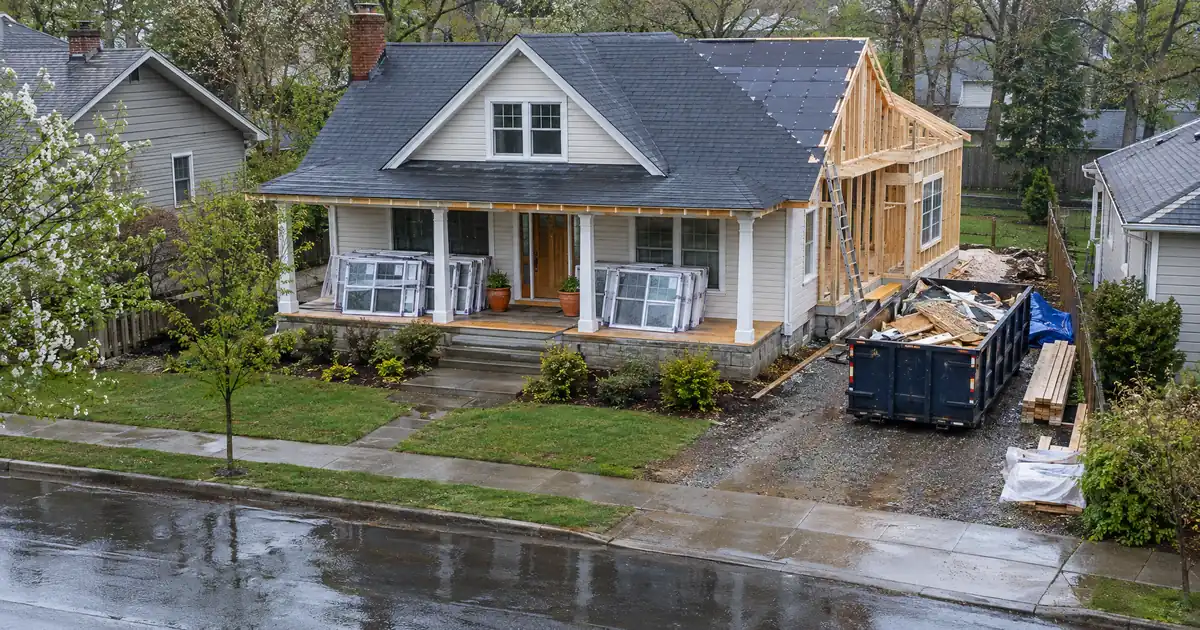
The Quick Read: It depends on the spread, because this kind of financing pays off only when the gap between your all-in cost and your resale price is wide enough to absorb interest, origination fees, and the extra months of carry that most projects pick up along the way. The loan is a tool for leverage and for buying properties banks pass on. It is not a source of profit.
- Gross flip returns have fallen over the past year, so the margin for error is thinner than it was.
- Leverage on these loans is sized on project cost and capped against after-repair value, so you still bring cash.
- Rehab money arrives in draws, so you front each phase before the lender reimburses it.
- Every extra month of interest-only carry comes straight out of your spread.
- If you plan to rent instead of sell, the real test is whether the refinance into long-term financing works.
What Does a Hard Money Fix-and-Flip Loan Actually Do?
It funds the purchase and the rehab of a non-owner-occupied house on a short, interest-only term. The lender reviews the property’s value after repairs, the renovation plan, and your exit instead of your income history. Across the wholesale network Lendmire works with, terms run 6 to 18 months, interest-only, with no prepayment penalty. Exact terms vary by lender, property, and experience.
What this loan actually costs to carry.
Hard money is sized against the project and priced by time. Enter the deal and see how much the program will lend, the cash required at closing, the carry while you hold it, and what is left at the exit.
Leverage tiers on the current program: 85% with fewer than 2, 90% with 2 or more, 93% with 5 or more completed projects — every tier capped at 75% of after-repair value. Loan amounts up to $5,000,000, larger by exception; terms of 6 to 18 months, interest-only, no prepayment penalty. The rehab portion funds in draws against completed work, not at closing.
Program parameters shown update from Lendmire’s centralized guideline source. Rate, points, and months are editable assumptions, not quoted terms.
Cost cap sets the loan · positive spread
Illustrative estimate only — not a quote, Loan Estimate, approval, or commitment to lend. Rate, points, and months are editable assumptions. Hard money is business-purpose financing for real estate investors, not a consumer mortgage. Leverage on the current program tops out at 93% of project cost for investors with a documented track record, capped at 75% of after-repair value, with rehab funding up to 100% of the documented budget released in draws; actual terms vary by lender, borrower experience, property, and exit. Lendmire is a mortgage broker, not a lender.
Collateral is a non-owner-occupied residential property of one to four units. A single-family house is the most common flip, and it is squarely in range. Loan amounts go up to $5,000,000, with larger by exception, and smaller balances vary by lender.
Lendmire is a mortgage broker. It arranges these loans through select lenders in its wholesale network, across 41 markets, including Washington, D.C. Nothing here is a commitment to lend.
How Much Will the Lender Fund?
Most files are sized on loan-to-cost, which is the loan as a share of purchase price plus rehab budget. Leverage depends on how many projects you have completed:
| Experience | Loan-to-cost | Hard ceiling |
|---|---|---|
| 5+ completed projects | Up to 93% of project cost | 75% of after-repair value |
| 2+ completed projects | Up to 90% of project cost | 75% of after-repair value |
| Fewer than 2 | Up to 85% of project cost | 75% of after-repair value |
The tighter of the two tests controls the loan amount. Bridge purchases with no rehab go up to 80% of purchase price. Up to 100% of the rehab budget is funded in draws against completed work. That is a rehab-budget figure, never a purchase LTV. All of these vary by lender, property, and experience.
You may see 100% financing advertised. There is no true 100% purchase program. The top leverage tier is reserved for experienced investors. Even the first tier leaves you funding the gap between the loan and project cost, plus every draw in advance.
On credit, 620 is the minimum score, with additional conditions below 660. First-time investors qualify at the lower leverage tiers. Underwriting stays asset-based, meaning property, plan, and exit, though a lender will still review credit and approve each file individually.
What Is the Real Cost of the Loan?
Interest is paid monthly on most flip loans, so total interest scales with how many months the loan stays open. Third-party and processing fees are where people often get surprised, because they come due at closing and depend on the property and the file.
| Cost piece | When you pay | What moves it |
|---|---|---|
| Interest | Monthly, during the term | Loan size and months open |
| Origination fees | At closing | Loan amount |
| Third-party and processing fees | At closing | Property and file |
| Carry costs (taxes, insurance, utilities) | Monthly | Months held |
| Selling costs | At sale | Sale price and market |
Notice that the interest line alone is not the cost. A cheaper-looking loan that runs three months longer than planned can cost more than a pricier one that finishes on schedule. Pricing varies by lender, property, and experience, and the calculator on this site gives an illustrative estimate, not a quote.
Why Is Gross Profit Not the Number You Keep?
Published flip profit figures are gross: resale price minus purchase price. HomeSage notes that renovation, loan, holding, and selling costs still come out of that figure.
The trend matters before you borrow. ATTOM’s Figures Friday feature on home flipping returns reports 77,991 flips, or 6.2% of home sales, with typical gross profit at $60,526, down from $71,000 a year earlier. A trade summary of the same data puts the typical gross return at 21.5%, down from 27.6% a year before, with margins falling in 126 of 186 metros.
For the full prior year, CNBC reported typical gross profit of $65,981, a 25.5% return. Gross is the ceiling, not the paycheck.
Does the Math Work on One Single-Family Flip?
Run the numbers on a modeled flip. These inputs are assumptions for illustration, not market data. Say you buy at 100 units and the gross spread matches the national typical of 21.5 units, as reported by the trade summary above.
Every cost below comes out of those 21.5 units:
- Rehab spend, including overruns.
- Interest for every month the loan is open.
- Origination and processing fees.
- Carry costs while the house sits.
- Agent and closing costs at sale.
If rehab and selling costs already take most of the spread, interest and fees take what is left. That is the whole “worth it” question in one line.
Now stress it. Take the same flip and let the schedule slip a few months. The resale price does not change, but interest and carry keep running, so the cushion shrinks. Then let the appraisal or buyer pool land a few percent under your plan. A thin spread can turn into a loss without any single mistake. A wide spread survives both.
Run the same flip with cash instead. Per-deal return is usually higher with cash, because you pay no financing cost. The loan earns its place when it lets you do two deals instead of one, or win a property a cash-poor buyer could not. If you cannot name which of those two it does, the loan is probably just a cost.
When Is It Worth It?
It tends to be worth it when most of these are true:
1. You bought below value. The spread was built at purchase, not hoped for at sale.
2. Your after-repair value is tight. It rests on recent sold comps in the same neighborhood, not on listings.
3. Your rehab scope is realistic. It carries a contingency, a commonly cited cushion being at least 5% to 10% of the budget.
4. Your timeline has slack. A 12-month loan with a 9-month plan has little spare room.
5. You have cash beyond the down payment. You will front each draw and cover carry.
6. You have a second exit. If the sale stalls, you can refinance or extend.
Price tier matters too. In ATTOM’s earlier quarterly report, homes bought under $50,000 typically lost money, at a 14% typical loss. Purchases between $100,000 and $200,000 produced the best typical margin, at 32%. Fixed fees take a bigger bite out of a cheap house’s spread.
When Should You Skip It?
Skip it when the profit depends on everything going right. Several situations deserve a hard no:
- A thin spread. If the gross margin is single digits after realistic rehab, financing will consume it.
- A guessed ARV. If you are not sure what the house sells for, the loan cap will not save you.
- A first project with a stretched budget. Without a contingency, one surprise behind a wall breaks the deal.
- A market with no buyer depth. National averages say little about your street. Among large metros, HomeSage reports flip margins ranged widely, from strongly profitable in Pittsburgh to a small loss in San Antonio.
That last point is the one to remember. A national average predicts nothing about your deal. Price your own comps.
How Do Draws Change Your Cash Needs?
A hard money lender pays out what is in the approved budget, and draws are reimbursements against completed work. You pay the contractor for a phase, the work is verified, and the lender releases that portion. Then you start the next phase.
This is why “up to 100% of the rehab budget” does not mean zero cash. It means the budget is eligible to be funded, in installments, after the work is done. Plan your cash for the gap between draws, especially if inspections run slow.
In practice, a flip loan file is often won or lost in the budget. Lenders in the network want to see line items, a contractor with a track record, and a contingency. Pattern-wise, files with a loose scope tend to come back for revisions, and files with sloppy ARV support tend to get the lower of the two caps applied. A first-time flipper who walks in with a clean scope and tight comps often gets a better conversation than one with a bigger budget and a vaguer plan.
What Happens After the Rehab: Sell or Hold?
Your exit decides whether the loan worked. There are two paths, selling or holding, and the right choice should be made before you close, not after the work is done.
Sell. The loan is repaid from sale proceeds. Every month of delay is interest you pay.
Hold. You lease the house and refinance into long-term financing. Many investors refinance out of hard money into long-term DSCR financing once the property is stabilized, and Lendmire brokers that path. A DSCR loan is reviewed primarily on property-level rental income covering the payment, subject to lender guidelines. Lendmire’s complete DSCR loans guide covers how that works.
Here are the parameters that matter for a flip-to-rental exit, all typical across the network and subject to lender guidelines:
- Cash-out refinance on a standard rental: tops out around 75% LTV across most of the network.
- Seasoning: about 6 months is the common expectation, so a hard money loan that expires first leaves you needing an extension.
- Coverage: 1.00 is where many select programs start. A separate select-lender path takes coverage below 1.00, with leverage and terms adjusted.
- Credit: most programs want around 660, and 700 or higher unlocks the strongest leverage tiers.
The refinance has its own break-even test. Your new loan must repay the hard money payoff plus exit costs. At a 75% cap, the break-even appraisal is the payoff plus exit costs, divided by 0.75. Each point of appraised value you lose cuts the new loan by 0.75 of a point, while the payoff does not move. A modest appraisal miss therefore hurts more than it looks, and it can shrink or erase your cash back.
Clearing 1.00 is also not the same as positive cash flow. DSCR compares rent to the full monthly housing obligation only (principal, interest, taxes, insurance, and any HOA dues). Repairs, vacancy, management, utilities, and capex sit outside the calculation.
Hard Money vs. Cash vs. Other Financing
Compare the options on the same house:
| Factor | Hard money flip loan | All cash | Bank loan |
|---|---|---|---|
| Underwriting focus | Property, plan, exit | None needed | Borrower income and credit |
| Rehab funding | Draws after work | You pay all | Often limited on distressed homes |
| Leverage | Up to 93% of project cost (top tier) | None | Varies by program |
| Per-deal return | Lower, after financing costs | Higher | Varies |
| Fit | Distressed buys, thin cash | Plenty of liquidity | Move-in-ready properties |
An investor with plenty of cash and one deal in front of them often does better paying cash. An investor who wants to run several projects, or who needs cash for contingencies, may find the loan worth the cost.
What If the House Does Not Sell?
You have three realistic choices: extend, refinance, or cut the price. An extension usually carries a fee, and the cost stacks onto months of interest you are already paying. Refinancing into a rental loan works if the property is finished and leased, or if the appraisal supports strong market rent on a rent schedule.
A vacant house is harder to refinance on rent alone, because the appraiser has to support the rent for it. Cutting the price is the cleanest exit and often the least painful, but it must be decided before carry costs consume the margin.
The refinance route also carries appraisal and seasoning risk. The network figure is about 6 months, subject to lender guidelines. If your hard money loan matures first, you need a fallback, and the fallback costs money.
Key Terms Defined
After-repair value (ARV): The estimated market value of the house once renovations are finished.
Loan-to-cost: The loan amount as a share of purchase price plus rehab budget.
Draw: A payment released by the lender after a phase of work is completed and verified.
Carry: The monthly cost of holding a property, including interest, taxes, insurance, and utilities.
Interest-only: A loan structure where you pay only the interest each month and repay principal at payoff.
Seasoning: The waiting period a lender wants between buying a property and refinancing it.
DSCR: Debt service coverage ratio, which compares a property’s rent to its full monthly housing payment.
PITIA: Principal, interest, taxes, insurance, and association dues, the payment a DSCR ratio is measured against.
Frequently Asked Questions
Can a first-time flipper use a hard money loan?
Yes, at the lower leverage tiers. First-time investors typically land in the tier at up to 85% of project cost, with the 75% of after-repair value cap still applying. The top tier is reserved for experienced investors. Lenders look hard at the scope of work, the budget, and the exit plan, so a first-timer should arrive with all three documented. Terms vary by lender, property, and experience.
What credit score do I need?
The minimum score is 620, with additional conditions below 660. Underwriting stays asset-based, so the property, the plan, and the exit matter as much as the score. A higher score can improve the conversation, but nothing here promises approval. Each file is reviewed individually, and exact requirements vary by lender.
Can I pay the loan off early?
Yes. The program has no prepayment penalty, so you can sell or refinance early without a fee for paying off sooner. You still pay interest for the months the loan is open and any fees charged at closing. Terms are interest-only and vary by lender and property.
Can I flip a house with no money down?
Not in the way advertising suggests. There is no true 100% purchase program. Even at the highest tier, the loan covers up to 93% of project cost, and draws are reimbursements against completed work. You will need a down payment, reserves for carry, and cash to front each phase.
Is a hard money loan worth it if I plan to keep the house?
It can be, if the refinance into long-term financing works. The test is the appraisal and the rent. Lenders in the network typically cap a cash-out refinance on a standard rental around 75% LTV and expect about 6 months of seasoning. Check that your numbers clear before you close the hard money loan, not after.
Quick Next Steps
Before you borrow, run three checks. First, price your own comps and set a resale number you would still accept in a soft market. Second, add the rehab budget with a contingency and extend your timeline by a few months. Third, decide whether you are selling or holding, and confirm the second exit.
If you are buying, rehabbing, or refinancing an investment property on a short timeline and want to see how the numbers work, Lendmire can help you compare hard money options based on the project, the exit plan, leverage, and your goals. Reach the team at 828-256-2183 or request a quote through the site.
Tax treatment varies; consult a qualified professional before relying on any deduction.
The spread you lock in at purchase, not the loan you choose, is what makes a flip worth financing.
About Lendmire
Lendmire, NMLS# 2371349, is a non-QM mortgage broker serving real estate investors in 41 markets, including Washington, D.C., through DSCR investor loan programs. Qualification is generally reviewed around the subject property’s rental income, not the borrower’s W-2 history — a practical fit for LLC-titled portfolios and self-employed investors. All scenarios remain subject to lender review and program guidelines. Two consecutive Scotsman Guide Top Mortgage Workplace recognitions (2025, 2026).
Hard money often opens the deal, and a refinance typically closes the chapter – see the hard money loan overview.
Get Started
Ready to find the right loan for you?
In about 30 seconds you can review financing options available for your investment property. No commitment required.
Informational only. Not a Loan Estimate, approval, or commitment to lend. Program availability and eligibility are subject to lender guidelines, credit approval, property review, and underwriting.
References
1. HomeSage: is flipping houses still profitable
2. ATTOM: Figures Friday on home flipping returns by metro
3. Wrenews: summary of ATTOM’s latest flipping data
4. CNBC: home flippers see smallest profits since the Great Recession
5. attomdata.com: Q1 Home Flipping Report
This article is part of Lendmire’s hard money loan program — full qualification details, guidelines, and scenarios live on the program page.
Related reading: Can You Get an Interest-Only Hard Money Loan for a Fix and Flip? · Can Hard Money Cover a Fix and Flip Purchase? · Can Hard Money Pay for Fix and Flip Rehab Through Draws?
Brandon Miller
Founder & CEO, Mortgage Loan Originator, Lendmire LLC
- Mortgage Loan Originator · NMLS# 1129696 · Verify on NMLS Consumer Access
- North Carolina Real Estate Broker · License# 343312 · Verify on NCREC
- North Carolina Insurance Producer · License# 19053198 · Property, Casualty, Life, Health · Verify on NAIC SBS
- Lendmire LLC · Firm NMLS# 2371349 · Verify firm licensure
Required disclosures. Lendmire (NMLS# 2371349) operates as a licensed mortgage broker, not a direct lender or depository. The discussion in this article is general in nature and should not be relied upon as financial, legal, or tax advice — every investment scenario is unique and should be reviewed by a qualified professional. Any loan inquiry is subject to lender underwriting, and this article is not a commitment to lend or a guarantee of approval. Mortgage rates, loan terms, and program guidelines vary by borrower, property, and state, and may change without notice. Equal Housing Opportunity. Verify licensure at NMLS Consumer Access.