
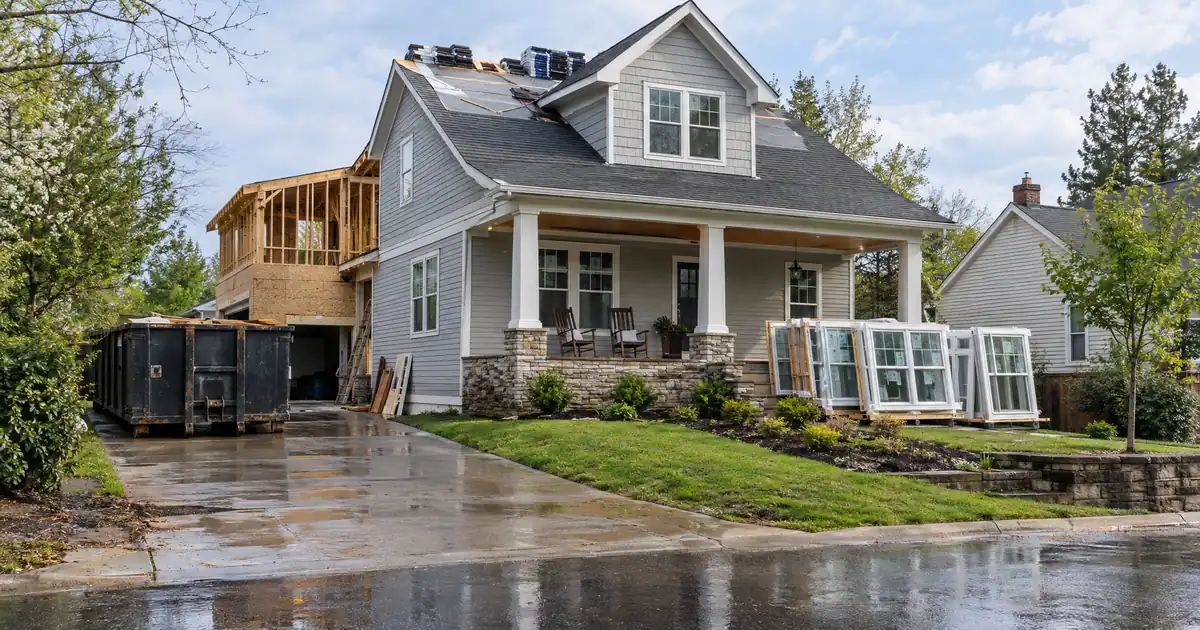
The Quick Read: Yes, an investor can hold two hard money bridge loans at once, because no universal rule caps the count, as long as each loan is reviewed on its own property and exit plan and the borrower’s total cash, experience, and repayment capacity still hold up. The real limit is each lender’s appetite and your own liquidity, not a number written into law.
- Two loans on two different properties is the normal, common version of this question.
- Two loans on the same property, a first and a second lien, is rare and many lenders refuse it.
- Every loan is judged on its own collateral, then on your whole portfolio.
- Each bridge needs its own exit, so two bridges mean two maturity clocks running together.
- Hard money terms run 6-18 months, so overlapping loans can collide at payoff.
What Does “Hard Money Bridge Loan” Mean Here?
The phrase blends two ideas. “Hard money” describes how the loan is underwritten: on the property, the plan, and the exit rather than on personal income. “Bridge” describes the purpose: short-term money that carries an investor from purchase or rehab to a sale or a long-term refinance. In practice the two terms overlap, and most investors use them for the same product.
What this loan actually costs to carry.
Hard money is sized against the project and priced by time. Enter the deal and see how much the program will lend, the cash required at closing, the carry while you hold it, and what is left at the exit.
Leverage tiers on the current program: 85% with fewer than 2, 90% with 2 or more, 93% with 5 or more completed projects — every tier capped at 75% of after-repair value. Loan amounts up to $5,000,000, larger by exception; terms of 6 to 18 months, interest-only, no prepayment penalty. The rehab portion funds in draws against completed work, not at closing.
Program parameters shown update from Lendmire’s centralized guideline source. Rate, points, and months are editable assumptions, not quoted terms.
Cost cap sets the loan · positive spread
Illustrative estimate only — not a quote, Loan Estimate, approval, or commitment to lend. Rate, points, and months are editable assumptions. Hard money is business-purpose financing for real estate investors, not a consumer mortgage. Leverage on the current program tops out at 93% of project cost for investors with a documented track record, capped at 75% of after-repair value, with rehab funding up to 100% of the documented budget released in draws; actual terms vary by lender, borrower experience, property, and exit. Lendmire is a mortgage broker, not a lender.
On the current program, these loans are business-purpose, interest-only, and run 6-18 months with no prepayment penalty. They cover non-owner-occupied residential property of 1-4 units, with ground-up construction going to 10 units. Loan sizes reach up to $5,000,000, and larger loans are handled by exception. All of this varies by lender, property, and experience, and none of it is a commitment to lend.
One disambiguation. Some search results treat “two bridge loans” as a homeowner’s problem: carrying a bridge on a home being sold while buying the next one. This article is about the investor version only, with business-purpose loans on investment property.
Is There a Limit on How Many Hard Money Loans You Can Hold?
There is no formal cap. Hard money is private, business-purpose lending, so it does not run under the property-count rules that shape agency-style mortgages. Each lender writes its own policy, and some set no loan-count limit at all.
The limit shows up in practice instead. A lender reviewing a second request asks four questions:
1. Does this property stand on its own?
2. Does the borrower have the cash to carry two projects?
3. Has the borrower finished similar projects before?
4. Is there a believable way out of each loan?
If every answer is yes, the count matters very little. If any answer is shaky, one loan can be too many. Count is a symptom. Exposure and execution are the actual test.
That is also why a lender who says “it depends” is not dodging. Across the wholesale network Lendmire places files with, the same borrower can get a clean yes on a second deal from one lender and a pass from another. The difference is usually the lender’s own exposure to that borrower, not the deal.
How Do Lenders Evaluate a Second Loan?
Lenders underwrite each loan separately on its own collateral, then step back and look at the whole portfolio. The second request is judged both ways. Here is what each side of that review looks like.
| Factor | What the lender checks | What to prepare |
|---|---|---|
| Per-deal leverage | Loan against cost and after-repair value | Purchase contract, rehab budget |
| Deal quality | Price, scope, after-repair value | Comps, contractor bids |
| Exit plan | Sale or long-term refinance | Written primary and backup exit |
| Liquidity | Cash after both deals are funded | Recent asset statements |
| Experience | Completed projects | Project history, photos, closings |
| Entity | Who owns and who guarantees | Operating agreement, ownership chart |
| Existing loans | Payment and draw history on loan one | Current payoff and draw status |
Leverage depends on experience. On a fix-and-flip, leverage is tiered by documented completed projects. The program runs up to 93% of project cost at 5+ completed projects, 90% of project cost at 2+, and 85% with fewer than 2. Every tier is capped at 75% of after-repair value. A bridge purchase with no rehab goes up to 80% of purchase price. A refinance goes up to 65% of value. Up to 100% of the rehab budget funds in draws against completed work.
That means a second loan is not just a second yes. If your project count is low, your leverage on loan two is lower, and you need more cash in the deal. The top tier belongs to experienced investors.
Credit matters, but less than collateral. The program asks for a 620 minimum score, with additional conditions below 660, and first-time investors qualify only at the lower leverage tiers. Underwriting stays asset-based, meaning property, plan, and exit.
The Schedule of Real Estate Owned
The portfolio view usually runs through a Schedule of Real Estate Owned, often called the SREO. It lists every property you own and the debt against each. Underwriters use it to see how many projects you are managing and whether the whole picture adds too much risk. A clean, current SREO is the single best thing to hand over with a second request.
Why Would an Investor Run Two at Once?
Investors stack bridges because projects overlap, and waiting for loan one to clear can cost the next deal. Three situations come up most often.
Overlapping flips. Picture an investor with a rehab in the middle of its budget who finds a second distressed property. Waiting for the first sale could lose the second deal. Two loans, two budgets, two exits.
A BRRRR pipeline. Say you own a rental that is rehabbed and leased but not yet seasoned for a refinance. A new purchase appears before the first one pays off. The bridge on the first property stays open while a new bridge funds the second.
Acquiring while a takeout is pending. An investor may be waiting on appraisal and rental coverage for a long-term refinance on property one. Loan two funds a different asset in the meantime.
The cost is real, though. You carry two interest-only obligations, two rehab budgets, and two sets of refinance risk at the same time. Hard money exists to move at the pace of a deal, but it is the expensive end of the debt stack, and stacking it magnifies every mistake.
What About Two Loans on One Property?
Two loans on the same property means a first lien and a second lien, and that is a different animal. Few hard money lenders write second-position loans because the risk is high. Some first-position lenders forbid any other lien on the property in their loan documents. It is legal in the abstract and unusual in practice.
When it does happen, the trigger is typically a gap. A low appraisal leaves a hole between what the first lender will fund and what the deal needs. If your plan relies on a second lien, treat that as a structure question to settle with the first lender before you sign anything. For the broader version of that problem, Lendmire’s piece How to Structure Gap Money Across Two Hard Money Rehabs at Once walks through the options.
Same Lender or Two Different Lenders?
It depends on whether you want a relationship or independence. Both work, and each has a catch.
| Factor | Same lender | Two lenders |
|---|---|---|
| Terms | May improve with repeat business | Each priced on its own |
| Linked collateral | Cross-collateral clauses possible | Loans stay separate |
| Exposure cap | One lender may hit its own limit | Spreads the exposure |
| Paperwork | Simpler, lender already knows you | Two full files |
| Default risk | Trouble on one note can spill over | Contained to one lender |
The word to watch is cross-collateralization. Wikipedia defines it as using one asset to secure more than one loan, or several assets to secure one. A same-lender pair of bridges can be linked that way. Hard Money First notes that some hard money lenders allow it, that it risks losing collateral on default, and that a lender who permits it can be hard to find. Nav adds that linking can improve terms but puts more assets at risk and limits future borrowing options.
Some clauses also carry cross-default language, which means trouble on one loan can put the other in default. Read the loan documents for any wording that ties the notes together before you accept better pricing. A modest discount is not worth a clause that can freeze both properties.
A Worked Example: Overlapping Maturities
Here is a simple timeline with modeled assumptions, not market data. An investor funds loan A on a rehab with a 12-month term. Four months later, loan B funds on a second property, also with a 12-month term. The maturities now sit four months apart.
Loan A’s plan is to rehab, lease, and refinance into a long-term rental loan. Loan B’s plan is similar. On the long-term side, cash-out refinances in the Lendmire network tend to top out around 75% LTV on a standard rental, and about 6 months of seasoning is the common expectation. The clock runs from title recording, not from the day a lease is signed.
Now run the collision test. If loan A’s rehab slips, its refinance slides toward maturity. That is the moment loan B needs cash for its own draws and interest. Two problems land in the same window, and one liquidity cushion has to cover both.
The staggered alternative is to fund loan B only after loan A’s rehab is substantially complete, or to choose a longer term on loan B so maturities sit further apart. You lose some overlap. You also gain room to absorb a delay.
Lendmire’s article Can You Refinance Two Hard Money Loans at Once? covers what the takeout looks like when both bridges end together.
The Exit Plan Is the Real Constraint
Every bridge needs its own exit from day one. Two bridges mean two exits, and for a buy-and-hold investor the usual exit is a refinance into long-term DSCR financing once the property is stabilized. Lendmire brokers that path through its wholesale network, and the complete DSCR loans guide explains how those programs work.
Two points matter when you plan two takeouts at once.
First, you need two separate files. That means two appraisals, two rent figures, and two seasoning clocks. The long-term lender sizes each takeout on its own appraisal and its own rent, not on your after-repair estimate and not on what the old bridge cost to carry.
Second, coverage is not cash flow. DSCR compares rent to the full housing payment of principal, interest, taxes, insurance, and any HOA dues. Clearing 1.00 does not mean the property is profitable, because repairs, vacancy, management, utilities, and capital expenses sit outside the calculation. Select programs start at 1.00, and stronger coverage opens better terms and leverage. Model both exits with conservative rent before you take the second bridge, not after.
A backup exit helps too. If the refinance stalls, a sale should still pay off the loan. If neither works, you face extension fees or default pressure, and that is the exact scenario stacking makes worse.
Risks to Manage When You Hold Two
Four risks account for most of the trouble with stacked bridges.
- Liquidity strain. Two interest-only loans and two draw schedules drain cash from the same pool. Stress-test the pool by assuming both projects run over budget and one exit slips.
- Exit collision. Maturities that land near each other leave no room for a delay. Stagger them where you can.
- Cross-default. If the loans are linked, a problem on one note can touch the other. Read the clauses.
- Extension planning. An extension costs money and is not a right. Ask each lender how extensions work before you need one.
The tradeoff is simple. Overlap speeds up your pipeline but narrows your margin for error. A solid investor with deep reserves can run two comfortably. An investor with thin cash and a first project that is behind schedule is better off waiting.
Key Terms Defined
SREO (Schedule of Real Estate Owned): A list of every property you own and the debt tied to each one, used by underwriters to see your total exposure.
Cross-collateralization: A structure where one property secures several loans, or several properties secure one loan.
Cross-default: A clause under which trouble on one loan can place another loan in default.
Loan-to-cost: The loan amount divided by the total project cost, which is how hard money leverage is usually measured on a flip.
Takeout: The refinance or sale that pays off a bridge loan at the end of its term.
Before You Ask for a Second Loan
Run through this list first.
1. Is the first project on budget and on schedule?
2. Can you cover both loans’ interest and draws if both exits slip?
3. Does the second property qualify on its own cost and after-repair value?
4. Do you have a written primary exit and a backup exit for each loan?
5. Is your SREO current and clean?
6. Have you read the loan documents for cross-collateral and cross-default language?
7. Do the two maturities leave a gap between them?
8. Is each property held in the entity you intend, with clear guarantor roles?
If you answered no to the first, second, or fourth question, wait. A second loan on top of an unresolved first project is where the stack goes wrong. Tax treatment varies by how funds are used and how property is held; consult a qualified professional before relying on any deduction.
Next Step
If you are buying, rehabbing, or refinancing an investment property on a short timeline and want to see how the numbers work, Lendmire can help you compare hard money options based on the project, the exit plan, leverage, and your goals. As a broker, Lendmire arranges these loans through select lenders in its wholesale network across 41 markets, including Washington, D.C. Final terms depend on the lender, the property, and your experience, and nothing here is a commitment to lend.
Frequently Asked Questions
Is there a legal cap on how many hard money loans I can have?
No universal cap appears in any rulebook. Hard money is private, business-purpose lending, so the limit is each lender’s own exposure policy plus your liquidity and track record. Some lenders set no loan-count limit and look only at whether each deal qualifies.
Do I need a different lender for the second loan?
Not necessarily. A single lender can write both loans, and repeat business sometimes improves terms. The catch is that one lender may reach its own exposure limit, and loans from the same lender can be linked by cross-collateral or cross-default clauses. A second lender keeps the loans separate but means a second full file.
Will a second loan affect my first one?
It can in two ways. The lender on loan one may care if you take on debt that strains your liquidity, depending on its documents. And if both loans share a lender with cross-default language, trouble on one note can reach the other. Check the loan documents before you add debt.
What happens if my first exit is delayed while the second loan is funded?
You carry two loans on one cash cushion. That is why each bridge needs a backup exit, such as a sale, and why you should know the extension terms in advance. Extensions typically cost money and require lender approval, so they are a plan B, not a guarantee.
Is this the same as a homeowner’s bridge loan?
No. A homeowner’s bridge usually carries someone from selling one home to buying another. The investor version is a business-purpose loan on non-owner-occupied property, underwritten mainly on the asset, the plan, and the exit. The two products have different purposes and different borrowers.
For current guidelines and terms, see Lendmire’s DSCR loan programs page.
About Lendmire
A DSCR-focused mortgage broker, Lendmire (NMLS# 2371349) places investor financing across 41 markets — 40 states plus Washington, D.C. — with DSCR eligibility generally reviewed by the lender on property cash flow instead of traditional personal-income documentation, subject to lender guidelines. Scotsman Guide named Lendmire a Top Mortgage Workplace in 2025 and 2026.
Get Started
Ready to find the right loan for you?
In about 30 seconds you can review financing options available for your investment property. No commitment required.
Informational only. Not a Loan Estimate, approval, or commitment to lend. Program availability and eligibility are subject to lender guidelines, credit approval, property review, and underwriting.
References
1. Wikipedia – Cross-collateralization
2. Hard Money First – Cross-collateralization glossary
3. Nav – Cross collateralization
This article is part of Lendmire’s hard money loan program — full qualification details, guidelines, and scenarios live on the program page.
Related reading: Hard Money vs Bridge Loan: Term Length and Closing Timeline · Do You Need Flip Experience for a Hard Money Loan? · Should You Use a Hard Money Lender for a Single Family Investment Home?
Brandon Miller
Founder & CEO, Mortgage Loan Originator, Lendmire LLC
- Mortgage Loan Originator · NMLS# 1129696 · Verify on NMLS Consumer Access
- North Carolina Real Estate Broker · License# 343312 · Verify on NCREC
- North Carolina Insurance Producer · License# 19053198 · Property, Casualty, Life, Health · Verify on NAIC SBS
- Lendmire LLC · Firm NMLS# 2371349 · Verify firm licensure
Disclosure information. Lendmire is a state-licensed mortgage brokerage under NMLS# 2371349. Lendmire is not a depository institution, direct lender, or financial advisor — all loans referenced are placed through wholesale lender partners and are subject to each lender's underwriting standards. This article is provided for general informational purposes and is not a commitment to lend, nor does it constitute financial, legal, or tax advice. Loan programs, terms, rates, and qualification standards change without notice and depend on borrower profile, property type, and the state in which the subject property is located. Equal Housing Opportunity provider. NMLS Consumer Access: nmlsconsumeraccess.org.