
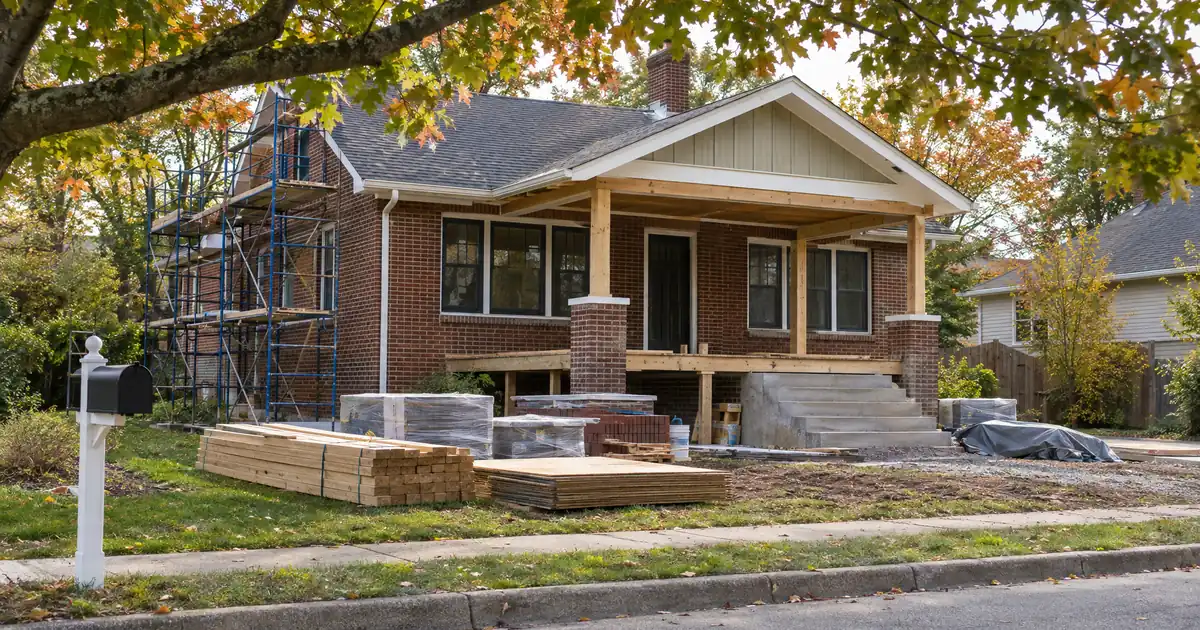
The Quick Read: Yes, a self-employed borrower can usually qualify for a hard money bridge loan, because lenders in this space underwrite mainly on the property, the project plan, and the exit strategy rather than on tax-return income, though they still review credit, experience, cash reserves, and entity documents, subject to lender guidelines and the borrower’s profile. Your business structure is not the deciding factor. The deal is.
- Underwriting centers on the property’s value, your equity or cost basis, and a believable plan to pay the loan off.
- Across Lendmire’s wholesale network, a 620 credit score is the typical minimum, with added conditions below 660.
- Leverage depends on your track record of completed projects, so first-time investors sit at the lower tiers.
- The balloon payoff makes your exit plan the most important part of the file.
- Hard money is business-purpose only: non-owner-occupied investment property, never your own home. Terms vary by lender guidelines, property type, leverage, credit profile, and full file review.
Why Self-Employment Stops Being the Problem
Bank underwriting asks one question: can your income carry the payment? Self-employed people often answer that badly on paper. Write-offs shrink net income, and the lender reviews your file on the net figure. A business that grosses well can still show modest taxable income.
What this loan actually costs to carry.
Hard money is sized against the project and priced by time. Enter the deal and see how much the program will lend, the cash required at closing, the carry while you hold it, and what is left at the exit.
Leverage tiers on the current program: 85% with fewer than 2, 90% with 2 or more, 93% with 5 or more completed projects — every tier capped at 75% of after-repair value. Loan amounts up to $5,000,000, larger by exception; terms of 6 to 18 months, interest-only, no prepayment penalty. The rehab portion funds in draws against completed work, not at closing.
Program parameters shown update from Lendmire’s centralized guideline source. Rate, points, and months are editable assumptions, not quoted terms.
Cost cap sets the loan · positive spread
Illustrative estimate only — not a quote, Loan Estimate, approval, or commitment to lend. Rate, points, and months are editable assumptions. Hard money is business-purpose financing for real estate investors, not a consumer mortgage. Leverage on the current program tops out at 93% of project cost for investors with a documented track record, capped at 75% of after-repair value, with rehab funding up to 100% of the documented budget released in draws; actual terms vary by lender, borrower experience, property, and exit. Lendmire is a mortgage broker, not a lender.
Hard money asks a different question. Can the property secure the loan, and will the borrower get out on time? Income still matters a little, because you need to carry interest during the term. But the lender isn’t averaging two years of returns to decide.
That is why a contractor, a restaurant owner, or a 1099 consultant can often get a bridge loan that a bank would decline. The loan is secured by real estate and sized to the deal, not to your tax return.
What the Lender Checks Instead
Think of the file as a stack of five things: the asset, the plan, the exit, you, and your entity. Here is how that compares with a bank’s focus.
| Factor | Bank mortgage | Hard money bridge |
|---|---|---|
| Main driver | Borrower income | Property and plan |
| Traditional personal-income documentation | Typically required | Usually not the center |
| Credit | Core to approval | Sets tier and leverage |
| Equity or cost basis | Down payment rule | Sizes the loan |
| Exit plan | Not asked | Central question |
| Experience | Rarely weighed | Sets leverage tier |
Light is not zero. Most programs we place files with still pull credit, ask for a personal financial statement, and want to see liquidity. Many want a personal guarantee from the principal, even when the borrower is an LLC. Some ask for a few months of bank statements to confirm you hold cash for interest, insurance, and surprises. Whether any lender asks for more varies by lender, property, and experience.
Lenders also differ on documents. Some balance-sheet lenders ask for no income paperwork. Others, especially those that borrow institutional money, ask for returns or statements anyway. Across a wholesale network you see both. Treat any single lender’s checklist as one data point, not the rule.
What to Bring to the Table
A self-employed borrower should show up with a clean, consistent package. These are the items that tend to matter most:
- The deal: address, purchase price, and a scope of work with a line-item budget if there is rehab.
- Your track record: a short list of completed projects, with addresses and outcomes. First-timers should say so plainly.
- Liquidity proof: recent bank statements showing cash on hand after the down payment.
- Entity documents: LLC formation papers and an operating agreement, since many lenders want the loan in an entity, subject to lender program eligibility.
- Credit and identity: expect a credit pull and standard identity checks.
- The exit: a written plan for sale or refinance.
Notice what’s missing: a two-year income history. You may still be asked for something, but you rarely build the file around it.
One habit helps self-employed borrowers a lot. Keep the business-purpose story simple and consistent. The loan funds an investment property. The money does not leak into personal spending. Mixed stories slow files down.
Leverage, Credit, and Loan Size
Leverage on hard money is usually measured against cost or value, and it moves with experience. Across the network we work with, the figures below are typical. They vary by lender, property, and experience, and none of them is a commitment to lend.
- Fix-and-flip: up to 93% of project cost at 5+ completed projects, 90% of project cost at 2+ completed projects, and 85% of project cost with fewer than 2. Every tier is capped at 75% of after-repair value.
- Bridge purchase without rehab: up to 80% of purchase price.
- Rehab funding: up to 100% of the rehab budget, paid in draws against completed work. That is a budget figure, not a purchase loan-to-value.
- Refinance (cash-out or rate-and-term): up to 65% of value.
- Loan size: up to $5,000,000, larger by exception. Smaller balances vary by lender.
- Term: 6-18 months, interest-only, with no prepayment penalty.
- Property: non-owner-occupied residential, 1-4 units.
Credit works the same way for everyone, self-employed or not. A 620 score is the typical minimum, with extra conditions under 660. The strongest tiers go to experienced investors. There is no true 100% purchase program, so when someone advertises “100% financing,” look for the real structure: high leverage on cost plus rehab draws.
A wholesale view matters here. Different lenders weigh experience and credit differently, so the same file can price and size differently from one to the next. Lendmire is a broker, so the point of the exercise is to place the project with a lender whose guidelines fit it.
The Exit Is the Real Test
Hard money loans end with a balloon. The lender is not asking whether you can make payments for thirty years. It is asking how you will pay off the balance within the term. For a self-employed borrower, this is where the file can wobble.
Why? Because some exits depend on the same income documentation that pushed you toward hard money in the first place.
| Exit route | How it works | Self-employed watch-out |
|---|---|---|
| Sell the property | Proceeds repay the loan | Depends on the market and the rehab schedule |
| Refinance into DSCR financing | Rent covers the new payment | Needs a leased, appraised property |
| Refinance with bank-statement or alt-doc program | Documented income under the program | Qualifies per program guidelines |
| Bank or agency refinance | Full income review | Returns and write-offs can hurt |
The route many rental investors choose is the second one. A DSCR loan compares the property’s monthly rent to its monthly obligation (principal, interest, taxes, insurance, and any HOA dues). That ratio is called debt service coverage. It qualifies primarily on property-level rental income covering the payment, subject to lender guidelines. Many investors refinance out of hard money into long-term DSCR financing once the property is stabilized, and Lendmire brokers that path. For more on how the long-term side works, see the complete DSCR loans guide.
A few notes on that takeout. Coverage of 1.00 is where many select programs start, and stronger ratios open better pricing and leverage. A separate select-lender path takes coverage below 1.00, with leverage and terms adjusted. And clearing 1.00 does not mean the property cash flows. Repairs, vacancy, management, and utilities sit outside the ratio. Plan for them separately.
If the exit slips, you have three honest options: extend with the lender if they agree, refinance into something else, or sell. Extensions are never automatic. So build a cushion into your schedule before you sign.
Where Self-Employed Borrowers Get Tripped Up
Owner-occupied collateral. Hard money in this network is for non-owner-occupied investment property only. Pledging your home is outside what these programs do, and it is generally a bad idea anywhere.
Personal-use leakage. Because these loans are business-purpose investor loans, they are reviewed differently from a standard owner-occupied mortgage. The label matters less than the use. Federal rulemaking treats investment-purpose loans as business-purpose credit. But a law firm’s guide on the business-purpose exemption gives an example of a rental cash-out used to pay personal taxes, which is treated as consumer purpose. Plan to occupy the property yourself and the analysis changes too. Keep loan proceeds on the project.
Business purpose is not a rule-free zone. Legal commentary notes that business-purpose status does not make a loan exempt from every compliance rule. A lender may still have reporting and state-law duties. That is the lender’s problem, not yours, but it explains why some lenders ask extra questions.
Assuming a bank’s rules apply. Agency-style underwriting for self-employed borrowers generally requires signed personal and sometimes business returns for the past two years. A hard money bridge loan generally skips that process. Just don’t confuse the two. Hard money and DSCR loans are not agency products, and agency rules do not govern them.
A short self-employment history. For the bridge itself, it rarely matters. It matters on the exit if you’re aiming at a bank refinance. If your history is short, a DSCR takeout is usually the cleaner target, since the property drives lender review.
First-timer expectations. Experience, not income type, drives the leverage tier. A first-time investor should expect the lower tiers and should show strong credit and visible cash. Don’t take an offer at face value if it promises top-tier leverage with no track record.
Tax treatment can depend on how the funds are used and how the property is held; investors should keep clear records and speak with a qualified tax professional before relying on any deduction.
Three Scenarios (Modeled, Not Real Files)
The contractor with heavy write-offs. Picture a general contractor who buys a distressed duplex with a rehab plan. Her returns show low taxable income because of equipment write-offs. A bank would struggle. A hard money lender looks at the purchase price, the scope of work, and her credit. She has completed two prior projects, so she lands in the 90%-of-project-cost tier, capped at 75% of after-repair value. Her exit is a DSCR refinance once the duplex is leased. The rent has to cover the full monthly obligation with room to spare.
The new business owner. Say you left a W-2 job eight months ago and started a consulting firm. You want a bridge purchase on a single-family rental with no rehab. A purchase without rehab can reach up to 80% of purchase price in this network, depending on the lender, though a first-timer should expect more conservative terms. Your short business history isn’t the issue. Your liquidity and credit are. The exit matters most: a bank refinance would ask for two years of self-employment history, so you plan on a DSCR takeout instead.
The investor with a messy paper trail. Consider an owner with three entities and commingled accounts. Underwriting on income would be a mess. But a hard money lender wants one clean file: this property, this entity, this plan. Cleaning up the paper trail before you apply, even for a few months, makes the file easier to review. Entity documents and a simple budget go a long way.
Is a Hard Money Bridge the Right Tool?
It fits when the property needs speed of action or work before it qualifies for long-term financing, and when you have a defined exit. It doesn’t fit when there is no plan for the balloon, or when a long-term loan is available now and the property is already stabilized.
| Situation | Better fit |
|---|---|
| Distressed property, rehab planned | Hard money bridge, then refinance |
| Stabilized, leased rental | DSCR purchase or refinance |
| Need longer runway than 18 months | Refinance into long-term rental financing |
| Own-home purchase | Not a hard money use case |
A few things to weigh honestly. Hard money costs more than long-term financing. The terms are short. The balloon puts pressure on your schedule. In return, you get asset-based underwriting that doesn’t hinge on your tax return. That trade is reasonable for many self-employed investors. It is not free.
Key Terms Defined
Hard money bridge loan: a short-term, interest-only loan secured by investment real estate and underwritten mainly on the asset and the plan.
Loan-to-cost: the loan amount as a share of the total project cost, including purchase price and rehab.
After-repair value (ARV): the estimated value of the property once the renovation is finished.
Balloon payment: the lump-sum balance due when the loan term ends.
DSCR: debt service coverage ratio, which compares a property’s monthly rent to its monthly payment obligation.
Personal guarantee: your promise to repay the loan personally if the entity cannot.
Frequently Asked Questions
Do I need two years of traditional personal-income documentation for a hard money bridge loan?
Not as a rule. Two years of returns is a bank and agency convention. Many hard money lenders underwrite on the property and exit instead. Some lenders still ask for returns or statements, so it varies by lender, property, and experience.
Can a brand-new business owner qualify?
Often, yes. A short business history is rarely what limits you. Credit, liquidity, and experience are. The typical minimum credit score across the network is 620, with added conditions below 660. First-time investors qualify at the lower leverage tiers, subject to lender guidelines.
What if my income is low on paper?
Low taxable income matters much less in asset-based underwriting. The lender cares more about the property, your equity or cost basis, and the exit. Still, you need cash to carry interest through the term, so be ready to show liquidity.
Can I use a hard money bridge loan on my primary residence?
No. These programs cover non-owner-occupied investment property, 1-4 units, and ground-up construction up to 10 units. Owner-occupied homes are not on the sheet.
How do I get out of the loan if I can’t refinance with a bank?
Plan a DSCR refinance from day one. The property needs to be leased and to appraise well enough to support the new loan.
Next Step
If you are buying, rehabbing or refinancing an investment property on a short timeline and want to see how the numbers work, Lendmire can help you compare hard money options based on the project, the exit plan, leverage, and your goals. Lendmire is a mortgage broker arranging financing through select lenders in its wholesale network, across 41 markets including Washington, D.C. You can reach the team at 828-256-2183. Nothing here is a commitment to lend, and every file is underwritten individually.
About Lendmire
Lendmire (NMLS# 2371349) is a mortgage brokerage focused on DSCR investor financing, helping arrange programs through wholesale and investor-lending channels in 41 markets, including Washington, D.C. DSCR loans are evaluated by the lender on property cash flow rather than personal income, subject to lender guidelines, supporting LLC closings and accommodating investors with four or more financed properties. Scotsman Guide Top Mortgage Workplace in both 2025 and 2026.
Short-term financing tends to work best when the long-term plan is decided early – see the hard money loan overview.
Get Started
Ready to find the right loan for you?
In about 30 seconds you can review financing options available for your investment property. No commitment required.
Informational only. Not a Loan Estimate, approval, or commitment to lend. Program availability and eligibility are subject to lender guidelines, credit approval, property review, and underwriting.
References
1. Federal Register, Ability-to-Repay and Qualified Mortgage Standards final rule
2. Doss Law, Business Purpose Exemption Simplified
3. Lexology, Beware of “Business Purpose”
4. Fannie Mae Selling Guide, self-employed borrower documentation
This article is part of Lendmire’s hard money loan program — full qualification details, guidelines, and scenarios live on the program page.
Related reading: Can a Landlord Still Qualify for a DSCR Loan After an Insurance Hike? · Can You Use a Hard Money Loan to Buy Out Siblings or a Partner? · Hard Money Overrun Documentation for a BRRRR Rehab Into a DSCR Loan
Brandon Miller
Founder & CEO, Mortgage Loan Originator, Lendmire LLC
- Mortgage Loan Originator · NMLS# 1129696 · Verify on NMLS Consumer Access
- North Carolina Real Estate Broker · License# 343312 · Verify on NCREC
- North Carolina Insurance Producer · License# 19053198 · Property, Casualty, Life, Health · Verify on NAIC SBS
- Lendmire LLC · Firm NMLS# 2371349 · Verify firm licensure
Required disclosures. Lendmire (NMLS# 2371349) operates as a licensed mortgage broker, not a direct lender or depository. The discussion in this article is general in nature and should not be relied upon as financial, legal, or tax advice — every investment scenario is unique and should be reviewed by a qualified professional. Any loan inquiry is subject to lender underwriting, and this article is not a commitment to lend or a guarantee of approval. Mortgage rates, loan terms, and program guidelines vary by borrower, property, and state, and may change without notice. Equal Housing Opportunity. Verify licensure at NMLS Consumer Access.