
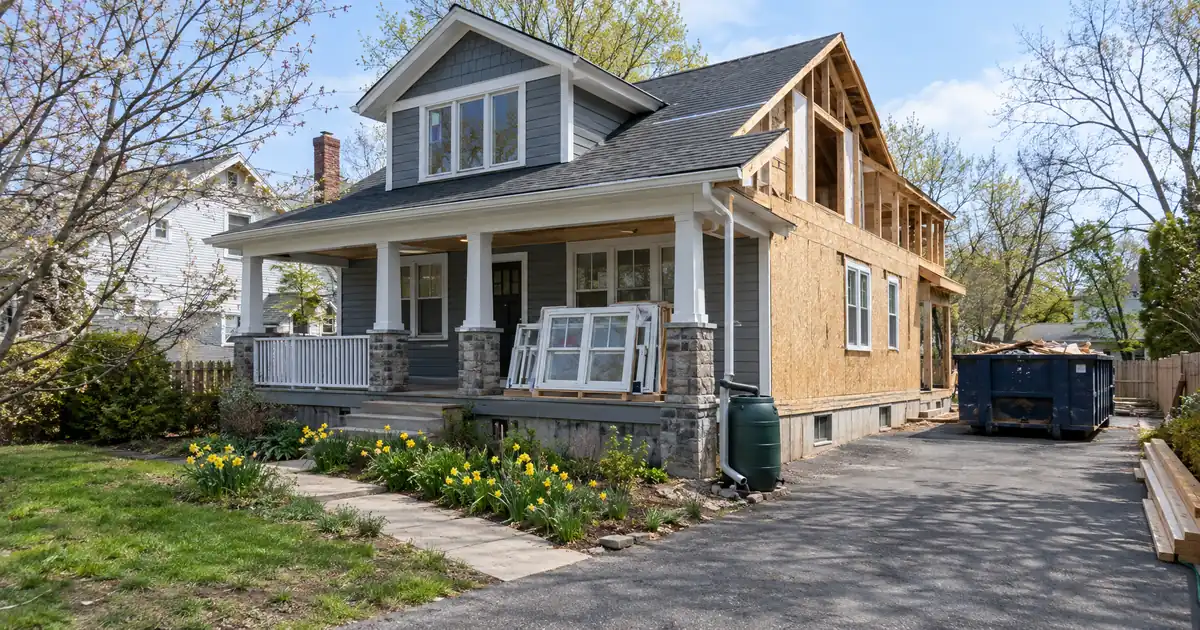
The Quick Read: Yes, an LLC can be both the borrower and the title holder on a flip financed with hard money. Many hard money lenders prefer or require an entity borrower, and most still want a personal guarantee from the owner. The order of operations matters more than the paperwork.
- Form the LLC before you sign or assign the purchase contract, so the entity takes title at closing.
- Expect to sign a personal guarantee. The LLC still shields you from many third-party claims.
- Fix-and-flip leverage is sized on project cost and capped by after-repair value, and it varies by lender, property, and experience.
- Fund the deal and the rehab from the LLC’s own bank account.
- Plan the exit (a sale or a refinance into long-term rental financing) before you close.
How Does a Hard Money Loan Work With an LLC?
The LLC signs the note, holds title, and pays the bills. You sign as the guarantor. The lender underwrites the asset: the purchase price, the rehab plan, and the value after repairs.
What this loan actually costs to carry.
Hard money is sized against the project and priced by time. Enter the deal and see how much the program will lend, the cash required at closing, the carry while you hold it, and what is left at the exit.
Leverage tiers on the current program: 85% with fewer than 2, 90% with 2 or more, 93% with 5 or more completed projects — every tier capped at 75% of after-repair value. Loan amounts up to $5,000,000, larger by exception; terms of 6 to 18 months, interest-only, no prepayment penalty. The rehab portion funds in draws against completed work, not at closing.
Program parameters shown update from Lendmire’s centralized guideline source. Rate, points, and months are editable assumptions, not quoted terms.
Cost cap sets the loan · positive spread
Illustrative estimate only — not a quote, Loan Estimate, approval, or commitment to lend. Rate, points, and months are editable assumptions. Hard money is business-purpose financing for real estate investors, not a consumer mortgage. Leverage on the current program tops out at 93% of project cost for investors with a documented track record, capped at 75% of after-repair value, with rehab funding up to 100% of the documented budget released in draws; actual terms vary by lender, borrower experience, property, and exit. Lendmire is a mortgage broker, not a lender.
Hard money is short-term, interest-only, business-purpose financing. Across the network Lendmire works with, terms run 6 to 18 months with no prepayment penalty, and loans go up to $5,000,000, larger by exception. Collateral is non-owner-occupied residential property of 1 to 4 units. Everything varies by lender, property, and experience, and nothing here is a commitment to lend.
Here is how the stages usually run:
| Stage | Who signs | What to confirm |
|---|---|---|
| LLC formation | You, as member | Articles, operating agreement, EIN |
| Contract | The LLC | Buyer name matches the borrower |
| Closing | LLC and guarantor | Title vests in the LLC |
| Rehab draws | LLC | Funds release against completed work |
| Payoff | LLC | Sale or refinance covers the balance |
Leverage works differently from a normal purchase loan. Fix-and-flip programs size the loan against project cost, meaning purchase plus rehab. Typical tiers run 85% of project cost with fewer than two completed projects, 90% at two or more, and 93% at five or more. Every tier is capped at 75% of after-repair value, or ARV. That is the appraiser’s estimate of what the home is worth once the work is done.
Up to 100% of the rehab budget can fund in draws against completed work. That is a rehab-budget figure, not a purchase loan-to-value. There is no true 100% purchase program, and the top tier goes to experienced investors.
Credit matters too. A 620 minimum score exists, with added conditions below 660. First-time investors typically qualify at the lower leverage tiers. Underwriting stays asset-based, so the property, the plan, and the exit carry the file.
Will You Still Have to Guarantee the Loan?
Usually, yes. Lending to your LLC does not mean you walk away from the debt. Most hard money programs want the owners to sign a personal guarantee, which makes your credit and finances part of the file.
A guarantee does not make the LLC pointless. It narrows what the entity protects.
| LLC generally helps with | LLC does not help with |
|---|---|
| Claims from contractors or visitors | The loan you guaranteed |
| Keeping flips separate from each other | Your own fraud or misconduct |
| Keeping personal assets out of project disputes | Claims after commingled funds |
The protection is only as good as your habits. If you pay project bills from a personal account, you hand a plaintiff an argument that the LLC is a shell. Keep the entity clean and it does its job.
Form the LLC First, or Buy Personally and Transfer?
Form it first. Have the LLC sign the contract, take title at closing, and own the project from day one.
| Approach | Upside | Downside |
|---|---|---|
| LLC buys at closing | Clean title, no later transfer | Entity must exist before contract |
| Buy personally, deed later | Works if you have no entity yet | Lender consent, transfer costs, due-on-sale risk |
Buying personally and moving the deed afterward looks harmless. It gets complicated when a loan is already on the property. Most mortgages carry a due-on-sale clause, which lets the lender demand full repayment if title changes hands. The Garn–St Germain Act makes those clauses federally enforceable, with listed exceptions for transfers to a spouse or children and into certain living trusts. A transfer into an LLC is not on that list.
A summary of a court case involving a large national bank, published by WealthCounsel, found no statutory protection for an LLC transfer. Many lenders never call the loan, and some investors do this without incident. The lender can still accelerate, and a flip lender with a fresh note is not the one to test. Some counties also charge transfer fees on a deed change. Let the LLC take title at purchase, or get the lender’s written consent first.
One narrow exception exists. A lender may allow a name change case by case when switching entities would cancel a contract. That is a negotiated exception, not a plan, and you should state the investment purpose clearly if you ask.
Why Do Lenders Want an Entity Borrower?
Hard money is business-purpose lending. The lender wants a file that is clearly about a project, not a home. An LLC makes that obvious on paper.
The federal rule behind this is the business-purpose exemption in Regulation Z. It exempts credit extended primarily for a business purpose and credit extended to someone other than a natural person. The CFPB’s commentary treats credit to acquire, improve, or maintain non-owner-occupied rental property as business purpose.
The same page carries the catch. That treatment does not apply if the owner expects to occupy the property for more than 14 days in the coming year. If you or a family member plan to live there, the loan drifts back toward consumer rules. Hard money collateral is non-owner-occupied only, so a flip you plan to move into is the wrong product.
An LLC also does not make a loan exempt from everything. A law-firm analysis from Hunton cautions that business purpose does not mean compliance exempt. Lenders carry that risk, which is why they document purpose carefully.
Many large retail lenders also avoid new LLCs buying flips. Entity loans mostly live in the hard money, portfolio, and non-QM world.
Keeping the LLC Clean
Run the whole project through the entity. Open a business account, deposit your cash contribution there, and pay the closing costs, contractors, and insurance from it.
- Bank account: closing funds should come from the LLC’s account, not yours.
- Insurance: the builder’s-risk and liability policies should name the LLC as insured. A mismatch between insured and owner is a common cause of claim trouble.
- One flip per entity: many investors use a separate LLC per project so one dispute cannot reach the next property. Others run several in one entity and accept the shared exposure.
- Partners: capital from a partner should come in as a documented contribution under the operating agreement. Lendmire’s piece Can You Use a Hard Money Loan to Buy Out Siblings or a Partner? covers the buyout side.
A Worked Example
Say you have completed two flips, so you sit in the 90%-of-project-cost tier. Two cases show how the ARV cap decides your cash in.
In the first, total project cost is 80% of the ARV. Ninety percent of that cost works out to 72% of ARV, under the 75% cap. The lender funds the full tier, and your cash in is the remaining 10% of cost.
In the second, project cost is 85% of the ARV. Ninety percent of that is 76.5% of ARV, which crosses the cap. The loan stops at 75% of ARV, and your cash in grows. The tight deal needs more of your money than the headline tier suggests.
The structure is the same either way. The LLC is the borrower, you guarantee, and the rehab portion releases in draws as work is completed. Treat these as illustrations, since actual terms vary by lender, property, and experience.
What Happens After the Rehab?
You exit by selling or refinancing. A sale pays off the hard money note from the LLC’s proceeds. A refinance moves the property into long-term rental financing once it is stabilized.
Many investors take the refinance route, and Lendmire arranges that path through select lenders in its wholesale network, which covers 41 markets, including Washington, D.C. The refinance is typically a DSCR loan, qualified primarily on property-level rental income covering the payment, subject to lender guidelines. Most programs allow entity vesting, subject to lender program eligibility. Buying in the same LLC that will refinance avoids a mid-stream title transfer.
Three things to plan for:
- The new lender’s appraisal sets the loan. It orders its own value and rent schedule, using form 1007 for single-family and 1025 for 2 to 4 units. Your ARV estimate does not drive proceeds.
- Timing and leverage. A standard rental cash-out refinance tops out around 75% LTV across most of the network, with about 6 months of seasoning as the common expectation. Your hard money term of 6 to 18 months needs to outlast rehab, lease-up, and that seasoning window. Lendmire’s guide How to Time a Two-Step DSCR Cash-Out After a Hard Money Flip walks through the sequence.
- Coverage. 1.00 is where many select programs start, and a separate select-lender path takes coverage below 1.00 with leverage and terms adjusted. Clearing 1.00 is not the same as positive cash flow, because repairs, vacancy, management, and utilities sit outside the calculation. For the full picture, see the complete DSCR loans guide. Every figure here varies by lender and program — guidelines, property type, leverage, and credit profile all apply.
Do not build a plan around hard money counting as cash for delayed-financing purposes. It generally does not, because the property secured the loan.
Pre-Closing Checklist
- LLC formed, with articles of organization, operating agreement, and EIN
- Good standing certificate and an authority resolution naming who may sign
- Guarantor ID and financial statements ready
- Contract in the LLC’s name
- Insurance naming the LLC
- LLC bank account funded for the down payment and closing costs
- A written exit plan with a sale price or refinance target
Key Terms Defined
Hard money loan: A short-term, interest-only, asset-based business loan secured by the property being bought or renovated.
After-repair value (ARV): The appraiser’s estimate of the property’s worth after renovations are finished.
Loan-to-cost: The share of purchase price plus rehab cost that the lender funds.
Personal guarantee: Your written promise to repay the loan if the LLC does not.
Due-on-sale clause: A loan term letting the lender demand full repayment if title transfers.
DSCR loan: A long-term rental loan qualified primarily on how well the property’s rent covers its payment.
This article is general information, not legal or tax advice. Tax treatment varies by situation, so consult a qualified attorney or CPA about your own entity and deal.
Frequently Asked Questions
Do I need an LLC to buy a flip with hard money?
Not by law, but many hard money lenders require or strongly prefer one. Buying in your own name is possible with some lenders. An LLC keeps the file clearly business-purpose and separates the project from your other assets.
Can a brand-new LLC get a hard money loan?
Yes, in many cases. The lender reviews the property, the purchase and rehab plan, the after-repair value, and the guarantor more than the entity’s age. First-time investors typically qualify at the lower leverage tiers, with a 620 minimum score and added conditions below 660. All of it varies by lender, property, and experience.
Can I transfer the property into the LLC after I close?
You can, but it risks the due-on-sale clause and possible transfer costs. Get the lender’s written consent first. Having the LLC buy at closing avoids the issue.
Does the LLC protect me if I signed a personal guarantee?
Only partly. The lender can pursue you for the guaranteed debt. The LLC still helps with other claims, such as a contractor dispute, as long as you keep funds and records separate.
Do I need a new LLC for every flip?
No. Separate entities isolate each project’s risk, but they add filings and bookkeeping. Weigh that against how much exposure you are comfortable sharing across properties.
Next Step
If you are buying, rehabbing or refinancing an investment property on a short timeline and want to see how the numbers work, Lendmire can help you compare hard money options based on the project, the exit plan, leverage, and your goals. Reach the team at 828-256-2183.
About Lendmire
As a non-QM mortgage broker (NMLS# 2371349), Lendmire facilitates DSCR investor loans across 41 markets, including Washington, D.C. DSCR eligibility is generally reviewed around property-level rental income instead of personal income documentation, subject to lender guidelines, serving LLC-structured portfolios and self-employed borrowers who don’t fit conventional boxes. A two-time Scotsman Guide Top Mortgage Workplace (2025, 2026).
Get Started
Ready to find the right loan for you?
In about 30 seconds you can review financing options available for your investment property. No commitment required.
Informational only. Not a Loan Estimate, approval, or commitment to lend. Program availability and eligibility are subject to lender guidelines, credit approval, property review, and underwriting.
References
2. WealthCounsel, Transferring Title of Mortgaged Real Property
3. CFPB, Regulation Z §1026.3 and commentary
4. Hunton, Beware of Business Purpose
This article is part of Lendmire’s hard money loan program — full qualification details, guidelines, and scenarios live on the program page.
Related reading: Seasoning Rules for a Two-Step DSCR Cash-Out After Hard Money · Hard Money Loan Requirements to Exit Seller Financing or Subject-to · Is a DSCR Loan the Usual Permanent Financing After a Flip You Keep?
Brandon Miller
Founder & CEO, Mortgage Loan Originator, Lendmire LLC
- Mortgage Loan Originator · NMLS# 1129696 · Verify on NMLS Consumer Access
- North Carolina Real Estate Broker · License# 343312 · Verify on NCREC
- North Carolina Insurance Producer · License# 19053198 · Property, Casualty, Life, Health · Verify on NAIC SBS
- Lendmire LLC · Firm NMLS# 2371349 · Verify firm licensure
Compliance and disclosures. Lendmire (NMLS# 2371349) is a licensed mortgage broker and is not a direct lender, depository institution, financial advisor, or tax professional. Content in this article is general market analysis and educational information — not financial, legal, or tax advice for any specific situation. Lendmire does not guarantee loan approval; every transaction is subject to underwriting by the funding lender. Mortgage pricing and loan program guidelines are subject to change at any time without notice and vary by borrower characteristics, property type, and state regulations. Lendmire complies with Equal Housing Opportunity. Licensure verification: NMLS Consumer Access.