
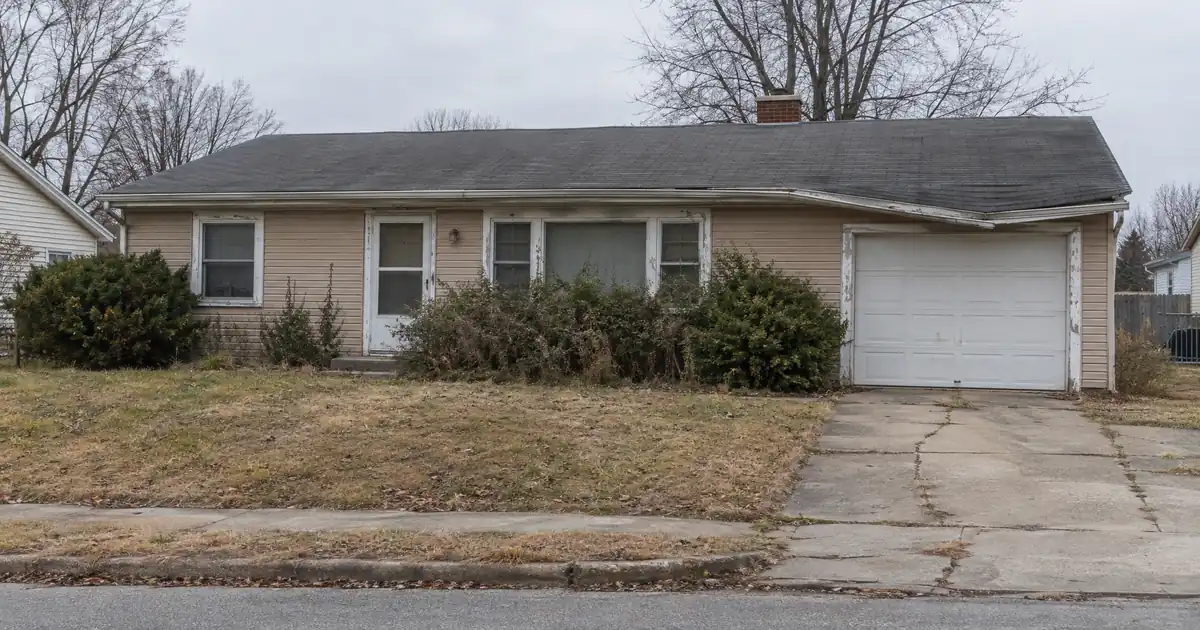
The Quick Read: Preparing low-value houses for a portfolio valuation means getting each house to read clean on two numbers, the appraised value and the market rent, because the appraiser sets both and the lender sizes the loan from them. The work is mostly condition, rent evidence, and file consistency, not cosmetics.
- Each house still gets its own value and market-rent opinion; pooling does not skip that step.
- Condition is the first filter. A house that rates C5 or C6 creates problems for the whole pool.
- Rent evidence matters as much as value, since the appraiser’s rent opinion often governs.
- Triage first: decide which houses stay in the pool before the appraisals are ordered.
- Clearing 1.00 coverage is not the same as positive cash flow.
Cheap houses are the ones where small file gaps become big problems. A weak valuation on a low-priced house moves the blended ratio more than it would on a larger asset. This piece walks the mechanics in order, then the edge cases, then the decisions an investor actually makes. For the broader picture, see Lendmire’s complete DSCR loans guide.
DSCR Calculator
Run the numbers in your market
Rate source: Freddie Mac 30-yr average via FRED® — Federal Reserve Bank of St. Louis · effective Oct 15, 2026
Prefilled with starting assumptions — enter your own rent or nightly figures, taxes, insurance, and HOA for a more accurate picture.
Program parameters update from Lendmire’s centralized guideline source. Taxes and insurance are editable estimates.
As of Oct 15, 2026 · General Freddie Mac market benchmark, not a Lendmire loan offer. Rent, nightly rate, occupancy, taxes, and insurance are editable estimates. Short-term rental figures are estimates only and vary significantly by season, property type, management approach, and local short-term-rental rules — confirm local regulations before relying on them. Qualifying income for short-term rentals varies by program — some use appraisal market rent, others use documented STR history or projections — and is confirmed in underwriting. Not a Loan Estimate, approval, or commitment to lend. Program availability and eligibility are subject to lender guidelines, credit approval, property review, and underwriting.
How Does a Portfolio Valuation Treat Each House?
A portfolio (blanket) DSCR loan puts several rentals under one note, and every property secures the whole debt. Each house is still valued on its own, and each gets its own market-rent opinion. The lender then looks at the pool: total rent against total PITIA, with the individual files underneath.
The appraisal does two separate jobs. It sets value, which drives LTV. It sets market rent, which drives the coverage ratio. Across the wholesale network, many programs credit the lower of the in-place lease and the appraiser’s market rent. Others lean on the appraiser’s number alone. Treat that as a pattern, not a rule, because programs differ.
On a single-family house, the rent opinion comes from the Single-Family Comparable Rent Schedule, Form 1007. For 2-4 unit properties, the Small Income Residential Appraisal Report, Form 1025, carries the rent analysis inside the report. Both form names are listed in the Fannie Mae Selling Guide. DSCR loans are not agency products. The forms are just the standard tools appraisers use.
The appraiser picks comparable rentals, adjusts for size, condition, bedrooms and location, and gives a market-rent figure. Underwriting uses it as gross rent. DSCR compares that rent to PITIA only. Repairs, vacancy, management, utilities and capex sit outside the calculation, so clearing 1.00 does not mean the house is cash-flowing.
Why Do Low-Value Houses Need Extra Preparation?
Low-value houses get extra scrutiny because a very low price can signal a declining or ultra-rural market, a rough condition, or thin comps. The appraisal is where those worries either get answered or get confirmed.
Three things hit cheap houses harder than expensive ones:
- Condition downgrades. One deferred roof or failed system can drop a house a full rating tier.
- Thin comps. Low-price neighborhoods often mix investor flips, distressed sales and owner sales. A comp set that does not resemble the subject pulls value and rent down.
- Per-loan weight. Smaller loan balances carry the same processing work as larger ones. Smaller balances route through select lenders in the network on some files, so pricing and terms vary.
Pooling helps. A cluster of lower-priced houses can sit under one note and one closing instead of several. But cross-collateralization cuts both ways. One weak house can hold up the whole pool at release or refinance. Lendmire’s own piece How to Qualify for a Blanket DSCR Portfolio Loan at the $5M Mark notes that release is contractual and priced, and that a vacant or delinquent property can block the next release.
Key Terms Defined
Blended DSCR: Total rent across the pool divided by total PITIA across the pool.
PITIA: Principal, interest, taxes, insurance and any association dues on the property.
Form 1007: The appraiser’s market-rent schedule for a single-family rental.
Form 1025: The small-income appraisal report used for 2-4 unit properties.
Condition rating (C1-C6): The appraiser’s scale for the state of repair, with C1 the best and C6 the worst.
Release clause: The contract term that lets one property leave the pool when its allocated share of the loan is paid down.
Step One: Triage the Houses Before Anyone Orders an Appraisal
Triage decides which houses go into the pool, which wait, and which stay out. Do it first, because swapping a house after the appraisal is ordered costs time and fees.
| House status | Main risk | Action | Pool decision |
|---|---|---|---|
| Clean, leased, good condition | Little | Gather documents | Keep |
| Leased, dated but sound | Condition downgrade | Fix visible wear | Keep |
| Vacant, rentable | No lease evidence | Rent comps, ready for access | Keep or hold |
| Active leak, failed system | C5 or worse | Repair first | Hold out |
| Safety or structural defect | C6 range | Major repair | Drop |
| Manufactured, log, barndominium | Property type | None | Not offered |
The last row matters. DSCR programs in the network do not offer loans on manufactured homes (single- and double-wide), log homes or barndominiums. If one of those sits in a bundle, it comes out before the file starts.
Next, sort by weight. A house with weak rent against its payment drags the blended number. Dropping it can lift the ratio, but only if the remaining houses still meet the property-level tests some programs apply. Programs genuinely differ here. Some test only the blended pool. Others add a per-property check, so one strong asset cannot fully cover a weak one.
What Condition Ratings Mean for a Cheap House
Appraisers rate condition from C1 to C6 under the Uniform Appraisal Dataset, as laid out in Restb.ai’s guide to UAD condition ratings. The three that matter for low-value stock:
- C4: minor deferred maintenance from normal wear, with major components still adequate.
- C5: obvious deferred maintenance and significant repair needs.
- C6: damage or deferred maintenance that can affect safety or structural integrity, per McKissock’s explainer on condition ratings.
McKissock also notes that on agency sales a C6 property has to be appraised subject to repairs that lift it above C6. That is agency contrast, not a DSCR rule. DSCR programs set their own condition cutoffs, and those vary by lender in the network. The practical read is the same either way: C4 is workable, C5 creates friction, and C6 is usually a house to repair or leave out.
The goal of prep on a cheap house is simple. Keep it at C4 or move it from C5 toward C4. That is where small, targeted work pays off.
The Per-House Prep Checklist
Each item below has a reason tied to value, condition or rent. If an item does not touch one of those, skip it.
Exterior
- Fix roof leaks and visible roof damage. A leak is a C5 trigger and an insurability problem.
- Repair or replace broken windows and doors. Open envelope reads as deferred maintenance.
- Clear debris, overgrowth and abandoned items. Appraisers note exterior condition first.
- Fix steps, railings and walkways. These read as safety items.
Interior
- Patch water-stained ceilings and walls after fixing the source. Stains read as active problems.
- Make sure kitchens and baths function. Missing fixtures or non-working plumbing downgrade a house fast.
- Replace worn flooring that is torn or unsafe. Cosmetic wear is acceptable; hazards are not.
- Fresh paint and cleaning are cheap and move condition perception.
Systems
- Confirm heat works, water heater works, and electrical panel is safe. A failed HVAC unit is a classic C5 item.
- Have utilities on at appraisal time. An appraiser cannot test what is off.
Fix or Skip: Spending on a Cheap House
On a low-value house, every repair dollar needs a reason. This table sorts by what the work changes.
| Item | Affects value, condition or rent? | Evidence to keep | Verdict |
|---|---|---|---|
| Roof leak repair | Condition, value | Invoice, photos | Fix |
| Failed HVAC | Condition, rent | Invoice, permit if any | Fix |
| Safety defects | Condition | Invoice, photos | Fix |
| Interior paint, deep clean | Condition perception | Before/after photos | Fix |
| Premium finishes | Little | None | Skip |
| Landscaping beyond cleanup | Little | None | Skip |
| Cosmetic upgrades that look like a flip | Can raise questions | Receipts | Skip |
An improvement may support a higher appraised value, depending on comps and underwriter review. It never guarantees one. Over-staging and flipper-style upgrades can also work against you if the rent opinion then assumes a condition level the house cannot hold as a rental.
Build the Evidence File, One Address at a Time
Mismatched or stale documents are a common failure on portfolio files. Build one schedule with a consistent address label, and keep the same label on every document.
For each house, collect:
- The current lease and a rent history if one exists.
- Three or four rental comps of similar condition and size.
- Receipts and scope notes for recent repairs and updates.
- Photos of the finished work and the major systems.
- Insurance quote information and any entity documents that go with the file.
- Unit count and occupancy status, stated the same way everywhere.
The rent comps deserve attention. Pull comps that match on size, bedrooms and condition, and drop outliers like fully renovated units next to your C4 house.
For sales comps, the same logic applies. Thin markets mean mixed sales. A short, defensible set beats a long, noisy one.
DSCR vs. conventional financing
There are two common ways to finance an investment property, and they qualify you differently — here’s how investors weigh them.
Why investors choose it
- Qualifies on the property’s rental income — no personal tax returns, W-2s, or pay stubs needed to document income.
- No personal debt-to-income ceiling to clear, so existing mortgages and obligations don’t cap your borrowing the same way.
- Can be closed in an LLC, keeping the property inside a business entity.
- Built for scaling — not held to the limit on number of financed properties that conventional financing applies.
- Underwriting centers on the deal: generally qualifies when the rent covers the payment, a 1.00x coverage ratio being a common baseline (confirmed in underwriting).
- Designed specifically for investment property, including long-term and, where the program allows, short-term rentals.
Where it’s strong
- Often the lowest ongoing financing cost for a buyer who fully qualifies on personal income — a fit for a first property or a cost-first purchase.
Trade-offs for investors
- Requires full personal income documentation and must fit within a debt-to-income limit — salary, existing debts, and other mortgages all count.
- Typically held in your personal name rather than a business entity.
- Caps how many financed properties you can carry, which can become a ceiling as a portfolio grows.
- Evaluates you as a borrower as much as the property, which usually means more paperwork.
How investors usually choose: a first or single property often optimizes for the lowest financing cost; portfolio builders often optimize for leverage, vesting in an LLC, and scaling past conventional caps. The right answer depends on your goals, the property, and current guidelines — both paths run through select lenders in Lendmire’s wholesale network, with eligibility and terms confirmed in underwriting.
Rent: The Lease Versus the Appraiser’s Number
Many programs credit the lower of the in-place lease and the appraiser’s market rent. Some use the market rent alone. A few allow some variance when a current lease exists, and treatment depends on the lender. So the lease does not set your ratio on its own.
| Situation | Typical effect |
|---|---|
| Lease above market rent | Rent may be capped at the appraiser’s figure |
| Lease below market rent | Many programs use the lower lease figure |
| Vacant house | Appraiser’s market rent governs |
| Short-term rental use | Form 1007 shows long-term monthly rent, not nightly income |
On that last row, the 1007 documents monthly long-term rent, not nightly revenue or business income, as McKissock’s note on Form 1007 and short-term rentals explains. Short-term rental programs in the network run on their own terms: purchase to 75% LTV, refinance around 70%, and cash-out 70%, with a 640+ score and about 12 months of hosting history expected. Short-term rental rules vary by city, county, HOA and property type, so investors should confirm local rules before relying on projected rental income. Terms depend on the lender’s guidelines, the property type, the leverage, and a full review of the credit profile.
A Worked Example: Five Houses, One Weak
This is an illustration with modeled assumptions, not market data.
Say an investor bundles five low-priced rentals. Four have leases that match the market-rent opinion and rate C4. The fifth has an old roof leak, a failed furnace, and rent comps that came in light.
Run the pool as ordered. Four houses carry coverage near 1.25x. The fifth runs near 0.85x. Blended across all five, the pool lands around 1.17x. That sits above 1.00, but programs that also test each property can flag the fifth house by itself.
Now run it two ways.
1. Repair and re-document. Fix the roof and furnace, collect invoices and photos, and pull rent comps that match the house’s real condition. If the rating moves from C5 toward C4 and rent supports a stronger figure, the fifth house rises toward 1.0x and the blended pool rises with it.
2. Drop and restructure. Pull the fifth house from the pool. The four remaining houses carry around 1.25x blended. The investor keeps a cleaner file and finances the fifth later, separately.
Neither path is automatic. Each goes through lender review, credit approval and property review. But the example shows the point: one weak valuation does not stay local. It moves the whole pool, and it is cheaper to fix before the appraisal than after.
Appraisal Week: Logistics Across Many Houses
Access is where multi-house files stall. Plan it like a schedule.
- Before ordering: finish triage, complete repairs, assemble the evidence file.
- Week of: confirm utilities are on, confirm tenant access in writing for occupied houses, and clear any locked areas.
- Vacant houses: have keys ready and the house swept. A dirty vacant house reads worse than it is.
- Occupied houses: give tenants notice and ask for reasonable access. Do not ask tenants to stage anything.
- After the report: read every page and compare unit counts, bedroom counts and addresses to your schedule.
One rule on contact. Do not contact the appraiser directly to argue value. Corrections go through the lender.
If One Valuation Comes In Low
A low appraisal on one house changes the sizing and the ratio. Value below contract means the loan sizes on the lower figure. Rent below the model means the coverage ratio drops. The options:
| Situation | Option |
|---|---|
| Factual error in the report | Request a correction through the lender |
| Missed comps or improvements | Submit documented comps and receipts for reconsideration |
| Weak house, strong pool | Ask whether the program tests the blended pool only |
| House drags the whole pool | Drop or swap it |
| Pool still too thin | Restructure leverage or split into two loans |
An appraisal reconsideration works best with documents: recent in-neighborhood sales, condition notes, receipts. A written complaint without evidence rarely moves a number.
If coverage on the pool falls below 1.00, note that 1.00 is where many select programs start, and a separate select-lender path may consider coverage below 1.00 with leverage and terms adjusted. Both are reviewed subject to lender guidelines, credit approval and property review.
What the Network Looks Like for These Files
Across Lendmire’s wholesale network, purchase files typically sit at 75%-80% LTV, with select high-leverage programs reaching 85% at roughly a 700+ score. Cash-out on standard rentals tops out around 75%, with about 6 months of seasoning common. Credit floors start near 620 in parts of the network, most programs want around 660, and 700+ opens the strongest leverage tiers. Reserves commonly run about 6 months of PITIA and step up to about 9 months on loans above $1,500,000, though conservative files can see them waived. Standard loan sizes run up to $3,000,000, and smaller balances route through select lenders. All of this is subject to lender guidelines and varies by borrower, property and scenario.
A larger down payment lowers the monthly obligation and can lift coverage. It does not erase leverage caps, credit floors, reserve rules or property eligibility. The strongest files clear both tests: enough equity and enough rental coverage.
Mistakes That Sink Low-Value Files
- Ordering appraisals before triage, then swapping houses mid-file.
- Claiming rent above what comps support. The appraiser’s number will win.
- Using rent comps from renovated houses against an unrenovated subject.
- Leaving utilities off or access unclear on appraisal day.
- Spending on finishes that do not change condition or rent.
- Letting documents carry different address labels or unit counts.
- Keeping an ineligible property type in the bundle.
Frequently Asked Questions
Does every house in a portfolio need its own appraisal?
Generally yes. Each house gets its own value and market-rent opinion, and the lender then looks at the pool. Pooling changes how the ratio is tested, not whether the houses are valued.
Can strong houses offset a weak one?
On programs that test only the blended pool, yes, up to a point. Some programs also test each property, so one strong asset cannot fully cover a weak one. Ask which test applies before deciding whether to repair or drop the weak house.
Is prep worth the cost on a cheap house?
Targeted prep is. Fixing items that drive a C5 rating, such as leaks and failed systems, and documenting rent properly cost little compared with a weak valuation that drags the pool. Premium finishes are not worth it.
What if a house is vacant?
The appraiser’s market rent governs, so rent comps and a clean, accessible house matter more. No-ratio structures are available only through select lenders, generally for borrowers who already own a primary residence, and are separate from the standard path.
What if comps are thin in a low-price area?
Build a short set that matches the subject on size, bedrooms and condition, and drop outliers. Pair it with receipts and photos so the appraiser can credit the actual state of the house.
If you are buying or refinancing rental properties and want to see how the numbers work, Lendmire can help you compare DSCR loan options based on the property income, credit profile, leverage, and investor goals. Lendmire is a broker arranging financing through select lenders in its wholesale network across 41 markets, including Washington, D.C. Lendmire’s related piece How Much Low-Value Houses Change the Allocated Loan on a DSCR Portfolio is a useful next read before ordering appraisals.
About Lendmire
Lendmire is a DSCR-focused mortgage brokerage, NMLS# 2371349, placing investor loans across 41 markets, including Washington, D.C. DSCR eligibility is generally reviewed by the lender around a property’s rental income rather than personal income documentation, which fits LLC-held rentals, self-employed investors, and portfolios scaling past conventional financed-property limits. Scotsman Guide named Lendmire a Top Mortgage Workplace in both 2025 and 2026.
Get Started
Ready to find the right loan for you?
In about 30 seconds you can review financing options available for your investment property. No commitment required.
Informational only. Not a Loan Estimate, approval, or commitment to lend. Program availability and eligibility are subject to lender guidelines, credit approval, property review, and underwriting.
References
1. Fannie Mae Selling Guide B4-1.2-01
2. Restb.ai UAD Condition Ratings
3. McKissock: Understanding Appraisal Condition Ratings
4. McKissock: Form 1007 and Short-Term Rentals
This article is part of Lendmire’s DSCR loan program — full qualification details, guidelines, and scenarios live on the program page.
Related reading: DSCR Portfolio Loan Appraisal Requirements for Every House · Is a DSCR Portfolio Loan Worth It for Rentals Bought One at a Time? · DSCR Portfolio Release Test Requirements for the Rentals Left Behind
Brandon Miller
Founder & CEO, Mortgage Loan Originator, Lendmire LLC
- Mortgage Loan Originator · NMLS# 1129696 · Verify on NMLS Consumer Access
- North Carolina Real Estate Broker · License# 343312 · Verify on NCREC
- North Carolina Insurance Producer · License# 19053198 · Property, Casualty, Life, Health · Verify on NAIC SBS
- Lendmire LLC · Firm NMLS# 2371349 · Verify firm licensure
Disclosures. The information presented in this article is general market commentary, not financial, legal, or tax advice. Lendmire is a mortgage brokerage (NMLS# 2371349) — not a direct lender or depository institution — and loan placement is subject to lender underwriting. Nothing in this content represents a commitment to lend. Loan terms, pricing, and program availability vary based on borrower qualifications, property characteristics, and state of subject property, and are subject to change at any time. Lendmire complies with Equal Housing Opportunity requirements. Consumer access: nmlsconsumeraccess.org.