
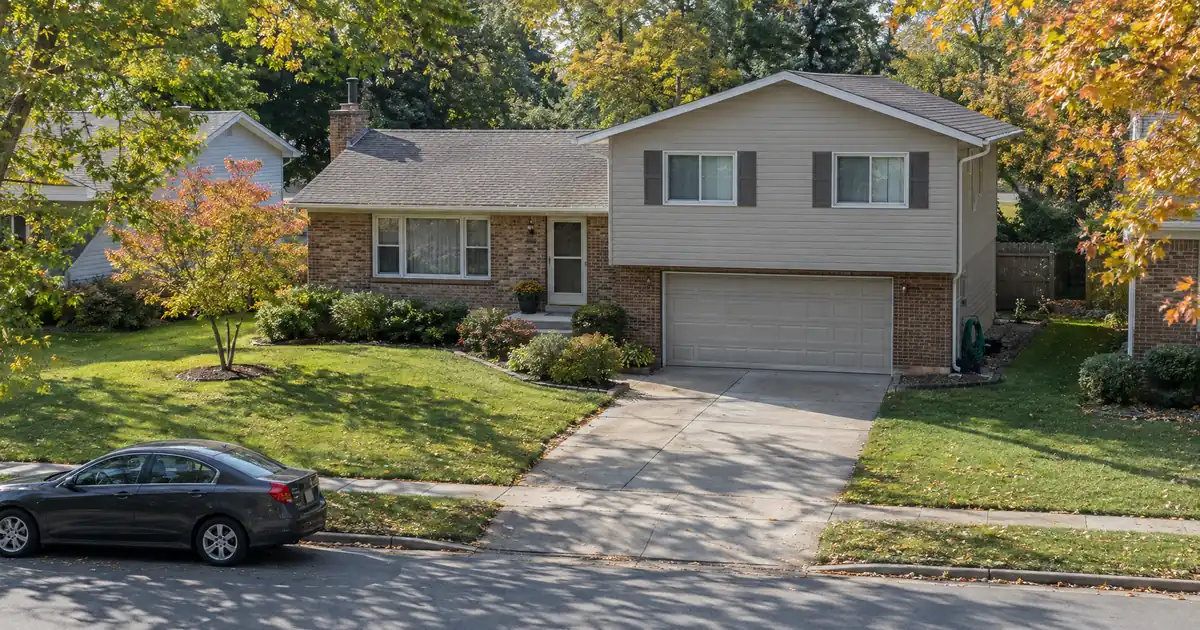
The Quick Read: Five rentals in one metro suit a portfolio DSCR loan when you plan to hold all five, want the pool’s combined rent to carry the weakest property, and can accept that every property backs one balance. Separate loans usually fit better when a sale is likely or all five already stand alone.
- A portfolio DSCR loan is one note secured by several rentals, also called a blanket or cross-collateralized loan.
- Coverage is measured on the pool, so stronger properties can offset weaker ones.
- Five doors in one metro help with management and comps, but one local shock hits all five.
- Selling one property later depends on the release terms in the loan documents.
- Terms and eligibility are subject to lender guidelines and individual underwriting.
Lendmire is a DSCR-focused mortgage broker. It arranges these loans through select lenders in a wholesale network covering 41 markets, including Washington, D.C. The brokerage does not lend or approve. It sees how many lenders treat pools, and across the network the pattern is mixed. The pool works well for investors who hold long and badly for investors who trade.
What Is a Portfolio DSCR Loan?
A portfolio DSCR loan is one note secured by liens on several rental properties. Nav describes this blanket structure as one that lets multiple properties secure a single loan, and notes that investors often use it to buy or refinance a group of properties. Here, “portfolio DSCR loan,” “blanket loan,” and “cross-collateralized loan” all mean that same thing.
One caution on vocabulary. A bank’s “portfolio loan” is a different sense of the word. It means a loan the bank keeps on its own books. That says nothing about how many properties secure it.
Another caution: a label does not prove the structure. Some products called “portfolio” are separate notes closed together, where each property qualifies alone. The note and security instruments decide which one you have. Read them.
How Does Underwriting Treat Five Rentals Step by Step?
Underwriting measures the pool, then checks each property inside it. Pooled coverage divides total rent across all five properties by the total monthly PITIA of the new loan. PITIA means principal, interest, taxes, insurance, and any HOA dues.
Here is the sequence on most files.
1. Rent is established for each property. Every property needs a lease or an appraiser-supported market rent.
2. Each property is valued. Per-property valuation still applies even though there is one note. The exact method is a program question, so ask the lender.
3. Coverage is measured on the pool. On the 30-year portfolio DSCR loan, the floor is 1.00 on pooled rent against pooled debt service. A strong property can offset a thin one.
4. Leverage is checked. That structure goes up to 80% of value on a purchase or rate-and-term refinance, subject to lender guidelines.
5. The borrower is reviewed. The credit floor on the portfolio programs is 640, and some structures ask for 680 or 720. Some structures also require a special-purpose entity, typically an LLC.
6. Release terms are set. These govern what happens if you sell one property later.
After closing there is one payment, one servicer, and one default trigger. That is the convenience, and it is also the risk.
Clearing 1.00 does not mean positive cash flow. The ratio compares rent to PITIA only. Repairs, vacancy, management, utilities, and capital expenses sit outside it.
Which Structures Exist for Five Rentals?
Two portfolio structures exist in the network, and they suit different investors.
| Feature | 30-year portfolio DSCR loan | Rental portfolio term loan |
|---|---|---|
| Properties | 2 to 20 under one note | Five or more properties or units |
| Loan size | $300,000 to $5,000,000 | $500,000 to $50,000,000 |
| Leverage | Up to 80% on purchase, rate-and-term | Up to 75% of value |
| Term | 30 years, fixed or adjustable | 3, 5, 7, or 10 years, balloon at maturity |
| Pooled coverage | 1.00 floor on the pool | Reviewed on the pool |
| Interest-only | Period available | Not a feature |
The term loan also offers recourse or non-recourse options. A non-recourse loan looks to the real estate, with recourse limited to carve-outs such as fraud and bankruptcy. A recourse loan carries a personal guarantee. Prepayment on the term loan follows yield maintenance, and reserves are held for taxes, insurance, and capital expenditures. Small multifamily of five or more units is eligible only on the rental portfolio term loan. Loan amounts above these ranges are reviewed individually.
Both structures cover single-family, 2-4 unit, condo, and townhome properties. Owner-occupied property, co-ops, mixed-use, and commercial property are ineligible in the pool. Manufactured and mobile homes are not reviewable on these programs.
For a deeper look at how the structures compare, the complete DSCR loans guide covers the single-property product that pools are built from.
What Changes When All Five Sit in One Metro?
Clustering cuts both ways. It makes management and valuation simpler, and it ties all five properties to one local economy.
What helps:
- One property manager and one vendor network across all five.
- Tighter comparable sales, so valuation is easier to support.
- You know the submarket, and you can see trouble coming.
What hurts:
- A major employer loss, a tax or insurance jump, or softening rents lands on all five at once.
- Rents move together, so pooling offers little diversification.
- Lenders look at the location and concentration of collateral, and policies differ by lender.
Concentration risk is the general finance concept here: exposure to a downturn in a single sector or region. A pool of five rentals in one metro is a small version of that exposure.
Metro is also a coarse measure. Two rentals in the same county, same tax regime, and same insurance zone are more correlated than two in opposite corners of a large metro. When you test your own five, look at county, insurance zone, and employer dependence, not just the metro name.
When Does Pooling Beat Five Separate Loans?
Pooling beats separate loans when the five properties are unequal and you intend to hold. If one or two rentals sit near the coverage floor, or equity is lopsided, the pool lets stronger properties carry weaker ones. A property below 1.00 can sit in the pool, but underwriting tests the pooled coverage, the leverage, and the terms.
If all five are well covered with even equity, separate loans produce the same result with isolated risk. One bad quarter on one property then stays on that property.
Consider a modeled scenario. Four rentals each cover their payment at roughly 1.25x, and a fifth, an older unit, covers at about 0.85x. Pooled, the blended coverage lands near 1.17x. That clears a 1.00 pooled floor with room to spare. Now stress it: one of the strong units goes vacant for a stretch. Pooled coverage drops to around 0.93x, which is under the floor. These are modeled inputs, not market data. The point is that one vacancy lowers the blended ratio for all five, and the pool is only as sound as its weakest stretch.
What Happens If You Sell One Property?
Selling one property out of a pool follows the loan documents and the lender’s release terms. Nav explains that a release clause lets individual properties leave the blanket once conditions are met, and that without one, selling a property is much more difficult.
The law gives you no shortcut. The federal due-on-sale statute, 12 U.S.C. §1701j-3, lets a lender enforce a due-on-sale clause when any part of the security property is sold without consent. Under subsection (b)(2), the lender’s exercise of that option is governed by the loan’s terms. Read plainly, the statute creates no right to a partial release. The contract does the work.
In practice, the release price runs above the property’s allocated balance, and the remaining portfolio must still cover its debt service. Ask for the release terms in writing before you commit. If you may sell one or two of the five within a couple of years, separate loans, or two smaller pools, preserve more flexibility.
How Do Lenders Look at Concentration?
Lenders look at concentration as one input among several, and no universal rule exists. Across a wholesale network, the pattern is mixed. Some programs accept a single-market pool without comment. Others ask harder questions about the share of value in one metro, county, or ZIP.
Some programs allow properties in several markets or states under one loan, which is what multi-market cross-collateralization means. That option matters if your pool is too clustered and you plan to add a property elsewhere.
Questions worth asking any lender or broker before you apply:
1. Is this one note secured by all five, or separate notes closed together?
2. Do you limit exposure by metro, county, or ZIP, and where does my pool fall?
3. How is each property valued, and how is rent established?
4. What are the release terms, and what does the remaining pool have to prove?
5. Can I add a property later, or substitute one?
6. What are the cross-default terms?
Entity structure comes up here too. Separate LLCs mean separate borrowers, and a pool may need one borrowing entity to hold everything, subject to lender program eligibility. Settle that before closing, not after.
A Self-Check for Your Five
Score yourself honestly. The more rows that land on the left, the more a pool makes sense.
| Factor | Points toward a pool | Points toward separate loans |
|---|---|---|
| Hold horizon | All five for years | May sell one or two soon |
| Weakest property | Near the coverage floor | All five clear on their own |
| Equity | Lopsided across the five | Even across the five |
| Zones | Mixed tax and insurance zones | Same county, same exposure |
| Reserves | Deep enough for a vacancy | Thin cushion |
| Admin load | Five payments are a burden | Five payments are fine |
If your answers split down the middle, the cleaner path is often a smaller pool of the three most similar properties, with the outliers kept on separate loans. That limits cross-default exposure while still capturing the pooled-coverage benefit where it matters.
For related thinking, Lendmire’s piece Five Rentals in One Metro vs Twenty Spread Out for a Portfolio DSCR Loan compares clustering against wider spread.
If Your Pool Is Too Clustered
Concentration is fixable in a few ways, and none require abandoning the plan.
- Split into two pools. Two smaller notes isolate default risk and release terms.
- Swap the weakest or most exposed property for one in another county or market.
- Add a property from a different market under a multi-market structure.
- Build reserves. Programs commonly look for about 6 months of PITIA, rising to about 9 months above $1,500,000, though terms vary by lender and structure.
- Keep outliers separate. A property with a likely sale stays outside the pool.
If you need to pull equity at the same time, the pool’s cash-out ceiling is 75% of pooled value, never above the structure’s own ceiling. Inside the first six months of ownership, the loan is also capped at 90% of total cost (purchase price plus documented improvements), and at 100% of total cost from six to twelve months. The leverage ceiling still applies, so the loan is the lower of the two. After twelve months, appraised value alone is the basis. A rate-and-term refinance is not subject to the cost-basis cap.
Common Misconceptions
A portfolio loan and a blanket loan are different. For this purpose they are the same: one note, several properties. Only a bank’s own-books “portfolio loan” is a different meaning.
One loan means no property-level work. Each property still needs rent support and valuation.
A weak property hides in the pool forever. Pooling helps at origination. A later release or refinance can force the remaining properties to pass a test again.
I can always sell one property. Not without release terms. The contract decides.
It saves money automatically. One closing replaces five, but the trade is flexibility. The saving is not guaranteed.
Key Terms Defined
Pooled coverage: total rent across the properties divided by total PITIA on the new loan.
Cross-collateralization: every property in the pool secures the whole balance, not just its own share.
Release clause: the loan term that lets one property leave the pool once conditions are met.
PITIA: principal, interest, taxes, insurance, and any HOA dues, the full monthly obligation.
Non-recourse: a loan that looks to the real estate, with recourse limited to carve-outs such as fraud and bankruptcy.
Concentration risk: exposure to a downturn in one region or sector.
Where the Decision Lands
For five rentals in one metro, the choice often comes down to hold period and the spread in quality. Possible sales or five solid properties favor separate loans. When the answer is unclear, a smaller pool with outliers kept separate is a reasonable middle.
If you are buying or refinancing a rental property and want to see how the numbers work, Lendmire can help you compare DSCR loan options based on the property income, credit profile, leverage, and investor goals. Reach the team at 828-256-2183 or request a quote. Qualification is subject to lender guidelines, credit approval, and property review, and tax treatment varies, so consult a qualified professional.
Frequently Asked Questions
Is a blanket loan the same as a portfolio loan?
For this topic, yes: both describe one note secured by several rentals. A bank’s own-books portfolio loan is a different use of the term, meaning a loan the bank keeps. Check the note itself, because some products sold as portfolio loans are separate notes closed together.
Can strong properties offset a weak one?
Yes, because coverage is measured on the pool. On the 30-year portfolio DSCR loan, pooled rent against pooled debt service needs to clear 1.00. A property under 1.00 can sit in the pool, but underwriting tests the pooled coverage, the leverage, and the terms.
Do lenders limit one-metro concentration?
Policies vary by lender, and no universal cap exists. Some programs accept a single-market pool, while others ask more questions about exposure by metro, county, or ZIP. Ask each lender directly before you apply.
Is five properties enough for a pool?
Five is a common threshold, and the rental portfolio term loan is built for five or more properties or units. The 30-year portfolio DSCR loan accepts two to 20. Fewer than five can still pool, but separate loans often fit better.
What happens if I sell one property?
The loan documents and release terms control it. The release price runs above the property’s allocated balance, and the remaining pool must still cover its debt service. Without a release clause, selling is much harder.
For current guidelines and terms, see Lendmire’s DSCR loan programs page.
About Lendmire
As a DSCR and non-QM mortgage broker, Lendmire — NMLS# 2371349 — connects investors with wholesale lending channels across 41 markets, including Washington, D.C. The property’s rental income, not the borrower’s tax returns, is central to lender review, which works for self-employed operators and portfolios beyond four financed properties. Scotsman Guide named Lendmire a Top Mortgage Workplace in both 2025 and 2026.
Get Started
Ready to find the right loan for you?
In about 30 seconds you can review financing options available for your investment property. No commitment required.
Informational only. Not a Loan Estimate, approval, or commitment to lend. Program availability and eligibility are subject to lender guidelines, credit approval, property review, and underwriting.
References
1. Nav – Cross collateralization
2. Wikipedia – Concentration risk
3. Cornell LII – 12 U.S.C. §1701j-3
This article is part of Lendmire’s DSCR loan program — full qualification details, guidelines, and scenarios live on the program page.
Related reading: Does a Portfolio DSCR Loan Take One Payment With a Property Manager? · DSCR Portfolio Release Test Requirements for the Rentals Left Behind · Can a W-2 Investor With Two Rentals Use a DSCR Loan on a Land Contract?
Brandon Miller
Founder & CEO, Mortgage Loan Originator, Lendmire LLC
- Mortgage Loan Originator · NMLS# 1129696 · Verify on NMLS Consumer Access
- North Carolina Real Estate Broker · License# 343312 · Verify on NCREC
- North Carolina Insurance Producer · License# 19053198 · Property, Casualty, Life, Health · Verify on NAIC SBS
- Lendmire LLC · Firm NMLS# 2371349 · Verify firm licensure
Disclosures. The information presented in this article is general market commentary, not financial, legal, or tax advice. Lendmire is a mortgage brokerage (NMLS# 2371349) — not a direct lender or depository institution — and loan placement is subject to lender underwriting. Nothing in this content represents a commitment to lend. Loan terms, pricing, and program availability vary based on borrower qualifications, property characteristics, and state of subject property, and are subject to change at any time. Lendmire complies with Equal Housing Opportunity requirements. Consumer access: nmlsconsumeraccess.org.