
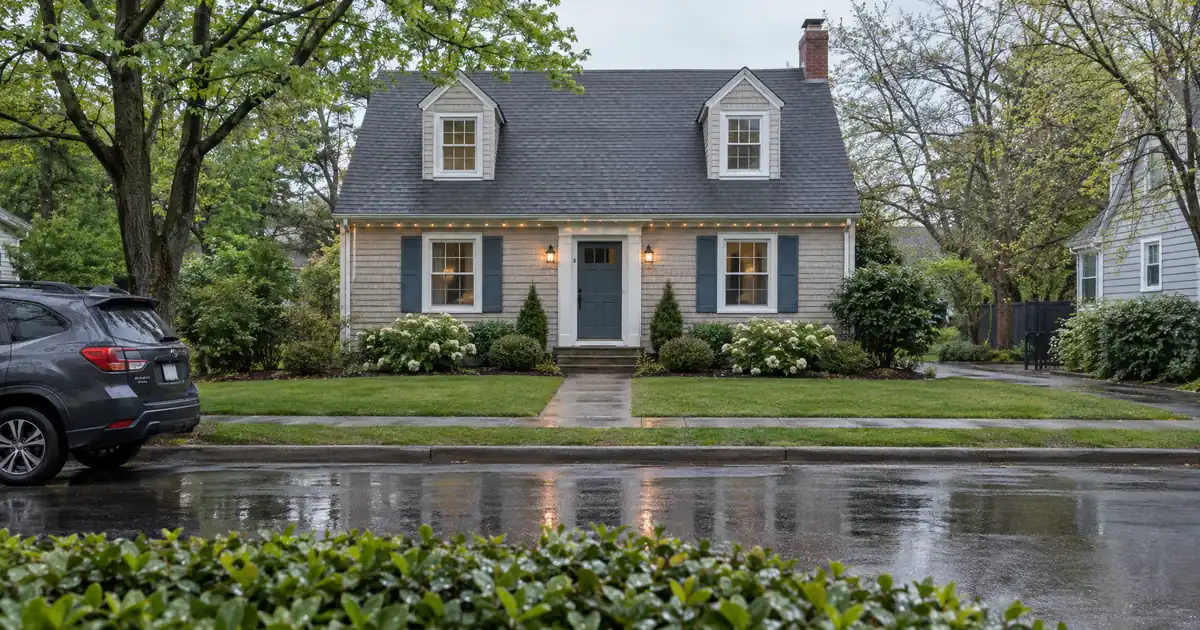
The Quick Read: A DSCR loan is permanent financing on finished, rentable homes, so a build-to-rent owner consolidating 5 to 20 rentals is tested on rent coverage, leverage, credit, reserves and property eligibility, usually on the pool of homes together rather than on a single house.
- Lenders see a newly built rental as an ordinary 1-4 unit rental, not a special product.
- Most purchase files land at 75%-80% LTV on investment property; cash-out tops out around 75%.
- Coverage of 1.00 is where select programs start, and stronger ratios open better terms.
- The appraiser’s market-rent figure, not your pro forma, usually drives coverage on a new build.
- A passing coverage ratio is not the same as positive cash flow.
What Does “Build-to-Rent” Mean to a DSCR Lender?
To a DSCR lender, build-to-rent means a newly built home that is rentable and, ideally, already leased. The label matters less than the property type, the rent evidence and the borrower’s file.
DSCR Calculator
Run the numbers in your market
Rate source: Freddie Mac 30-yr average via FRED® — Federal Reserve Bank of St. Louis · effective Oct 15, 2026
Prefilled with starting assumptions — enter your own rent or nightly figures, taxes, insurance, and HOA for a more accurate picture.
Program parameters update from Lendmire’s centralized guideline source. Taxes and insurance are editable estimates.
As of Oct 15, 2026 · General Freddie Mac market benchmark, not a Lendmire loan offer. Rent, nightly rate, occupancy, taxes, and insurance are editable estimates. Short-term rental figures are estimates only and vary significantly by season, property type, management approach, and local short-term-rental rules — confirm local regulations before relying on them. Qualifying income for short-term rentals varies by program — some use appraisal market rent, others use documented STR history or projections — and is confirmed in underwriting. Not a Loan Estimate, approval, or commitment to lend. Program availability and eligibility are subject to lender guidelines, credit approval, property review, and underwriting.
The industry uses the term for purpose-built rental communities planned, financed and built as one project for long-term rental and professional management. The Urban Institute treats build-to-rent as a subset of the single-family rental market and a growing source of new supply. No single definition is universal.
Here is the practical point. An investor who owns 5 to 20 individual new-construction homes, often in or near one of these communities, holds a stack of 1-4 unit rentals. A DSCR lender underwrites them that way. Community-level financing for an entire development is a different, developer-side channel. The federal housing agency HUD, for example, has opened its FHA multifamily insurance to build-to-rent communities, but that route serves developers and multifamily mortgagees, not a small owner pooling homes.
The sequence a consolidation follows looks like this:
1. The homes are built, and construction debt (a separate product) funds that stage.
2. Each home is leased or appraised for market rent.
3. The homes are appraised for value.
4. The permanent DSCR loan pays off the earlier debt.
5. The homes are grouped into one pool or a set of notes.
Why DSCR Does Not Fund the Build
A DSCR loan is a take-out on a completed home, not a construction loan. Construction debt, whether from a construction lender or private capital, pays for the build. The DSCR financing then replaces it once the home can be appraised and its rent supported.
This matters for timing. If the construction debt matures before the home is rentable and appraised, the borrower is squeezed. Plan the exit before the first foundation is poured, and treat the permanent loan as the last step of the build.
The same logic applies to consolidation. If your homes are already built and occupied, you are past the construction problem. What remains is whether the pool clears the lender’s tests.
How Is Rent Established on a Brand-New Home?
Rent on a new build is usually set by the appraiser’s market-rent schedule, not by your projection. A signed lease can help, and many programs work from the lower of the lease and the appraised figure.
A new subdivision has few leased comparables, so appraised rent can land below what a developer pro forma promised. Lenders borrow the appraisal forms conventional lending uses for this job: the 1007 rent schedule for single-family homes and the 1025 operating income statement for 2-4 units. Those are appraisal forms, not DSCR rules, but they show where the rent number comes from.
Three practical consequences follow:
- A lease above market rent is treated with caution.
- A vacant home runs on appraised rent alone.
- A home with a short or month-to-month lease may be treated differently from one with a standard term, depending on the lender.
If you want the coverage number to look better before you apply, Lendmire’s piece How to Raise DSCR Coverage Before Consolidating 5 to 20 Rentals walks through the levers.
The Requirements, Category by Category
Across the wholesale network Lendmire works with, the requirements fall into seven categories. These are typical ranges, subject to lender guidelines, and no figure here is a commitment to lend.
| Category | What the lender reviews | What you provide |
|---|---|---|
| Property eligibility | 1-4 unit rentals, finished and rentable | Property list, completion details |
| Rent evidence | Lease or appraised market rent | Leases, appraisal rent schedule |
| Coverage test | Rent vs. PITIA, pooled or per home | Insurance, tax and HOA details |
| Leverage test | 75%-80% LTV on purchase; around 75% on cash-out | Appraised values |
| Borrower and entity | Credit, ID, vesting | Entity papers if held in an LLC |
| Reserves | Commonly about 6 months of PITIA | Asset statements |
| Loan size | Roughly $100,000 up to $3,000,000 | Combined balance for the pool |
A few notes on the table. Credit floors begin at 620 in parts of the network, most programs want around 660, and a 700+ score unlocks the strongest leverage tiers. Select high-leverage purchase programs reach 85% LTV with roughly a 700+ score. Purchases tend to sit at 75%-80%, and a consolidation that pulls cash out generally tops out near 75%. The cash-out refinance on a standard rental also expects about 6 months of seasoning.
Reserves vary by lender, leverage, loan size and transaction type. About 6 months of PITIA is common, conservative rate-and-term files at modest leverage under $1,500,000 can see reserves waived, and loans above that size typically step up to about 9 months. Loans above $2,500,000 generally hold to 30-year fixed structures.
Some property types are simply not offered in the network. Manufactured homes (single- and double-wide), log homes and barndominiums fall outside these DSCR programs, so a pool containing one needs a different plan for that home.
How Does Pooled Coverage Work?
On a true blanket loan, coverage is tested on the pool: total rent divided by total PITIA, which means principal, interest, taxes, insurance and any HOA dues. Strong homes can offset weak ones. If instead you close several single-property notes together, each home is tested alone.
Run the numbers on two equal-sized homes with the same debt service. One covers at roughly 1.35x, the other at roughly 0.90x. Pooled, the pair covers at about 1.1x, which clears a 1.00 starting point. Tested separately, the second home fails on its own.
Now the caution. A passing ratio does not mean positive cash flow. DSCR compares rent to PITIA only. Repairs, vacancy, management, utilities and capital reserves sit outside the calculation. A pool at 1.05x can look fine on paper and still feel thin in a month with two vacancies.
Some lenders also define coverage differently, using net operating income over debt service. Confirm which formula your lender uses before you compare quotes.
Coverage of 1.00 is where many select programs start. A separate select-lender path takes coverage below 1.00, with leverage and terms adjusted, usually through lower LTV and stronger credit. That path suits a pool with a clear improvement story. It is a poor fit if the only reason you need it is that the homes do not carry themselves.
Sizing the Loan: Two Limits, and the Lower One Wins
Loan size is capped twice, and the smaller cap controls. One limit comes from value: pooled appraised value times the LTV the program allows. The other comes from rent: the amount the pooled rent can support at the coverage ratio the program requires.
Say you own ten homes of similar value and ask for 75% LTV. If the appraised rent only covers a smaller balance at the coverage the lender wants, the rent limit binds. Pushing for more means either raising coverage, accepting a lower loan, or moving to a sub-1.00 path with adjusted terms. Each figure is subject to lender guidelines and a complete review of property type, leverage, and credit.
A larger down payment on a purchase lowers the monthly payment and can lift coverage. It never erases leverage caps, credit floors, reserve rules or property eligibility. The strongest files clear both tests: enough equity and enough rental coverage.
Five Homes or Twenty? What Changes
Pool size changes the file more than the program. The same tests apply, but the practical load grows.
| Factor | Around 5 homes | Around 20 homes |
|---|---|---|
| Vacancy sensitivity | One empty home moves the ratio | Diluted across the pool |
| Documentation | Manageable | Heavy; needs a tracker |
| Title and entity | Simple to align | Errors become likely |
| Loan size | Usually mid-range | May reach the higher-reserve tier |
| Release planning | One sale matters less | One sale can reshape the pool |
Two points stand out. Twenty homes can easily push the total balance above $1,500,000, which is where reserves typically step up to about 9 months. And a pool built mostly in one community can bump into lender limits on exposure in one ZIP code or county. Ask about concentration early.
Which Homes Belong in the Pool?
Screen each home before you assemble the pool, because one weak home can drag down the whole file. A home belongs in the pool when it is a finished 1-4 unit rental of an eligible type, with rent evidence you trust and a clear title in the borrowing entity.
Leave out, or plan around:
- Homes of a type the network does not offer, such as manufactured or log homes.
- Homes with unresolved title or vesting problems.
- Homes still on cheap legacy debt that you would lose by paying off.
- Homes with appraised rent far below the rest.
- Homes recently completed, if they lack seasoning for a cash-out request.
If you hold title in an LLC, the entity must match across the homes, subject to program eligibility. Many files stall because a few homes sit in a personal name and the rest in an entity.
One more reality for new construction. Tax bills on a new home often reset after the county reassesses it, and HOA-heavy communities carry higher dues. Both raise PITIA and pull coverage down, so use today’s expected carrying costs, not the builder’s early estimates.
DSCR vs. conventional financing
There are two common ways to finance an investment property, and they qualify you differently — here’s how investors weigh them.
Why investors choose it
- Qualifies on the property’s rental income — no personal tax returns, W-2s, or pay stubs needed to document income.
- No personal debt-to-income ceiling to clear, so existing mortgages and obligations don’t cap your borrowing the same way.
- Can be closed in an LLC, keeping the property inside a business entity.
- Built for scaling — not held to the limit on number of financed properties that conventional financing applies.
- Underwriting centers on the deal: generally qualifies when the rent covers the payment, a 1.00x coverage ratio being a common baseline (confirmed in underwriting).
- Designed specifically for investment property, including long-term and, where the program allows, short-term rentals.
Where it’s strong
- Often the lowest ongoing financing cost for a buyer who fully qualifies on personal income — a fit for a first property or a cost-first purchase.
Trade-offs for investors
- Requires full personal income documentation and must fit within a debt-to-income limit — salary, existing debts, and other mortgages all count.
- Typically held in your personal name rather than a business entity.
- Caps how many financed properties you can carry, which can become a ceiling as a portfolio grows.
- Evaluates you as a borrower as much as the property, which usually means more paperwork.
How investors usually choose: a first or single property often optimizes for the lowest financing cost; portfolio builders often optimize for leverage, vesting in an LLC, and scaling past conventional caps. The right answer depends on your goals, the property, and current guidelines — both paths run through select lenders in Lendmire’s wholesale network, with eligibility and terms confirmed in underwriting.
Release, Prepayment and Exit Planning
A true blanket loan ties every home to the whole balance, so you need to know how a home leaves the pool. A release clause lets one property exit when a stated amount is paid, usually a figure above the balance allocated to that home. It exists only if the note contains it, so read the clause rather than assuming it is there.
Cross-collateral risk is the other side of the structure. One default or one title problem can reach every property. The trade is simplicity for flexibility: one payment and one servicer, but fewer clean exits.
Exit order matters too. Selling the strongest home first can leave a pool that fails its retest. If you expect to sell homes in the next few years, separate notes may fit better, because each home stands alone.
The industry is also watching policy. Reporting by Multifamily Dive describes a proposed provision that would force institutional build-to-rent owners to sell homes within a set period. It targets institutional owners rather than small DSCR borrowers, so it is best treated as a headline to watch.
For scale, the Urban Institute cites NAHB estimates of about 84,000 single-family homes built to rent in one recent year and 68,000 in the next. Including homes sold to investors after completion lifts annual supply to around 120,000, mostly institutionally owned. That is a lot of new inventory feeding the rental comps your appraiser will use.
Where the Pooled Approach Stops
Very large communities and larger multifamily buildings are typically underwritten on a commercial basis, not a DSCR basis. If you own an entire 100-home community, or buildings with five or more units, a pooled 1-4 unit DSCR file is probably the wrong lane.
DSCR loans are designed for non-owner-occupied investment properties. Because they are business-purpose investor loans, they are reviewed differently from a standard owner-occupied mortgage.
Common Mistakes
- Using pro forma rent instead of appraised rent.
- Closing the permanent loan before lease-up is far enough along to document rent.
- Assuming a release clause exists.
- Pooling homes of mixed vintage without checking seasoning for each one.
- Treating a 1.05x ratio as proof of cash flow.
- Mixing personal and entity titles.
- Ignoring reserve steps once the balance crosses $1,500,000.
Which Structure Fits? A Decision Table
| Your situation | Likely better fit |
|---|---|
| Long hold, uneven home performance | One pooled loan |
| Planning to sell homes soon | Separate notes |
| Cheap legacy debt on a few homes | Leave those out |
| Whole community or 5+ unit buildings | Commercial route |
| Weak coverage but strong equity | Sub-1.00 path, terms adjusted |
Tax treatment can depend on how the funds are used and how the property is held; investors should keep clear records and speak with a qualified tax professional before relying on any deduction.
Term structure is another choice. The spine of the network is the 30-year fixed, with extended terms (40-year) and interest-only periods available through select lenders, and ARM structures for investors who want them. The complete DSCR loans guide covers the program basics.
Key Terms Defined
DSCR (debt service coverage ratio): A measure of how well a property’s rent covers its monthly PITIA.
PITIA: Principal, interest, taxes, insurance and any HOA dues on the property.
Take-out loan: Permanent financing that pays off short-term construction debt.
Seasoning: The time a lender wants you to have held a property before a cash-out refinance.
Pooled coverage: Total rent across the pool divided by total PITIA across the pool.
Blanket loan: One note secured by several properties, each backing the full balance.
Frequently Asked Questions
Can a DSCR loan fund construction?
No. It is permanent financing on a finished, rentable home. Construction debt covers the build, and the DSCR loan replaces it once the home can be appraised and its rent supported.
Do I need a signed lease on every home?
Not always. Many programs accept appraised market rent when a home has no lease, and some use the lower of the lease and the appraisal. A lease can still help the file, subject to lender guidelines.
Can I hold the homes in an LLC?
Often yes, per lender program requirements. The entity paperwork has to match the title on every home in the pool, which is where many consolidation files hit trouble.
What if one home fails the coverage test?
On a pooled loan, stronger homes may offset it. On separate notes, that home is tested alone. You can also leave it out, improve its rent, or explore a select-lender path below 1.00 with leverage and terms adjusted.
Do I need personal income documents?
Qualification runs primarily on property-level rental income covering the payment, subject to lender guidelines. Lenders still review credit, assets and reserves.
Next Steps
If you are buying or refinancing a rental property and want to see how the numbers work, Lendmire can help you compare DSCR loan options based on the property income, credit profile, leverage, and investor goals. Investors can reach the team at 828-256-2183 or request a quote.
Build-to-rent supply is still arriving in large numbers, so the pool of comparable leased homes your appraiser can use will keep growing, and the appraised rent on your next consolidation may look different from your last one.
About Lendmire
Lendmire — NMLS# 2371349 — is a mortgage brokerage specializing in DSCR investor loans, helping arrange financing across 41 markets, including Washington, D.C., through wholesale and investor-lending channels. The model centers on property-level rental income reviewed by the lender rather than W-2 documentation, subject to lender guidelines, suiting entity-owned and multi-property investors. Lendmire holds Scotsman Guide Top Mortgage Workplace recognition for 2025 and 2026.
Get Started
Ready to find the right loan for you?
In about 30 seconds you can review financing options available for your investment property. No commitment required.
Informational only. Not a Loan Estimate, approval, or commitment to lend. Program availability and eligibility are subject to lender guidelines, credit approval, property review, and underwriting.
References
1. National Multifamily Housing Council
2. Urban Institute: What Is the Build-to-Rent Sector
3. HUD Mortgagee Letter 2026-12
5. Urban Institute, Urban Wire
This article is part of Lendmire’s DSCR loan program — full qualification details, guidelines, and scenarios live on the program page.
Related reading: Is a DSCR Loan on Rentals in Three States Harder to Document? · Is a DSCR Portfolio Loan Worth It for Rentals Bought One at a Time? · Can a Portfolio DSCR Loan Refinance Rentals Including a Duplex?
Brandon Miller
Founder & CEO, Mortgage Loan Originator, Lendmire LLC
- Mortgage Loan Originator · NMLS# 1129696 · Verify on NMLS Consumer Access
- North Carolina Real Estate Broker · License# 343312 · Verify on NCREC
- North Carolina Insurance Producer · License# 19053198 · Property, Casualty, Life, Health · Verify on NAIC SBS
- Lendmire LLC · Firm NMLS# 2371349 · Verify firm licensure
Disclosures. The information presented in this article is general market commentary, not financial, legal, or tax advice. Lendmire is a mortgage brokerage (NMLS# 2371349) — not a direct lender or depository institution — and loan placement is subject to lender underwriting. Nothing in this content represents a commitment to lend. Loan terms, pricing, and program availability vary based on borrower qualifications, property characteristics, and state of subject property, and are subject to change at any time. Lendmire complies with Equal Housing Opportunity requirements. Consumer access: nmlsconsumeraccess.org.