
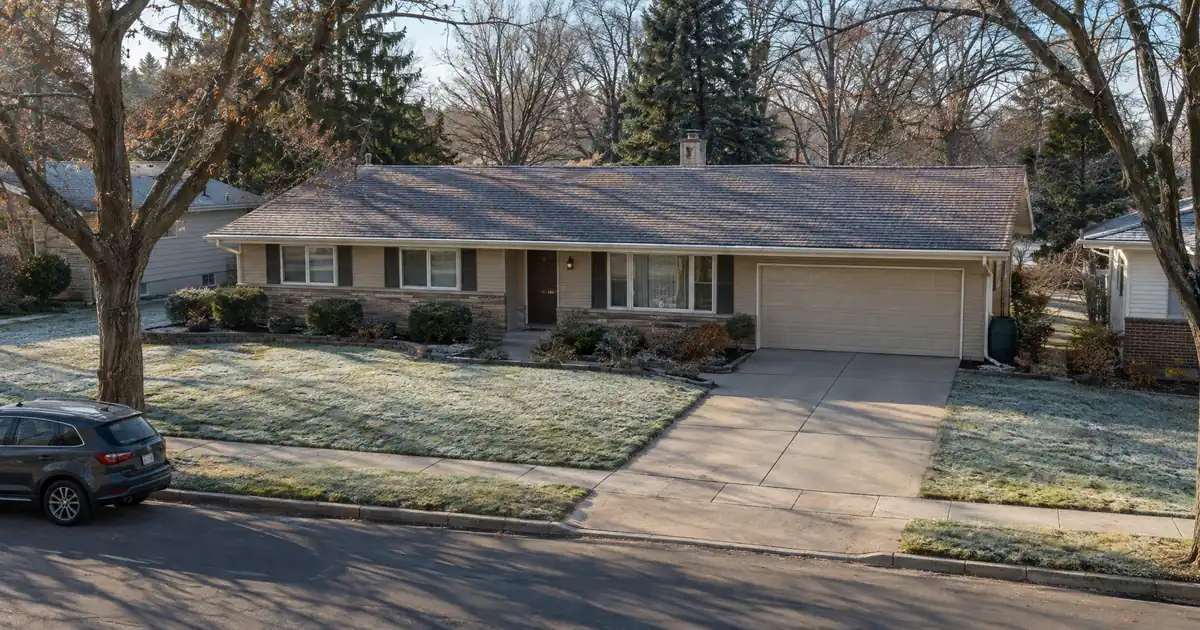
The Quick Read: A portfolio loan covers both houses under one note, but it does not mean one insurance policy. Each house still needs its own acceptable hazard coverage, and two states mean two sets of insurance markets to satisfy. Insurance premiums sit inside the monthly payment the rent must cover, so they move your coverage ratio directly.
- Each tenant-occupied house typically needs a landlord or dwelling-fire policy, usually the DP-3 form, not a homeowners policy.
- The named insured should match whoever holds title, including an LLC, subject to program terms.
- The lender is listed as mortgagee on every property’s policy.
- Flood coverage is checked house by house, so one state may need it and the other may not.
- Premiums feed the debt coverage ratio, so a renewal jump can lower the number with no change in rent.
Investors who own two rentals in different states often assume the paperwork doubles in a simple, parallel way. It mostly does. The surprises come from flood zones, carrier licensing, and the way a premium spike in one state drags down a combined ratio. This article walks through what the policies must say, how underwriting treats them, and where two-state pools get tricky. For the full picture of how these loans work, see Lendmire’s complete DSCR loans guide.
DSCR Calculator
Run the numbers in your market
Rate source: Freddie Mac 30-yr average via FRED® — Federal Reserve Bank of St. Louis · effective Oct 15, 2026
Prefilled with starting assumptions — enter your own rent or nightly figures, taxes, insurance, and HOA for a more accurate picture.
Program parameters update from Lendmire’s centralized guideline source. Taxes and insurance are editable estimates.
As of Oct 15, 2026 · General Freddie Mac market benchmark, not a Lendmire loan offer. Rent, nightly rate, occupancy, taxes, and insurance are editable estimates. Short-term rental figures are estimates only and vary significantly by season, property type, management approach, and local short-term-rental rules — confirm local regulations before relying on them. Qualifying income for short-term rentals varies by program — some use appraisal market rent, others use documented STR history or projections — and is confirmed in underwriting. Not a Loan Estimate, approval, or commitment to lend. Program availability and eligibility are subject to lender guidelines, credit approval, property review, and underwriting.
Key Terms Defined
DSCR (debt service coverage ratio): the property’s monthly rent divided by its monthly obligation, which is principal, interest, taxes, insurance, and any HOA dues.
PITIA: the full monthly obligation: principal, interest, taxes, insurance, and association dues.
Portfolio (blanket) loan: one loan secured by several properties, often with coverage measured across the whole group.
Mortgagee: the lender, listed on the insurance policy so it is paid alongside you on a dwelling claim.
DP-3: the “special form” dwelling-fire policy, commonly used for rentals the owner does not live in.
Loss of rents: coverage that replaces rental income while a covered loss makes the house unlivable.
Binder: short-term proof that coverage has been bound before the full policy is issued.
Pooled coverage: the ratio of combined rent to combined PITIA across every house in the loan.
Why a Portfolio Loan Does Not Mean a Portfolio Policy
A DSCR loan is a business-purpose investor loan, so the insurance rules come from the loan documents and program guidelines. They do not come from a one-size statute. DSCR loans are designed for non-owner-occupied investment properties, and they are reviewed differently from a standard owner-occupied mortgage.
Here is the practical result. One note across two houses still requires acceptable coverage on each house. Lenders want to see that every collateral property can be rebuilt after a loss, because each one backs the debt.
Some investors do buy one blanket property policy that lists several dwellings. That is a separate insurance product, and a lender may or may not accept it as written. Investor commentary on BiggerPockets describes portfolio policies that can add properties in several states and list multiple lenders and entities. The same thread notes that commercial blanket policies may leave out liability coverage, so check that piece on its own.
Across the wholesale network Lendmire works with, the safest assumption is simple. Plan on evidence of coverage for each address, with the lender named on each one, and ask early whether a multi-location policy is acceptable on your file.
What the Policy Has to Look Like on Each House
Underwriters review the same core items on every house in the pool. Think of this as a per-property checklist.
| Item | What lenders typically look for |
|---|---|
| Policy form | Landlord or dwelling-fire (DP-3), not homeowners |
| Named insured | Matches the borrower or title-holding LLC |
| Mortgagee clause | Lender listed on each property |
| Dwelling limit | Enough to rebuild, per program rules |
| Loss of rents | Often expected on landlord forms |
| Flood | Separate policy where required |
Landlord form, not homeowners
The North Carolina Department of Insurance explains that a dwelling-fire policy is typically used when the owner does not live in the property. It labels DP-1 the basic form, DP-2 the broad form, and DP-3 the special form. DP-3 covers the dwelling and other structures on an open-perils basis, while personal property is covered on a named-perils basis.
A tenant-occupied house on a homeowners form is the classic mismatch. Insurers can treat rental use as business use. Expect the lender to ask for the landlord form instead.
Named insured and LLC alignment
If an LLC holds title, the policy should name the LLC. A mismatch here is one of the most common reasons a file stalls near the finish. Lending to LLC-titled entities is subject to lender program eligibility, so confirm your structure before you order the policy.
Two states add a wrinkle. An LLC formed in one state that holds a house in another still needs one clean insured name on both policies. Keep the spelling identical across every document.
Dwelling limit and loss of rents
Lenders typically want the dwelling limit to cover the cost to rebuild. Exact thresholds are program-specific, so ask for them in writing. Insurance.com notes that a lender may require coverage sufficient to cover the outstanding mortgage balance along with the rebuild.
Landlord policies commonly include loss of rents. Flood policies do not. That gap matters, and we return to it below.
How Underwriting Treats Insurance, Step by Step
Here is how the review typically flows on a two-house, two-state file.
1. Flood determination, per property. The lender checks each address against federal flood maps. A listing site does not decide this. Expect one house to need flood coverage and the other not.
2. Policy form check. Each house needs a landlord or DP-3 equivalent.
3. Named insured check. The insured must match the borrower or title-holding entity.
4. Mortgagee clause. The lender is added as mortgagee or loss payee on each policy, which puts it on the claim check for dwelling proceeds.
5. Dwelling limit check. The limit is tested against rebuild cost and program rules.
6. Premium enters the ratio. The annual premium is divided by 12 and lands in PITIA. Flood, wind, and hazard premiums all land in the same denominator.
7. Evidence before funding. The file typically needs proof of coverage with effective dates that leave no gap.
8. After funding. Renewals are monitored. A lapse can trigger lender-placed coverage at your expense.
Step six is where insurance touches your approval directly. The ratio is rent divided by PITIA. A higher premium raises the bottom number, so the ratio falls even if rent stays flat.
Flood: The One Place Federal Rules Reach
Flood is different from everything else on this list, and it is the likeliest reason your two houses get different treatment.
The Congressional Research Service traces the mandatory flood purchase requirement to the Flood Disaster Protection Act of 1973. It applies to properties in a mapped Special Flood Hazard Area with a federally backed mortgage. A privately funded DSCR lender may still require flood coverage by contract, so ask how your lender’s program treats it rather than assuming the statute’s reach.
The National Association of Realtors explains that a Special Flood Hazard Area carries a 1% annual chance of flooding. Moderate-to-low-risk zones, labeled X, B and C, do not trigger the federal requirement.
Two facts catch investors off guard.
A DP-3 policy does not cover flood. The NAIC lists floods and earthquakes among the typical exclusions on all-risks dwelling coverage. Flood needs its own policy.
The federal program has a ceiling. The Congressional Research Service reports that National Flood Insurance Program coverage limits for 1–4 family homes are capped for both the building and its contents. A higher-value house may need a private flood policy, and you should confirm lender acceptance before you buy one.
Also remember that flood policies do not replace lost rent. You can satisfy the lender’s flood condition and still have no income protection if the house floods and sits empty.
Two Houses, Two States: Where the Differences Show Up
The title’s core question is what changes when the houses sit in different states. The honest answer is that the rules for the loan stay the same while the insurance markets do not.
| Variable | State one | State two |
|---|---|---|
| Carrier licensing | Must be licensed there | Must be licensed there |
| Dominant perils | Local mix of wind, hail, fire, flood | A different local mix |
| Flood zone | Determined per address | Determined per address |
| Deductibles | Set by that state’s market | Set by that state’s market |
| Evidence | Own declarations page | Own declarations page |
State insurance departments regulate carriers and forms, so a carrier has to be licensed in each state where it writes a policy. An insurance agency blog, Fadaie Insurance, makes the point that not every carrier offers multi-state blanket coverage. Treat that as a general caution, not a rule.
Investor commentary shows how uneven this is in practice. In one BiggerPockets discussion on umbrella coverage, captive carriers could not add out-of-state rentals, while a commercial broker said blanket programs spanning many states are routine. Those posts are anecdotal. The takeaway is that splitting carriers by state is common, and that is fine for underwriting as long as each house shows acceptable coverage.
One more practical point. Whether a single portfolio loan can span two states is a program rule, not a law of insurance. Across the network, that is a question to settle on the lender side before you shop for policies. Lendmire arranges DSCR investor loans in 40 states plus Washington, D.C., and the pooling rules for a specific file depend on the select lender and program.
How Premiums Move the Pooled Ratio
Run the numbers on a simple two-house pool, described in ratios rather than dollars. Say the combined rent clears the combined PITIA at roughly 1.25x. Now suppose the house in the hurricane-exposed state renews with a sharp premium increase while rent is unchanged. The denominator rises, and the pooled ratio might slide toward 1.10x. Nothing about the tenants changed.
Now picture the same pool after a covered loss at one house. If the house sits empty and loss of rents is thin or missing, the pool’s rent falls while the monthly obligation stays whole. One weak house can pull the whole pooled number down until it earns again.
Three habits protect you:
- Use real quotes, not estimates, when you run coverage before locking the loan. A stale premium estimate is a common source of late surprises.
- Remember that 1.00 is where select programs start, not a comfortable target. Stronger ratios open better pricing and leverage. Coverage below 1.00 is available through select lenders in the network, with leverage and terms adjusted.
- Keep reserves in mind. Reserves commonly run around 6 months of PITIA, stepping up to about 9 months on loans above $1,500,000, subject to lender guidelines.
Clearing the ratio is also not the same as positive cash flow. DSCR compares rent to PITIA only. Repairs, vacancy, management, utilities, and capex sit outside it.
Leverage rules still apply on top of all this. Purchases typically land at 75% to 80% LTV on an investment property, and cash-out refinances top out around 75%. Insurance cannot buy back leverage, and a low premium cannot erase a credit or reserve requirement.
DSCR vs. conventional financing
There are two common ways to finance an investment property, and they qualify you differently — here’s how investors weigh them.
Why investors choose it
- Qualifies on the property’s rental income — no personal tax returns, W-2s, or pay stubs needed to document income.
- No personal debt-to-income ceiling to clear, so existing mortgages and obligations don’t cap your borrowing the same way.
- Can be closed in an LLC, keeping the property inside a business entity.
- Built for scaling — not held to the limit on number of financed properties that conventional financing applies.
- Underwriting centers on the deal: generally qualifies when the rent covers the payment, a 1.00x coverage ratio being a common baseline (confirmed in underwriting).
- Designed specifically for investment property, including long-term and, where the program allows, short-term rentals.
Where it’s strong
- Often the lowest ongoing financing cost for a buyer who fully qualifies on personal income — a fit for a first property or a cost-first purchase.
Trade-offs for investors
- Requires full personal income documentation and must fit within a debt-to-income limit — salary, existing debts, and other mortgages all count.
- Typically held in your personal name rather than a business entity.
- Caps how many financed properties you can carry, which can become a ceiling as a portfolio grows.
- Evaluates you as a borrower as much as the property, which usually means more paperwork.
How investors usually choose: a first or single property often optimizes for the lowest financing cost; portfolio builders often optimize for leverage, vesting in an LLC, and scaling past conventional caps. The right answer depends on your goals, the property, and current guidelines — both paths run through select lenders in Lendmire’s wholesale network, with eligibility and terms confirmed in underwriting.
Edge Cases Where the General Rule Bends
Blanket policies behave differently from individual ones. A BiggerPockets thread on blanket coverage explains that some carriers keep separate policies and bill them together, while others write one policy with several dwellings. A contributor there warns that a claim on one property can complicate renewal for all of them.
Umbrella liability has limits. Personal-lines carriers sometimes cap how many rentals they will place on an umbrella. One investor in a BiggerPockets post cites a four-property cap. Treat that as one person’s experience, not a rule.
Condos. A condo can involve an association master policy plus the owner’s own unit policy. Ask the underwriter which pieces the file needs.
Vacant or short-term-rental houses. These may need a different form than a long-term tenant house. For short-term rentals, the program side changes too: purchases go up to 75% LTV, cash-out and some refinance structures sit around 70%, and expect a 640+ score and about 12 months of hosting history. Short-term rental rules can vary by city, county, HOA, and property type, so confirm local rules before relying on projected rental income. Every figure here varies by lender and program — guidelines, property type, leverage, and credit profile all apply.
Mixed pools. A long-term rental in one state and a short-term rental in the other can need two different policy forms, with two different evidence packages.
Property types that are not offered. Manufactured homes, log homes, and barndominiums are not offered in the network’s DSCR programs, so insurance questions never arise for them.
Evidence Package and Timing
Plan one evidence folder per house. A typical package includes the declarations page, the mortgagee clause showing the lender’s name and loan number, proof of effective dates with no gap, and proof the premium is paid or escrowed. A quote is not a bound policy. A binder is a short-term stand-in until the full policy issues.
With two states you may have two agents and two carriers, and renewal dates will rarely line up. Put both renewals on one calendar. Staggered dates mean you may face a premium surprise twice a year instead of once.
Several things commonly stall pooled files:
- An insured name that differs by one letter or one entity suffix
- A homeowners form on a rented house
- A policy written on actual cash value when the lender expects replacement cost
- A condo owner who assumed the association’s master policy was enough
- Flood handled for one house but missed on the other
Questions to Ask Before You Apply
Put these in writing to your broker and your insurance agent.
1. Does this program accept one multi-location policy, or does each house need its own?
2. Can the pool include houses in two states?
3. How does the program test the dwelling limit?
4. Is loss of rents expected, and for how long?
5. Is flood required on either house, and is a private flood policy acceptable above the federal cap?
6. Is insurance escrowed, and how are renewals tracked across two policies?
7. What happens to the pool if one policy lapses?
Lendmire’s piece One Blanket Loan vs Two Smaller DSCR Portfolio Loans for 10 Houses is a useful companion when the answer to question two is not what you hoped. If one house is much weaker than the other, the article How a Portfolio Cash-Out Refinance Allocates Two Weak Houses shows how the pool treats it.
Tax treatment varies; consult a qualified professional.
Frequently Asked Questions
Do both houses need separate insurance policies?
Each house needs its own acceptable coverage, whether that comes from two policies or one multi-location policy the lender accepts. A portfolio loan does not remove the per-property requirement. Ask the lender in writing whether a blanket policy is acceptable on your file.
Can an LLC be the insured on a DSCR portfolio?
Yes, and when an LLC holds title the policy should name it, subject to program terms. The insured name must match the loan file exactly. Portfolio policies can often list several entities, according to investor commentary on BiggerPockets.
Is loss-of-rents coverage required?
Landlord policies commonly include it, and lenders often expect it, though the exact requirement is program-specific. Flood policies do not replace lost rent, so protect that income separately if flood is a real risk.
Does flood coverage differ between the two states?
It can, because flood zones are determined house by house. One house may sit in a mapped high-risk zone while the other does not. The federal program caps building coverage at $250,000 on 1–4 family homes, so higher-value houses may need a private policy.
What if one premium jumps at renewal?
The pooled ratio falls because the monthly obligation rises while rent is unchanged. Keep reserves in place, shop the renewal like-for-like, and rerun the combined number before the policy date.
About Lendmire
Lendmire is a non-QM mortgage brokerage (NMLS# 2371349) arranging DSCR investor loans in 41 markets, including Washington, D.C., through wholesale and investor-lending channels. DSCR loans are evaluated by the lender on rental income rather than personal income, subject to lender guidelines — a fit for LLC-owned portfolios, self-employed investors, and operators scaling beyond conventional loan caps. Recognized as a Scotsman Guide Top Mortgage Workplace in 2025 and 2026.
Get Started
Ready to find the right loan for you?
In about 30 seconds you can review financing options available for your investment property. No commitment required.
Informational only. Not a Loan Estimate, approval, or commitment to lend. Program availability and eligibility are subject to lender guidelines, credit approval, property review, and underwriting.
References
1. BiggerPockets – Blanket Coverage for 20 Properties
2. NC Department of Insurance – Dwelling Policies
4. Congressional Research Service – NFIP Selected Issues
5. National Association of Realtors – Flood Zone Tips
6. NAIC
8. BiggerPockets discussion on umbrella coverage
9. BiggerPockets thread on blanket coverage
This article is part of Lendmire’s DSCR loan program — full qualification details, guidelines, and scenarios live on the program page.
Related reading: Can an Out-of-State Investor Fix a DSCR Insurance Shortfall? · Is a 30-Year DSCR Loan Safer for an LLC Portfolio With 10+ Doors? · Portfolio DSCR Reserve Requirements With Deferred Maintenance
Brandon Miller
Founder & CEO, Mortgage Loan Originator, Lendmire LLC
- Mortgage Loan Originator · NMLS# 1129696 · Verify on NMLS Consumer Access
- North Carolina Real Estate Broker · License# 343312 · Verify on NCREC
- North Carolina Insurance Producer · License# 19053198 · Property, Casualty, Life, Health · Verify on NAIC SBS
- Lendmire LLC · Firm NMLS# 2371349 · Verify firm licensure
Important disclosures. Lendmire (NMLS# 2371349) is a licensed mortgage brokerage. Lendmire is not a direct lender, depository institution, or financial advisor. All loan inquiries are subject to lender underwriting; this article does not constitute a commitment to lend. Rates, terms, and program guidelines are subject to change without notice and vary by borrower profile, property type, and state. Information in this article is general in nature and is not financial, legal, or tax advice. Equal Housing Opportunity. NMLS Consumer Access: nmlsconsumeraccess.org.