
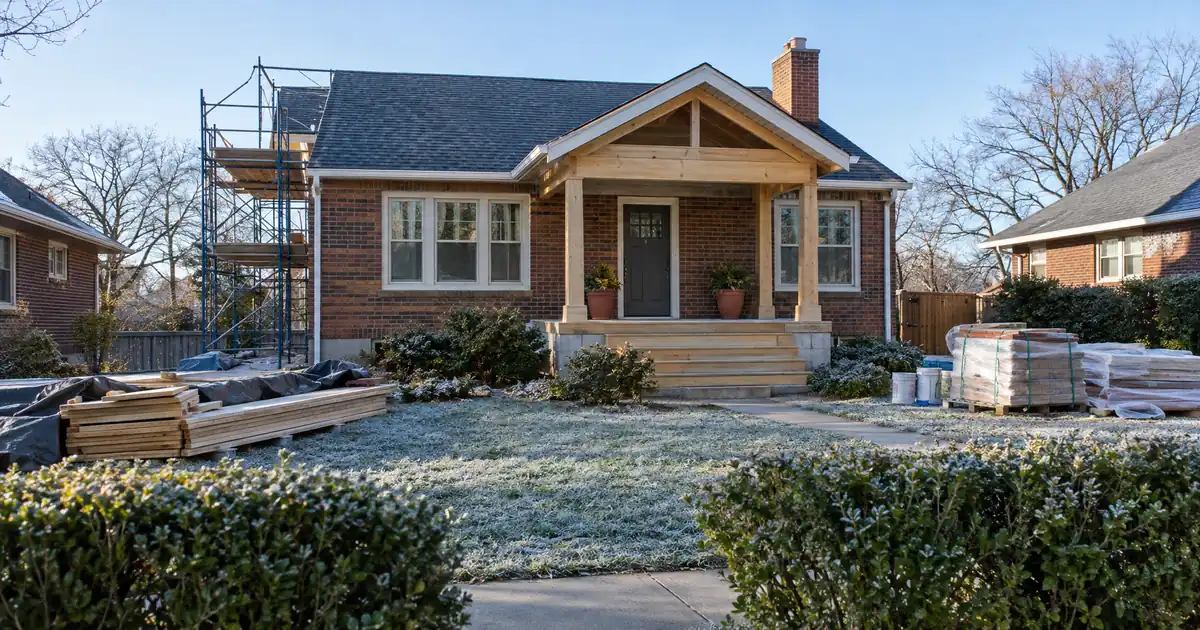
The Quick Read: Extend hard money when the build is not finished, not yet rentable, or the note is performing and only needs more time; take out with a DSCR loan when the house is complete, has a certificate of occupancy, and an appraisal rent figure that covers the payment at a workable loan-to-value. The two are not rivals. They manage the same risk, a short loan ending before long-term financing is in place.
- An extension moves the maturity date only. The loan stays interest-only with a balloon.
- A DSCR takeout is a new long-term loan that qualifies primarily on property-level rental income covering the payment, subject to lender guidelines.
- A DSCR cash-out refinance tops out at 75% LTV on a standard investment rental, with about 6 months of ownership measured from title recording.
- Rent coverage and equity both have to clear. Strong rent does not erase a leverage cap.
Here is the honest answer on who each option is for. Extension fits the builder who is close but not ready. The punch list is open, the CO has not issued, or the appraisal would land short today. A takeout fits the builder with a finished, rentable house and a payoff that fits inside the new loan’s limits. Most files decide themselves once those facts are on the table.
DSCR Calculator
Run the numbers in your market
Rate source: Freddie Mac 30-yr average via FRED® — Federal Reserve Bank of St. Louis · effective Oct 15, 2026
Prefilled with starting assumptions — enter your own rent or nightly figures, taxes, insurance, and HOA for a more accurate picture.
Program parameters update from Lendmire’s centralized guideline source. Taxes and insurance are editable estimates.
As of Oct 15, 2026 · General Freddie Mac market benchmark, not a Lendmire loan offer. Rent, nightly rate, occupancy, taxes, and insurance are editable estimates. Short-term rental figures are estimates only and vary significantly by season, property type, management approach, and local short-term-rental rules — confirm local regulations before relying on them. Qualifying income for short-term rentals varies by program — some use appraisal market rent, others use documented STR history or projections — and is confirmed in underwriting. Not a Loan Estimate, approval, or commitment to lend. Program availability and eligibility are subject to lender guidelines, credit approval, property review, and underwriting.
Side-by-Side
The table below puts the two paths next to each other. The extension column reflects general industry practice for private hard money notes, so the note’s own terms control. The takeout column uses the DSCR guidelines Lendmire’s wholesale network works with. All of it varies by lender, property, and borrower.
| Factor | Extend hard money | DSCR takeout |
|---|---|---|
| Review basis | Lender’s view of plan, collateral, exit | Rent vs. PITIA, value, credit, reserves |
| Documentation | Extension request, payoff and draw status | Appraisal with rent schedule, credit, entity papers |
| Property types | 1-4 units; ground-up to 10 units | Finished rentals; manufactured, log, barndominium not offered |
| Entity vesting | Stays as originally papered | LLC borrower with personal guarantor is common |
| Timeline pressure | Moves the date; structure unchanged | New long-term loan; needs a finished, rentable home |
| Reserve expectations | Set by the lender; liquidity may be reviewed | About 6 months PITIA; about 9 above $1,500,000 |
Reserve figures are guideline ranges, not universal rules. Conservative rate-and-term files at modest leverage under $1,500,000 can see reserves waived on some programs.
How the Two Loans Are Built Differently
Hard money underwrites the project. The lender looks at the builder’s track record, the plan, the collateral, and the exit. Across the hard money lenders in Lendmire’s network, ground-up construction runs up to 90% of cost and 75% of completed value at 3+ completed projects. Terms run 6-18 months, interest-only, with no prepayment penalty. Loan sizes go up to $5,000,000, and larger by exception. Credit starts at a 620 minimum with added conditions below 660. All of that varies by lender, property, and experience, and none of it is a commitment to lend.
There are no multi-year options on that program. A builder who needs more runway has two paths. One is a negotiated extension on the existing note. The other is a refinance into long-term rental financing.
A DSCR loan underwrites the rental. The lender wants a finished house, a supportable rent figure, an appraised value that supports the payoff, and a borrower who clears the credit and reserve tests. The ratio is monthly rent divided by the monthly obligation: principal, interest, taxes, insurance, and any HOA dues. Many select programs start at 1.00. A separate select-lender path takes coverage below 1.00, with leverage and terms adjusted. Credit floors begin at 620 in parts of the network, most programs want around 660, and 700+ opens the strongest tiers.
Clearing 1.00 is not positive cash flow. The ratio counts rent against the payment. Repairs, vacancy, management, utilities, and capex sit outside it. Some commercial usage divides net operating income by debt service instead, so the definition is whatever the lender’s program says it is.
When Extending Hard Money Is the Better Fit
Extension wins when the property cannot be underwritten as a rental yet. Four situations come up most often on ground-up files.
The build is behind. The final draw is open, the punch list is long, or inspections are slipping. A takeout file needs a completed house, and a DSCR lender will not underwrite a plan. Forcing the file early usually produces a stall at appraisal or title.
There is no certificate of occupancy. The CO is the gate on most takeout files. A temporary CO that is about to expire is an edge case worth verifying locally with the permitting office. If the property cannot lawfully be occupied, it cannot be lease-ready.
The appraisal would land short. A new build has no operating history and often thin rent comps. The takeout lender uses its own appraised value and rent, not the builder’s pro forma. If the number comes back light, the loan amount shrinks and the builder has to bring cash to the payoff. An extension buys time to lease the house, build a track record, or wait out a soft comp set.
Ownership-period rules have not run. Cash-out on the network’s DSCR programs generally expects about 6 months of ownership, measured from title recording. On a builder’s own lot, how that clock applies is a lender policy item. If maturity lands before the clock runs, the options are an extension, a payoff-only loan, bringing cash, or selling.
The catch on extensions is that they are discretionary. Lenders usually grant them on performing loans, and they cost a fee. The fee and the added interest enlarge the payoff, so any later takeout has to cover a bigger number. That can shrink or erase cash-out. An extension also stays interest-only with a balloon at the end. It does not turn the loan into long-term debt.
One more point on the extension side. Because the extension is a contract amendment, it needs no rent evidence. That makes it cleaner than forcing a takeout file with no lease. Confirm in the note whether any extension option is tied to a coverage or occupancy test. Commercial bridge notes sometimes carry one, and a private hard money note may not.
Investors describe the risk in plain terms. One broker’s view in a BiggerPockets thread on hard money lenders is that these loans are built to be short-term, in and out, and that a balloon arriving before the deal is done can start eating equity. It is one opinion, but it matches how these files behave.
When a DSCR Takeout Is the Better Fit
A takeout wins when the house is done and the rental case is documented. The test is whether the file clears both halves: enough equity and enough rent.
The house is complete and rentable. The CO has issued, the final draw is closed, and hazard insurance is in force on the finished home. This is the point where a DSCR lender can treat the property as a rental.
Rent is supportable. With no tenant yet, the appraiser’s market rent is the rent figure. For a single-family investment property, the appraiser typically prepares a rent schedule, and Fannie Mae’s Form 1007 is the common format. Freddie Mac’s copy of the same form describes it as a way to estimate market rent from the appraiser. These are agency forms. DSCR loans are not agency products, and each lender decides how it uses a rent schedule. For two- to four-unit builds, rent documentation shifts to a small residential income property appraisal report and a rent roll. Some lenders use the lower of lease rent and market rent, so confirm per program.
The payoff fits the new loan. Title pays the hard money lender from the new loan’s proceeds. Here are the network figures that matter on an investment property:
- A DSCR rate-and-term refinance, with no cash back at closing, can reach up to 85% LTV at the top tier.
- A DSCR cash-out refinance tops out at 75% LTV on a standard rental.
- Loan sizes run up to $3,000,000 on standard programs.
- Short-term rental collateral has its own lower ceilings and expects about 12 months of hosting history. The exact numbers vary by lender and program and follow a full review of property, leverage, and credit.
Those are guideline ranges. Your credit tier, coverage ratio, and reserves set where a specific file lands.
The cost of a second closing is worth it. A takeout replaces interest-only debt with long-term structure. The spine is the 30-year fixed. Extended terms and interest-only periods exist through select lenders, and ARM structures are available for investors who want them. Many investors refinance out of hard money into long-term DSCR financing once the property is stabilized, and Lendmire brokers that path through its hard money exit refinance program.
Entity papers matter here. A takeout often closes in an LLC with a personal guarantor, subject to lender program eligibility. Operating agreement, certificate of good standing, and EIN letter should already be in a folder. Most takeout delays on these files are preventable document gaps, not credit problems.
Three Builder Scenarios (Ratios, Not Dollars)
Run the logic on three situations. All inputs are modeled assumptions.
Scenario one: finished, CO issued, appraisal supports value. Assume the appraiser’s market rent covers the full obligation at roughly 1.2x, and the payoff sits comfortably inside a rate-and-term ceiling. The builder has strong credit and about 6 months of reserves documented. This is a clean takeout. An extension only adds cost. Final terms depend on the lender’s guidelines, the property type, and the borrower’s complete credit picture.
Scenario two: finished, no lease, appraisal rent is thin. Assume coverage lands near 1.00 and the appraised value leaves the payoff right at the leverage cap. Here the builder faces a choice. Sub-1.00 coverage is available through select lenders in the network, with leverage and terms adjusted. That path can change the loan amount available. The other choice is to lease the home first and refinance with a lease in hand. It is a genuine toss-up. If the extension fee is small against the cost of taking a reduced loan and bringing cash, extending can win. If the note has no real extension option, the sub-1.00 path is the one to price.
Scenario three: build delayed, maturity close. The CO has not issued. A takeout is not available as a rental loan, so the question is extension versus selling or bringing cash. Ask the existing lender early. Extensions go to performing loans, and a loan already past maturity can trigger default provisions in the note.
The Break-Even Method
Compare the paths by cost, in order.
1. Price the extension. Take the extension fee plus added accrued interest and add it to the current payoff. That is the number any later takeout has to cover.
2. Price the takeout now. List the second closing’s costs, the reserves to document, and any cash to the payoff if the appraisal comes in short.
3. Price the takeout later. Assume the extension works and the home leases. Compare the later loan to the loan available today. A lease and a stronger coverage ratio can move the loan toward better leverage tiers.
4. Watch the double-closing trap. Extending, then taking a payoff-only loan, then refinancing again for cash-out stacks closing costs. If a cash-out is the goal, plan one refinance, not two.
5. Check the rules before the math. Credit tier, reserves, and any ownership-period rule decide whether the takeout path is open at all. A cheaper path that the lender will not offer is not a path.
Where Files Break
Operators see the same failure points on ground-up files.
Entity documents. The note was papered in one name and the takeout is going to a different one. Fix vesting before the file goes in.
Open draws and title. Mechanic’s liens, an open final draw, or a gap in construction and title history stall the payoff statement. Clear title early.
Stale rent evidence. A lease that predates the final build, or a builder pro forma that nobody has tested against an appraiser’s schedule. The lender relies on its own appraisal.
Reserves documentation. The cash is there but spread across accounts with no clear statements. Lenders want reserves traced, not described.
Appraisal reconsideration. If the value comes in light, a documented reconsideration request with recent in-neighborhood sales and a clean construction cost record can recover part of the gap. It is a routine step, not a crisis, but it works only when the packet is complete.
One thing a builder can do to keep both options open is to keep the existing lender in the loop. Early, honest status updates on completion make an extension easier to get if it is needed. They also give the takeout file a clean payoff history.
Key Terms Defined
- Balloon: the lump sum owed when an interest-only note matures.
- Takeout: the new loan that pays off a short-term construction or hard money loan.
- Seasoning: the ownership period a lender wants before it allows cash-out on a property.
- Certificate of occupancy (CO): the local approval that says a finished home can lawfully be occupied.
The Verdict
Extend when time is the only thing missing, and the extension fee and added interest are small against the cost of a bad takeout. Take out when the house is finished, rentable, and appraises well enough that the payoff fits the leverage cap with rent covering the payment. Neither is cheaper in the abstract. The arithmetic depends on the build’s status, the payoff, and the lender’s terms.
A builder with a thin file should lean toward extension. A builder with a clean, finished file should lean toward the takeout. For the full mechanics of the long-term side, see Lendmire’s complete DSCR loans guide.
If you are buying, rehabbing or refinancing an investment property on a short timeline and want to see how the numbers work, Lendmire can help you compare hard money options based on the project, the exit plan, leverage, and your goals. Lendmire is a broker arranging financing through select lenders across 41 markets, including Washington, D.C. Program terms vary by lender, property, and experience, and nothing here is a commitment to lend.
Frequently Asked Questions
Is a hard money extension automatic?
No. Extensions are discretionary, usually go to performing loans, and carry a fee. Some notes include a priced extension option, so read the note first. Ask the existing lender early rather than at maturity.
Does an extension turn the loan into long-term debt?
No. It moves the maturity date and leaves the loan interest-only with a balloon. Only a refinance into long-term financing, such as a DSCR loan, replaces the structure.
Can a DSCR takeout pay off a ground-up hard money loan?
Yes, when the property is complete and can be underwritten as a rental. The lender needs a CO, an appraisal with a rent figure, and a payoff that fits the LTV cap. A DSCR cash-out tops out at 75% LTV on a standard rental, and a rate-and-term refinance can reach up to 85% at the top tier. Both are subject to lender guidelines.
Does a DSCR above 1.00 mean the property cash flows?
No. The ratio compares rent to the PITIA payment only. Repairs, vacancy, management, utilities, and capex are outside it, so a property can clear 1.00 and still be thin on real cash flow.
What if rent coverage is below 1.00 on a new build?
It is a different path from programs that start at 1.00. Which one fits depends on credit, reserves, and the appraisal.
About Lendmire
Lendmire is a non-QM mortgage brokerage (NMLS# 2371349) arranging DSCR investor loans in 41 markets, including Washington, D.C. DSCR eligibility is generally reviewed around property-level rental income rather than personal income, subject to lender and program guidelines, a fit for self-employed investors and LLC-owned portfolios. Lendmire was recognized as a Scotsman Guide Top Mortgage Workplace in 2025 and 2026.
Get Started
Ready to find the right loan for you?
In about 30 seconds you can review financing options available for your investment property. No commitment required.
Informational only. Not a Loan Estimate, approval, or commitment to lend. Program availability and eligibility are subject to lender guidelines, credit approval, property review, and underwriting.
References
1. BiggerPockets forum thread on hard money lenders
3. Freddie Mac Form 1000 / Fannie Mae Form 1007
This article is part of Lendmire’s hard money loan program — full qualification details, guidelines, and scenarios live on the program page.
Related reading: Can You Refinance a Hard Money Loan Into a DSCR Loan After Buying? · Can a Ground-Up Builder Exit Hard Money Into a DSCR Loan Before Leasing? · Can a Vacant Rental Qualify for a DSCR Loan to Pay Off Hard Money?
Brandon Miller
Founder & CEO, Mortgage Loan Originator, Lendmire LLC
- Mortgage Loan Originator · NMLS# 1129696 · Verify on NMLS Consumer Access
- North Carolina Real Estate Broker · License# 343312 · Verify on NCREC
- North Carolina Insurance Producer · License# 19053198 · Property, Casualty, Life, Health · Verify on NAIC SBS
- Lendmire LLC · Firm NMLS# 2371349 · Verify firm licensure
Compliance and disclosures. Lendmire (NMLS# 2371349) is a licensed mortgage broker and is not a direct lender, depository institution, financial advisor, or tax professional. Content in this article is general market analysis and educational information — not financial, legal, or tax advice for any specific situation. Lendmire does not guarantee loan approval; every transaction is subject to underwriting by the funding lender. Mortgage pricing and loan program guidelines are subject to change at any time without notice and vary by borrower characteristics, property type, and state regulations. Lendmire complies with Equal Housing Opportunity. Licensure verification: NMLS Consumer Access.