
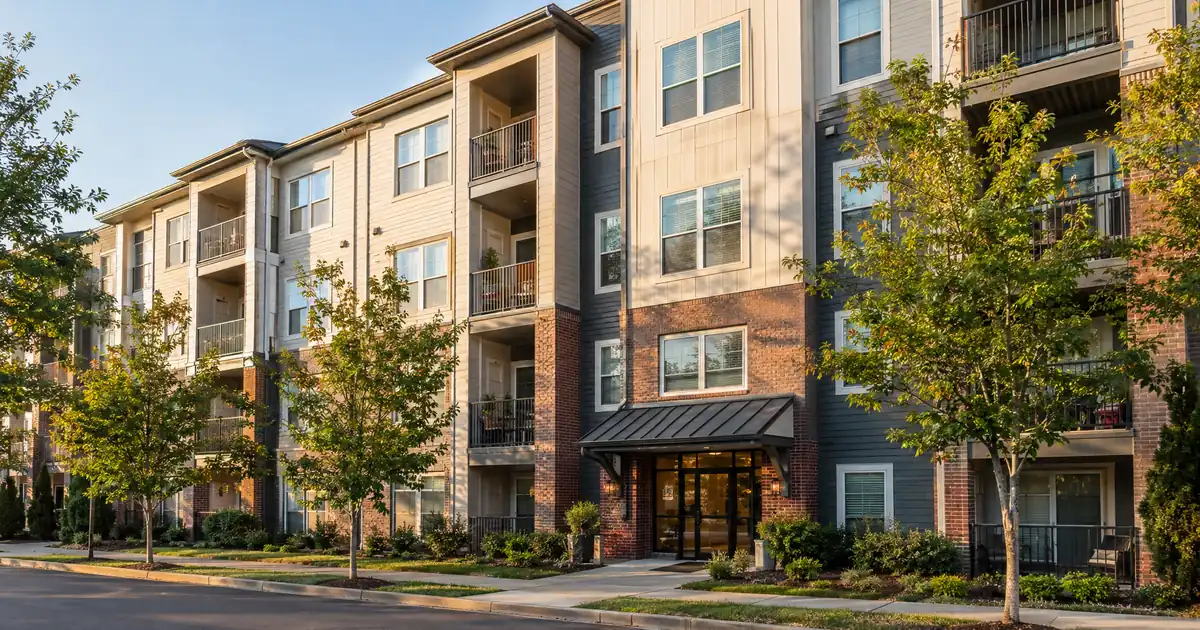
The Quick Read: A ten-unit building is commercial multifamily, so the real choice is what each lender tests: agency small-balance loans test the building’s net cash flow and your balance sheet, while a super jumbo DSCR loan tests mainly whether the property’s rent covers its debt, and only a narrow set of programs reach ten units.
- Agency small-balance fits a stabilized, well-documented building and a sponsor with real net worth and liquidity.
- Super jumbo DSCR fits an investor who wants the file built around the property, often through an LLC.
- “Boutique” is not a loan category. Unit count decides classification, not finish level.
- Ten units sits at the edge of many DSCR programs, so the lender pool is narrow and terms vary.
The Honest Answer First
Pick agency small-balance if the building is full, the rent roll is clean, and you are comfortable putting your personal financial strength in the file. Pick super jumbo DSCR if the building needs flexibility, such as lease-up or an unusual unit mix, or you want the property’s income at the center of the review.
DSCR Calculator
Run the numbers in your market
Rate source: Freddie Mac 30-yr average via FRED® — Federal Reserve Bank of St. Louis · effective Oct 22, 2026
Prefilled with starting assumptions — enter your own rent or nightly figures, taxes, insurance, and HOA for a more accurate picture.
Program parameters update from Lendmire’s centralized guideline source. Taxes and insurance are editable estimates.
As of Oct 22, 2026 · General Freddie Mac market benchmark, not a Lendmire loan offer. Rent, nightly rate, occupancy, taxes, and insurance are editable estimates. Short-term rental figures are estimates only and vary significantly by season, property type, management approach, and local short-term-rental rules — confirm local regulations before relying on them. Qualifying income for short-term rentals varies by program — some use appraisal market rent, others use documented STR history or projections — and is confirmed in underwriting. Not a Loan Estimate, approval, or commitment to lend. Program availability and eligibility are subject to lender guidelines, credit approval, property review, and underwriting.
Neither is better in the abstract. They answer different questions.
Here is the catch for a ten-unit deal. “Super jumbo” is a label, not a regulated product. It means a large-balance loan outside the agency system. Lendmire is a broker, so it places files with lenders in a wholesale network. It does not make this choice for you.
One more note on program figures. The Lendmire ladder here is built on one-to-four unit collateral. A ten-unit file sits past that, so treat the ladder as the shape of how size drives leverage, not a promise for ten units. Every figure is a ceiling through select programs, subject to underwriting.
Side-by-Side
This table describes published industry norms for the agency column and typical wholesale-network practice for the DSCR column. Programs change, and every file is underwritten individually.
| Factor | Super Jumbo DSCR | Agency Small-Balance |
|---|---|---|
| Review basis | Property rent against debt, per lender | Underwritten net cash flow plus sponsor strength |
| Personal income docs | Property income leads the review; guidelines vary | Not the focus; sponsor financials are reviewed |
| Property types | Narrow at ten units; varies by program | Existing, stabilized multifamily |
| Entity vesting | LLC welcome, no layered entities | Single-asset entity typical |
| Recourse | Often a personal guarantee; varies | Typically non-recourse with carve-outs |
| Reserves | Months of payment on the subject property | Liquidity test on the sponsor |
| Third-party reports | Appraisal; income-approach likely at ten units | Streamlined reports plus appraisal |
| Vacant or value-add | May use appraisal market rents | Stabilization expected |
Read the rows as tendencies, not rules. Some lenders on each side bend them.
How Each Option Actually Underwrites
Agency small-balance starts with net cash flow, not a simple rent figure. Under Fannie Mae’s Multifamily Selling and Servicing Guide, gross rent is the lesser of actual in-place rents or market rents for occupied units, plus market rents for vacant units. Operating expenses must reflect the property on a stand-alone basis. The management fee is the greatest of 3% of effective gross income or the actual fee.
That last line matters for a boutique building. High-finish units often carry heavier expenses, and the guide does not let you assume them away.
A DSCR file leans on a different test. DSCR means debt service coverage ratio: the property’s rent divided by its monthly obligation, meaning principal, interest, taxes, insurance, and any association dues. At 1.00 the rent exactly covers the payment. A DSCR loan is reviewed primarily on property-level rental income covering the payment, subject to lender guidelines.
At five-plus units, many lenders shift toward a net-operating-income view, not simple rent. Practice varies by lender and loan size. Ask early which math your lender uses, because it changes the answer.
Across the wholesale network, the strongest ten-unit conversations start with the rent roll, not the borrower’s traditional personal-income documentation. The lender wants leases, a current rent roll, and an appraisal that supports the income. A ten-unit building usually calls for a commercial-style income appraisal, not the small residential income forms used on one-to-four unit files.
When Super Jumbo DSCR Is the Better Fit
Super jumbo DSCR wins when the property’s income is stronger than your paperwork. Picture a self-employed investor whose traditional personal-income documentation shows heavy depreciation. The building throws off healthy rent, but personal income looks thin on paper. A loan built on the property’s cash flow reads that file more fairly.
It also wins on structure. Entity vesting is welcome across Lendmire’s wholesale programs, and lenders accept an LLC, subject to program terms. Layered entities are the exception. Plan your vesting before you go under contract, not after.
Run a modeled example. Say a ten-unit building shows gross rent covering the payment at roughly 1.30x. The lender’s net-cash-flow view, after real expenses and the management fee, lands near 1.05x. Both numbers are illustrative assumptions. A DSCR loan that is reviewed on rent against payment sees the stronger number. An agency underwrite sees the weaker one.
Other situations that favor DSCR:
- The building is not fully stabilized. Agency programs target existing, stabilized properties per Fannie Mae’s small loan term sheet. A partly vacant building may fall outside that box, while some DSCR programs use appraisal market rents.
- You want your balance sheet out of the center. DSCR reviews the property first. Credit still counts. Our programs carry a 660 floor on loans to $3,000,000 and 700 above that, with 700 or higher typically needed for the top leverage cells in the mid-size bands.
- You want interest-only runway. Interest-only periods of 120 months on 30- and 40-year terms, up to 75% leverage, exist through select programs, qualified on interest, taxes, insurance, and dues (the ITIA calculation).
- You hold several properties. Our programs allow up to 20 financed properties, with reserves counted on the subject property only.
Here is how size drives leverage in our one-to-four unit programs. Up to $1,000,000, a purchase reaches 80%. From $1,000,000 to $3,000,000, a purchase reaches 75%. From $3,000,000 to $4,000,000, it drops to 65%, and from $4,000,000 to $6,000,000 it is 60% on review. Above $4,000,000 every request is reviewed case by case before submission, with no cash-out. Two appraisals apply above $2,000,000. Reserves run six months of payment on the subject, twelve for first-time investors.
Coverage under 1.00 is a real path through select programs, but LTV and terms adjust, subject to underwriting. Don’t plan around it for a ten-unit file without a lender in hand.
The tradeoff is plain. DSCR at ten units means a thinner lender pool, and a personal guarantee is common. Terms are shorter and less standardized than agency’s.
When Agency Small-Balance Is the Better Fit
Agency small-balance wins on a clean, full building held by a strong sponsor. The published Fannie Mae term sheet lists loans up to $9 million, terms of 5 to 30 years, and amortization up to 30 years. It also lists a maximum 80% LTV and a minimum 1.25x DSCR. Those are published agency norms, not network figures. Our ladder, for comparison, tops out at 75% on a purchase above $1,000,000 and steps down with size. The exact numbers vary by lender and program and follow a full review of property, leverage, and credit.
Notice the 1.25x minimum. It is tied to a net-cash-flow underwrite, so it is a tougher test than rent over payment.
What you get for that discipline:
- Non-recourse structure. Fannie’s term sheet describes non-recourse loans as typically assumable, subject to review of the new borrower. Non-recourse means the lender looks to the property, not your personal assets, if the loan fails, apart from standard carve-outs for bad acts.
- Fixed, long terms. A buyer who plans a ten-year hold likes a stable structure.
- Assumability. A future buyer may take over the loan with approval, which can help at exit.
- Single-asset security. Agencies lend to LLCs set up to own one property.
The sponsor test is the price. Agency lenders review your net worth, liquidity, and experience. If your wealth sits in other buildings and your cash is thin, this route gets hard.
Agency loans also move through approved lenders, so you don’t apply to the agency directly. A broker can route the file, but the lender still decides.
A wry footnote: some investors assume agency means no personal documents, but it only means different documents.
Where Ten Units Gets Tricky
Three edge cases decide more ten-unit files than the headline terms do.
Stabilization. If a few units are down for renovation, agency eligibility gets shaky. Fix the building first or choose a program that accepts market rents on the appraisal.
Mixed-use space. A ground-floor retail unit complicates both lanes. Agency programs cap commercial space, and the cap should come from the Multifamily Guide, not from a lender’s web page. DSCR programs vary on how they treat it.
Loan-size bands. Agency small-loan product lines have been restructured in recent years, and older descriptions of size bands linger online. Confirm the current band with the lender before you build a plan around it.
The same caution applies to unit count. Some DSCR programs stop at four units, some reach eight, and a few reach about ten. A ten-unit building is at the edge of many.
Short-term rentals add another layer. Short-term rental rules can vary by city, county, HOA, and property type, so investors should confirm local rules before relying on projected rental income. In our programs, short-term-rental files qualify on documented operating history at a discount to gross rent, and they stop at $2,000,000.
Key Terms Defined
Super jumbo. A lender’s label for a large-balance loan outside agency limits. It is not a federal category. The federal conforming-limit schedule covers one-to-four unit homes only, and Calculated Risk reports the one-unit baseline at $832,750 and the four-unit baseline at $1,601,750.
Agency small-balance. A loan from an approved lender, sold to Fannie Mae or Freddie Mac, for stabilized multifamily below a size ceiling.
Net cash flow. Rental income minus real operating expenses. It is the number agency underwriting sizes the loan on.
Sponsor. The borrower and key principals behind the deal. Agency lenders review their net worth and liquidity.
Non-recourse. A loan where the lender looks to the property, not your personal assets, if you default, apart from standard carve-outs.
Vesting. How you hold title, such as in your name or in an LLC.
DSCR vs. conventional financing
There are two common ways to finance an investment property, and they qualify you differently — here’s how investors weigh them.
Why investors choose it
- Qualifies on the property’s rental income — no personal tax returns, W-2s, or pay stubs needed to document income.
- No personal debt-to-income ceiling to clear, so existing mortgages and obligations don’t cap your borrowing the same way.
- Can be closed in an LLC, keeping the property inside a business entity.
- Built for scaling — not held to the limit on number of financed properties that conventional financing applies.
- Underwriting centers on the deal: generally qualifies when the rent covers the payment, a 1.00x coverage ratio being a common baseline (confirmed in underwriting).
- Designed specifically for investment property, including long-term and, where the program allows, short-term rentals.
Where it’s strong
- Often the lowest ongoing financing cost for a buyer who fully qualifies on personal income — a fit for a first property or a cost-first purchase.
Trade-offs for investors
- Requires full personal income documentation and must fit within a debt-to-income limit — salary, existing debts, and other mortgages all count.
- Typically held in your personal name rather than a business entity.
- Caps how many financed properties you can carry, which can become a ceiling as a portfolio grows.
- Evaluates you as a borrower as much as the property, which usually means more paperwork.
How investors usually choose: a first or single property often optimizes for the lowest financing cost; portfolio builders often optimize for leverage, vesting in an LLC, and scaling past conventional caps. The right answer depends on your goals, the property, and current guidelines — both paths run through select lenders in Lendmire’s wholesale network, with eligibility and terms confirmed in underwriting.
Which One Fits You? A Quick Decision Aid
Run through these in order:
1. Is the building full and stable? If yes, agency stays on the table. If not, lean DSCR.
2. How strong is your balance sheet? Ample net worth and cash favor agency. Wealth tied up in real estate favors DSCR.
3. Do you need non-recourse? That points to agency.
4. How long will you hold? A long, steady hold favors the agency’s fixed terms. A shorter or flexible plan favors DSCR, though prepayment structures differ by lender and should be read closely.
5. Do you want an LLC? Both lanes accept one, but agency expects a single-asset structure. Plan it before contract.
Your answers will usually split. That is normal. The tiebreaker is the question of who you want reviewing the file: your property or you.
The Balanced Verdict
For a stabilized, well-run ten-unit building and a sponsor with real liquidity, agency small-balance is hard to beat on structure. The terms are long, the loan is typically non-recourse, and it is often assumable. You pay for it with paperwork, a net-cash-flow underwrite, and a sponsor review.
For a building with lease-up, mixed income, or a borrower whose returns understate their wealth, super jumbo DSCR is the more realistic lane. It reads the property first. The tradeoffs are a narrow lender pool at ten units, firmer personal guarantees, and terms that differ lender to lender.
Honestly, a toss-up is likely if the building is stable and you have both strong liquidity and an LLC. In that case, compare the two actual term sheets side by side. Tax treatment varies; consult a qualified professional.
If you are buying or refinancing a high-balance rental property and want to see how the numbers work, Lendmire can help you compare super jumbo DSCR loan options based on the property income, the loan balance, credit profile, leverage, and investor goals. Lendmire arranges business-purpose financing through select lenders in its wholesale network across 41 markets, including Washington, D.C. The complete DSCR loans guide covers the basics, and Lendmire’s piece on super jumbo DSCR versus agency small-balance financing on a coastal six-unit goes deeper on the smaller end of this range. Nothing here is a commitment to lend, and every file is underwritten individually.
Frequently Asked Questions
Is super jumbo a real loan category?
No. It is a lender’s label for a large-balance loan outside agency limits. The conforming-limit schedule only covers one-to-four unit properties, so a ten-unit building sits outside it entirely.
Can a ten-unit building get agency financing?
Yes, if it fits the program box. Agency small-balance products are built for existing, stabilized multifamily of five or more units, and a ten-unit building generally falls inside that unit range. Loan size, occupancy, and sponsor strength then decide the outcome.
Does a DSCR loan test my personal income?
Not as the main test. It qualifies primarily on property-level rental income covering the payment, subject to lender guidelines. Credit, reserves, and entity documents still matter.
Which option has recourse?
Agency small loans are typically non-recourse with standard carve-outs. DSCR loans often require a personal guarantee, though it varies by lender and program.
What if the building is not stabilized?
Agency eligibility gets harder, since those programs target stabilized buildings. Some DSCR programs may use appraisal market rents, subject to underwriting and a narrow lender pool at this unit count.
For current guidelines and terms, see Lendmire’s super jumbo DSCR loan programs page.
Lendmire’s self-employed mortgages page presents both super jumbo programs, bank statement and DSCR, side by side.
About Lendmire
As a non-QM mortgage broker (NMLS# 2371349), Lendmire facilitates DSCR investor loans across 41 markets, including Washington, D.C. DSCR eligibility is generally reviewed around property-level rental income instead of personal income documentation, subject to lender guidelines, serving LLC-structured portfolios and self-employed borrowers who don’t fit conventional boxes. A two-time Scotsman Guide Top Mortgage Workplace (2025, 2026).
Get Started
Ready to find the right loan for you?
In about 30 seconds you can review financing options available for your investment property. No commitment required.
Informational only. Not a Loan Estimate, approval, or commitment to lend. Program availability and eligibility are subject to lender guidelines, credit approval, property review, and underwriting.
References
1. Fannie Mae Multifamily Selling and Servicing Guide
2. Fannie Mae Multifamily – Small Mortgage Loan Program Term Sheet
This article is part of Lendmire’s super jumbo DSCR loan program — full qualification details, guidelines, and scenarios live on the program page.
Related reading: Super Jumbo DSCR Reporting Requirements for an Operator With a Manager · Super Jumbo DSCR vs Agency Small-Balance Loans for a Portfolio Investor · Can You Use One Super Jumbo DSCR Loan for 20 or More Rentals?
Brandon Miller
Founder & CEO, Mortgage Loan Originator, Lendmire LLC
- Mortgage Loan Originator · NMLS# 1129696 · Verify on NMLS Consumer Access
- North Carolina Real Estate Broker · License# 343312 · Verify on NCREC
- North Carolina Insurance Producer · License# 19053198 · Property, Casualty, Life, Health · Verify on NAIC SBS
- Lendmire LLC · Firm NMLS# 2371349 · Verify firm licensure
Compliance and disclosures. Lendmire (NMLS# 2371349) is a licensed mortgage broker and is not a direct lender, depository institution, financial advisor, or tax professional. Content in this article is general market analysis and educational information — not financial, legal, or tax advice for any specific situation. Lendmire does not guarantee loan approval; every transaction is subject to underwriting by the funding lender. Mortgage pricing and loan program guidelines are subject to change at any time without notice and vary by borrower characteristics, property type, and state regulations. Lendmire complies with Equal Housing Opportunity. Licensure verification: NMLS Consumer Access.