
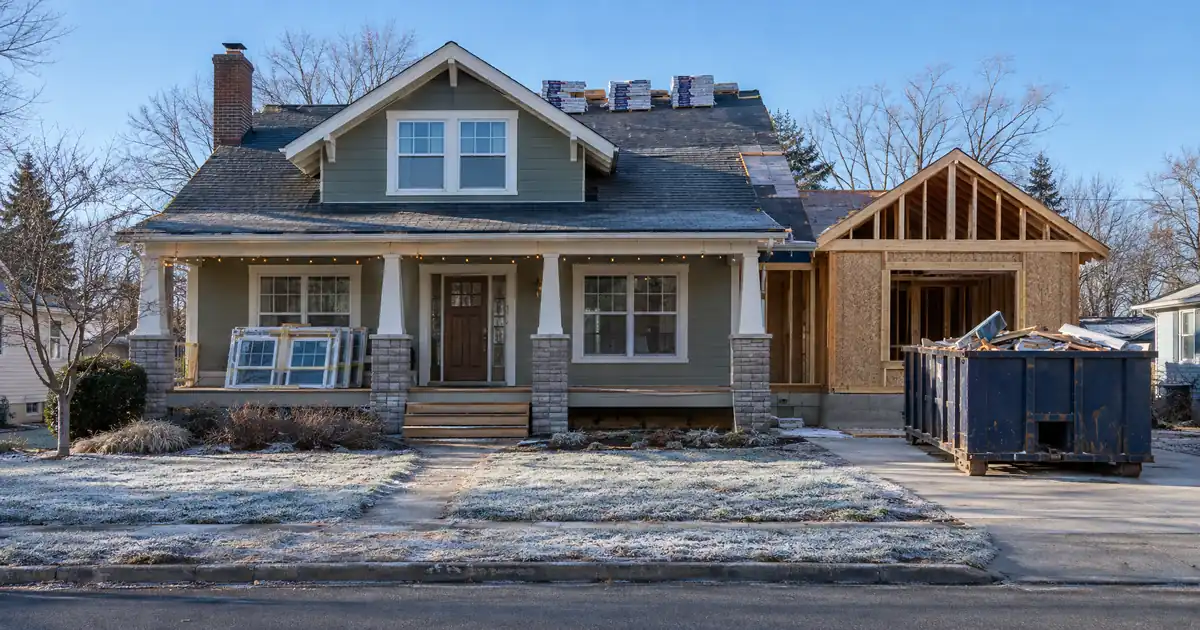
The Quick Read: Rolling costs into the loan keeps more of your cash in the bank, and paying cash keeps the loan balance and carry smaller. Neither choice makes a cost disappear. Financing a cost spreads it over the hold, while paying cash moves it to day one.
- Rolled-in suits a first-timer whose cash is thin but whose deal margin is wide and whose budget is tight.
- Cash suits a buyer with real reserves, a thinner margin, or a plan to keep the deal simple.
- On a first flip, leverage is typically set as a percentage of project cost, with a cap against after-repair value. That cap often limits how much can be rolled in.
- 100% of rehab does not mean zero cash. You still fund each phase before the lender reimburses it.
- Programs vary by lender, property, and experience, and nothing here is a commitment to lend.
The Honest Answer Before the Details
Pick rolled-in if your margin is wide, your budget is realistic, and your liquid cash is the scarce resource. Pick cash if you have deep reserves, a narrow margin, or a first project you want to keep boring. Many first-time flippers do a blend: they finance what the lender will carry and keep a cash cushion for the surprises.
What this loan actually costs to carry.
Hard money is sized against the project and priced by time. Enter the deal and see how much the program will lend, the cash required at closing, the carry while you hold it, and what is left at the exit.
Leverage tiers on the current program: 85% with fewer than 2, 90% with 2 or more, 93% with 5 or more completed projects — every tier capped at 75% of after-repair value. Loan amounts up to $5,000,000, larger by exception; terms of 6 to 18 months, interest-only, no prepayment penalty. The rehab portion funds in draws against completed work, not at closing.
Program parameters shown update from Lendmire’s centralized guideline source. Rate, points, and months are editable assumptions, not quoted terms.
Cost cap sets the loan · positive spread
Illustrative estimate only — not a quote, Loan Estimate, approval, or commitment to lend. Rate, points, and months are editable assumptions. Hard money is business-purpose financing for real estate investors, not a consumer mortgage. Leverage on the current program tops out at 93% of project cost for investors with a documented track record, capped at 75% of after-repair value, with rehab funding up to 100% of the documented budget released in draws; actual terms vary by lender, borrower experience, property, and exit. Lendmire is a mortgage broker, not a lender.
A hard money loan is short-term, secured by the property, and priced higher than long-term financing. That gives each choice a different shape. Cash has no lender review, no draws, and no maturity date. A financed flip puts a lender in the deal, with a budget to approve and a clock to meet.
What “Rolled In” Actually Means
Rolled in gets used for three different things, and mixing them up causes most of the confusion.
1. Deducted from proceeds. The lender takes a fee out of the money it funds. You pay it, but not from your bank account.
2. Added to the balance. A cost is financed on top of the purchase and rehab amounts, so you owe more and carry interest on it.
3. Higher leverage. You borrow a larger share of project cost so you bring less cash to the table.
On a hard money flip, the loan is sized as a share of project cost and then capped against what the finished house should be worth. Across our wholesale network, fix-and-flip leverage is tiered by experience. It typically runs 85% of project cost with fewer than two completed projects, 90% of project cost at two or more, and 93% at five or more. Every tier is capped at 75% of after-repair value, the estimated worth once the work is done.
Here is the catch. When that cap binds, there is no room to add costs on top. Whether a given fee counts as project cost or sits outside it depends on the lender, so ask before you assume.
The same logic explains why there is no true 100% purchase program. Up to 100% of the rehab budget can fund in draws against completed work. That is a rehab figure, not a purchase figure. First-timers sit at the lowest tier, so the purchase side usually needs the most cash from you.
Side-by-Side
The table compares structure, not pricing. Pricing varies by file, so run your own numbers in the calculator.
| Factor | Rolled In | Paid in Cash |
|---|---|---|
| What gets reviewed | Deal, after-repair value, scope, exit | Proof of funds |
| Documentation | Budget, comps, entity papers, exit plan | Bank or brokerage statements |
| Property types | 1-4 units; ground-up to 10 units | Whatever you choose to buy |
| Entity vesting | Often an LLC, per program rules | Your choice |
| Timeline shape | Draw cycle and maturity date | No draws, no maturity |
| Reserves | Lender typically wants liquidity shown | You hold your own cushion |
| Cash left after closing | Higher | Lower |
| Loan balance and carry | Larger | Smaller |
The first column reflects how hard money loans are typically structured. The second reflects how a cash buyer operates. Hard money programs are for non-owner-occupied residential property, and commercial, land, and owner-occupied deals are not offered. Entity vesting, such as an LLC, is common, subject to lender program eligibility.
When Rolled-In Is the Better Fit
Financing more of the deal makes sense when cash is the constraint and the margin has room.
You have a wide margin. If the projected profit stays healthy after a few extra months of interest, a larger balance is an affordable trade. It means you can start the project without draining your account.
You want a second project in reserve. Cash tied up in one flip cannot be used elsewhere. A practitioner who wants capital free for the next deal often accepts a bigger loan to keep dry powder.
Your budget is solid. Contractor bids are in, the scope is clear, and the contingency line is real. A tight, believable budget is the best protection against the main risk of financing: running out of cash mid-project.
The loan structure fits the plan. Terms on our network typically run 6-18 months, interest-only, with no prepayment penalty. That works when the plan fits inside the term and you have an exit. Many investors later refinance into long-term DSCR financing once the property is stabilized. A DSCR loan compares rent to the full housing payment, and Lendmire brokers that path through its wholesale network. Cash-out on standard rentals generally tops out around 75% LTV across most of the network, and about six months of seasoning is the common expectation.
Even here, rolled-in is not free money. You are borrowing the cost, and the interest-only carry runs for every month you hold.
When Cash Is the Better Fit
Paying cash wins when simplicity and cushion matter more than preserving liquidity.
Your margin is thin. A narrow deal has little room for added interest. Every month of delay costs more on a larger balance, and a thin margin can turn into a loss.
You can absorb a surprise. Overruns are common on a first flip. A cash buyer who sets aside money for them can finish the job without asking anyone for more. A financed borrower needs that same cushion, plus the cash to fund the first phase.
You want no lender review. Cash needs a statement and a contract. It involves no appraisal-driven cap, no entity papers, and no exit story. For a true learning project, that quiet can be worth something.
Your credit or file is a problem. Hard money underwriting stays asset-based, but programs typically start at a 620 score, with added conditions below 660. A thin credit file at that edge may mean a smaller loan or a pass. Paying cash sidesteps it, though it uses up your capital.
You are testing a market or a contractor. A first flip is a trial. A smaller project in cash lets you learn where your estimates run off before you borrow against them.
Cash carries a cost of its own. All of your capital sits in one project, so a delay or a loss hits harder. Lendmire’s piece Cash vs. Gap Loan vs. Hard Money Modification for a First Flip walks through that trade-off.
The Cash You Still Need Either Way
Even a fully financed rehab leaves you with cash needs. A typical first-timer’s cash requirement is larger than the down payment alone. It usually includes four buckets:
- The equity portion of the purchase, which sits at the share of project cost the lender does not fund.
- Lender fees and third-party closing costs.
- Working capital to start the rehab.
- Liquid reserves the lender wants to see.
Lenders usually fund the purchase at closing and hold the rehab money in escrow. They release it in stages after the work is done and reviewed. That means you front each phase and get reimbursed after. Some lenders ask you to deposit part of the rehab funds at closing instead of just showing proof of funds. Others accept a statement. This varies, so ask which one applies before you write an offer.
Reserves vary by lender, leverage, and loan size. Plan to show real liquidity, and do not assume equity in another property counts as cash. Some lenders will accept it and others will not.
One more point on documents. Hard money usually skips income paperwork, but it asks for a budget, comps, entity papers, and bank statements. A cash purchase skips the budget review, the comps, the entity papers, and the exit story, though you still show a statement to prove the funds. That difference matters if your file is messy.
Where the Extra Cost Shows Up
Financed costs look cheap on closing day and expensive on day two hundred. Interest-only carry runs on the whole balance for the full hold. A rolled-in cost is paid again every month the property sits. The CFPB’s guidance on points and lender credits frames the same trade-off: paying cash now versus paying more over time.
Think of it as a simple test. Take the extra amount you financed, then ask how many extra months of carry your margin can absorb. If a delay in the rehab, the sale, or the permit queue would eat the margin, the cash you saved was borrowed at a cost you did not plan for.
This is the quiet failure mode on first flips. A buyer finances costs to preserve cash, then hits an overrun with no cash left to cover it. The savings turn out to be false. The overrun raises the money in the deal and lengthens the hold, but it does not raise the appraisal.
Be careful about the other direction too. A larger balance also affects your exit. If you plan to refinance into long-term rental financing, the lender looks at value and rent coverage, not at what you spent. Receipts show cost, and value comes from the appraisal and comps. Clearing a DSCR of 1.00 also does not mean positive cash flow, because repairs, vacancy, management, and utilities sit outside the calculation.
Key Terms Defined
Loan-to-cost: The share of the total project cost, purchase plus rehab, that the lender will fund.
After-repair value (ARV): The estimated worth of the property once the planned work is finished, based on comps.
Holdback: Rehab money the lender keeps in escrow and releases as work is completed.
Draw: A release from the holdback, typically after the lender confirms the work and receives an invoice or draw request.
Cash to close: The total cash you bring at closing, beyond what the loan covers.
Interest-only carry: The periodic interest you pay while the principal stays unchanged until payoff.
Mistakes First-Timers Make
- Reading 100% of rehab as 100% of the project.
- Assuming proof of funds and deposited funds are the same thing.
- Financing every cost, then having no cushion for an overrun.
- Treating the inspector’s sign-off as a code or permit approval. It confirms that the work exists, nothing more.
- Skipping the written question of whether fees count toward the cost cap.
- Forgetting that interest on undrawn funds varies by lender. Some lenders charge interest on the full loan from day one.
Practitioners in this space see a recurring pattern. First-timers build the purchase budget carefully and the contingency line loosely. The files that go smoothly tend to fund contingency and the first phase from cash, not from the draw schedule.
The Verdict
The better choice depends on one question: what is scarce for you, cash or margin?
- Cash is scarce and margin is wide: roll in what the lender allows, keep a real cushion, and run the carry on a longer hold than you expect.
- Margin is thin and cash is ample: pay cash for the costs and let the loan do less.
- Both are tight: the deal is probably too big for your first flip. Skip it, or find a smaller project.
A split often works best. Let the lender carry the rehab through draws, use cash for fees and the cushion, and keep enough liquidity to survive a slow sale. Tax treatment can depend on how the funds are used and how the property is held; investors should keep clear records and speak with a qualified tax professional before relying on any deduction.
Lendmire’s complete DSCR loans guide covers the long-term financing many flippers use as their exit. If you are buying, rehabbing, or refinancing an investment property on a short timeline and want to see how the numbers work, Lendmire can help you compare hard money options based on the project, the exit plan, leverage, and your goals. The calculator gives an illustrative estimate you can edit, not a quote.
Frequently Asked Questions
Does “100% rehab financing” mean I put no money down?
No. The 100% typically refers to the rehab budget, funded in draws against completed work. The purchase side is funded as a share of project cost, and a first-time investor sits at the lowest tier. You still bring the remaining equity, fees, and working capital.
Can I roll closing costs into a hard money loan?
Sometimes, and it depends on the lender and the loan cap. Leverage is set against project cost and capped against after-repair value, so there may be no room to add costs. Ask whether a fee counts as project cost, gets deducted from proceeds, or sits outside the loan.
Does the lender give me the rehab money at closing?
Usually not all of it. Lenders typically fund the purchase and hold the rehab money in escrow. They release it in stages after the work is done. Some ask you to bring part of the rehab funds to closing, and others accept proof of funds.
Is paying cash safer for a first flip?
It removes lender review, draws, and a maturity date. It also concentrates your capital in one project. Cash is safer when you can absorb a loss and still fund your next deal. It is riskier when it leaves you with no cushion for an overrun.
How does the way I fund the flip affect a later DSCR refinance?
A DSCR refinance looks at the property’s value, the rent covering the full housing payment, and your reserves. Draw history, receipts, and entity documents feed the file. More cash in the deal does not raise the appraisal. The refinance does not fund an overrun, so the project has to finish and stabilize first. Terms vary by lender, property, and experience.
About Lendmire
Lendmire, NMLS# 2371349, is a non-QM mortgage broker serving real estate investors in 41 markets, including Washington, D.C., through DSCR investor loan programs. Qualification is generally reviewed around the subject property’s rental income, not the borrower’s W-2 history, a practical fit for LLC-titled portfolios and self-employed investors. All scenarios remain subject to program review and program guidelines. Two consecutive Scotsman Guide Top Mortgage Workplace recognitions (2025, 2026).
Get Started
Ready to find the right loan for you?
In about 30 seconds you can review financing options available for your investment property. No commitment required.
Informational only. Not a Loan Estimate, approval, or commitment to lend. Program availability and eligibility are subject to lender guidelines, credit approval, property review, and underwriting.
References
1. Corporate Finance Institute: Hard Money
2. CFPB’s guidance on points and lender credits
This article is part of Lendmire’s hard money loan program — full qualification details, guidelines, and scenarios live on the program page.
Related reading: How a Hard Money Lender Sizes a Bridge Loan for a First-Time Investor · How to Replace Seller Financing With a Hard Money Loan on a First Flip · How to Apply for a Hard Money Bridge Loan as a First-Time Investor
Brandon Miller
Founder & CEO, Mortgage Loan Originator, Lendmire LLC
- Mortgage Loan Originator · NMLS# 1129696 · Verify on NMLS Consumer Access
- North Carolina Real Estate Broker · License# 343312 · Verify on NCREC
- North Carolina Insurance Producer · License# 19053198 · Property, Casualty, Life, Health · Verify on NAIC SBS
- Lendmire LLC · Firm NMLS# 2371349 · Verify firm licensure
Disclosure information. Lendmire is a state-licensed mortgage brokerage under NMLS# 2371349. Lendmire is not a depository institution, direct lender, or financial advisor — all loans referenced are placed through wholesale lender partners and are subject to each lender's underwriting standards. This article is provided for general informational purposes and is not a commitment to lend, nor does it constitute financial, legal, or tax advice. Loan programs, terms, rates, and qualification standards change without notice and depend on borrower profile, property type, and the state in which the subject property is located. Equal Housing Opportunity provider. NMLS Consumer Access: nmlsconsumeraccess.org.