
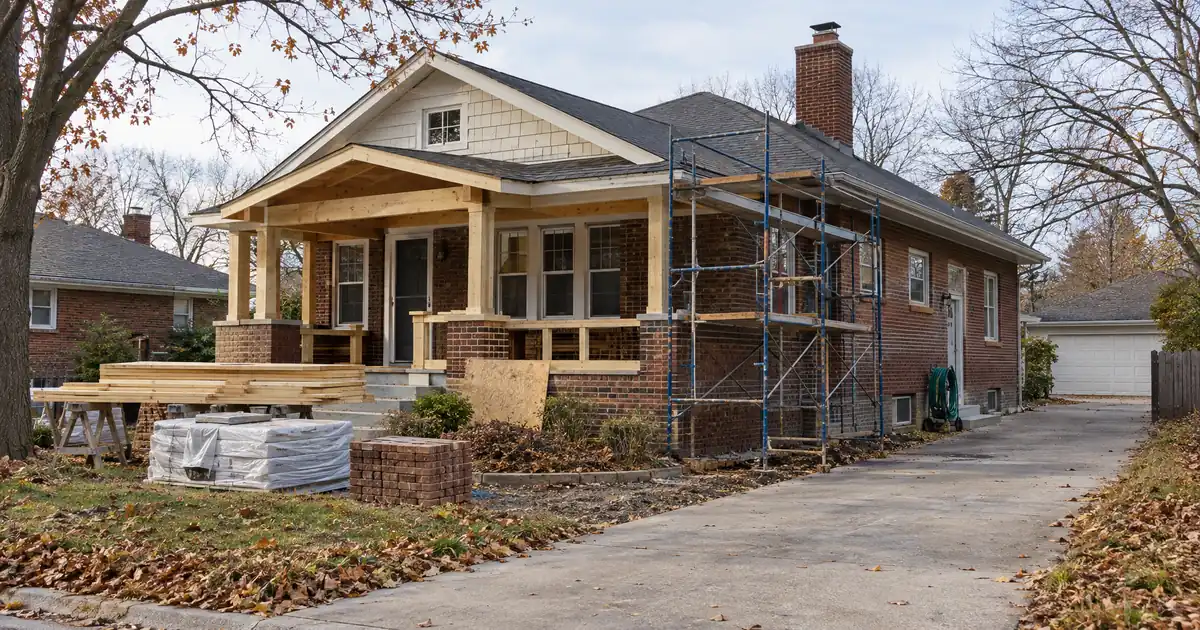
The Quick Read: A fix-and-flip hard money file is built around the property, the entity and the rehab plan, not your personal income, so you need entity papers, proof of funds, a purchase contract, a line-item scope of work, insurance and a title order, with the exact list set by each lender and each deal.
- Expect entity documents: formation papers, operating agreement, EIN and government ID for every signer.
- Expect proof of liquidity, meaning cash you can show, not just equity on paper.
- Expect a scope of work and budget in line items, because they drive the after-repair value.
- Expect insurance with the lender listed, plus title work run alongside review.
- Expect rehab money to arrive in draws, each backed by paperwork.
Hard money gets called “easy paperwork.” That’s half true. You skip most of the personal-income file. You do not skip the project file, and the project file is where deals stall.
What this loan actually costs to carry.
Hard money is sized against the project and priced by time. Enter the deal and see how much the program will lend, the cash required at closing, the carry while you hold it, and what is left at the exit.
Leverage tiers on the current program: 85% with fewer than 2, 90% with 2 or more, 93% with 5 or more completed projects — every tier capped at 75% of after-repair value. Loan amounts up to $5,000,000, larger by exception; terms of 6 to 18 months, interest-only, no prepayment penalty. The rehab portion funds in draws against completed work, not at closing.
Program parameters shown update from Lendmire’s centralized guideline source. Rate, points, and months are editable assumptions, not quoted terms.
Cost cap sets the loan · positive spread
Illustrative estimate only — not a quote, Loan Estimate, approval, or commitment to lend. Rate, points, and months are editable assumptions. Hard money is business-purpose financing for real estate investors, not a consumer mortgage. Leverage on the current program tops out at 93% of project cost for investors with a documented track record, capped at 75% of after-repair value, with rehab funding up to 100% of the documented budget released in draws; actual terms vary by lender, borrower experience, property, and exit. Lendmire is a mortgage broker, not a lender.
Why Hard Money Paperwork Is Lighter, Not Absent
Hard money is asset-based lending. The Scotsman Guide notes the decision to lend rests on the subject property, which is why lenders stay conservative on leverage.
So the question underwriting asks is different. A bank asks whether you earn enough. A hard money lender asks whether the property, the plan and the exit hold up. Documents follow that question.
No central rulebook lists the required papers. Each lender in a wholesale network sets its own file requirements, and across the programs Lendmire places files with, the list shifts with leverage, experience and loan size. Treat any checklist, including this one, as the common core rather than a universal list.
Key Terms Defined
After-repair value (ARV): what the property should be worth once the rehab is finished, as estimated in the valuation.
As-is value: what the property is worth today, before any work.
Loan-to-cost (LTC): the loan amount as a share of total project cost, meaning purchase price plus rehab budget.
Scope of work: a line-by-line description of every repair, with costs and a timeline.
Draw: a release of held-back rehab money after work is completed and inspected.
Proof of funds: documents showing you hold the cash for your down payment, closing costs and reserves.
Lien waiver: a signed statement from a contractor or supplier that they have been paid and will not file a claim against the property.
What Your File Contains, Document by Document
Here is the common core, with what each item proves and who supplies it.
| Document | What it proves | Who supplies it |
|---|---|---|
| Government ID | Who is signing | Borrower |
| Entity papers and EIN | The borrower exists and who controls it | Borrower |
| Purchase contract | Price, seller, property | Borrower |
| Bank statements | Cash for down payment and reserves | Borrower |
| Scope and budget | What the money builds | Borrower, contractor |
| ARV valuation | Value as-is and after repairs | Lender orders |
| Insurance | Property is protected | Borrower, insurer |
| Title work | Clean ownership | Title company |
Borrower and entity documents
Most flippers borrow through an LLC or corporation, subject to lender program eligibility. Expect to provide government ID for each signer, the formation document, the operating agreement and the EIN letter.
Have these ready before you find a deal. A newly formed entity can draw extra requests, and a lender may want to see that your funds sat in an account for a while. Lenders vary on how long, so ask.
Most hard money lenders also ask for a signed business-purpose statement. Hard money loans are designed for non-owner-occupied investment properties. Because they are business-purpose investor loans, they are reviewed differently from a standard owner-occupied mortgage, and that statement documents the purpose.
Experience and track record
Leverage on the hard money programs Lendmire works with is tiered by documented completed projects. The top tier is reserved for experienced investors, and that’s where documentation pays off directly.
| Completed projects | Typical leverage on fix-and-flip |
|---|---|
| 5 or more | Up to 93% of project cost |
| 2 or more | Up to 90% of project cost |
| Fewer than 2 | Up to 85% of project cost |
Every tier is capped at 75% of after-repair value, and all of it varies by lender, property and experience. Whichever number is lower governs. More on that below.
Document the track record with a one-page project list: address, purchase date, sale date, rehab scope, and sale price. Attach the closing statements. First-timers qualify at the lower tier, so lead with your team, your budget and your funds instead.
Proof of funds
Lenders want to see cash. Recent bank statements are the standard evidence. Whether home equity or a cash-out refinance counts as liquidity varies by lender, and some want money sitting in an account.
Large unexplained deposits slow files down. If a deposit came from a sale, a partner or a refinance, bring the paper trail with it.
The Scope of Work Decides Your Value
This is the document most borrowers underbuild. Meet the contractor and finish a full budget before the appraisal is ordered, so the appraiser sees a line-by-line plan. In the Scotsman Guide’s illustrative example, the same house comes back with an ARV of $210,000 without the scope and $300,000 with it.
Those are the article’s example figures, not a promise. A thin scope can drag down ARV, and ARV caps your loan.
A usable scope includes:
- Line items by trade, such as roofing, kitchen, flooring and mechanicals.
- A cost for each line and a total budget.
- A timeline with phases.
- Contractor name, license and contact details.
Because the lender tests leverage against both cost and ARV, the lower result controls. A strong cost-based tier doesn’t help if the ARV cap binds first. If the appraisal lands below your estimate, the loan shrinks and you cover the gap or renegotiate the price.
Insurance and Title
Expect a builder’s risk or renovation policy, liability coverage, and the lender named as mortgagee or loss payee. A standard homeowner policy on a gut rehab often won’t fit.
Title runs in parallel with lender review. Make sure your entity name matches the contract, the insurance binder and the loan application exactly. A mismatched name is a small error that creates a big delay.
What Happens After Closing: Draws
Closing doesn’t hand you the rehab money. The program Lendmire works with funds up to 100% of the rehab budget in draws against completed work. That is a rehab-budget figure, not a purchase loan-to-value.
The usual sequence: you pay for the work, submit a draw request, an inspector confirms progress, and the lender releases the approved amount, minus any retained holdback. A software-vendor walkthrough describes the same flow.
Draw paperwork commonly includes permits, photos, invoices, inspection sign-off and lien waivers. Minimums per draw, inspection fees and the number of draws are lender-set, so get them in writing. You also need enough cash to float each phase before reimbursement.
When the General Rule Breaks
- First-time flipper or new entity. Expect a lower leverage tier and requests for stronger liquidity. A 620 minimum score applies on this program, with additional conditions below 660.
- Owner-occupied rehab. This is a different animal. These programs cover non-owner-occupied 1-4 unit residential property, so an owner-occupied rehab isn’t offered. A law-firm analysis explains why occupancy changes the legal classification.
- Bridge purchases without rehab. Leverage runs up to 80% of purchase price, and the scope-of-work file mostly drops away.
- Refinances. Cash-out and rate/term refinances run up to 65% of value, so the file leans on valuation and ownership records.
- Ground-up construction. Up to 90% of cost and 75% of completed value at 3 or more completed projects, with a heavier plan package.
Context matters on the rule behind all this. The CFPB’s Regulation X guide exempts loans made primarily for business purposes, which is why you won’t see consumer-mortgage disclosures on a flip loan. The purpose decides the classification, and other laws can still apply.
Sample File for a Typical Flip
Picture a two-time flipper buying a non-owner-occupied single-family house through an LLC. The package would look like this:
1. Signed purchase contract and property address.
2. LLC formation document, operating agreement and EIN letter.
3. Government ID for both members.
4. Recent bank statements showing the down payment and reserves.
5. A project list with two closing statements attached.
6. A line-item scope of work, budget and timeline.
7. Contractor details and license.
8. Builder’s risk and liability insurance naming the lender.
9. A signed business-purpose statement.
Hand this in organized and complete, and underwriting has nothing to chase. For this borrower, the 2+ project tier applies: up to 90% of project cost, capped at 75% of ARV, subject to lender guidelines.
Why Files Stall
- Scope of work arrives after the appraisal, so ARV comes in low.
- Entity names don’t match across contract, binder and application.
- Unexplained deposits in the bank statements.
- Insurance binder missing the lender or expired.
- Cash too thin to float the first draw.
A practical order of operations: build the entity and gather statements first, write the scope before you go under contract, then submit everything as one clean package.
Planning the Exit
Many investors refinance out of hard money into long-term DSCR financing once the property is rented and stabilized, and Lendmire brokers that path. Keep your closing statement and project history; they double as your experience record next time. Details are in Lendmire’s complete DSCR loans guide.
If you are buying, rehabbing or refinancing an investment property on a short timeline and want to see how the numbers work, Lendmire can help you compare hard money options based on the project, the exit plan, leverage, and your goals. Lendmire is a broker arranging financing through select lenders in its wholesale network across 41 markets, including Washington, D.C. Nothing here is a commitment to lend.
Frequently Asked Questions
Do I need traditional personal-income documentation for a hard money flip loan?
Often not as the core of the file. The loan is underwritten on the property, the plan and the exit, not on personal income. Some lenders still ask for extra items depending on your profile, so confirm early.
Can I borrow through an LLC?
Yes, and most flippers do, subject to lender program eligibility. Bring formation papers, the operating agreement, the EIN letter and ID for each signer. Names must match across every document.
What if I have never flipped a house?
First-time investors qualify at the lower leverage tier, up to 85% of project cost and capped at 75% of ARV, with varied terms by lender. Substitute a strong scope, a vetted contractor and solid proof of funds for the missing track record.
Who orders the appraisal?
The lender typically orders it after your offer is accepted. Your job is to hand over the scope of work first, so the appraiser can value the finished project.
Do I get the rehab money at closing?
No. Rehab funds are held and released in draws as completed work passes inspection, up to 100% of the rehab budget. Plan to float costs between draws.
About Lendmire
A non-QM mortgage broker (NMLS# 2371349), Lendmire arranges DSCR financing for real estate investors in 41 markets — 40 states plus Washington, D.C. Because deals are underwritten primarily on property cash flow rather than personal income documentation, the structure suits self-employed buyers and entity-owned portfolios. Lendmire places loans through wholesale investor lenders; it is not a direct lender. Scotsman Guide named Lendmire a Top Mortgage Workplace in both 2025 and 2026.
Get Started
Ready to find the right loan for you?
In about 30 seconds you can review financing options available for your investment property. No commitment required.
Informational only. Not a Loan Estimate, approval, or commitment to lend. Program availability and eligibility are subject to lender guidelines, credit approval, property review, and underwriting.
References
1. Scotsman Guide, “Take a Tutorial on Hard Money Loans”
2. Yieldstack draw schedule article
3. Hunton law-firm article on business purpose
4. CFPB Regulation X (RESPA) guide
This article is part of Lendmire’s hard money loan program — full qualification details, guidelines, and scenarios live on the program page.
Related reading: How to Replace Seller Financing With a Hard Money Loan on a First Flip · How a Hard Money Lender Counts Days to Close a Fix and Flip Loan · Hard Money Project Loan Requirements for a Funded Rehab Budget
Brandon Miller
Founder & CEO, Mortgage Loan Originator, Lendmire LLC
- Mortgage Loan Originator · NMLS# 1129696 · Verify on NMLS Consumer Access
- North Carolina Real Estate Broker · License# 343312 · Verify on NCREC
- North Carolina Insurance Producer · License# 19053198 · Property, Casualty, Life, Health · Verify on NAIC SBS
- Lendmire LLC · Firm NMLS# 2371349 · Verify firm licensure
Compliance and disclosures. Lendmire (NMLS# 2371349) is a licensed mortgage broker and is not a direct lender, depository institution, financial advisor, or tax professional. Content in this article is general market analysis and educational information — not financial, legal, or tax advice for any specific situation. Lendmire does not guarantee loan approval; every transaction is subject to underwriting by the funding lender. Mortgage pricing and loan program guidelines are subject to change at any time without notice and vary by borrower characteristics, property type, and state regulations. Lendmire complies with Equal Housing Opportunity. Licensure verification: NMLS Consumer Access.