
The Quick Read: Put materials on cards only when the balance will be paid down before the next credit pull, because utilization is the lever that moves a score. The hard money loan itself is asset-based, so the cards are what the DSCR refinance lender sees later.
- Utilization, not payment history alone, drives most card-related score damage.
- Business cards often report to personal bureaus only on serious delinquency, but issuer policy varies.
- Pay balances down before the statement closes, because the reported balance is what counts.
- Plan the takeout before the first purchase, so the cards are cleared before the refinance application.
- Draws reimburse completed work, so cards bridge the gap between buying materials and getting paid.
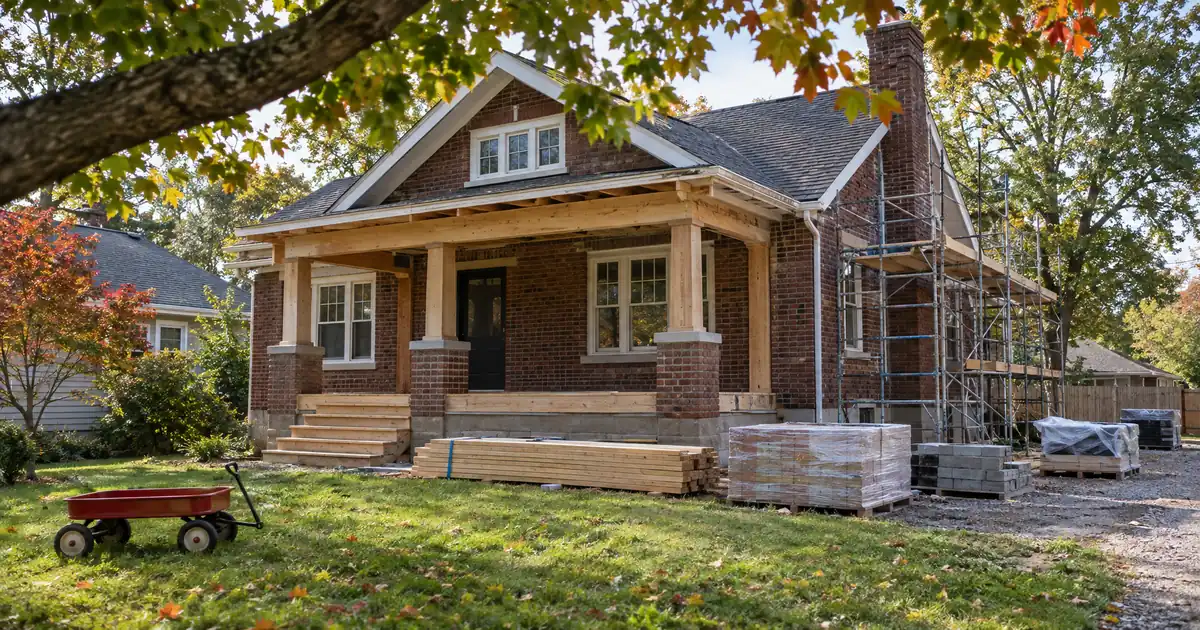
Rehab materials are the expense that hits first and gets reimbursed last. A hard money lender typically releases funds in draws against completed work, so someone has to front the cost. Investors often use cards for that gap. Done carefully, it works. Done carelessly, a card balance follows the investor into the next loan application.
What this loan actually costs to carry.
Hard money is sized against the project and priced by time. Enter the deal and see how much the program will lend, the cash required at closing, the carry while you hold it, and what is left at the exit.
Leverage tiers on the current program: 85% with fewer than 2, 90% with 2 or more, 93% with 5 or more completed projects — every tier capped at 75% of after-repair value. Loan amounts up to $5,000,000, larger by exception; terms of 6 to 18 months, interest-only, no prepayment penalty. The rehab portion funds in draws against completed work, not at closing.
Program parameters shown update from Lendmire’s centralized guideline source. Rate, points, and months are editable assumptions, not quoted terms.
Cost cap sets the loan · positive spread
Illustrative estimate only — not a quote, Loan Estimate, approval, or commitment to lend. Rate, points, and months are editable assumptions. Hard money is business-purpose financing for real estate investors, not a consumer mortgage. Leverage on the current program tops out at 93% of project cost for investors with a documented track record, capped at 75% of after-repair value, with rehab funding up to 100% of the documented budget released in draws; actual terms vary by lender, borrower experience, property, and exit. Lendmire is a mortgage broker, not a lender.
How Does a Card Touch Credit on a Hard Money Rehab?
A hard money loan is not a card, so it does not count toward utilization. The cards do. Utilization is the share of revolving credit in use: total balances divided by total limits. FINRED, a federal financial-education site, says payment history is 35% of a score and utilization is 30%, and that utilization applies only to revolving credit, not installment loans like mortgages.
That tells you where the risk sits. A rehab can run for months with perfect payments and still push a score down, because the balance is high relative to the limit. FINRED puts the ideal range at about 1% to 10%. Equifax says lenders typically prefer to see no more than 30%.
Two details matter on real files:
- Per-card utilization counts. One maxed card can signal stress even when the overall figure looks fine, as ConsumerAffairs notes.
- Utilization has a short memory. Bureaus recalculate it from the balances and limits issuers report each month. Pay the balance down and the pressure on the score eases.
That last point is the good news. The damage from a high balance is usually temporary, provided it is cleared before someone pulls credit.
Business Card or Personal Card?
The reporting rule is the biggest lever for protecting a personal score. It is also the most misunderstood.
Many major business-card issuers report to personal bureaus only when an account goes seriously delinquent. Others report ongoing activity. Issuer policy changes, so confirm it before applying.
| Card type | Typical personal-bureau reporting | What to check |
|---|---|---|
| Personal card | Always reports | Limit and per-card balance |
| Business card, delinquency-only | Reports only serious delinquency | Issuer policy before applying |
| Business card, full reporting | Reports ongoing activity | Whether utilization will show |
| Corporate card, no guarantee | Does not report to consumer bureaus | Underwriting on business cash flow |
Three edge cases trip people up:
- A personal guarantee is not the same as credit reporting. A card can require a guarantee and still not report routine activity. Guarantee language can still include permission to report, as Forbes Advisor points out.
- Applications are personal pulls. The hard inquiry hits regardless of the card type. Several applications at once can look like over-reliance.
- Delinquency flips the rule. Issuers that normally stay silent will report a serious late payment.
Corporate cards need no personal guarantee and do not report to consumer bureaus. They are underwritten on business cash flow, so a new LLC with no revenue may not qualify. Any LLC-titled borrowing is subject to lender program eligibility.
Where Cards Fit in a Draw-Funded Rehab
Cards suit line items, not whole renovations. The credit limit is the practical ceiling. Hard money draws are reimbursements for verified work, so cards cover materials bought before a draw lands.
| Expense | Card fit | Why |
|---|---|---|
| Lumber, fixtures, flooring | Good | Clear receipts, quick to match to a draw line |
| Appliances, hardware | Good | Retail purchases, extended return windows |
| Large contractor deposits | Weak | Exceeds limits, vendors may add card fees |
| Special orders | Mixed | Long lead times stretch the balance |
| Closing costs and purchase price | Avoid | Source-of-funds questions arise |
Keep receipts matched to the draw budget line by line. When the inspector verifies work and the lender releases reimbursement, you want each card charge traceable to a budget item. That paper trail also makes your payoff plan simple.
On the funding side, the hard money program in Lendmire’s network funds fix-and-flip projects up to a percentage of project cost, with up to 100% of the rehab budget released in draws against completed work. Those figures vary by lender, property, and experience, and nothing here is a commitment to lend. Terms run 6 to 18 months, interest-only. That window sets your card timeline.
The Timeline: Purchase to Payoff
The sequence below keeps the balance low at the moments that matter.
1. Buy materials on the card. Record each charge against a rehab budget line.
2. Watch the statement close date. The balance reported to the bureaus is the balance at statement close, not the due date.
3. Request the draw. Submit receipts and photos when a phase is complete.
4. Inspection and reimbursement. The lender verifies the work, then releases funds.
5. Pay the card down. Apply the reimbursement to the card right away, ideally before the next statement closes.
6. Repeat per phase. Each cycle should end with the balance back near zero.
Here is a modeled example, not market data. Say an investor has two cards and a rehab with three phases. Phase one puts roughly a third of the combined limit on the cards. The draw arrives, and the investor pays the cards to a low balance before the statement closes. The reported utilization stays modest. Skip step five and let all three phases stack, and the cards sit near maxed when the DSCR lender pulls credit.
That is the pattern investors on forums describe. One reported a score drop from about 825 to about 655 with no missed payments, after using roughly 25% of total available credit on 0% cards, per a BiggerPockets forum thread. It is a single anecdote on free monitoring tools, so treat it as illustrative only. The direction is the point: a high balance hurts even with perfect payment history.
0% Offers Set the Clock
Many 0% business card offers run 12 to 18 months, according to BiggerPockets. That fits a project that will refinance or sell before the promotional window ends. It does not fit one that drifts.
The risk is stacking. If the rehab runs long, rent starts late, and the promo expires, card payments and the new higher cost hit together. 0% is not free either. Balance-transfer fees and a lost promo after a late payment are real costs. Build the exit date into the plan before the first charge.
Also be careful about buying the property itself on cards. Lenders may ask about the source of funds, and seasoning money in a bank account eats up the 0% window. Keep cards to materials.
What the Refinance Lender Sees
Hard money underwriting is asset-based: the property, the plan, and the exit. Credit still matters at the takeout. A common path is to buy and rehab with hard money, lease the property, then refinance into long-term DSCR investor loans that Lendmire brokers. Credit is pulled at that point, and the card balances reported then affect the score.
Across the wholesale network, the typical credit picture looks like this. A 620 floor exists in parts of the network. Most programs want around 660. A 700+ score unlocks the strongest leverage tiers. A purchase typically lands at 75% to 80% LTV, and cash-out refinances top out around 75% LTV, with about six months of seasoning as the common expectation. Coverage of 1.00 is where select programs start, and a separate select-lender path takes coverage below 1.00 with leverage and terms adjusted. Reserves vary by lender, leverage, and loan size, commonly around six months of PITIA. All of it is subject to lender guidelines and individual underwriting.
Here is the friction point: a card balance can move a score across a tier. A modest drop at 660 may cost leverage or change eligibility. The same drop at 720 may not. Ask your loan officer where your score sits relative to the tiers before you load the cards.
Remember what the coverage ratio measures. DSCR compares rent to PITIA only. Clearing it is not the same as positive cash flow, because repairs, vacancy, and management sit outside the calculation. Card payments sit outside it as well, but they hit the investor’s cash all the same.
If you plan to roll the cards into the refinance, read Lendmire’s piece How to Use a DSCR Cash-Out to Clear a Hard Money Note and Rehab Cards. Whether paying off cards at closing counts as cash-out is lender policy. Rehab cards are unsecured with no lien, so assume cash-out treatment unless a lender confirms otherwise in writing. The complete DSCR loans guide covers the full program picture.
Things That Go Wrong
| Problem | Impact | Action |
|---|---|---|
| Failed inspection | Draw delayed, balance stays high | Pay part from cash, fix the item fast |
| Scope change | Materials exceed the card plan | Re-budget before buying |
| Late rent start | Card payments and promo expiry collide | Set a payoff date early |
| Several new cards at once | Stacked inquiries, lower score | Apply months before the project |
| Maxed single card | Per-card utilization spike | Spread spend across accounts |
The common thread is timing. Nearly every failure is a balance that stays high longer than planned.
When a Card Is the Wrong Tool
Skip cards when the spend is large relative to the limits. Skip them when a vendor adds a card fee that outweighs the interest you would save. Skip them if the project has no clear exit date inside the promo window. And skip them if a score near a tier edge would cost you leverage at the refinance. In those cases, pay from cash, negotiate vendor terms, or ask the hard money lender how draws can be sequenced.
One more note: not using cards at all builds no positive history, per Debt.org. Zero is not the goal. Low is.
Key Terms Defined
- Utilization: The share of your revolving credit limits that you are using at a given moment.
- Draw: A release of rehab funds from the hard money lender after completed work is verified.
- Statement close: The date the issuer totals your balance and reports it to the bureaus.
- Personal guarantee: Your promise to repay a business card from personal assets if the business cannot.
- Takeout: The refinance or sale that repays the hard money loan.
- PITIA: Principal, interest, taxes, insurance, and association dues, the payment a DSCR ratio compares rent against.
Tax treatment varies; consult a qualified professional.
Frequently Asked Questions
Do business cards hurt my personal credit?
Sometimes. Applications are personal pulls, some issuers report all activity, and nearly all report serious delinquency. Others report only delinquency, so check the issuer’s current policy before you apply.
How much of my limit should I use during the rehab?
Lower is better. FINRED gives about 1% to 10% as the ideal range, and lenders commonly prefer under 30%. Aim to keep each card low at statement close, not just the total.
Does hard money underwriting check my credit?
Yes, to a degree. The program in Lendmire’s network has a 620 minimum score with added conditions below 660, but underwriting stays asset-based. The bigger credit test comes at the DSCR refinance, when card balances are reported.
When should I pay the cards down?
Before the statement closes, since the reported balance is what bureaus see. Apply each draw reimbursement to the cards promptly, and clear them before any DSCR credit pull.
Can I use cards for the purchase or closing costs?
That is a poor fit. Lenders may ask about the source of funds, and seasoning cash in a bank account uses up the 0% window. Keep cards for materials.
If you are buying, rehabbing, or refinancing an investment property on a short timeline and want to see how the numbers work, Lendmire can help you compare hard money options based on the project, the exit plan, leverage, and your goals. Reach the team at 828-256-2183.
About Lendmire
Lendmire — NMLS# 2371349 — is a DSCR and non-QM mortgage brokerage with investor loan programs in 41 markets, including Washington, D.C. DSCR eligibility is commonly reviewed by the lender around property-level rent rather than personal income documentation, subject to lender guidelines, and the brokerage helps arrange financing for LLC-owned portfolios beyond conventional financed-property limits. Recognized by Scotsman Guide as a Top Mortgage Workplace in 2025 and 2026.
Get Started
Ready to find the right loan for you?
In about 30 seconds you can review financing options available for your investment property. No commitment required.
Informational only. Not a Loan Estimate, approval, or commitment to lend. Program availability and eligibility are subject to lender guidelines, credit approval, property review, and underwriting.
References
6. BiggerPockets: zero-interest cards
7. Debt.org
This article is part of Lendmire’s hard money loan program — full qualification details, guidelines, and scenarios live on the program page.
Related reading: First-Time DSCR Refinance Requirements After a Hard Money Rehab · Can You Use Hard Money on a Two to Four Unit Multifamily Property? · Can You Buy a Flip in an LLC With a Hard Money Loan?
Brandon Miller
Founder & CEO, Mortgage Loan Originator, Lendmire LLC
- Mortgage Loan Originator · NMLS# 1129696 · Verify on NMLS Consumer Access
- North Carolina Real Estate Broker · License# 343312 · Verify on NCREC
- North Carolina Insurance Producer · License# 19053198 · Property, Casualty, Life, Health · Verify on NAIC SBS
- Lendmire LLC · Firm NMLS# 2371349 · Verify firm licensure
Required disclosures. Lendmire (NMLS# 2371349) operates as a licensed mortgage broker, not a direct lender or depository. The discussion in this article is general in nature and should not be relied upon as financial, legal, or tax advice — every investment scenario is unique and should be reviewed by a qualified professional. Any loan inquiry is subject to lender underwriting, and this article is not a commitment to lend or a guarantee of approval. Mortgage rates, loan terms, and program guidelines vary by borrower, property, and state, and may change without notice. Equal Housing Opportunity. Verify licensure at NMLS Consumer Access.