
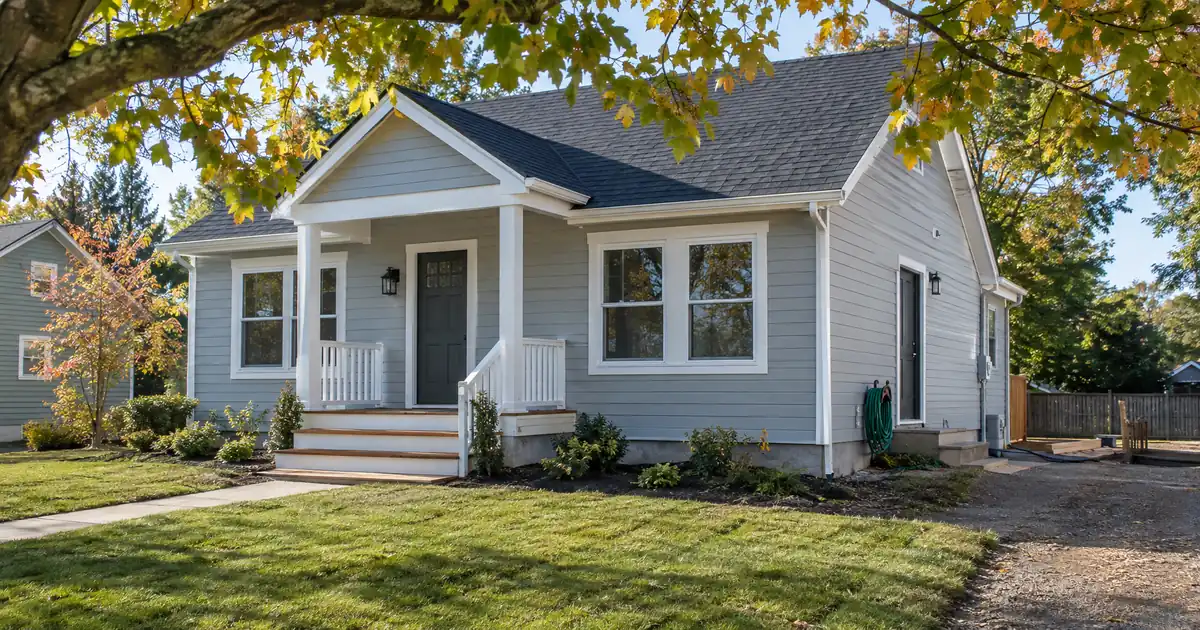
The Quick Read: A DSCR pool is one loan secured by several rentals, and the lender tests the whole group’s rent against the whole group’s payment, usually against a 1.00 coverage floor on select programs, while every property still needs its own appraisal, rent evidence and title work before the bridge loans can be paid off. Strong rentals can offset weak ones in the coverage test. They cannot offset a weak appraisal or a missing lease. Terms vary by lender, property and borrower, and nothing here is a commitment to lend.
- The pool is tested as a group, but each property is still appraised and documented on its own.
- Seasoning, the waiting period after you buy, is lender policy. Across Lendmire’s network it commonly runs about 6 months from the recorded deed.
- The new lender sizes the loan on its own appraisal and rent figure, never on your after-repair estimate.
- Cash-out on standard rentals tops out around 75% LTV. One low appraisal can mean bringing cash to close.
- Pooling trades per-loan fees for cross-collateralization risk. One default can reach every property.
What “Pooling” Means in Plain English
A pool is one note, meaning one loan, with several rentals pledged behind it. Lenders also call it a blanket or portfolio loan. Every property backs the whole debt. You make one payment, and you have one set of loan terms to track.
What this loan actually costs to carry.
Hard money is sized against the project and priced by time. Enter the deal and see how much the program will lend, the cash required at closing, the carry while you hold it, and what is left at the exit.
Leverage tiers on the current program: 85% with fewer than 2, 90% with 2 or more, 93% with 5 or more completed projects — every tier capped at 75% of after-repair value. Loan amounts up to $5,000,000, larger by exception; terms of 6 to 18 months, interest-only, no prepayment penalty. The rehab portion funds in draws against completed work, not at closing.
Program parameters shown update from Lendmire’s centralized guideline source. Rate, points, and months are editable assumptions, not quoted terms.
Cost cap sets the loan · positive spread
Illustrative estimate only — not a quote, Loan Estimate, approval, or commitment to lend. Rate, points, and months are editable assumptions. Hard money is business-purpose financing for real estate investors, not a consumer mortgage. Leverage on the current program tops out at 93% of project cost for investors with a documented track record, capped at 75% of after-repair value, with rehab funding up to 100% of the documented budget released in draws; actual terms vary by lender, borrower experience, property, and exit. Lendmire is a mortgage broker, not a lender.
Eight to twelve doors is a natural size for this structure. It is too many to feel manageable as separate bridge loans with separate maturity dates. It is also a size where one structure can still hold the group together.
Here is the vocabulary you will see on a term sheet, in plain words.
Key Terms Defined
Bridge loan: A short, interest-only loan used to buy or rehab a property. Hard money bridge terms commonly run 6 to 18 months, with no prepayment penalty on the current Lendmire hard money program. Terms vary by lender, property and experience.
DSCR (debt service coverage ratio): Monthly rent divided by the monthly payment. In residential DSCR lending, that payment is PITIA: principal, interest, taxes, insurance and any HOA dues.
Pooled coverage: The same ratio, run on the whole group. Total rent over total payment.
Seasoning: The waiting period a lender wants between buying a property and refinancing it with cash-out or full value credit.
Cross-collateralization: Each property secures the whole loan. A problem with one can reach all of them.
Release clause: Language that lets you pay down part of the loan to free one property for sale or refinance.
Cost basis: What you paid plus documented rehab spend. Lenders often size on this before seasoning ends.
Which Structure Fits Eight to Twelve Properties?
A single pooled loan, a set of individual loans, and a hybrid of the two all exist. The right one depends on whether your rentals are finished, seasoned and similar, or still staggered. A blanket suits a stabilized, seasoned group. A batch that finishes at different times usually fits individual loans better.
| Factor | One pooled note | Separate loans |
|---|---|---|
| Payments | One | One per property |
| Coverage test | Whole group | Property by property |
| Default risk | Reaches every property | Isolated |
| Selling one door | Needs release terms | Simple payoff |
| Best for | Seasoned, stabilized group | Staggered batch |
The hybrid is common with a staggered batch. Refinance the finished, seasoned properties individually first. Then pool the remainder once they catch up. A single property can’t sit in two first liens, so each one goes into one structure or the other.
Read the label carefully. A “portfolio loan” can mean a lender-held loan. In marketing copy it is sometimes just a stack of separate notes. Confirm the note count and the lien count before you assume you have one loan.
The Requirements Checklist
Some tests apply to the pool. Others apply to every property inside it. Both sets must clear. Here is how the network’s select programs generally look, subject to lender guidelines.
| Test | Level | Typical range |
|---|---|---|
| Coverage | Pool | 1.00 where many select programs start |
| Purchase or rate-term leverage | Pool | Roughly 75%-80% LTV |
| Cash-out leverage | Pool | Around 75% LTV, standard rentals |
| Short-term rental cash-out | Pool | 70% on STR collateral |
| Credit | Borrower | 620 floor in parts of network, most want ~660 |
| Reserves | Pool | About 6 months PITIA, about 9 above $1.5M |
| Appraisal and rent evidence | Property | Required on each |
| Title work | Property | Required on each |
| Seasoning | Property | About 6 months from deed |
Credit of 700 or better unlocks the strongest leverage tiers. A bigger down payment lowers the payment and can lift coverage. It never erases leverage caps, credit floors, reserve rules or property eligibility. The strongest files clear both tests: enough equity and enough rental coverage.
Coverage below 1.00 is a separate path. It is available through select lenders in the network, with leverage and terms adjusted. Don’t plan a pool around it unless you’ve discussed it up front.
Reserves vary by lender, leverage, loan size and transaction type. A conservative rate-and-term file at modest leverage under $1,500,000 can see reserves waived. The structure alone rarely rescues a thin cash position, so don’t count on pooling to fix that.
Property types matter too. Manufactured homes (single- and double-wide), log homes and barndominiums are not offered. If one sits in your batch, it has to be financed outside the pool.
DSCR loans are designed for non-owner-occupied investment properties. Because they are business-purpose investor loans, they are reviewed differently from a standard owner-occupied mortgage. The complete DSCR loans guide walks through the basics if the ratio is new to you.
How Underwriting Treats the Pool, Step by Step
Underwriting a pool follows a fixed order. Each step can stop the file, so it helps to know them in sequence.
1. Triage. The lender checks each rental against property-type rules. Ineligible properties come out first.
2. Rent support. Each property needs lease evidence or an appraiser’s market rent. The new lender uses its own rent figure.
3. Valuation. Each property is appraised. The new lender sizes on its own appraisal, never on your after-repair estimate.
4. Value basis. Before seasoning ends, sizing is usually on cost basis. After it ends, the lender can size on appraised value.
5. Two caps. The loan is the lesser of what value allows and what rent supports. Whichever limit binds first sets the check.
6. Coverage test. Total rent is divided by total payment for the whole group.
7. Payoffs. The lender collects payoff statements from each bridge lender and pays them off at closing.
8. Title and closing. Each property needs its own title work.
Step four is where bridge-funded batches get surprised. The same leverage percentage multiplies a cost number inside the seasoning window and an appraisal number after it. That means timing can change your proceeds, not just your eligibility.
A Worked Pool, Including One That Fails
These are modeled assumptions, not market data. Assume each rental carries a similar monthly obligation, so each counts about equally in the group test. Real pools weight by actual rent and payment, so run your own numbers.
Pool that clears. Ten rentals. Eight cover their payment at about 1.20x. Two sit near 0.80x because of a vacant unit and a low-rent street. Add them up and the group lands around 1.12x. The strong eight carry the weak two, and the pool clears a 1.00 floor.
Pool that fails. Eight rentals. Four cover at about 1.10x. Four sit near 0.85x. The group comes in near 0.97x, just under 1.00. A coverage floor at 1.00 means this pool doesn’t pass as built.
The fixes. Pull the two weakest rentals out. The remaining six land near 1.02x, which clears. Or split the group into two pools or a pool plus individual loans. Or lease up the vacancies first and retest. Sub-1.00 coverage is available through select lenders in the network, with leverage and terms adjusted, but that changes the terms of the whole file.
Remember what the ratio measures. DSCR compares rent to PITIA only. Clearing 1.00 does not mean the portfolio produces positive cash flow. Repairs, vacancy, management, utilities and capex all sit outside the calculation.
Pooled coverage forgives uneven rents. It does not forgive uneven values. Each property is still appraised, so a weak property can drag down the pool’s proceeds even though its rent is pooled.
DSCR vs. conventional financing
There are two common ways to finance an investment property, and they qualify you differently — here’s how investors weigh them.
Why investors choose it
- Qualifies on the property’s rental income — no personal tax returns, W-2s, or pay stubs needed to document income.
- No personal debt-to-income ceiling to clear, so existing mortgages and obligations don’t cap your borrowing the same way.
- Can be closed in an LLC, keeping the property inside a business entity.
- Built for scaling — not held to the limit on number of financed properties that conventional financing applies.
- Underwriting centers on the deal: generally qualifies when the rent covers the payment, a 1.00x coverage ratio being a common baseline (confirmed in underwriting).
- Designed specifically for investment property, including long-term and, where the program allows, short-term rentals.
Where it’s strong
- Often the lowest ongoing financing cost for a buyer who fully qualifies on personal income — a fit for a first property or a cost-first purchase.
Trade-offs for investors
- Requires full personal income documentation and must fit within a debt-to-income limit — salary, existing debts, and other mortgages all count.
- Typically held in your personal name rather than a business entity.
- Caps how many financed properties you can carry, which can become a ceiling as a portfolio grows.
- Evaluates you as a borrower as much as the property, which usually means more paperwork.
How investors usually choose: a first or single property often optimizes for the lowest financing cost; portfolio builders often optimize for leverage, vesting in an LLC, and scaling past conventional caps. The right answer depends on your goals, the property, and current guidelines — both paths run through select lenders in Lendmire’s wholesale network, with eligibility and terms confirmed in underwriting.
Seasoning and Cost Basis for Bridge-Funded Rentals
Seasoning decides how much value the lender credits, not only whether you can refinance. Across Lendmire’s network the clock typically runs about 6 months from the recorded deed. Rehab completion, lease signing and tenant move-in do not start it. No regulator sets this period. It is each lender’s own risk policy, so confirm it in the lender’s written guidelines.
| Where you are | Typical sizing basis |
|---|---|
| Inside the seasoning window | Cost basis: price plus documented rehab |
| After the clock runs | Appraised value, up to the leverage cap |
| Cash-out, standard rentals | Around 75% LTV |
| Cash-out, STR collateral | 70% |
A stronger ratio or bigger down payment does not shorten seasoning. It helps pricing and leverage, nothing more.
Delayed financing is not a workaround. That is a lender rule that lets cash buyers refinance right away. A bridge or hard money purchase generally disqualifies you, because the purchase was financed.
Run the break-even appraisal for every property, then for the whole pool. The formula is payoff plus exit costs, divided by the LTV cap. Below that appraised value, you bring cash. Hard money bridge purchases are typically sized on a loan-to-cost basis, with a bridge-purchase loan-to-value ceiling well below the exit ceiling, and a cash-out exit on standard rentals sits around 75% LTV. A bridge at the top of its range can leave little room under the exit ceiling. Across eight to twelve loans, one low appraisal can force you to bring cash. Leverage, reserves, and pricing vary by lender and program; the final terms follow the full file review.
Staggering Bridge Maturities
With eight to twelve properties, the slowest rehab sets the pool’s timeline. Plan backward from your earliest bridge maturity. The bridge has to outlast rehab, lease-up, seasoning, appraisal and underwriting, with room to spare.
Say your bridge loans mature across several months and some properties haven’t seasoned. You have three workable paths.
- Individual-first. Refinance the seasoned, finished rentals into separate loans now. Pool the rest later.
- Two-step on a single property. Do a payoff-only DSCR refinance to stop the bridge clock. Do a cash-out once seasoning completes. Each loan clears its own tests, and it costs two closings.
- Wait for the full group. Only if every bridge maturity allows it. Extension costs on the bridge side can erase the savings.
Many investors refinance out of hard money into long-term DSCR investor loans once a property is stabilized, and Lendmire brokers that path. Bridge terms and leverage vary by lender, property and experience.
Where the General Rule Breaks
Mixed entities. Entity ownership must line up with the borrower structure, subject to lender program eligibility. Consolidating titles before you apply may be required.
Short-term rentals in the mix. Short-term-rental collateral is capped lower on cash-out, and a mixed pool needs a check on how STR rent is treated. Short-term rental rules can vary by city, county, HOA and property type, so investors should confirm local rules before relying on projected rental income.
The business-purpose line. This product exists because the credit is for business, not personal use. The CFPB’s Truth in Lending summary notes that credit extended to acquire or improve non-owner-occupied rental property is considered business purpose credit. The exemption turns on the loan’s purpose, not the collateral, per the Federal Reserve’s staff commentary on Regulation Z. A cash-out used for personal spending is a different analysis.
Releases. A blanket with no release clause can trap a property you want to sell. Release terms matter more than the label on the loan.
Appraisals can’t be skipped. Appraisal-free DSCR refinances are rare enough that a budget should never assume one.
Pool, Partial Pool or Separate Notes?
Match the structure to your plan for the next few years.
| Your plan | Better fit |
|---|---|
| Hold all doors long term | One pool |
| Sell one or two within a few years | Partial pool or separate notes |
| Rehabs finish at different times | Individual loans, pool later |
| One weak property in the batch | Hold it out |
| Want risk isolation | Separate notes |
The savings from a pool come from per-loan fees, not cheaper money. Cross-collateralization is the cost. Many experienced investors choose individual loans for that reason. Neither answer is wrong. It depends on how long you plan to hold and how clean the batch is.
Pre-Signing Checklist
Before you sign, get these in writing:
- The release clause and the price to release one property.
- The allocation schedule, meaning how the loan balance is divided among properties.
- Cross-default language.
- Whether substitution of a property is permitted.
- The note count and lien count.
- Reserve requirement for the whole pool.
- Entity names that match across all documents. Terms vary by lender guidelines, property type, leverage, credit profile, and full file review.
Documents to Gather
Common stalls are mismatched seasoning dates, missing lease and deposit documentation, and appraisers who lack an itemized list of rehab improvements. Bring these:
- Recorded deeds for each property, with dates.
- Executed leases and security deposit records.
- A rent roll for the pool.
- An itemized rehab list with receipts for each property.
- Payoff statements from each bridge lender.
- Entity documents for every LLC involved.
- Proof of reserves.
- Current insurance for each property.
Tax treatment varies; consult a qualified professional.
Frequently Asked Questions
Can strong rentals really offset weak ones in the pool?
Yes, for the coverage test. The lender divides total rent by total payment, so a strong property raises the group number. It does not help the weak property’s appraisal or rent evidence. Each rental still needs its own support, and one low value can still reduce proceeds.
Do I need to wait for every property to season?
Usually, if you want one pool sized on value. Seasoning is lender policy, commonly about 6 months from the recorded deed across Lendmire’s network. A property still inside the window is often sized on cost basis. A staggered batch often does better with individual loans first and a pool later.
What happens if one property in the pool fails the appraisal?
You have two main options: bring cash to close, or drop that property from the pool and finance it separately. Because each property is appraised on its own, a low value cuts that property’s share of the proceeds. Run the break-even appraisal on every door before you commit to a structure.
Is a pool better than individual DSCR loans?
It depends on your plan. A pool gives you one payment and fewer loan fees, but it ties every property to the same debt. Individual loans isolate risk and make selling one door simple. Many experienced investors prefer them for that reason.
Does clearing 1.00 coverage mean the pool cash flows?
No. The ratio compares rent to PITIA only. Repairs, vacancy, management, utilities and capex sit outside it. Treat 1.00 as a floor that select programs start from, not a profit measure.
If you are buying, rehabbing or refinancing an investment property on a short timeline and want to see how the numbers work, Lendmire can help you compare hard money options based on the project, the exit plan, leverage, and your goals. Lendmire arranges financing through select lenders in its wholesale network, across 41 markets including Washington, D.C. Programs change and every file is underwritten individually.
About Lendmire
Lendmire (NMLS# 2371349) is a mortgage brokerage built around DSCR investor lending, with programs available in 41 markets, including Washington, D.C. DSCR lenders commonly evaluate rental-income coverage instead of personal income paperwork — a practical fit for LLC-owned and multi-property investors. Terms vary by lender, property, leverage, and program. Scotsman Guide named Lendmire a Top Mortgage Workplace in both 2025 and 2026.
Get Started
Ready to find the right loan for you?
In about 30 seconds you can review financing options available for your investment property. No commitment required.
Informational only. Not a Loan Estimate, approval, or commitment to lend. Program availability and eligibility are subject to lender guidelines, credit approval, property review, and underwriting.
References
1. CFPB – Truth in Lending Act summary
2. Federal Reserve – Regulation Z staff commentary
This article is part of Lendmire’s hard money loan program — full qualification details, guidelines, and scenarios live on the program page.
Related reading: Does a Twenty-House DSCR Pool Get Re-Tested After Closing? · Portfolio DSCR Reserve Requirements With Deferred Maintenance · DSCR Inspection and Insurance Requirements for Rentals in Three Markets
Brandon Miller
Founder & CEO, Mortgage Loan Originator, Lendmire LLC
- Mortgage Loan Originator · NMLS# 1129696 · Verify on NMLS Consumer Access
- North Carolina Real Estate Broker · License# 343312 · Verify on NCREC
- North Carolina Insurance Producer · License# 19053198 · Property, Casualty, Life, Health · Verify on NAIC SBS
- Lendmire LLC · Firm NMLS# 2371349 · Verify firm licensure
Compliance and disclosures. Lendmire (NMLS# 2371349) is a licensed mortgage broker and is not a direct lender, depository institution, financial advisor, or tax professional. Content in this article is general market analysis and educational information — not financial, legal, or tax advice for any specific situation. Lendmire does not guarantee loan approval; every transaction is subject to underwriting by the funding lender. Mortgage pricing and loan program guidelines are subject to change at any time without notice and vary by borrower characteristics, property type, and state regulations. Lendmire complies with Equal Housing Opportunity. Licensure verification: NMLS Consumer Access.