
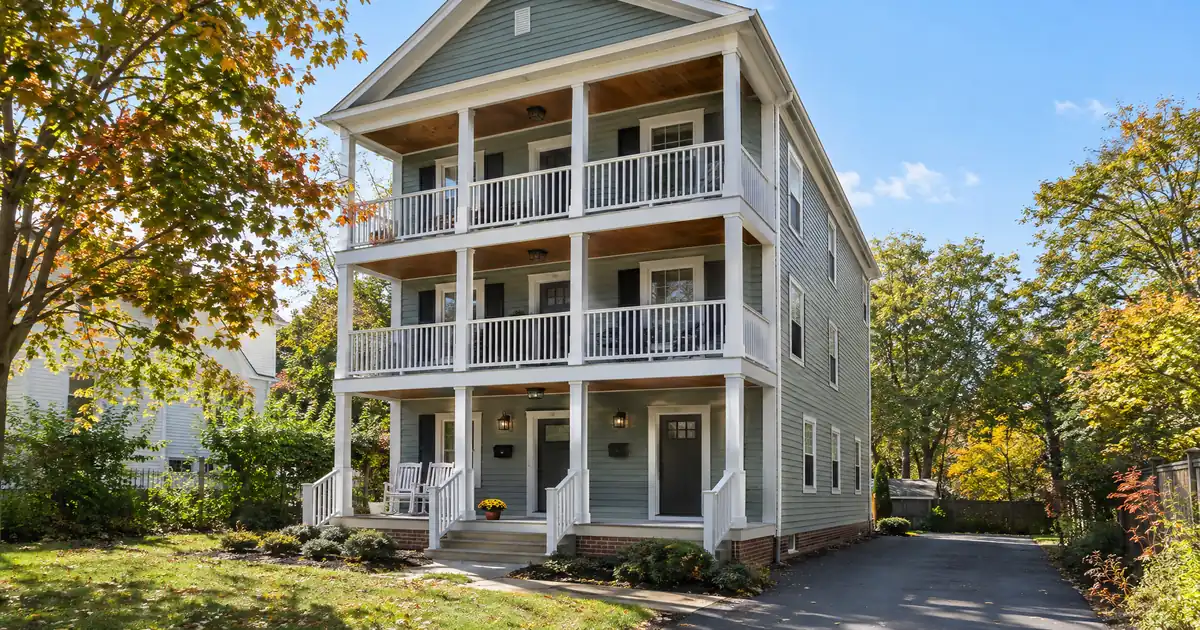
The Quick Read: The choice turns on one fact: whether you will sleep in one of the units. If you will, the file is a personal-income jumbo deal, and your W-2 pay carries it. If every unit goes to outside tenants, the file runs as a DSCR investor loan, and the building’s rent carries it. The two lanes do not blend.
- Live in a unit: your income, debts and assets drive the file.
- Rent every unit: rent against the full monthly obligation drives the file.
- DSCR programs are built for non-owner-occupied property, so a live-in building does not fit them.
- Purchase leverage on the investor side typically runs 75%-80% LTV, subject to lender guidelines.
- A high price with modest rent often favors the live-in jumbo for a salaried buyer.
An executive with strong pay and a pricey fourplex is really picking which test the file takes. One test looks at you. The other looks at the building.
DSCR Calculator
Run the numbers in your market
Rate source: Freddie Mac 30-yr average via FRED® — Federal Reserve Bank of St. Louis · effective Oct 15, 2026
Prefilled with starting assumptions — enter your own rent or nightly figures, taxes, insurance, and HOA for a more accurate picture.
Program parameters update from Lendmire’s centralized guideline source. Taxes and insurance are editable estimates.
As of Oct 15, 2026 · General Freddie Mac market benchmark, not a Lendmire loan offer. Rent, nightly rate, occupancy, taxes, and insurance are editable estimates. Short-term rental figures are estimates only and vary significantly by season, property type, management approach, and local short-term-rental rules — confirm local regulations before relying on them. Qualifying income for short-term rentals varies by program — some use appraisal market rent, others use documented STR history or projections — and is confirmed in underwriting. Not a Loan Estimate, approval, or commitment to lend. Program availability and eligibility are subject to lender guidelines, credit approval, property review, and underwriting.
Who Each Option Is Really For
The live-in jumbo is for the buyer whose income can carry the debt and who wants to live in the building. The full rental is for the buyer who wants the building judged on its own rent, with personal debt-to-income kept out of the test.
A W-2 executive usually has the income strength for the first lane. That does not make it the better lane. A buyer adding a third or fourth property can find that each personal-name loan stacks onto the debt test. A rental loan tests each building by itself. That one difference decides many files.
For the broader mechanics, Lendmire’s complete DSCR loans guide covers how coverage is calculated and what programs review.
Side-by-Side
Read the right column as typical wholesale-network DSCR guidance. Read the left as published industry norms for full-doc jumbo files, which vary by lender. Lendmire’s network places both product types.
| Factor | Live-in jumbo (industry norms) | Full rental DSCR (network) |
|---|---|---|
| Review basis | Personal income and debts | Rent vs. full monthly obligation |
| Documentation | W-2s, pay stubs, returns, assets | Lease or rent schedule, credit, entity papers |
| Property types | 2-4 units, borrower occupies one | 1-4 units, all leased to third parties |
| Entity vesting | Usually personal name | Personal name or LLC, with guaranty |
| Rent from other units | Treatment varies by lender | Core of the coverage test |
| Reserves | Vary by loan size and lender | About 6 months PITIA; about 9 above $1,500,000 |
| Debt-to-income | Counts every personal debt | Not used; rent is tested against the property’s payment |
| Appraisal | Form 1025 | Form 1025, with market rent |
DSCR compares rent to PITIA only. Clearing 1.00 is not the same as positive cash flow. Repairs, vacancy, management and utilities sit outside the ratio. Eligibility on any file depends on lender guidelines, credit, reserves and property review.
When the Live-in Jumbo Is the Better Fit
Choose the live-in lane when your documented income is the strongest part of your file and the building’s rent is the weakest. That pairing is common with a trophy 2-4 unit in a high-price area. Rent may not cover the full monthly obligation, but your salary can.
It also fits when you want to live there for real. Market surveys report that owner-occupied loans usually need less down than investment loans. That is a published industry pattern, not a network figure. On the investor side, purchase leverage typically runs 75%-80% LTV, with select high-leverage programs reaching 85% on files with roughly a 700+ score.
For a W-2 executive, the file is mostly paperwork on pay. Expect two years of W-2s, recent pay stubs and traditional personal-income documentation. Bonus and RSU income typically need a two-year history, and a declining average usually gets used. Asset statements verify reserves.
Two cautions apply.
1. Rent credit is partial at best. Some lenders count only part of the other units’ rent, and practice differs by lender. Rent from your own unit never counts.
2. Debt stacking. The full building payment lands in your personal debt test. Buy a second financed property later and both loans sit in the same ratio.
When the Full Rental Is the Better Fit
Choose the full rental when the building should stand on its own rent and you do not plan to live in it. This lane suits the executive who already owns a primary residence and wants rental properties kept out of the personal debt-to-income calculation.
Here the lender divides rent by the full monthly obligation: principal, interest, taxes, insurance and any association dues. Across the wholesale network, 1.00 is where select programs start, and stronger ratios open better leverage. A separate path through select lenders takes coverage below 1.00, with leverage and terms adjusted. Subject to program terms, vesting can be personal or an LLC with a personal guaranty. The guarantor’s credit and reserves are still reviewed.
Standard programs run loans up to $3,000,000. Credit tiers start with a 620 floor in parts of the network, with most programs wanting about 660. A 700+ score unlocks the strongest leverage tiers. Cash-out tops out around 75% LTV, with about 6 months of seasoning common.
Don’t read “DSCR” as “light paperwork.” Credit, reserves, appraisal, entity documents and a guaranty still get reviewed. Qualification runs primarily on the property’s rental income covering the payment, subject to lender guidelines.
The weak spot is rent-to-price. A jumbo-sized balance can compress coverage. If the building cannot clear coverage on rent alone, this lane is the wrong tool, and the live-in jumbo or a smaller leverage structure deserves a look.
The Occupancy Line Is Not Negotiable
Occupancy decides the product, and it has to be true.
DSCR loans are designed for non-owner-occupied investment properties. Because they are business-purpose investor loans, they are reviewed differently from a standard owner-occupied mortgage. Under Regulation Z, an owner who expects to occupy a property more than 14 days in the coming year cannot treat it as non-owner-occupied. A mostly-rental plan with heavy personal use can cross that line.
Misstating occupancy to reach the lower-friction lane is a legal problem, not a shortcut. Nolo’s overview of occupancy fraud describes federal penalties of up to $1,000,000 in fines and up to 30 years in prison, and notes a lender may re-underwrite the loan as a second-home or investment loan. A real change of plans after closing, with real intent at application and honest disclosure, is a different matter.
Where the Standard Picture Breaks
- Moving out later. A live-in loan can stay in place if you later convert the building to a rental, but the borrower typically has to live there for a year first, per BiggerPockets’ house hacking guide.
- Duplex versus triplex or fourplex. The federal business-purpose label turns on unit count for owner-occupied acquisitions, but loan programs do not simply follow that label. Per the official interpretation, live-in acquisition credit on more than two units is deemed business-purpose. Expect program rules, not that label, to decide your lane.
- Short-term rentals. In the network, purchases go to 75% LTV with about 12 months of hosting history and a 640+ score. Short-term rental rules vary by city, county, HOA and property type, so confirm local rules before relying on projected rental income.
- Five or more units. Those move to commercial-style underwriting and fall outside these programs.
- Ineligible structures. Manufactured homes, log homes and barndominiums are not offered in the network’s DSCR programs.
Reserves and the Whole Balance Sheet
Reserves differ in how they are counted. Across the network, DSCR reserves run commonly around 6 months of PITIA, stepping up to about 9 months above $1,500,000, though conservative rate-term files at modest leverage under that size can see reserves waived. Reserves vary by lender, leverage, loan size and transaction type.
A live-in jumbo file is different. Market surveys report that jumbo reserve expectations commonly scale with loan size and can reach well beyond the investor-side figures on very large balances. Published norms also tend to measure reserves across every property you own. For an executive adding a second building, that can matter more than the down payment.
A larger down payment lowers the payment and can lift coverage. It does not erase leverage caps, credit floors, reserve rules or property eligibility. The strongest files clear both tests: enough equity and enough rental coverage.
Key Terms Defined
DSCR: Monthly rent divided by the full monthly obligation (principal, interest, taxes, insurance, association dues).
PITIA: Principal, interest, taxes, insurance and association dues, the payment side of the coverage test.
Form 1025: The appraisal form for small 2-4 unit income properties; it reports value and unit-by-unit market rent.
Live-in jumbo: A loan above conforming limits on a building where the borrower occupies one unit, qualified on personal income.
Non-owner-occupied: A property where no borrower or household member lives, with every unit leased to outside tenants.
A Decision Checklist
Live-in jumbo fits if:
- You want to live in one unit.
- Your income and assets are the strongest part of the file.
- The building’s rent is thin against its price.
- You are not stacking many other financed properties.
Full rental fits if:
- You will not live in any unit.
- The building’s rent covers its full obligation with room to spare.
- You want entity vesting, subject to lender program eligibility.
- You want the building tested apart from your personal debts.
Tax treatment can depend on how the property is held and how it is used; investors should keep clear records and speak with a qualified tax professional before relying on any deduction.
Balanced Verdict
Neither lane is better in general. The executive with big pay and a high-price, low-rent building usually belongs in the live-in jumbo. The executive with an existing home and a building that pays its own way usually belongs in the rental lane. If you want both, buy the live-in building on personal income and finance later rentals on DSCR. Lendmire’s piece Jumbo Loan for a 2-4 Unit You Live In vs a Pure Rental covers the owner-occupied side in more depth.
If you are buying or refinancing a rental property and want to see how the numbers work, Lendmire can help you compare DSCR loan options based on the property income, credit profile, leverage, and investor goals. Reach the team at 828-256-2183 or request a quote.
Frequently Asked Questions
Can I live in one unit and still use a DSCR loan?
No. DSCR programs are built for non-owner-occupied property, so a building where you live does not fit them. Mislabeling occupancy creates legal exposure rather than a workaround. A live-in building belongs in an owner-occupied loan.
Does rent from the other units count on a live-in jumbo?
It depends on the lender. Some count part of it, some use it as an offset, and some give no credit. Rent from your own unit never counts. Confirm the treatment before you price the deal.
Which lane needs fewer reserves?
It varies by lender, leverage, loan size and transaction type. DSCR files commonly run around 6 months of PITIA, about 9 months above $1,500,000. Published jumbo norms often scale higher on large balances and may count all properties you own.
Can I move out of a live-in building and rent it later?
Often yes, if the intent to live there was real at application. The borrower typically needs to occupy it for about a year first. Tell the lender if plans change.
Does an LLC change how the coverage math works?
No. An LLC changes title and liability exposure, not the ratio. The personal guaranty and the guarantor’s credit review remain.
For current guidelines and terms, see Lendmire’s DSCR loan programs page.
About Lendmire
Lendmire, NMLS# 2371349, is a mortgage brokerage focused on investor financing, arranging DSCR loans in 40 states plus Washington, D.C. — 41 markets total. Qualification is based on the property’s income rather than personal income documentation, subject to lender guidelines, making it a fit for LLC-held rentals and scaling portfolios. Scotsman Guide named Lendmire a Top Mortgage Workplace in both 2025 and 2026.
Get Started
Ready to find the right loan for you?
In about 30 seconds you can review financing options available for your investment property. No commitment required.
Informational only. Not a Loan Estimate, approval, or commitment to lend. Program availability and eligibility are subject to lender guidelines, credit approval, property review, and underwriting.
References
2. Nolo, Mortgage Occupancy Fraud
3. BiggerPockets, House Hacking Strategy
4. Cornell LII, Regulation Z Official Interpretations
This article is part of Lendmire’s DSCR loan program — full qualification details, guidelines, and scenarios live on the program page.
Related reading: Is a 30-Year DSCR Loan Safer for an LLC-Held Rental Pool? · Can a BRRRR Batch Get a Portfolio DSCR Loan at Full Value? · Can You Sell a Rental Early on a DSCR Loan Without Owing a Fee?
Brandon Miller
Founder & CEO, Mortgage Loan Originator, Lendmire LLC
- Mortgage Loan Originator · NMLS# 1129696 · Verify on NMLS Consumer Access
- North Carolina Real Estate Broker · License# 343312 · Verify on NCREC
- North Carolina Insurance Producer · License# 19053198 · Property, Casualty, Life, Health · Verify on NAIC SBS
- Lendmire LLC · Firm NMLS# 2371349 · Verify firm licensure
Compliance and disclosures. Lendmire (NMLS# 2371349) is a licensed mortgage broker and is not a direct lender, depository institution, financial advisor, or tax professional. Content in this article is general market analysis and educational information — not financial, legal, or tax advice for any specific situation. Lendmire does not guarantee loan approval; every transaction is subject to underwriting by the funding lender. Mortgage pricing and loan program guidelines are subject to change at any time without notice and vary by borrower characteristics, property type, and state regulations. Lendmire complies with Equal Housing Opportunity. Licensure verification: NMLS Consumer Access.