
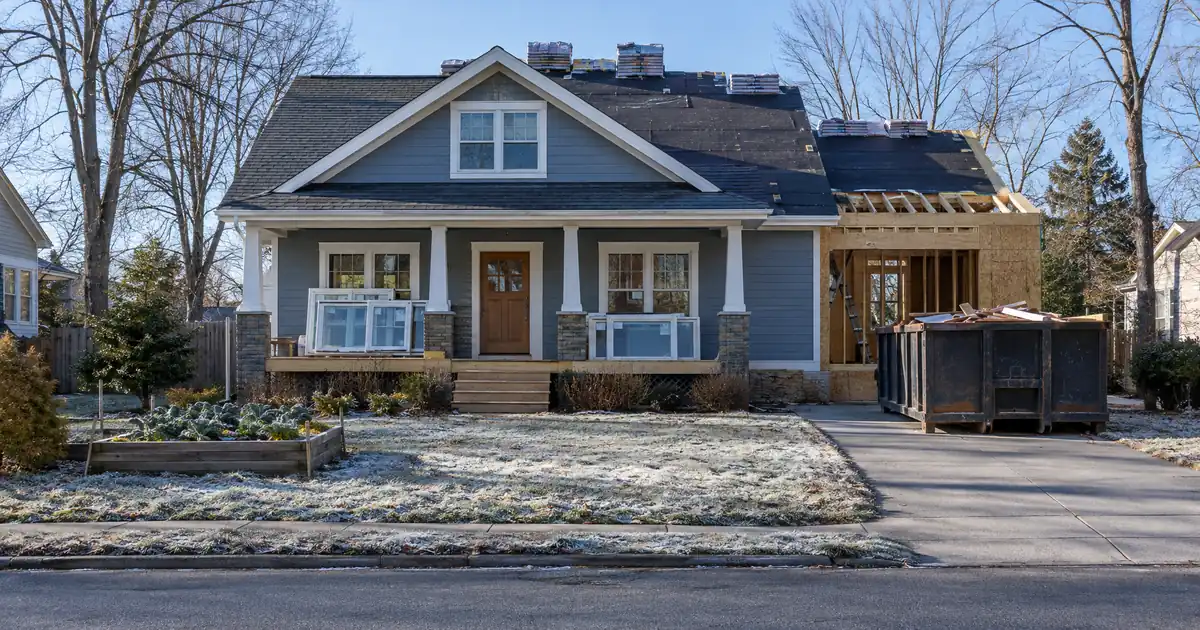
The Quick Read: A vacant house is the cleaner fit for a first flip, because the rehab schedule, the appraisal visit and the exit plan all depend on who controls the house on day one, while an occupied house can work when the lease is read, possession is dated in the contract, and the numbers hold if the tenant stays longer. What matters most:
- Business-purpose hard money is built for non-owner-occupied residential property, 1-4 units. A borrower who plans to live in the house is on a different financing path.
- A first-time flipper typically sits in the lowest leverage tier, around 85% of project cost, capped at 75% of after-repair value. Leverage varies by lender, property, and experience.
- Terms run 6-18 months, interest-only. An occupied house burns part of that clock before the rehab can start.
- Occupancy is a timing and legal risk, not an automatic disqualifier. The deciding question is whether possession arrives on schedule.
Lendmire is a mortgage broker that arranges these loans through select lenders in its wholesale network, across 41 markets including Washington, D.C. Nothing here is a commitment to lend. Every file is reviewed on its own.
What this loan actually costs to carry.
Hard money is sized against the project and priced by time. Enter the deal and see how much the program will lend, the cash required at closing, the carry while you hold it, and what is left at the exit.
Leverage tiers on the current program: 85% with fewer than 2, 90% with 2 or more, 93% with 5 or more completed projects — every tier capped at 75% of after-repair value. Loan amounts up to $5,000,000, larger by exception; terms of 6 to 18 months, interest-only, no prepayment penalty. The rehab portion funds in draws against completed work, not at closing.
Program parameters shown update from Lendmire’s centralized guideline source. Rate, points, and months are editable assumptions, not quoted terms.
Cost cap sets the loan · positive spread
Illustrative estimate only — not a quote, Loan Estimate, approval, or commitment to lend. Rate, points, and months are editable assumptions. Hard money is business-purpose financing for real estate investors, not a consumer mortgage. Leverage on the current program tops out at 93% of project cost for investors with a documented track record, capped at 75% of after-repair value, with rehab funding up to 100% of the documented budget released in draws; actual terms vary by lender, borrower experience, property, and exit. Lendmire is a mortgage broker, not a lender.
“Occupied” Means Three Different Things
Most confusion starts with the word itself. It can describe three situations, and each one changes the loan differently.
The buyer will live there. This is a live-in flip. Hard money for flips is a business-purpose product for non-owner-occupied property. A buyer who moves in typically needs a renovation mortgage or another consumer-purpose loan instead.
A tenant lives there. The buyer inherits the tenancy with the house. The lease, its term, and the rent all come along. Read them during escrow, before the deposit is at risk.
The seller lives there. This is a seller rent-back or a late move-out. The risk is a possession date that slips.
Investor loans are designed for non-owner-occupied investment properties. Because they are business-purpose loans, they are reviewed differently from a standard owner-occupied mortgage. The rest of this piece is about the second and third situations, since those are what a first-time flipper actually faces.
Side-by-Side
The table below reflects published industry norms and investor practice for tenant- or seller-occupied deals, set against a vacant delivery. Lendmire’s wholesale network places both kinds of files. Treat the columns as general patterns, since each lender sets its own treatment.
| Factor | Vacant at closing | Tenant- or seller-occupied |
|---|---|---|
| Review basis | Property, plan, exit, experience | Same, plus possession risk |
| Documentation | Contract, scope, budget, entity papers | Adds lease, rent roll, move-out terms |
| Property types | Non-owner-occupied, 1-4 units | Same; occupant stays or leaves by plan |
| Entity vesting | LLC common; guarantee typical | Same; lease may need assignment |
| Timeline | Rehab can start at once | Rehab waits for possession |
| Appraisal access | Open interior | Needs occupant cooperation |
| Reserves | Carry and rehab liquidity reviewed | Often a larger cushion for delay |
LLC vesting is common on flip files, subject to lender program eligibility. A personal guarantee from the principal is typical alongside it.
When a Vacant House Is the Better Fit
For most first-time flippers, vacant is the better fit. The reason is control. When the keys change hands at closing, the borrower sets the schedule.
The loan is underwritten on the purchase price against the as-is value, the rehab scope and budget, the after-repair value, and the exit plan. Across the wholesale network, the leverage tiers follow the borrower’s track record. Fewer than two completed projects points to roughly 85% of project cost. Two or more points to about 90%, and five or more to about 93%. Every tier is capped at 75% of after-repair value. Rehab money, up to 100% of the rehab budget, is released in draws as completed work is inspected. Credit typically starts at a 620 score, with added conditions below 660. All of this varies by lender, property, and experience.
Here is why vacant helps a first deal specifically. The draw inspector can walk the whole house. The appraiser can see every room. The contractor can start on the first day, so the interest-only clock on a 6-18 month term runs against real progress.
Run the numbers on two identical flips. One closes vacant. The other has a month-to-month tenant who needs time to leave. The second one pays the same interest-only carry during the delay, with no rehab progress behind it. A first-timer on the lowest leverage tier has the least cushion to absorb that.
Vacant also protects the exit. A flip with a firm sale date depends on a firm completion date, and possession drives both.
If your plan is flip first and hold later, a stabilized property can often be refinanced into long-term DSCR financing. Lendmire’s complete DSCR loans guide covers how that path works.
When an Occupied House Is the Better Fit
Occupied is the better fit in a narrower set of cases. It works when the purchase price reflects the problem and the investor has already priced the delay.
A tenant-occupied house can come at a discount, because many buyers want vacant delivery and pass. If the lease is short, the tenant is cooperative, and the contract spells out possession, the discount can be real. The investor takes on legal and timing risk and gets paid for it in the price.
Occupied can also make sense when the tenant stays through part of the plan. Some flips are light cosmetic work. A tenant in place may stay while the investor completes exterior or systems work, though one practical limit applies: an occupied home is hard to work in.
Think through the contract terms before you sign:
- Delivery of possession. Write vacant delivery into the contract with a date, or define the notice the seller must serve.
- Lease review. Know whether the tenancy is fixed-term, month-to-month, or informal, and what rent it pays.
- Cash-for-keys. You cannot buy out a lease on a house you do not yet own. If closing fails, any money paid is hard to recover, so payment should follow the move-out.
- Walkthrough. If the house is still occupied at the final walkthrough, the closing should not proceed on the assumption that it will empty out.
This is where a first flip gets risky. A buyer cannot evict a tenant just because the house was sold. Local eviction rules apply, and they differ widely.
The Federal Backstop on Foreclosure Purchases
Auction and bank-owned houses often come with occupants. The Protecting Tenants at Foreclosure Act generally requires a successor owner to give bona fide tenants 90 days’ notice, and tenants with leases can typically stay through the lease term. The Oregon State Bar’s consumer law blog describes a bona fide lease as arm’s-length, at rent not substantially below market, with no relative of the prior owner as tenant. Some states and cities give tenants more protection than the federal floor, as the National Law Center on Homelessness & Poverty’s fact sheet explains. A first-time flipper buying at auction should price that notice period into the carry.
What Changes If You Plan to Live There
This is the edge case that trips up first-timers. Federal consumer-credit rules under Regulation Z exempt credit extended primarily for a business, commercial or agricultural purpose, as the regulation text at Cornell’s Legal Information Institute lays out. Occupancy changes how that purpose is judged. A compliance consultancy’s summary notes that for owner-occupied rental property, the unit-count thresholds are higher, while for non-owner-occupied property even a single unit can fall in the exempt category.
In plain words, a flip loan stays a business-purpose loan only if the borrower will not live in the house. That is why flip lenders ask about occupancy, and why the live-in flip belongs to renovation or consumer products, not investor hard money. If your plan is to move in, this article’s loan path does not apply to you.
Which One Fits a First Flip?
This one is close to a toss-up on paper and lopsided in practice. Vacant is easier to underwrite, easier to schedule, and easier to explain to a lender who is looking at a first-time borrower. Occupied can be the cheaper house to buy. For roughly the first few loans, lenders tend to be more cautious and want more skin in the game. Delay costs matter most when the cushion is thinnest.
| Your profile | Likelier fit |
|---|---|
| First flip, thin liquidity | Vacant |
| First flip, tight sale date | Vacant |
| Some experience, patience for a lease term | Either |
| Buying a discounted tenant-occupied house | Occupied, with a dated possession clause |
| Plan to live in the house | Neither; consumer-purpose financing |
The flip point comes when the discount on the occupied house is larger than the carry you would pay while waiting, plus a margin for a delay you did not plan for.
Key Terms Defined
Business-purpose loan: a loan made primarily for investment or business use, not for a home the borrower will live in.
Loan-to-cost: the loan amount measured against the total project cost, which is the purchase price plus the rehab budget.
After-repair value (ARV): the estimated value of the house once the rehab is finished, used as a cap on how much the lender will advance.
Draw: a release of rehab funds after the lender confirms that a stage of work is complete.
Delivery of possession: the contract term that says when, and in what condition, the seller hands over the house.
The Verdict
Choose vacant if this is your first flip and your cushion is thin. Choose occupied only when the discount is real, the lease is read, and the contract dates possession. Whichever path you take, bring the occupancy facts to the lender before you make an offer, since each lender sets its own treatment of tenant-occupied files.
For the broader decision, Lendmire has a deeper piece Buying Occupied on Hard Money vs. Waiting for a Vacant House.
If you are buying, rehabbing or refinancing an investment property on a short timeline and want to see how the numbers work, Lendmire can help you compare hard money options based on the project, the exit plan, leverage, and your goals.
Frequently Asked Questions
Can I use hard money on a house I plan to live in?
Generally not. Hard money for flips is a business-purpose product for non-owner-occupied property, 1-4 units. A buyer who will live in the house typically needs a renovation mortgage or another consumer-purpose loan, since occupancy changes how the loan is classified.
Will a lender fund a house that has a tenant in it?
It depends on the lender, the lease, and the plan. The file is still reviewed on the property, the rehab budget, the after-repair value, and the exit. Expect to supply the lease and rent roll, and expect questions about when the tenant leaves.
Does an LLC change any of this?
Not the occupancy question. Investors often vest flips in an LLC, subject to lender program eligibility, and the principal typically signs a personal guarantee. The entity does not turn a live-in purchase into a business-purpose loan.
What if the seller is still in the house at closing?
Put a possession date and a holdover remedy in the contract, and do not rely on a verbal move-out. If the seller will not commit to a date, the schedule risk lands on your term, which runs 6-18 months and is interest-only.
Can I refinance after the flip?
Many investors do. Once the property is rehabbed and stabilized, it can move into long-term rental financing, and Lendmire brokers DSCR loans for that step. Eligibility depends on lender guidelines, credit, and the property.
For current guidelines and terms, see Lendmire’s DSCR loan programs page.
About Lendmire
Lendmire (NMLS# 2371349), a non-QM mortgage broker serving investors in 41 markets including Washington, D.C., helps structure DSCR scenarios commonly evaluated around a property’s rental income rather than personal income paperwork, subject to lender guidelines. A Scotsman Guide Top Mortgage Workplace in 2025 and 2026, Lendmire places loans through wholesale investor lenders and is not a direct lender.
Get Started
Ready to find the right loan for you?
In about 30 seconds you can review financing options available for your investment property. No commitment required.
Informational only. Not a Loan Estimate, approval, or commitment to lend. Program availability and eligibility are subject to lender guidelines, credit approval, property review, and underwriting.
References
1. Oregon State Bar Consumer Law Blog, Protecting Tenants at Foreclosure Act
2. National Law Center on Homelessness & Poverty, PTFA Fact Sheet
3. Cornell Legal Information Institute, 12 CFR 1026.3
4. Compliance Alliance, Regulation Z and Investment Properties
This article is part of Lendmire’s hard money loan program — full qualification details, guidelines, and scenarios live on the program page.
Related reading: Should You Ask a Hard Money Lender Questions Before a Fix and Flip? · Can a 1099 Contractor Get a Hard Money Loan to Flip a House? · Can Hard Money Cover a Fix and Flip Purchase?
Brandon Miller
Founder & CEO, Mortgage Loan Originator, Lendmire LLC
- Mortgage Loan Originator · NMLS# 1129696 · Verify on NMLS Consumer Access
- North Carolina Real Estate Broker · License# 343312 · Verify on NCREC
- North Carolina Insurance Producer · License# 19053198 · Property, Casualty, Life, Health · Verify on NAIC SBS
- Lendmire LLC · Firm NMLS# 2371349 · Verify firm licensure
Required disclosures. Lendmire (NMLS# 2371349) operates as a licensed mortgage broker, not a direct lender or depository. The discussion in this article is general in nature and should not be relied upon as financial, legal, or tax advice — every investment scenario is unique and should be reviewed by a qualified professional. Any loan inquiry is subject to lender underwriting, and this article is not a commitment to lend or a guarantee of approval. Mortgage rates, loan terms, and program guidelines vary by borrower, property, and state, and may change without notice. Equal Housing Opportunity. Verify licensure at NMLS Consumer Access.