
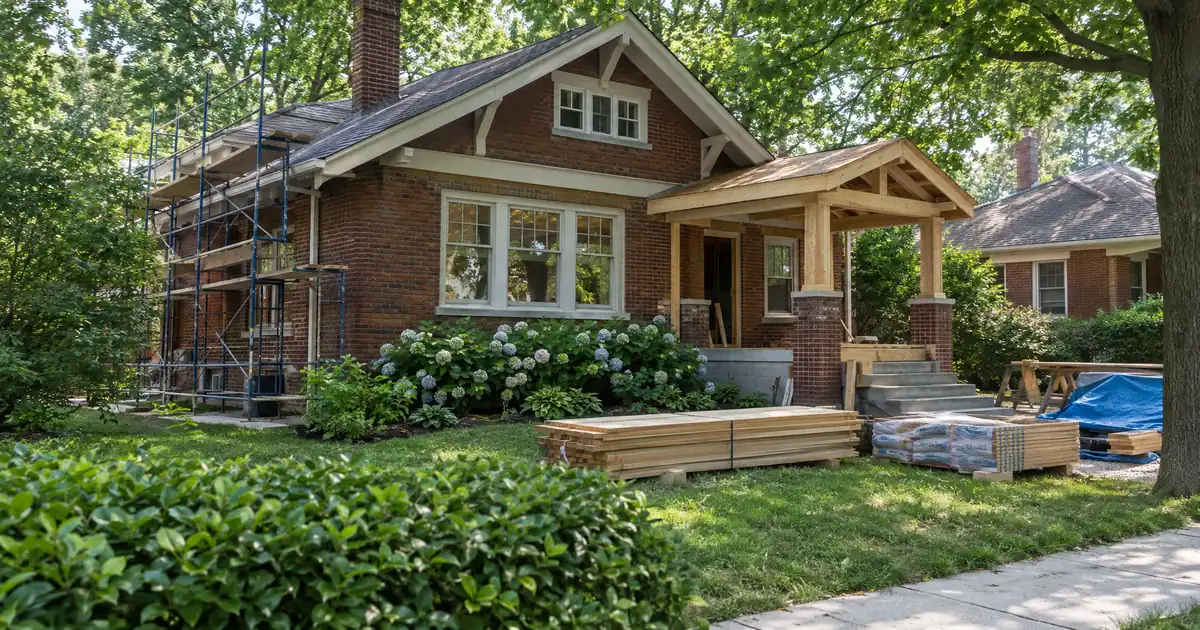
The Quick Read: For a first-time investor, the labels matter less than the exit, because both loans are short-term, asset-based, and interest-only, and both fail when the payoff plan slips. A hard money loan is built around the property and the project. A bridge loan is built around the gap it spans until longer-term financing arrives. Pick the loan whose term and structure match a takeout you can document before you close.
- Neither term is a regulated product category. Both are market labels, so ask a lender how it underwrites, not what it calls the loan.
- Hard money sizing runs on project cost and after-repair value (ARV), tiered by completed projects. First-timers sit at the lower tiers.
- Terms on the hard money sheet run 6-18 months, interest-only, with no prepayment penalty. Varies by lender, property, and experience.
- A rental exit usually means a DSCR refinance, which qualifies primarily on property-level rental income covering the payment, subject to lender guidelines.
- Clearing 1.00 coverage is not the same as positive cash flow. Repairs, vacancy, and management sit outside the ratio.
The Honest Answer: Who Each Option Is For
Hard money fits a first-timer buying a property that needs work, where the loan is sized on the project and the plan. A bridge loan fits a first-timer buying a property that is already livable or near-stabilized, where the loan covers the stretch until a long-term loan or sale takes it out. In practice, the two overlap heavily. Investopedia defines a bridge loan as short-term financing used until permanent financing is secured or an existing obligation is removed. It describes a hard money loan as one backed by real property, from lenders who are generally individuals or companies rather than banks.
DSCR Calculator
Run the numbers in your market
Rate source: Freddie Mac 30-yr average via FRED® — Federal Reserve Bank of St. Louis · effective Oct 22, 2026
Prefilled with starting assumptions — enter your own rent or nightly figures, taxes, insurance, and HOA for a more accurate picture.
Program parameters update from Lendmire’s centralized guideline source. Taxes and insurance are editable estimates.
As of Oct 22, 2026 · General Freddie Mac market benchmark, not a Lendmire loan offer. Rent, nightly rate, occupancy, taxes, and insurance are editable estimates. Short-term rental figures are estimates only and vary significantly by season, property type, management approach, and local short-term-rental rules — confirm local regulations before relying on them. Qualifying income for short-term rentals varies by program — some use appraisal market rent, others use documented STR history or projections — and is confirmed in underwriting. Not a Loan Estimate, approval, or commitment to lend. Program availability and eligibility are subject to lender guidelines, credit approval, property review, and underwriting.
So one name describes the job, and the other describes the lender and underwriting style. A single loan can be both. Across the wholesale network, the useful question for a first-timer is never “bridge or hard money?” It is “what pays this off, and when?”
One caution on the word bridge. Homeowner bridge loans, used to buy a new home before selling the old one, are a different animal. They lean on equity in a home you already own. A first-time investor with no property to sell is shopping for the investor version, which centers on the asset and the exit.
Side-by-Side
The table below shows published industry norms for each product, not Lendmire pricing. Lendmire’s wholesale network places both kinds of short-term loan, and exact terms vary by lender, property, and experience.
| Factor | Hard Money (industry norms) | Bridge Loan (industry norms) |
|---|---|---|
| Review basis | Collateral and project plan | Property value plus borrower position and exit |
| Documentation | Lighter than conventional, not absent | Lighter than conventional, often more borrower review |
| Property types | Often distressed or rehab | Often transitional or near-stabilized |
| Entity vesting | LLC common, entity papers requested | LLC common, entity papers requested |
| Timeline | Short, often driven by the deal calendar | Short, tied to a defined event |
| Reserves | Proof of cash for holding costs and gaps | Proof of cash and exit support |
| Typical exit | Sell, or refinance to long-term loan | Sell, or refinance to long-term loan |
| First-timer scrutiny | Plan, contractor, budget, reserves | Plan, liquidity, exit evidence |
Two rows deserve a closer look. Documentation is lighter, not missing. Expect proof of reserves, the contract, a scope of work and budget for any rehab, entity documents, and often a personal guarantee. And the exit row looks the same on both sides for a reason. Both loans live and die by it.
Why the Exit Decides Everything
The exit is the first thing a careful lender reads. A vague plan, such as “I may rent it or sell it,” is a weak file. A plan with a named path, a date range, and evidence behind it is a stronger file.
There are three exits:
1. Sell the property. This needs a realistic ARV, comps that support it, and a holding period that fits the loan term.
2. Refinance into long-term financing. For a rental, this is typically a DSCR loan.
3. Pay off with other funds. This works only if those funds are documented and not already committed.
Line up the takeout before you close on the short-term loan.
When a Hard Money Loan Is the Better Fit
Hard money is the better fit when the property needs work and you want the loan sized on the project rather than on today’s condition. The program parameters in the network are tiered by documented completed projects. Fix-and-flip leverage runs 93% of project cost at 5+ completed projects, 90% of project cost at 2+ completed projects, and 85% of project cost with fewer than 2, with every tier capped at 75% of after-repair value. Rehab money funds in draws against completed work, up to 100% of the rehab budget. Those figures vary by lender, property, and experience, and none is a commitment to lend.
A first-timer lands at the lower tier. That is normal. The top tier is reserved for experienced investors, and the point of the lower tier is to let a new investor prove a first project.
Other mechanics a first-timer should know:
- Terms: 6-18 months, interest-only, no prepayment penalty. There are no multi-year options on the current program, so a plan that needs longer runway belongs in a refinance, not a longer note.
- Credit: a 620 minimum score, with additional conditions below 660. Underwriting stays asset-based, meaning property, plan, and exit.
- Property: non-owner-occupied residential, 1-4 units. Ground-up construction goes to 10 units. Commercial, land, hospitality, and owner-occupied are not on the sheet.
- Amounts: hard money sizes vary by lender, property, and experience, with larger balances handled by exception. The DSCR takeout below carries its own, separate loan-size guide.
Picture a first-time investor buying a dated duplex with a clear scope of work, a contractor with a written bid, and comps that support the ARV. The loan sizes on cost and ARV, rehab funds in draws, and the exit is a refinance once the units are leased. That is a clean hard money file. The same investor with no contractor bid and a guess at ARV is the file that gets questions.
When a Bridge Loan Is the Better Fit
A bridge loan is the better fit when the property is already in rentable or near-rentable shape and the gap is about timing, not construction. Think of a purchase that needs a short hold before lease-up, or a property where long-term financing can’t start until a defined event happens.
On the network’s hard money sheet, bridge purchases without rehab go up to 80% of purchase price. Cash-out and rate-and-term refinances run up to 65% of value. Those are the figures this product carries, and they differ from the DSCR figures further down.
For a first-timer, a bridge structure has a trade-off. With no rehab to fund, the lender has less project to hang the loan on, so the exit and your cash position carry more weight. A thin reserve account is a bigger problem here than on a rehab, because there is no scope of work to explain where the money goes.
One more point. Bridge lenders often care about lease evidence. If the exit is a rental refinance, signed leases and market rent support make the takeout believable. Without them, the exit is a hope.
Building the Rental Exit First
If the property will be a rental, the takeout is a DSCR loan, and it is underwritten on the property, not on your first-deal story. Many investors refinance out of hard money into long-term DSCR financing once the property is stabilized. Lendmire brokers that path, and the hard money exit refinance program is the place to see how it fits.
Here is what the DSCR takeout allows across most programs in the wholesale network, framed as typical ranges and never guarantees:
- Rate-and-term refinance: up to 85% LTV on a DSCR rate-and-term refinance of an investment property, with no cash back at closing.
- Cash-out refinance: up to 75% LTV on a standard-rental cash-out. If the property is a short-term rental, the cash-out ceiling drops to 70%.
- Coverage: 1.00 is where select programs start. A separate select-lender path takes coverage below 1.00, with leverage and terms adjusted.
- Credit: a 620 floor in parts of the network, with most programs wanting around 660 and 700+ opening the strongest tiers.
- Reserves: commonly around 6 months of PITIA, stepping up to about 9 months above $1,500,000.
- Seasoning: about 6 months of ownership before cash-out, measured from title recording.
- Loan size: up to $3,000,000 on the DSCR takeout’s standard programs.
Seasoning is lender policy, not law. No federal rule sets it for these loans. A first-timer who plans a cash-out takeout should read the takeout lender’s written seasoning policy before choosing a short-term loan, because a payoff-only refinance and a cash-out refinance can be treated differently.
Property type matters too. Manufactured homes, log homes, and barndominiums fall outside these DSCR programs. If your exit property is one of those, the rental takeout described here doesn’t exist, and a short-term loan on it has no exit through this route.
What Happens If the Exit Slips
Plan for the exit to run late, because it often does. Four slips show up repeatedly in files.
1. The appraisal comes in low. The takeout sizes on appraised value. A low number shrinks the loan and leaves a gap you fund from cash. Run the exit at a value below your ARV, not at it.
2. The rehab runs over. Draws release after completed work, so overruns eat your reserves first. Keep a cushion beyond the budget.
3. The refinance doesn’t qualify. Rent evidence is thin, coverage lands under the program floor, or seasoning isn’t met. A second exit option is not optional.
4. The loan hits maturity. Extension fees and accrued interest grow the payoff. A mid-project refinance is where a plan often breaks.
One more risk from a first-time investor’s side: the short-term lender is not always the long-term lender. Line up the takeout independently so you aren’t relying on the lender who funded you.
Also worth stating plainly: clearing 1.00 on a DSCR takeout is not positive cash flow. Coverage compares rent to the full monthly obligation. Repairs, vacancy, management, utilities, and capital expenses sit outside the number. A property can clear the ratio and still lose money. Size your plan on real operating costs.
Entity, Purpose, and the Business-Purpose Frame
Both loans are business-purpose loans on investment property. Lexology’s analysis of business-purpose rules notes that credit to acquire or improve non-owner-occupied rental property is generally treated as business purpose, and that loans to non-natural persons such as LLCs are separately exempt from certain consumer-credit rules. The same source cautions that business purpose is not the same as compliance-exempt. Other laws still apply.
Practically, two things follow. First, keep the property non-owner-occupied. A mixed or owner-occupied use can pull a loan out of this lane, and many lenders simply decline it. Second, set up the LLC before you approach lenders if you plan to hold in one. LLC vesting is accepted subject to lender program eligibility, so read the takeout lender’s entity rules before you close the short-term loan. Vesting that works on the short-term loan may need to be re-papered for the refinance.
Bridge Loan vs. Hard Money: The Balanced Verdict
Choose hard money when the property needs work, the budget and contractor are documented, and you accept the lower leverage tier a first project earns. Choose a bridge structure when the property is close to rent-ready and the real task is spanning time to a long-term loan or sale. If you can’t describe the exit in two sentences with a date range and evidence, you aren’t ready for either.
The strongest first-time files share a pattern. The takeout is checked before closing, the reserves cover holding costs and a slip, the entity is set up, and the numbers are run at a conservative value. That file survives a low appraisal. The other kind doesn’t.
If you are buying, rehabbing or refinancing an investment property on a short timeline and want to see how the numbers work, Lendmire can help you compare hard money options based on the project, the exit plan, leverage, and your goals. The complete DSCR loans guide covers the long-term side of that exit.
Key Terms Defined
ARV (after-repair value): the estimated value of a property once planned renovations are finished.
Loan-to-cost: the loan amount as a share of the project’s total cost, including purchase and rehab.
Draw: a release of rehab funds after an inspection confirms completed work.
Takeout: the long-term loan or sale that pays off the short-term loan.
Seasoning: the period of ownership a lender requires before it will offer cash-out on a property.
PITIA: principal, interest, taxes, insurance, and association dues, the monthly obligation that rent is measured against.
Frequently Asked Questions
Are a bridge loan and a hard money loan the same thing?
Often, in practice. Neither is a regulated product category. A bridge describes the job the loan does, and hard money describes the lender type and asset-based underwriting. Ask any lender how it underwrites and what its extension terms are.
Can a first-time investor get hard money?
Yes, at the lower leverage tiers. On the network’s sheet, first-time investors sit at 85% of project cost, capped at 75% of ARV, with a 620 minimum score and added conditions below 660. The top tier is reserved for experienced investors. Varies by lender, property, and experience, and nothing is a commitment to lend.
How long are the terms?
The hard money sheet runs 6-18 months, interest-only, with no prepayment penalty. There are no multi-year options. Investors who need longer runway refinance into long-term rental financing.
Do I need to document income?
Not in the way a conventional loan does. Underwriting is asset-based, so expect the contract, scope and budget, reserves, entity papers, and often a personal guarantee. The DSCR takeout qualifies primarily on property-level rental income covering the payment, subject to lender guidelines.
What if my exit property is a short-term rental?
The DSCR takeout changes. Cash-out tops out at 70% on short-term rental collateral, versus 75% on a standard rental, and lenders typically want about 12 months of hosting history. Short-term rental rules can vary by city, county, HOA, and property type, so investors should confirm local rules before relying on projected rental income.
About Lendmire
Lendmire — NMLS# 2371349 — is a mortgage brokerage specializing in DSCR investor loans, helping arrange financing across 41 markets, including Washington, D.C., through wholesale and investor-lending channels. The model centers on property-level rental income reviewed by the lender rather than W-2 documentation, subject to lender guidelines, suiting entity-owned and multi-property investors. Lendmire holds Scotsman Guide Top Mortgage Workplace recognition for 2025 and 2026.
Get Started
Ready to find the right loan for you?
In about 30 seconds you can review financing options available for your investment property. No commitment required.
Informational only. Not a Loan Estimate, approval, or commitment to lend. Program availability and eligibility are subject to lender guidelines, credit approval, property review, and underwriting.
References
2. Investopedia: Hard Money Loan
3. Lexology: Beware of “Business Purpose”
This article is part of Lendmire’s hard money loan program — full qualification details, guidelines, and scenarios live on the program page.
Related reading: How to Remove an Ex-Spouse From a First-Time Airbnb DSCR Loan · Can a First-Time Flipper Fund Payments Inside a Hard Money Loan? · Can a Self-Employed Business Owner Get a Hard Money Bridge Loan?
Brandon Miller
Founder & CEO, Mortgage Loan Originator, Lendmire LLC
- Mortgage Loan Originator · NMLS# 1129696 · Verify on NMLS Consumer Access
- North Carolina Real Estate Broker · License# 343312 · Verify on NCREC
- North Carolina Insurance Producer · License# 19053198 · Property, Casualty, Life, Health · Verify on NAIC SBS
- Lendmire LLC · Firm NMLS# 2371349 · Verify firm licensure
Compliance and disclosures. Lendmire (NMLS# 2371349) is a licensed mortgage broker and is not a direct lender, depository institution, financial advisor, or tax professional. Content in this article is general market analysis and educational information — not financial, legal, or tax advice for any specific situation. Lendmire does not guarantee loan approval; every transaction is subject to underwriting by the funding lender. Mortgage pricing and loan program guidelines are subject to change at any time without notice and vary by borrower characteristics, property type, and state regulations. Lendmire complies with Equal Housing Opportunity. Licensure verification: NMLS Consumer Access.