
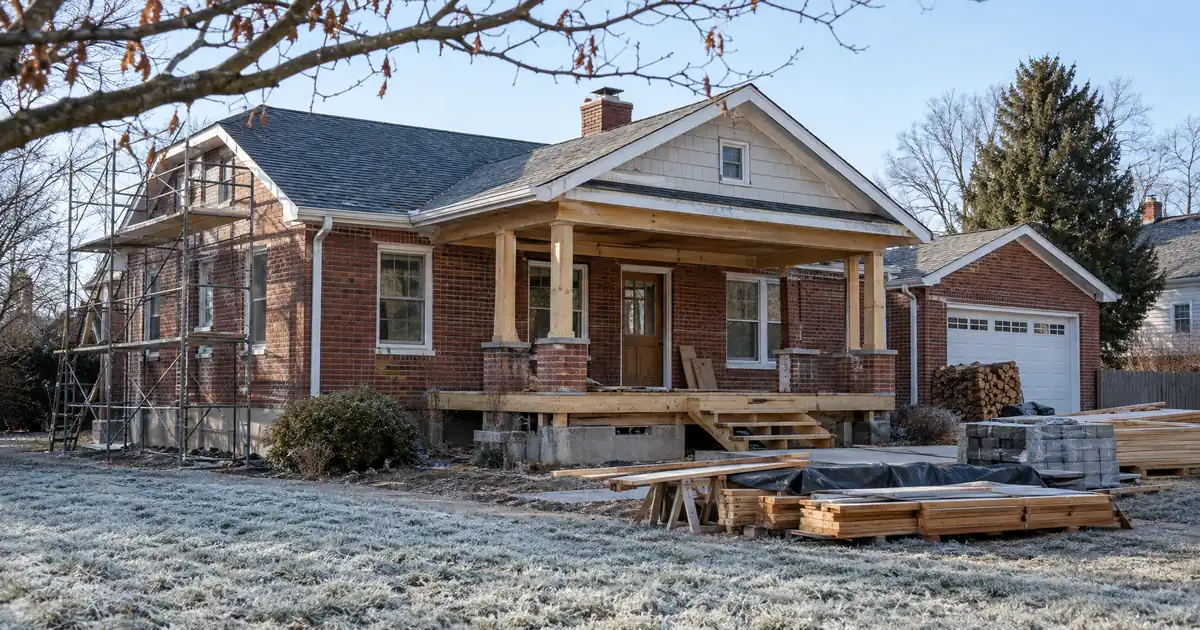
The Quick Read: An interest-only hard money loan buys and rehabs the property, a DSCR loan holds it, and the exit date decides whether the handoff between them works. The bridge matures on a fixed date, while the DSCR loan has its own seasoning, appraisal and lease requirements that start from different events. Most failed BRRRR exits come from those clocks not lining up.
- Hard money is sized on project cost and after-repair value, and the DSCR loan is sized on appraised value and rent coverage.
- The bridge term on the current program is 6 to 18 months, interest-only, with no prepayment penalty.
- A DSCR cash-out refinance typically wants about 6 months of ownership measured from title recording.
- The DSCR loan has to pass two separate tests: enough value and enough rent.
- Plan the exit backward from the bridge maturity date before you close the purchase.
Who Each Loan Is Really For
Hard money is for the stretch when the property is not yet rentable. It pays for the purchase and the rehab, and it lets the deal and the exit plan carry the file. The DSCR loan is for the stretch after that. It needs a finished, leasable property, and it qualifies primarily on property-level rental income covering the payment, subject to lender guidelines.
DSCR Calculator
Run the numbers in your market
Rate source: Freddie Mac 30-yr average via FRED® — Federal Reserve Bank of St. Louis · effective Oct 15, 2026
Prefilled with starting assumptions — enter your own rent or nightly figures, taxes, insurance, and HOA for a more accurate picture.
Program parameters update from Lendmire’s centralized guideline source. Taxes and insurance are editable estimates.
As of Oct 15, 2026 · General Freddie Mac market benchmark, not a Lendmire loan offer. Rent, nightly rate, occupancy, taxes, and insurance are editable estimates. Short-term rental figures are estimates only and vary significantly by season, property type, management approach, and local short-term-rental rules — confirm local regulations before relying on them. Qualifying income for short-term rentals varies by program — some use appraisal market rent, others use documented STR history or projections — and is confirmed in underwriting. Not a Loan Estimate, approval, or commitment to lend. Program availability and eligibility are subject to lender guidelines, credit approval, property review, and underwriting.
Neither loan is the better product in the abstract. They do different jobs in the same sequence. The BRRRR method runs buy, rehab, rent, refinance, repeat, and it differs from flipping because the investor keeps the property after the refinance. Hard money covers the first two steps. The DSCR loan covers the last two.
The rest of this piece is about the seam between them. For the wider product picture, see Lendmire’s complete DSCR loans guide.
Side-by-Side
The table reflects guidelines across the select lenders in Lendmire’s wholesale network. Figures vary by lender, property, and borrower experience, and nothing here is a commitment to lend.
| Factor | Interest-only hard money | DSCR loan |
|---|---|---|
| Job in a BRRRR | Buy and rehab | Long-term hold |
| Review basis | Property, plan, exit | Rent vs PITIA, plus credit |
| Sizing basis | Project cost, capped by ARV | Appraised value, rent coverage |
| Documentation | Scope, budget, exit plan | Lease or rent schedule, appraisal |
| Property types | Non-owner-occupied, 1-4 units | Rental property, standard types |
| Entity vesting | LLC or individual | LLC or individual |
| Term structure | 6-18 months, interest-only | 30-year fixed spine |
| Reserves | Varies by lender and file | Commonly about 6 months PITIA |
| Prepayment | None on the current program | Varies by lender |
| Exit | Sale or refinance at maturity | Hold, sell or refinance later |
Entity vesting on either side is subject to lender program eligibility. The title and vesting at the bridge closing matter, because a later change of entity can trigger a fresh title review at some lenders.
Manufactured homes, log homes and barndominiums are not offered on the DSCR side, so a rehab of one of those property types has no DSCR exit.
What Interest-Only Does to Your Carry
An interest-only bridge keeps the principal balance flat, and the whole balance comes due at maturity. That is the exit-timing risk in one sentence.
The structure keeps cash outflow modest during the rehab. It does not make the debt smaller. Every month the exit slips, the borrower pays carry on the same balance and gains nothing against principal.
Interest-only is also not unique to the bridge. Select lenders in the network offer interest-only periods and extended terms inside DSCR structures. That is a separate feature from a balloon, and the coverage test and terms for it are set by the individual lender.
Where the Clocks Collide
The bridge clock starts at its closing and ends at maturity. The DSCR clock has several parts. Here is the sequence as a working timeline, with no durations assumed beyond the program figures.
1. Acquire on the bridge. The deed records. That recording date starts the ownership seasoning period for a DSCR cash-out.
2. Rehab in draws. Hard money funds up to 100% of the rehab budget in draws against completed work. Late draws mean late finish dates, and the later dates push every step below.
3. Lease up. The DSCR file needs rent evidence: a signed lease, or the appraiser’s market-rent opinion on the rent schedule form. A property that sits vacant leans entirely on the appraiser’s number.
4. Season the title. Across the network, a cash-out refinance typically wants about 6 months of ownership, measured from title recording. Rehab completion and lease start do not restart or shorten it.
5. Appraise. One appraisal sets value, which sets leverage, and a rent schedule sets the coverage number.
6. Underwrite and pay off. The DSCR lender reviews credit, reserves, title and the lease. The new loan pays off the bridge.
Inman’s BRRRR coverage makes the same point from the investor side: after-repair value has to support the refinance, and rent has to cover the new loan. Both are tests the lender applies, not numbers the investor projects.
Plan Backward From the Maturity Date
Pick the bridge term from the exit, not from the rehab. Start at the maturity date and subtract each step with slack.
- Subtract appraisal and underwriting time.
- Subtract the seasoning period if the exit is a cash-out. About 6 months from title recording is the common expectation.
- Subtract lease-up.
- Subtract the rehab, including draw delays.
If the answer is longer than the term, either shorten the scope, plan on a payoff-only refinance, or build in a way to hold the bridge longer. The current hard money program runs 6 to 18 months, so a 6-month term on a heavy rehab with a cash-out exit leaves no room. The seasoning clock alone could consume the full term.
A payoff-only refinance that returns no cash is a different transaction from a cash-out. Seasoning treatment can differ by lender and program, so confirm it in writing before relying on it.
The Two Gates the DSCR Exit Must Clear
The DSCR loan has to pass a value test and a rent test. Passing one does not carry the other.
Value. On a cash-out refinance of an investment property, the DSCR loan is sized against appraised value, and leverage is capped at a lower level than a purchase would allow, depending on the lender and the file. Hard money is sized differently. On a fix-and-flip file, the bridge funds 85% to 93% of project cost depending on documented completed projects, and every tier is capped at 75% of after-repair value. A bridge refinance runs up to 65% of value. These specifics are subject to lender guidelines and a full review of property, leverage, and credit.
That mismatch is where money gets trapped. If the appraisal comes in below your projected after-repair value, the DSCR payoff stack may not fit under the leverage cap. The gap has to come from the borrower.
Rent. The DSCR ratio is rent used for lender review divided by PITIA: principal, interest, taxes, insurance and association dues. A cash-out loan carries a larger balance than a payoff-only loan, so coverage drops as cash comes out. Many select programs start at 1.00. A separate select-lender path takes coverage below 1.00, with leverage and terms adjusted. Stronger ratios open better terms and leverage.
Clearing 1.00 is not the same as positive cash flow. The ratio compares rent to PITIA only. Repairs, vacancy, management, utilities and capex sit outside it.
Run it as a scenario. Say a rehab finishes with after-repair value close to plan and rent coverage near 1.25x on a payoff-only loan. If the investor then asks for cash back, the larger balance could pull coverage toward 1.00x. Value could pass while rent fails, or the reverse. Test both before choosing cash-out over payoff.
Credit and reserves matter too. A 620 floor exists in parts of the network, most programs want around 660, and 700 or higher unlocks the strongest leverage tiers. Reserves commonly run about 6 months of PITIA, stepping up to about 9 months above $1,500,000. Reserves vary by lender, leverage, loan size and transaction type, so document them early.
When Hard Money Is the Better Fit
Hard money is the better fit when the property is not in lendable condition. A DSCR lender wants a habitable, leasable property, so an active rehab has to be funded another way. The bridge fills that gap.
It also fits when the file is strong on the deal and weak on the borrower profile. Underwriting is asset-based, looking at the property, the plan and the exit. A 620 credit minimum applies, with additional conditions below 660, and first-time investors qualify at the lower leverage tiers. The top leverage tier is reserved for experienced investors with documented completed projects.
Other situations that favor the bridge:
- The rehab budget is large relative to the purchase price, and draws will fund it.
- The plan might end in a sale rather than a hold, since the program has no prepayment penalty.
- The loan size, up to $5,000,000 with larger by exception, exceeds what the investor’s DSCR file would carry.
The cost is the balloon. The investor takes on a maturity date and has to hit it.
When a DSCR Loan Is the Better Fit
A DSCR loan is the better fit when the property is finished, leased and meant to be held. It replaces a balloon with long-term financing, and it qualifies primarily on property-level rental income covering the payment, subject to lender guidelines.
It also fits investors whose personal returns are complicated, or who hold many properties. Underwriting does not run on personal-income debt ratios. Credit, reserves, the appraisal, title and the lease are still reviewed.
DSCR loans are designed for non-owner-occupied investment properties. Because they are business-purpose investor loans, they are reviewed differently from a standard owner-occupied mortgage.
A DSCR loan is the wrong tool for a property that cannot be leased yet. It cannot fund a gut rehab, and it does not pay off a bridge until the property meets the gates above. Loan sizes run up to $3,000,000 on standard programs (smaller balances available through select lenders), and above $2,500,000 the network generally holds to 30-year fixed structures.
When the Exit Slips
Slippage is normal. Plan for it before the bridge closes.
| Situation | Options to review |
|---|---|
| Appraisal under ARV | Appraisal reconsideration, bring cash, smaller loan |
| Rent too thin | Lower leverage, payoff-only, select-lender sub-1.00 path |
| Seasoning not cleared | Wait, extend the bridge, payoff-only refinance |
| Rehab ran late | Extend the bridge, delay lease-up, re-plan the exit |
| Missing lease papers | Assemble lease, deposit proof, rent records |
Lenders review each option against their own guidelines, and none is a commitment to lend. A sub-1.00 file is available through select lenders in the network, with leverage and terms adjusted.
Documents are the quiet cause of delay. The usual gaps are the signed lease, deposit verification, rehab invoices, entity documents and reserves statements. Assemble them while the rehab is still running, not after the final draw.
Carry cost is the other cost of delay. Interest-only carry on the bridge keeps accruing on the full drawn balance for as long as the exit takes. Tax treatment varies; consult a qualified professional.
Investors who want to see how the handoff is structured can read Lendmire’s hard money exit refinance program page. Many investors refinance out of hard money into long-term DSCR financing once the property is stabilized, and Lendmire brokers that path.
Key Terms Defined
Seasoning is the minimum ownership period a lender requires before it allows a cash-out refinance.
After-repair value (ARV) is the estimated value of the property once the rehab is finished.
Balloon is the lump-sum principal due at the end of an interest-only term.
PITIA is principal, interest, taxes, insurance and association dues, the payment used in the coverage test.
Payoff-only refinance is a refinance that retires the existing loan and returns no cash at closing.
Draw is a release of rehab funds after the lender confirms completed work.
The Verdict
Use hard money when the property needs work before anyone can lease it. Use a DSCR loan when the property is leased and you plan to hold it. For a BRRRR rehab, most investors need both, in that order.
The decision that matters is the term. Pick the bridge length by counting backward from the DSCR exit: rehab, lease-up, seasoning, appraisal and underwriting, with slack. If the numbers only work with no delays, the bridge is too short. If the exit depends on pulling cash out at the full leverage cap, test value and rent coverage separately first, because the lender will.
Frequently Asked Questions
Can I refinance a hard money loan into a DSCR loan?
Yes, when the property is finished, leased and meets the DSCR program’s tests. The DSCR loan pays off the bridge. The lender looks at appraised value, rent coverage, credit, reserves and title. Eligibility is subject to lender guidelines.
How long until I can pull cash out after the rehab?
A cash-out DSCR refinance typically wants about 6 months of ownership, measured from title recording. Finishing the rehab or placing a tenant does not shorten that period. A payoff-only refinance can be treated differently, so confirm it with the lender.
What if my appraisal comes in below my ARV?
The new loan is sized on the lender’s appraisal, so a low value reduces what the DSCR loan can pay off. A cash-out refinance caps near 75% LTV on an investment property. Options include appraisal reconsideration, bringing cash, or taking a smaller loan. Terms depend on the lender’s guidelines, the property type, the leverage, and a full review of the credit profile.
What if the bridge matures before the DSCR loan is ready?
The usual options are extending the bridge with the lender, doing a payoff-only refinance, bringing cash to close, or waiting if the lender allows. Each carries cost and is subject to lender approval. Planning the term backward from the exit reduces the odds of needing one.
Does clearing 1.00 coverage mean the rental cash flows?
No. The ratio compares rent used for lender review to PITIA only. Repairs, vacancy, management, utilities and capex are outside it, so a property can clear the ratio and still run thin after those costs.
If you are buying, rehabbing or refinancing an investment property on a short timeline and want to see how the numbers work, Lendmire can help you compare hard money options based on the project, the exit plan, leverage, and your goals.
About Lendmire
As a DSCR and non-QM mortgage broker, Lendmire — NMLS# 2371349 — connects investors with wholesale lending channels across 41 markets, including Washington, D.C. The property’s rental income, not the borrower’s tax returns, is central to lender review, which works for self-employed operators and portfolios beyond four financed properties. Scotsman Guide named Lendmire a Top Mortgage Workplace in both 2025 and 2026.
Get Started
Ready to find the right loan for you?
In about 30 seconds you can review financing options available for your investment property. No commitment required.
Informational only. Not a Loan Estimate, approval, or commitment to lend. Program availability and eligibility are subject to lender guidelines, credit approval, property review, and underwriting.
References
1. Pritzker/USD Professional and Continuing Education: BRRRR Method
2. Inman: BRRRR Method Investor Strategy
This article is part of Lendmire’s hard money loan program — full qualification details, guidelines, and scenarios live on the program page.
Related reading: Can You Refinance a Hard Money Loan Into a DSCR Loan After Buying? · Should a Light-Rehab Airbnb Go Hard Money Then DSCR or Direct DSCR? · Can You Refinance Hard Money Into a DSCR Loan After a Rehab?
Brandon Miller
Founder & CEO, Mortgage Loan Originator, Lendmire LLC
- Mortgage Loan Originator · NMLS# 1129696 · Verify on NMLS Consumer Access
- North Carolina Real Estate Broker · License# 343312 · Verify on NCREC
- North Carolina Insurance Producer · License# 19053198 · Property, Casualty, Life, Health · Verify on NAIC SBS
- Lendmire LLC · Firm NMLS# 2371349 · Verify firm licensure
Important disclosures. Lendmire (NMLS# 2371349) is a licensed mortgage brokerage. Lendmire is not a direct lender, depository institution, or financial advisor. All loan inquiries are subject to lender underwriting; this article does not constitute a commitment to lend. Rates, terms, and program guidelines are subject to change without notice and vary by borrower profile, property type, and state. Information in this article is general in nature and is not financial, legal, or tax advice. Equal Housing Opportunity. NMLS Consumer Access: nmlsconsumeraccess.org.