
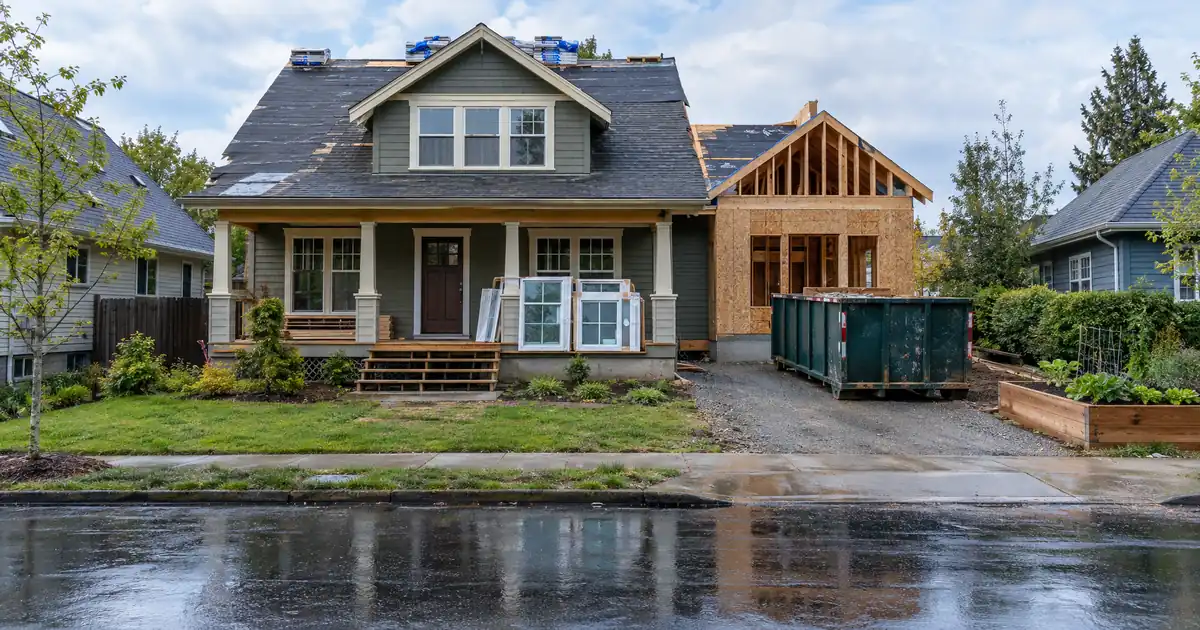
The Quick Read: A bridge-style hard money loan is sized on what the property costs or is worth today and leaves the repairs to the borrower. A fix-and-flip loan bundles the purchase with a rehab budget that is held back and released in draws against finished work. If the repairs are light and you hold the cash, the bridge structure usually fits; if the rehab is real work you want financed, the flip structure usually fits. Lenders often use the labels interchangeably, so the useful question is what the loan is sized on and whether rehab money is inside it.
- Value basis: bridge loans lean on purchase price or as-is value, and flip loans lean on project cost with an after-repair value (ARV) ceiling.
- Rehab money: a flip loan holds it back and pays it out in draws, while a bridge loan generally funds none of it.
- Leverage on the network sheet: flip loans run 85% to 93% of project cost depending on completed projects, capped at 75% of ARV, and bridge purchases without rehab run up to 80% of purchase price.
- Exit: both end in a sale or a refinance, and a rental hold usually ends in a DSCR loan.
Every figure here varies by lender, property, and experience, and none of it is a commitment to lend.
DSCR Calculator
Run the numbers in your market
Rate source: Freddie Mac 30-yr average via FRED® — Federal Reserve Bank of St. Louis · effective Oct 15, 2026
Prefilled with starting assumptions — enter your own rent or nightly figures, taxes, insurance, and HOA for a more accurate picture.
Program parameters update from Lendmire’s centralized guideline source. Taxes and insurance are editable estimates.
As of Oct 15, 2026 · General Freddie Mac market benchmark, not a Lendmire loan offer. Rent, nightly rate, occupancy, taxes, and insurance are editable estimates. Short-term rental figures are estimates only and vary significantly by season, property type, management approach, and local short-term-rental rules — confirm local regulations before relying on them. Qualifying income for short-term rentals varies by program — some use appraisal market rent, others use documented STR history or projections — and is confirmed in underwriting. Not a Loan Estimate, approval, or commitment to lend. Program availability and eligibility are subject to lender guidelines, credit approval, property review, and underwriting.
Side-by-Side
The table compares structure, not price. Pricing lives in the calculator, and the columns show published industry norms alongside the parameters from Lendmire’s wholesale network, where terms vary by lender, property, and experience.
| Factor | Bridge-style loan | Fix-and-flip loan |
|---|---|---|
| Sized on | Purchase price or as-is value | Project cost, capped by ARV |
| Rehab funding | Usually none; borrower pays | Holdback released in draws |
| Review basis | Property and exit plan first | Property, scope, and experience |
| Documentation | Contract, entity papers, liquidity proof | Same, plus scope, budget, contractor |
| Property types | Non-owner-occupied, 1-4 units | Non-owner-occupied, 1-4 units |
| Entity vesting | LLC common, per program terms | LLC common, per program terms |
| Timeline | Short, interest-only term | Short term; draws add steps |
| Liquidity expectation | Cash for repairs, carry, and exit | Cash for down payment and first phase |
Two things to read into this table. First, the credit floor is the same for both. The network’s hard money programs typically start at a 620 score, with added conditions below 660. Second, the real separation is rehab funding, not the lender’s source of capital.
Why the Labels Blur
“Hard money” describes where the money comes from, a private or non-bank lender. “Bridge” describes the function, a short loan that spans the gap until longer-term financing or a sale. A fix-and-flip loan is usually a hard money loan with a rehab component. So one deal can fairly carry all three names.
That is why two lenders can quote what looks like the same loan with different labels and different structures. One may size on a percentage of appraised value and fund no rehab. Another may size on cost and ARV and fund repairs in draws. The practical test is simple. Ask three questions: what value is the loan sized on, is there a rehab holdback, and are draws inspected?
Across the network, the loans that come through as true flip structures share three traits. The collateral is a non-owner-occupied residential property of one to four units. The terms run roughly 6 to 18 months, interest-only. The exit is stated up front. The network has no multi-year hard money option, so an investor who needs longer runway plans a refinance rather than an extension.
When the Bridge Loan Is the Better Fit
A bridge-style structure fits when the property needs little work, the borrower has cash for what work there is, and the real job is buying now and refinancing or selling later. The network’s bridge purchase tier goes up to 80% of purchase price with no rehab component. A cash-out or rate-and-term bridge refinance goes up to 65% of value. Those are different tiers with different ceilings, so a refinance should not be modeled at purchase leverage.
Consider a few investor profiles where the bridge side tends to win.
- The cosmetic rehab with cash on hand. Paint, flooring, fixtures, and a deep clean rarely need a draw schedule. A holdback adds inspection steps without adding much, and the borrower is already paying out of pocket.
- The buyer who needs to win a contract. A single advance at closing is simple to present to a seller. Nothing has to be phased or inspected before the purchase funds.
- The refinance of an existing short-term loan. If a prior loan is maturing and the property is already finished, there is no rehab to hold back. The loan is sized on value and the exit.
- The investor with a leasing runway. A property that is already habitable and needs only light turn work may need time to lease up and season before a long-term loan. A single advance keeps the structure plain.
The tradeoff is that the borrower funds the whole rehab. If a “light” job turns into rotted subfloor or a failed inspection item, the cash comes out of your pocket with no reimbursement. A bridge loan also does nothing to bring the final loan amount up to the rehabbed value. The loan was sized on today’s value, so the equity you create stays yours but is not available to borrow against during the term.
That is the flip point. If the scope has any real chance of growing, a structure that reimburses repairs is the safer cash plan.
When the Fix-and-Flip Loan Is the Better Fit
A fix-and-flip loan fits when the rehab is substantial and the borrower wants repair costs inside the financing. Leverage is tiered by documented completed projects. Most files in the network see 93% of project cost at five or more completed projects, 90% at two or more, and 85% with fewer than two. Every tier is capped at 75% of ARV. Up to 100% of the rehab budget funds in draws against completed work. That last figure is a rehab-budget measure, not a purchase LTV. There is no true 100% purchase program.
The experience tiers matter more than most first-time flippers expect. The top tier is reserved for experienced investors. A first-time investor can still qualify at the lower tiers, so a thin track record changes the cash required rather than ending the conversation.
Investors who tend to be well served by the flip structure include:
- The heavier-scope rehabber. Kitchens, baths, mechanicals, roof work, or layout changes are costly enough that financing them matters.
- The investor stretching capital across several projects. Higher leverage on cost leaves more cash free for the next deal.
- The borrower who values a built-in checkpoint. Draws follow inspections of completed work. That discipline can keep a budget honest.
- The investor planning a hold. If the project ends as a rental, the structure still points toward a long-term refinance rather than a sale.
The downsides are real. Draws reimburse finished work, so you carry the cost of each phase until the lender pays it out. Working capital has to cover the down payment, the first phase of work, and a buffer. Inspection steps add friction to a schedule you may have built tightly. A contractor who needs a deposit on day one is a problem if your cash is already committed at closing.
For a rehab that is genuinely short, the draw process can feel heavy. For a rehab that is long, it is protection. If you cannot tell which yours is, build the schedule first and choose the loan second.
Running the Numbers on a Short Rehab
The percentages below are modeled assumptions, not market data. They show how the cap and the tiers interact.
Take a flip where the all-in project cost, purchase plus rehab, equals 70% of ARV. At the 90% of project cost tier, the loan lands near 63% of ARV. That sits well inside the 75% ARV cap, so the cost tier controls. At the 85% tier, the loan lands just under 60% of ARV.
Now change the deal so that all-in cost is 85% of ARV, a thin spread. At 93% of project cost, the math would produce a loan near 79% of ARV. The 75% ARV cap binds, and the borrower has to cover the gap with more cash. A thin spread between cost and ARV cuts leverage even for the most experienced tier.
The lesson is that the ARV cap, not the cost percentage, often decides how much cash you need. A tight deal needs more cash than the headline tier suggests. A deal with real margin may fit comfortably inside it.
One more practitioner observation from broker-side deal flow. The files that run into trouble are rarely the ones with an aggressive ARV. They are the ones where the rehab timeline and the loan term were set without any slack. A 6-to-18-month term sounds roomy for a 90-day project until permits, a contractor delay, or a slow sale use the cushion. Where a sale is the exit, a second plan, usually a refinance into long-term rental financing, is what protects the borrower if the market moves.
Planning the Exit Before You Pick the Loan
Both loans are short, so the exit decides whether either one works. The loan must outlast the rehab, the sale or lease-up, and any underwriting on the takeout.
A sale exit is straightforward in concept. It depends on pricing and buyer demand when the work is finished. A rental exit usually means a refinance into a DSCR loan, which qualifies primarily on property-level rental income covering the payment, subject to lender guidelines. Many investors refinance out of hard money into long-term DSCR financing once the property is stabilized, and Lendmire brokers that path through its hard money exit refinance program.
Here is how the four stages differ, because the figures are not interchangeable:
- The hard money tier is sized against project cost rather than value, and any value-based hard money ceiling is 65% of value. A DSCR cash-out refinance is a separate, value-based product, and its leverage is set by the DSCR lender’s own appraisal rather than by project cost.
- A DSCR cash-out refinance typically expects about 6 months of seasoning, measured from title recording. Hard money terms are separate and run roughly 6 to 18 months.
- A DSCR loan typically starts at 1.00 coverage on select programs. Sub-1.00 coverage is available through select lenders in the network, with leverage and terms adjusted.
- A DSCR loan commonly asks for credit around 660, with a 620 floor in parts of the network, and reserves of about 6 months of PITIA, stepping up to about 9 months above $1,500,000.
Two cautions belong here. The DSCR lender orders its own appraisal, so your ARV estimate is not what sizes the takeout. And clearing 1.00 does not mean the property cash flows. DSCR compares rent to PITIA only, so repairs, vacancy, management, utilities, and capex sit outside the calculation. A strong coverage ratio is a qualification result, not a profit forecast.
For the full picture of how those long-term loans are built, see the complete DSCR loans guide.
The Business-Purpose Paperwork
Both products are business-purpose loans on non-owner-occupied investment property, and they are reviewed differently from a standard owner-occupied mortgage. The CFPB’s TILA examination procedures treat credit extended primarily for a business purpose as exempt from Regulation Z, and they treat credit to acquire or improve non-owner-occupied rental property as business-purpose credit. The Federal Reserve’s Consumer Compliance Handbook also lists an exemption for credit to non-natural persons, which is part of why many investors borrow through an LLC, subject to program terms.
That does not make the paperwork optional. A Hunton Andrews Kurth paper cautions that business purpose does not mean exempt from all compliance. Expect a business-purpose declaration and an occupancy affidavit on either loan, and keep your own records of how proceeds were used. Tax treatment varies; consult a qualified professional.
How to Compare Two Quotes on the Same Deal
Because labels vary, put the questions to each lender in the same order. A short checklist helps.
1. What is the loan sized on? Purchase price, as-is value, project cost, or ARV? A percentage of appraised value is a different number than a percentage of cost.
2. Is rehab money inside the loan? If so, how much, and in how many draws?
3. How are draws inspected and paid? Ask who inspects, what a draw package requires, and whether fees apply.
4. What does the term allow? Check the interest-only period, the maximum term, and whether any extension exists.
5. What is the exit assumption? Sale, refinance, or both, and what the lender expects to see.
6. What leverage tier applies to your track record? Completed projects change the cost percentage.
7. What cash do you need in total? Add the down payment, the first phase of work, the carry, and a contingency.
Put the answers side by side. A quote that looks like a bargain on one line may be missing rehab funding on another. Pricing questions go to the calculator and to the lender, not into a structure comparison.
Reading Your Own Deal: A Short Scorecard
A few honest self-checks usually point the way.
- Scope: If you can describe the whole job as cosmetic, lean bridge. If it involves systems, structure, or permits, lean flip.
- Cash: If paying for the first phase of work would strain you, a draw structure adds stress. In that case, consider whether the project fits your balance sheet at all.
- Experience: A thin track record lowers flip leverage. It also raises the odds that a scope surprise will land on your cash.
- Exit: If the plan is a sale, check how thin your spread is. If the plan is a rental, check how the finished rent will cover PITIA at the DSCR stage.
- Slack: If the plan has no room for delay, change the plan before you change the loan.
Where the answers are mixed, a flip structure is usually safer for heavier work and a bridge structure is usually simpler for lighter work. This is a tendency, not a rule. Some experienced operators run light rehabs on flip loans for the leverage, and some run heavy ones on bridge loans because they hold deep cash.
The Verdict
Neither option is better in the abstract. The bridge-style structure is the simpler tool: one advance, sized on value, built for investors who have the cash for repairs and a clear next step. The fix-and-flip structure is the fuller tool: leverage on cost, repairs reimbursed through draws, and a checkpoint for each phase. It rewards experience and punishes thin spreads.
The choice flips on three variables: the scope of the work, the cash you can carry between draws, and how firm the exit is. When the work is light and the cash is deep, bridge is hard to beat on simplicity. When the work is heavy or the cash is stretched, the flip structure usually protects you better. When the exit is a rental, the DSCR takeout, not the short-term loan, is the stage that decides whether the whole project pencils.
Frequently Asked Questions
Are a hard money bridge loan and a fix-and-flip loan the same thing?
They overlap, but they are not identical. Hard money describes a private or non-bank source of capital, and bridge describes a short-term function. A fix-and-flip loan is typically a hard money loan that includes a rehab holdback and is sized with reference to ARV. A bridge-style loan usually funds the purchase or refinance and leaves repairs to the borrower. Ask each lender what the loan is sized on to see which one you are being quoted.
Can a bridge loan pay for a renovation?
Usually only indirectly. A bridge-style loan is sized on cost or as-is value, and the borrower generally pays for repairs from their own cash. A fix-and-flip loan is the structure that finances rehab, with up to 100% of the rehab budget released in draws against completed work. Some lenders blend the two, so confirm whether rehab money is part of the loan before you sign anything.
How much leverage does a flip loan allow?
On the network sheet, leverage is loan-to-cost: 93% of project cost at five or more completed projects, 90% at two or more, and 85% with fewer than two. Terms vary by lender, property, and experience, and nothing is a commitment to lend.
What happens if the rehab runs past the loan term?
The borrower needs a backup exit. Terms run roughly 6 to 18 months, interest-only, and the current program has no multi-year option. If a sale slips, a refinance into long-term rental financing is the usual alternative. A DSCR loan can serve that role for a stabilized rental, subject to lender guidelines, seasoning, and property review.
Which is easier for a first-time investor?
Neither is simple, because both require cash and a credible exit. A first-time investor can qualify at the lower flip leverage tier, with a 620 minimum score and added conditions below 660. The bridge structure leaves more cash risk on the borrower, while the flip structure reimburses repairs but requires cash to start each phase. The better fit depends on scope and liquidity.
Next Steps
If you are buying, rehabbing, or refinancing an investment property on a short timeline and want to see how the numbers work, Lendmire can help you compare hard money options based on the project, the exit plan, leverage, and your goals. The brokerage arranges financing through select lenders in its wholesale network across 41 markets, including Washington, D.C. Programs change, and every file is reviewed individually.
About Lendmire
Lendmire is a non-QM mortgage brokerage (NMLS# 2371349) arranging DSCR investor loans in 41 markets, including Washington, D.C., through wholesale and investor-lending channels. DSCR loans are evaluated by the lender on rental income rather than personal income, subject to lender guidelines — a fit for LLC-owned portfolios, self-employed investors, and operators scaling beyond conventional loan caps. Recognized as a Scotsman Guide Top Mortgage Workplace in 2025 and 2026.
Get Started
Ready to find the right loan for you?
In about 30 seconds you can review financing options available for your investment property. No commitment required.
Informational only. Not a Loan Estimate, approval, or commitment to lend. Program availability and eligibility are subject to lender guidelines, credit approval, property review, and underwriting.
References
2. Federal Reserve Consumer Compliance Handbook, Regulation Z
3. Hunton Andrews Kurth paper on business-purpose lending
This article is part of Lendmire’s hard money loan program — full qualification details, guidelines, and scenarios live on the program page.
Related reading: Is a Hard Money Fix and Flip Loan Worth It for a Business Owner? · Can You Buy a Flip in an LLC With a Hard Money Loan? · Can a Business Owner Qualify for a Larger Hard Money Flip Loan?
Brandon Miller
Founder & CEO, Mortgage Loan Originator, Lendmire LLC
- Mortgage Loan Originator · NMLS# 1129696 · Verify on NMLS Consumer Access
- North Carolina Real Estate Broker · License# 343312 · Verify on NCREC
- North Carolina Insurance Producer · License# 19053198 · Property, Casualty, Life, Health · Verify on NAIC SBS
- Lendmire LLC · Firm NMLS# 2371349 · Verify firm licensure
Required disclosures. Lendmire (NMLS# 2371349) operates as a licensed mortgage broker, not a direct lender or depository. The discussion in this article is general in nature and should not be relied upon as financial, legal, or tax advice — every investment scenario is unique and should be reviewed by a qualified professional. Any loan inquiry is subject to lender underwriting, and this article is not a commitment to lend or a guarantee of approval. Mortgage rates, loan terms, and program guidelines vary by borrower, property, and state, and may change without notice. Equal Housing Opportunity. Verify licensure at NMLS Consumer Access.