
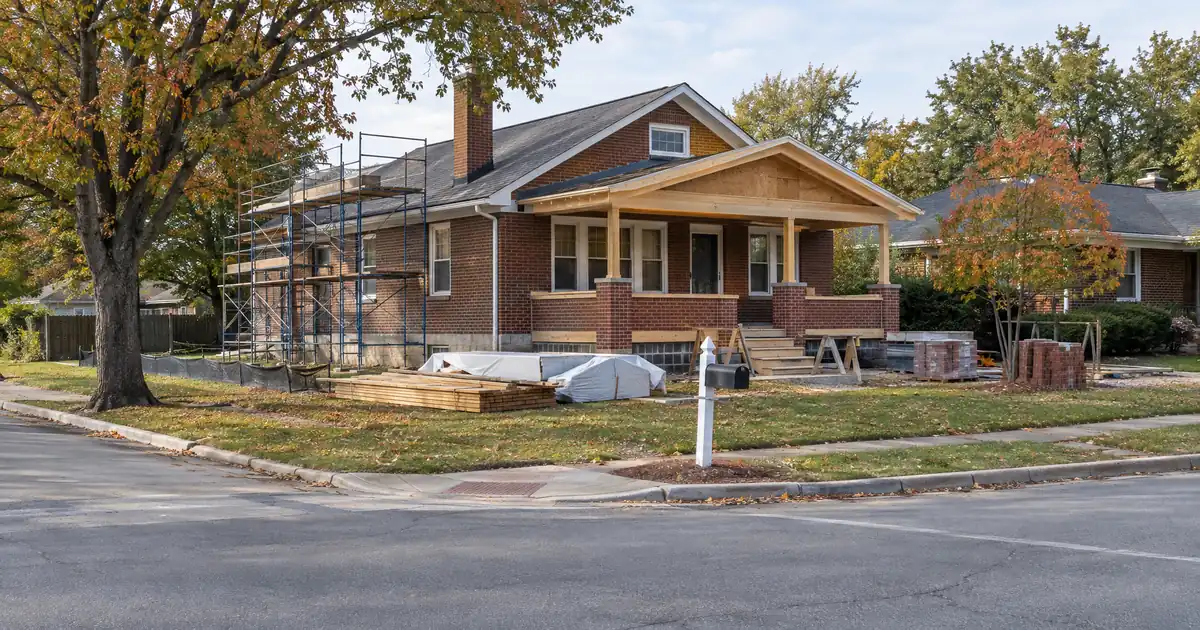
The Quick Read: Only when the resale margin still holds after interest, fees, rehab, carrying and selling costs, the property truly needs work and cannot be rented as it sits, and you have a firm exit by sale or refinance before the loan term ends. Being a business owner changes the risk picture more than the underwriting.
- Hard money for flips is underwritten mainly on the property, the rehab plan and the exit, so messy business income documentation matters less.
- Gross flip profit is shrinking, and financing costs come out of that shrinking number.
- Rehab money is released in draws, so you fund the gap with your own cash.
- A property that is already rentable and will be held belongs in long-term rental financing, not a flip loan.
What a Hard Money Fix and Flip Loan Actually Is
A hard money fix and flip loan is a short-term, interest-only loan secured by the property, used to buy and renovate a house you plan to resell. Hard money means the lender weighs the asset first and the borrower second. Interest-only means you pay interest during the term and repay the principal at the end.
What this loan actually costs to carry.
Hard money is sized against the project and priced by time. Enter the deal and see how much the program will lend, the cash required at closing, the carry while you hold it, and what is left at the exit.
Leverage tiers on the current program: 85% with fewer than 2, 90% with 2 or more, 93% with 5 or more completed projects — every tier capped at 75% of after-repair value. Loan amounts up to $5,000,000, larger by exception; terms of 6 to 18 months, interest-only, no prepayment penalty. The rehab portion funds in draws against completed work, not at closing.
Program parameters shown update from Lendmire’s centralized guideline source. Rate, points, and months are editable assumptions, not quoted terms.
Cost cap sets the loan · positive spread
Illustrative estimate only — not a quote, Loan Estimate, approval, or commitment to lend. Rate, points, and months are editable assumptions. Hard money is business-purpose financing for real estate investors, not a consumer mortgage. Leverage on the current program tops out at 93% of project cost for investors with a documented track record, capped at 75% of after-repair value, with rehab funding up to 100% of the documented budget released in draws; actual terms vary by lender, borrower experience, property, and exit. Lendmire is a mortgage broker, not a lender.
Some lenders separate “hard money” from “fix and flip” products. Hard money is the broader, flexible category. A fix and flip loan is the version built around a renovation budget and a draw schedule. Across the wholesale network Lendmire works with, the two terms usually point to the same kind of file: a business-purpose loan on an investment property that needs work.
These loans are designed for non-owner-occupied investment properties. Because they are business-purpose investor loans, they are reviewed differently from a standard owner-occupied mortgage. A house you plan to live in is not what this product is for.
Typical parameters on this program vary by lender, property, and experience:
- Property type. Non-owner-occupied residential, 1-4 units. Ground-up construction can go to 10 units.
- Loan size. Up to $5,000,000, with larger by exception. Smaller balances vary by lender.
- Term. 6-18 months, interest-only, with no prepayment penalty.
- Credit. A 620 minimum score, with additional conditions below 660.
There are no multi-year terms on the current program. If you need longer runway, the plan is to refinance into long-term rental financing.
How the Loan Works on a Real Flip
The lender sizes the loan against the purchase price plus the rehab budget, then caps it by a share of after-repair value. After-repair value (ARV) is what the property should be worth once the work is finished. Four steps cover most flips.
1. Purchase. The loan covers a share of project cost at closing. Project cost is the purchase price plus the rehab budget, and a loan sized this way is called loan-to-cost.
2. Rehab draws. A draw is a release of renovation money against completed, inspected work. The budget is approved up front, but it is not handed over at closing.
3. Carry. You pay interest and cover taxes, insurance and utilities while the work gets done.
4. Exit. You sell and pay off the loan, or you refinance it into long-term financing.
The draw step surprises many first-time flippers. You front the down payment, the first phase of work, and the carrying costs until the first reimbursement arrives. A well-capitalized business owner usually has that cash. The question is whether you want it tied up there.
What Leverage to Expect
Leverage on this program is tiered by documented completed projects, and every tier is capped at 75% of ARV. Figures vary by lender, property, and experience.
| Scenario | Typical ceiling |
|---|---|
| Flip, 5+ completed projects | 93% of project cost |
| Flip, 2+ completed projects | 90% of project cost |
| Flip, fewer than 2 projects | 85% of project cost |
| Bridge purchase, no rehab | Up to 80% of purchase price |
| Cash-out or rate/term refinance | Up to 65% of value |
Up to 100% of the rehab budget funds in draws against completed work. That is a rehab-budget figure, not a purchase loan-to-value. There is no true 100% purchase program. The top tier is reserved for experienced investors, and first-time investors qualify at the lower tiers.
Nothing here is a commitment to lend. Each file is underwritten individually, subject to lender guidelines.
Is the Margin Still There?
Margins have been thinning for two years. ATTOM’s report on flipping returns across top metros puts typical gross flip profit at $60,526. That compares with $66,932 the prior quarter and $71,000 a year earlier. A trade-press recap of the same data shows the typical gross return at 21.5%, down from 27.6% a year earlier.
Gross profit is only resale price minus purchase price. Rehab, loan interest, loan fees, holding costs and selling costs all come out of it. That is why a deal that looks fine on gross margin can lose money after financing.
Two more points matter for where you buy:
- Price tier. Homes bought for under $50,000 posted a typical 14% loss in ATTOM’s first-quarter flipping report. The recap above shows the $100,000-$200,000 tier at a 28% gross return in the latest quarter.
- Market variance. HomeSage’s analysis shows typical returns among large metros ranging from above 80% in the strongest to a slight loss in the weakest. Do not underwrite your deal off one national figure.
CNBC’s coverage of the same data described flip profits as the smallest since the Great Recession. The direction matters more than the exact number. Financing cost has more room to hurt you when the cushion is thin.
Why Business Owners Weigh a Hard Money Fix and Flip Loan Differently
You are not a typical borrower, and the loan is not a typical tool for you. Four things change the decision.
The paperwork is lighter, which helps. Underwriting centers on the property, the plan and the exit. If your traditional personal-income documentation understates your real income because of write-offs, that matters less here than at a big bank. It does not disappear. Lenders still look at liquidity and flip experience.
Your capital has another job. Your cash has a return inside your own company. Before you tie up money in a flip, compare the likely net profit on the flip with what the same cash would earn in your business. A flip that clears a modest net return on money you could use to grow your core business is a weak trade.
Entity and guarantee exposure is real. Hard money lenders usually lend to an entity such as an LLC, subject to lender program eligibility. Many lenders still ask for a personal guarantee from the owner behind it. That can put personal and business assets at risk if the flip goes badly. Read the guarantee terms and any cross-collateral language before you sign.
Your attention is limited. A flip needs weeks of decisions on scope, contractors, inspections and draw requests. If you are already running a company, price that time honestly.
One practitioner point from files like these: the strongest business-owner flips keep the flip money separate from operating cash. Payroll and working capital stay untouched, and the flip runs on its own reserve. A flip that depends on pulling cash from the business to cover a delay is the version that goes wrong.
What It Really Costs
The cost is the trade-off. This loan costs more than long-term rental financing, and it only pays if the project is short and the margin is wide. Pricing is set lender by lender, so use the cost categories below to build your own number from actual quotes.
| Cost component | What to price |
|---|---|
| Interest | Interest-only, accrues over the full term |
| Origination fees | Charged by the lender on the loan |
| Draw and inspection fees | Per release of rehab funds |
| Carrying costs | Taxes, insurance, utilities during the work |
| Selling costs | Agent, closing and transfer costs at resale |
| Your cash in | Down payment plus the first phase of rehab |
A Modeled Flip, Base Case and Delayed Case
Here is a modeled example. The inputs are assumptions, not market data. Think of everything as a share of ARV.
Say you buy at 60% of ARV and budget rehab at 15% of ARV. Project cost is then 75% of ARV. A lender at the 90% of project cost tier would sit at 67.5% of ARV, under the 75% cap. You bring the rest of the cost, plus the carry.
Assume selling costs run 8% of ARV. Your margin before financing and carrying is then 17% of ARV. Interest, fees and carrying costs come out of that 17%.
Now delay the project by a few months. The contractor runs long, or buyers are scarce. Nothing about the purchase changed, but interest and carrying costs keep accruing, and the 17% shrinks month by month. If the deal needs every point of that 17% to work, a short delay turns it into a loss.
That is the whole test. Build the deal so it still works with a delay you did not plan for. If the model only works with perfect timing, the deal is too thin for this loan.
Worth-It Scorecard
| Factor | Green light | Red flag |
|---|---|---|
| Margin after all costs | Wide, with room for delays | Works only on gross margin |
| Property condition | Needs real work | Already rentable |
| Exit | Sale or refinance, clearly planned | “I’ll figure it out” |
| Your cash | Reserve beyond the down payment | Pulling from payroll or operating cash |
| Experience | Prior projects documented | First flip, thin budget |
| Entity setup | LLC, with guarantee understood | Guarantee terms unread |
Mostly green means the loan can be worth it. Two or more red flags means pause and rework the deal.
When It Is Not Worth It, and What to Use Instead
It is not worth it on a property that is already rentable and will be held. A hard money balloon due in months is the wrong shape for a long hold. The same goes for a deal that needs a long runway to pay off, or a business owner who needs the cash for operations. Hard money is for the property, not for operating expenses.
| Option | Best fit | Watch out for |
|---|---|---|
| Hard money flip loan | Property needing work, short project | Cost, draws, guarantee |
| Your own cash | Small project, strong liquidity | Opportunity cost in your business |
| Partner capital | You want to share risk | Shared profit, control |
| Big bank financing | Move-in-ready, longer timeline | Heavier paperwork, slower fit for distressed homes |
| Long-term rental financing | Rentable property you will hold | Not built for rehab draws |
Collateral limits also apply. This program covers non-owner-occupied residential property with 1-4 units. Commercial, industrial, land, hospitality and owner-occupied property are not on the sheet.
The Exit, and What Happens if the Flip Stalls
Your exit is sale or refinance. A sale pays off the loan from proceeds. A refinance pays it off with new, longer-term financing once the property is stabilized.
If the flip stalls, you have three levers: cut the price to sell, extend within the lender’s terms where allowed, or move to the rental exit. Terms here run 6-18 months with no prepayment penalty, so an early payoff does not trigger a fee. ATTOM tracks how long flips take from purchase to resale. Compare that timeline against the loan term before you commit.
Many investors refinance out of hard money into long-term DSCR investor loans once the property is stabilized, and Lendmire arranges that path. DSCR, or debt service coverage ratio, compares the property’s rent to its full monthly payment: principal, interest, taxes, insurance and any association dues, together called PITIA. On a rental, 1.00 is where many select programs start, and stronger ratios open better terms and leverage. A separate select-lender path takes coverage below 1.00, with leverage and terms adjusted.
Clearing 1.00 does not mean positive cash flow. Repairs, vacancy, management and utilities sit outside that calculation. The DSCR lender also wants the property livable and rentable at that point, and does not release rehab draws. For the wider picture, see Lendmire’s complete DSCR loans guide.
Tax treatment can depend on how the funds are used and how the property is held; investors should keep clear records and speak with a qualified tax professional before relying on any deduction.
How to Evaluate a Lender
Compare lenders on structure, not just on the headline of how much they will lend. Ask five questions:
1. How are draws requested and inspected, and what does each release cost?
2. What happens if the work runs past the term?
3. Is there a personal guarantee, and is it limited?
4. Are there prepayment penalties?
5. What is the lender’s record on flips like yours?
A broker sees many lenders’ guidelines at once. That is useful when your file sits between tiers, such as a first or second flip.
Key Terms Defined
After-repair value (ARV). The estimated value of the property once renovations are finished.
Loan-to-cost. The loan amount as a share of purchase price plus rehab budget.
Draw. A release of rehab money against work that has been completed and inspected.
Interest-only. A structure where you pay interest during the term and repay principal at the end.
Personal guarantee. A promise by the owner behind an entity to repay the loan personally if the entity cannot.
DSCR. A ratio of a rental’s income to its full monthly payment, used to qualify long-term rental loans.
Frequently Asked Questions
Is a hard money fix and flip loan the same as a regular hard money loan?
Often yes in practice, but the terms are sometimes used differently. Hard money is the broad asset-based category. A fix and flip loan is the rehab-structured version with draws. Ask any lender which one you are being offered.
Does good credit make the loan worth it?
Credit helps, but it does not change the math of the flip. The program looks for a 620 minimum score, with additional conditions below 660. Underwriting stays asset-based, focused on the property, the plan and the exit. A strong score will not rescue a deal with a thin margin.
Can I use a hard money loan to fund my business?
No. This product is built for investment property, not working capital or operating expenses. The collateral is a non-owner-occupied residential property, and the loan is for buying and renovating it. Use business financing for operating needs.
What if the flip takes longer than planned?
Interest and carrying costs keep running, which cuts your margin. Terms run 6-18 months with no prepayment penalty. Build a delay into your model and keep a cash reserve outside your business accounts. If a sale stalls, a refinance into long-term rental financing may be the exit, subject to the property meeting rental requirements.
Can a first-time flipper get one?
Yes, at the lower leverage tiers. First-time investors typically see 85% of project cost, capped at 75% of ARV, while the higher tiers go to experienced investors. Terms vary by lender, property, and experience.
Bottom Line
If you are buying, rehabbing or refinancing an investment property on a short timeline and want to see how the numbers work, Lendmire can help you compare hard money options based on the project, the exit plan, leverage, and your goals. Lendmire is a broker that arranges financing through select lenders in its wholesale network, across 41 markets including Washington, D.C. Nothing here is a commitment to lend, and the calculator on this page is an illustrative estimate only.
About Lendmire
Lendmire is a non-QM mortgage brokerage (NMLS# 2371349) arranging DSCR investor loans in 41 markets, including Washington, D.C., through wholesale and investor-lending channels. DSCR loans are evaluated by the lender on rental income rather than personal income, subject to lender guidelines — a fit for LLC-owned portfolios, self-employed investors, and operators scaling beyond conventional loan caps. Recognized as a Scotsman Guide Top Mortgage Workplace in 2025 and 2026.
Get Started
Ready to find the right loan for you?
In about 30 seconds you can review financing options available for your investment property. No commitment required.
Informational only. Not a Loan Estimate, approval, or commitment to lend. Program availability and eligibility are subject to lender guidelines, credit approval, property review, and underwriting.
References
1. ATTOM: Top metros with the largest increases in home flipping ROI
2. WRE News: Home flipping returns recap
3. attomdata.com: Q1 Home Flipping Report
4. HomeSage: Is flipping houses still profitable?
5. CNBC: Home flippers see smallest profits since the Great Recession
This article is part of Lendmire’s hard money loan program — full qualification details, guidelines, and scenarios live on the program page.
Related reading: Is a Hard Money Refinance Worth It Before Moving Into a DSCR Loan? · Can You Use Hard Money to Flip a Triplex or Fourplex? · Does a Hard Money Fix and Flip Loan Allow Interest Only Payments?
Brandon Miller
Founder & CEO, Mortgage Loan Originator, Lendmire LLC
- Mortgage Loan Originator · NMLS# 1129696 · Verify on NMLS Consumer Access
- North Carolina Real Estate Broker · License# 343312 · Verify on NCREC
- North Carolina Insurance Producer · License# 19053198 · Property, Casualty, Life, Health · Verify on NAIC SBS
- Lendmire LLC · Firm NMLS# 2371349 · Verify firm licensure
Important disclosures. Lendmire (NMLS# 2371349) is a licensed mortgage brokerage. Lendmire is not a direct lender, depository institution, or financial advisor. All loan inquiries are subject to lender underwriting; this article does not constitute a commitment to lend. Rates, terms, and program guidelines are subject to change without notice and vary by borrower profile, property type, and state. Information in this article is general in nature and is not financial, legal, or tax advice. Equal Housing Opportunity. NMLS Consumer Access: nmlsconsumeraccess.org.