
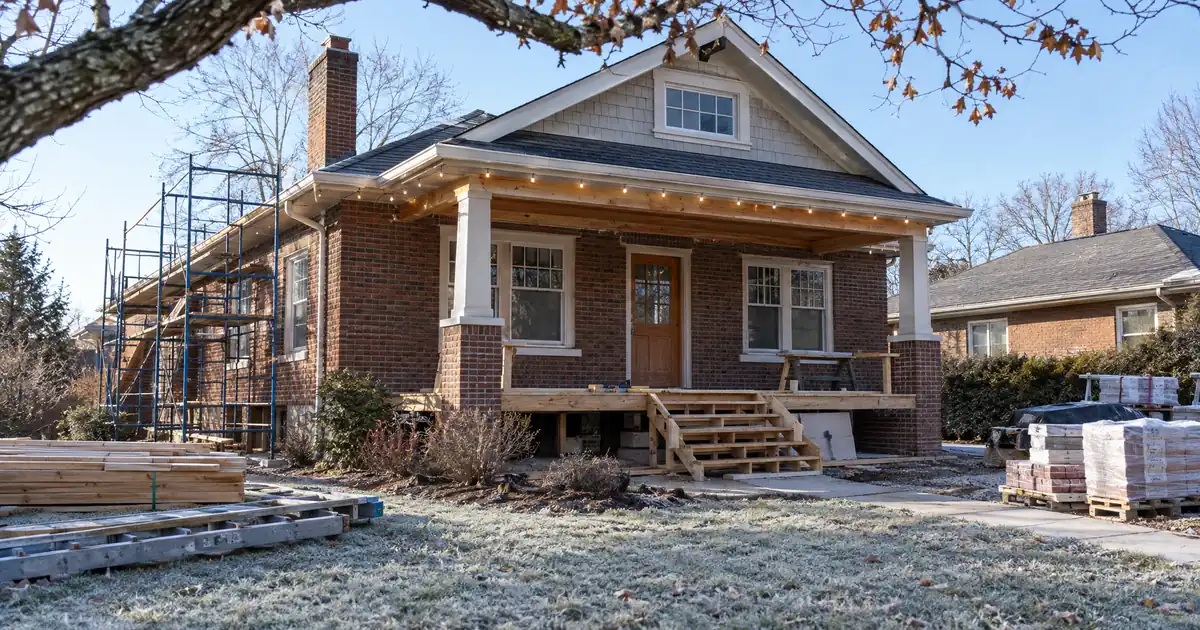
The Quick Read: A blanket hard money loan puts several investment properties under one short-term note. Lenders typically judge it on the borrower’s credit, the equity and exit plan on each property, and the release terms in the note, because every property secures the whole balance and a problem on one can reach the rest.
- Each property is sized on its own cost and after-repair value, then the pool is papered under one note.
- The release clause decides whether you can sell one property and keep the loan on the others.
- Release price usually runs above the property’s allocated balance, so read the formula before signing.
- Hard money terms are short and interest-only, so the exit plan carries as much weight as the credit score.
- Long-term rentals held together usually fit a portfolio DSCR structure better than a hard money pool.
What Is a Blanket Hard Money Loan?
A blanket loan is one mortgage that covers several properties, with the group acting as collateral.
Hard money is a different label. It describes a short-term, asset-based loan sized on the property rather than the borrower’s income. Corporate Finance Institute covers the short-term nature of these loans. The two labels combine only sometimes.
A blanket structure can sit on a bank loan, a commercial loan, a non-QM loan or a hard money loan. The structure and the lender type are separate choices. A blanket hard money loan is the combination: one note, several liens, short maturity.
No government agency sets the requirements for any of this. The note and the security instrument govern. Each lender writes its own terms, so two pools that look alike on paper can behave very differently at payoff.
Throughout this article, “portfolio DSCR loan,” “blanket loan” and “cross-collateralized loan” mean the same thing: one note secured by several rentals. A bank’s “portfolio loan,” a loan the bank keeps on its own books, is a different use of the phrase.
Key Terms Defined
Blanket loan: One note secured by liens on several properties.
Cross-collateralization: Each property secures the entire debt, not only its own share.
Allocated amount: The slice of the loan the lender assigns to each property.
Release clause: The note term that lets you sell a covered property after paying a stated amount.
Release price: The payoff required to free one property, which runs above its allocated amount.
Cross-default: A missed payment or covenant breach on one property that puts the whole pool in default.
Loan-to-cost: The loan as a share of purchase price plus rehab budget, used on flips.
After-repair value (ARV): The appraised value of the property once the work is finished.
What Lenders Require on a Multi-Property Pool
Requirements fall into three groups: the borrower, each property, and the structure. Lenders weigh them together. Strength in one group does not erase a gap in another.
| Requirement | What the lender reviews | Why it matters in a pool |
|---|---|---|
| Credit | Score and history | Sets leverage tier and approval path |
| Experience | Completed projects | Unlocks higher loan-to-cost tiers |
| Property type | Use and unit count | Each property must be eligible alone |
| Valuation | Appraisal per property | Sizes each property’s share of the loan |
| Exit plan | Sale or refinance path | Short terms leave little room to adjust |
| Entity papers | Operating agreement, guaranty | Shows who owns and who is liable |
The lender is exposed to the whole pool, so it looks harder at the weakest property in it.
Entity documents are a quiet friction point. When rentals sit in LLCs, each LLC releases the property it holds, and a personal guaranty generally stays in place after release. Loans to LLC-titled entities are subject to lender program eligibility. Operating agreements, good-standing certificates and guarantor details should be in the file before submission, not after the first condition list.
Credit matters too. In the hard money program, the minimum score is 620, with additional conditions below 660. First-time investors can qualify at the lower leverage tiers. The strongest tiers are reserved for experienced investors. Underwriting stays asset-based: the property, the plan and the exit.
How a Pool Gets Underwritten, Step by Step
The sequence below is how a lender typically works through a multi-property file.
1. Screen each property alone. Every property must be eligible by itself. In the hard money program that means non-owner-occupied residential, 1-4 units, with ground-up construction up to 10 units. Manufactured and mobile homes are not reviewable on these programs.
2. Value each property separately. The lender orders an appraisal for each one. On a flip, that means as-is value and after-repair value. Multiple appraisals add cost and add chances for one value to come in light.
3. Size each property on its own numbers. Leverage is measured per property first, then added up. A weak value on one property cuts that property’s share. It does not get averaged away by a strong one.
4. Allocate the loan. The lender assigns each property a slice of the total. This matters later, because the release price is built from that allocation.
5. Test the pool. On hard money, the test is the exit plan and the equity. On rental pools, the test is pooled coverage, covered below.
6. Paper the note and the release terms. One note, several liens, and a release clause if the lender offers one. Everything that follows depends on this document.
Leverage, Credit and Terms by Structure
Three different structures get called a blanket loan. They share a name but not their figures. The table keeps each one labeled. Every figure is a program ceiling or floor from select wholesale-network guidelines, not a quote, and varies by lender, property, and experience.
| Item | Hard money | 30-year portfolio DSCR | Rental portfolio term |
|---|---|---|---|
| Use | Flip, bridge, construction | 2-20 rentals | 5+ rentals or units |
| Term | 6-18 months, interest-only | 30-year | 3, 5, 7, 10-year, balloon |
| Loan size | Up to $5,000,000 | $300,000-$5,000,000 | $500,000-$50,000,000 |
| Leverage | Cost-based, see below | Up to 80% of value | Up to 75% of value |
| Test | Property, plan, exit | 1.00 pooled coverage | Property and pool review |
Hard money leverage is loan-to-cost, tiered by documented completed projects. A flip funds up to 93% of project cost at five or more completed projects, 90% of project cost at two or more, and 85% with fewer than two. Every tier is capped at 75% of after-repair value. A bridge purchase without rehab goes up to 80% of purchase price. A cash-out or rate-and-term refinance goes up to 65% of value. Up to 100% of the rehab budget funds in draws against completed work. That is a rehab-budget figure, not a purchase LTV. Prepayment carries no penalty on hard money.
The 30-year portfolio DSCR loan measures coverage on the pool. DSCR is monthly rent divided by the full monthly obligation, meaning principal, interest, taxes, insurance and any HOA dues. Corporate Finance Institute explains the formula. Pooled measurement means stronger properties can offset weaker ones. A rental that falls below 1.00 can sit in the pool, and underwriting tests the pooled coverage, the leverage and the terms. Rates are fixed or adjustable, and an interest-only period is available. Eligible types are SFR, 2-4 unit, condo and townhome. Credit floors start at 640, and 680 or 720 applies on some structures.
The rental portfolio term loan carries a balloon at maturity. Properties in several markets can sit under one note. Non-recourse structures exist, with carve-outs such as fraud and bankruptcy, while recourse loans carry a personal guarantee. Prepayment is yield maintenance. Reserves are held for taxes, insurance and capital expenditures. Small multifamily of five or more units is eligible only on this term structure.
Ineligible in any of these pools: owner-occupied property, co-ops, mixed-use property and commercial property.
A clearing DSCR is not the same as positive cash flow. The ratio compares rent to the payment only. Repairs, vacancy, management, utilities and capex sit outside it.
On cash-out, a portfolio loan never goes above 75% of pooled value. Inside the first six months of ownership the loan is also capped at 90% of total cost (purchase price plus documented improvements), and at 100% of total cost from six to twelve months. The leverage ceiling still applies, so the loan is the lower of the two. After twelve months the appraised value alone is the basis. A rate-and-term refinance is not subject to the cost-basis cap.
For a fuller view of how these loans work, see the complete DSCR loans guide.
Release Mechanics: A Three-Property Example
The release clause is where blanket files succeed or fail. A conventional mortgage works differently.
Run the sequence on a pool of three rehabbed properties under one note.
1. Property A sells. The buyer’s closing triggers a payoff request to the lender.
2. The lender states the release price. It runs above the property’s allocated balance. That cushion protects the lender’s collateral on the remaining two properties.
3. The lender releases the lien on A. Title clears for the buyer.
4. The lender retests the remaining pair. On a rental pool, the remaining properties must still cover their debt service. On a hard money pool, the remaining exit plan and equity get a fresh look.
The mistake here is assuming the sale frees cash. It frees a lien. The release price can absorb most or all of the sale proceeds, and the loan on B and C stays in place.
Where the General Rule Breaks
No release clause, no release right. Release is a contract term.
Cross-default in a down market. Because every property secures the whole balance, a missed payment can pull the entire pool toward default. A lender may also refuse a sale meant to cure the default. One stalled rehab can drag the other two with it.
Balloon at maturity. On a 6-18 month hard money term, properties at different stages all face the same maturity date. A project that is behind schedule is the weak link.
Adding properties later. Addition, substitution and release are three different acts. A rental added after closing may need a loan modification, and a separate loan can cost less.
Low-balance rentals. A rental with a small mortgage often clears coverage by itself. Pooling it adds cross-collateral exposure for little qualifying benefit.
A batch is not a blanket. Closing several loans in one transaction does not make them cross-collateralized. Each keeps its own note, and a default on one does not automatically reach the others.
Blanket Pool or Separate Loans?
Benefits are real. One closing can lower aggregate costs, and you get one payment and one escrow account.
| Situation | Better fit |
|---|---|
| Seasoned rentals held together | Portfolio DSCR pool |
| Flips on different schedules | Separate loans |
| Frequent sales | Separate loans |
| Similar properties, same exit date | Hard money pool |
| One strong rental, others weak | Pool, if pooled coverage clears |
Investors who trade often tend to do better with separate loans. Releases on a blanket take paperwork and can sap the proceeds. Smaller pools of two or three properties are another middle path.
Here is the practical split. A flip pool on one schedule can justify one note. Staggered flips usually do not. Long-term rentals are the best case for pooling, and many investors refinance out of hard money into long-term DSCR financing once a property is stabilized. Lendmire brokers that path.
For flippers weighing the structure, Lendmire’s article How to Structure a Blanket Hard Money Loan as a High-Volume Flipper goes deeper.
What to Confirm in Writing Before You Sign
These items settle most disputes later.
- Release price and formula. Ask how it is calculated against the allocated balance.
- Post-release test. Ask whether the remaining properties face a coverage or leverage retest.
- Substitution rights. Ask whether you can swap collateral or add properties.
- Maturity and extension. Ask what happens if one property is not ready to sell or refinance.
- Payoff process. Ask how payoff requests are timed to buyer closings, and who handles lien releases.
- Guaranty. Ask which entity and which guarantor stay liable after a release.
On documents, the package per property is a lease or an appraiser-supported market rent for rentals, an appraisal, a scope of work and budget for flips, and title information. Entity papers and reserves documentation comes with the borrower. Clean documents give the lender fewer preventable gaps to review. They do not guarantee approval.
Tax treatment varies; consult a qualified professional.
Frequently Asked Questions
What is the minimum number of properties on a blanket loan?
It depends on the structure. The 30-year portfolio DSCR loan covers 2 to 20 properties. The rental portfolio term loan is built for five or more rental properties or units. Hard money pools vary by lender, so confirm the count in the term sheet.
Can the properties sit in different states or under different LLCs?
Often yes. The rental portfolio term loan allows properties in several markets under one note. Each LLC releases the property it holds, and a personal guaranty generally stays in place. Both depend on lender guidelines and the structure.
Can I sell one property early?
Only if the note has a release clause. Even then, the release price runs above the property’s allocated balance, and the remaining pool may be retested. A sale frees the lien, not the cash.
What happens if one project stalls?
Cross-collateralization means one weak property can pressure the pool. A stalled rehab can threaten the maturity and the other liens. Separate loans keep that risk contained.
Is a blanket loan right for a flip pool?
Only when the flips share a schedule and an exit date. Staggered projects usually fit separate loans better. Hard money flips fund on loan-to-cost tiers capped at 75% of after-repair value, so each property still has to stand on its own numbers.
Next Steps
If you are buying, rehabbing or refinancing an investment property on a short timeline and want to see how the numbers work, Lendmire can help you compare hard money options based on the project, the exit plan, leverage, and your goals. Lendmire is a broker that arranges these loans through select lenders in its wholesale network, across 41 markets including Washington, D.C. Every file is underwritten individually, and nothing here is a commitment to lend.
About Lendmire
Lendmire — NMLS# 2371349 — is a mortgage brokerage specializing in DSCR investor loans, helping arrange financing across 41 markets, including Washington, D.C., through wholesale and investor-lending channels. The model centers on property-level rental income reviewed by the lender rather than W-2 documentation, subject to lender guidelines, suiting entity-owned and multi-property investors. Lendmire holds Scotsman Guide Top Mortgage Workplace recognition for 2025 and 2026.
Get Started
Ready to find the right loan for you?
In about 30 seconds you can review financing options available for your investment property. No commitment required.
Informational only. Not a Loan Estimate, approval, or commitment to lend. Program availability and eligibility are subject to lender guidelines, credit approval, property review, and underwriting.
References
1. Corporate Finance Institute: Hard Money Loan
2. Corporate Finance Institute: Debt Service Coverage Ratio
This article is part of Lendmire’s hard money loan program — full qualification details, guidelines, and scenarios live on the program page.
Related reading: Can an Investor Get a Hard Money Loan Without Verifying Income? · Should a Rental Buyer Choose Hard Money or a Non-QM Loan? · Can You Get a Hard Money Loan Without Owning a Business?
Brandon Miller
Founder & CEO, Mortgage Loan Originator, Lendmire LLC
- Mortgage Loan Originator · NMLS# 1129696 · Verify on NMLS Consumer Access
- North Carolina Real Estate Broker · License# 343312 · Verify on NCREC
- North Carolina Insurance Producer · License# 19053198 · Property, Casualty, Life, Health · Verify on NAIC SBS
- Lendmire LLC · Firm NMLS# 2371349 · Verify firm licensure
Compliance and disclosures. Lendmire (NMLS# 2371349) is a licensed mortgage broker and is not a direct lender, depository institution, financial advisor, or tax professional. Content in this article is general market analysis and educational information — not financial, legal, or tax advice for any specific situation. Lendmire does not guarantee loan approval; every transaction is subject to underwriting by the funding lender. Mortgage pricing and loan program guidelines are subject to change at any time without notice and vary by borrower characteristics, property type, and state regulations. Lendmire complies with Equal Housing Opportunity. Licensure verification: NMLS Consumer Access.