
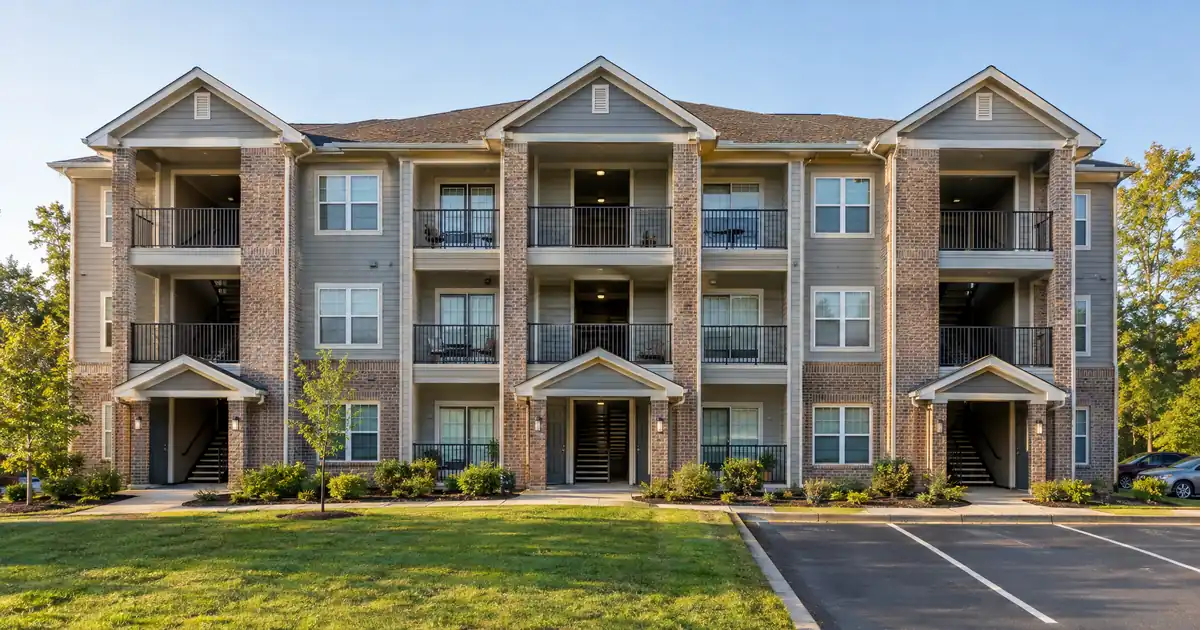
The Quick Read: Hard money loan limits on a 2-4 unit flip are set by lender underwriting caps, not by any government maximum, and the smaller of two tests decides the loan. Across Lendmire’s wholesale network, those tests are a percentage of project cost and a percentage of after-repair value.
- Fix-and-flip leverage typically runs 85% of project cost with fewer than 2 completed projects, 90% at 2 or more, and 93% at 5 or more, and it varies by lender, property, and experience.
- Every tier is capped at 75% of after-repair value (ARV), and the lower result wins.
- Up to 100% of the rehab budget funds in draws against completed work, not at closing.
- Collateral must be non-owner-occupied residential property of 1-4 units, with loan amounts up to $5,000,000 and larger by exception.
A 2-4 unit flip works much like a single-family flip, but the appraisal and the exit plan carry extra weight. Nothing here is a commitment to lend, and every file is underwritten individually.
What this loan actually costs to carry.
Hard money is sized against the project and priced by time. Enter the deal and see how much the program will lend, the cash required at closing, the carry while you hold it, and what is left at the exit.
Leverage tiers on the current program: 85% with fewer than 2, 90% with 2 or more, 93% with 5 or more completed projects — every tier capped at 75% of after-repair value. Loan amounts up to $5,000,000, larger by exception; terms of 6 to 18 months, interest-only, no prepayment penalty. The rehab portion funds in draws against completed work, not at closing.
Program parameters shown update from Lendmire’s centralized guideline source. Rate, points, and months are editable assumptions, not quoted terms.
Cost cap sets the loan · positive spread
Illustrative estimate only — not a quote, Loan Estimate, approval, or commitment to lend. Rate, points, and months are editable assumptions. Hard money is business-purpose financing for real estate investors, not a consumer mortgage. Leverage on the current program tops out at 93% of project cost for investors with a documented track record, capped at 75% of after-repair value, with rehab funding up to 100% of the documented budget released in draws; actual terms vary by lender, borrower experience, property, and exit. Lendmire is a mortgage broker, not a lender.
Key Terms Defined
After-repair value (ARV): The appraised value of the property once the planned renovation is finished.
Loan-to-cost (LTC): The loan amount divided by project cost, meaning purchase price plus rehab budget.
Loan-to-ARV: The loan amount divided by the after-repair value. This is the second cap on a flip loan.
Rehab holdback: The part of the loan reserved for renovation and released only as work is completed.
Draw: A payout from the holdback, usually after an inspection confirms the work is done.
Binding limit: Whichever cap produces the smaller loan on a given deal.
Is There an Official Limit on Hard Money Loans?
No. No agency publishes a maximum for flip loans. Each lender sets its own caps, which is why a conforming-style dollar ceiling doesn’t exist here. The ceiling comes from the deal math and from the lender’s appetite for risk.
Flip loans are business-purpose credit. Investment-property loans of this kind are reviewed differently from a standard owner-occupied mortgage, and underwriting leans on the asset and the plan rather than personal debt-to-income ratios. Credit, experience, and liquidity still shape the terms. Hard money is asset-focused, not borrower-blind.
How the Loan Ceiling Is Actually Set
Two caps apply to every flip, and the lower one controls. The first is a percentage of project cost. The second is a percentage of ARV. Across the network, the cost-based cap is tiered by how many projects an investor has completed, while the ARV cap stays fixed at 75%.
| Completed projects | Cost-based cap | ARV cap |
|---|---|---|
| Fewer than 2 | 85% of project cost | 75% of ARV |
| 2 or more | 90% of project cost | 75% of ARV |
| 5 or more | 93% of project cost | 75% of ARV |
These are typical ranges from select lenders in the network, and they vary by lender, property, and experience. The top tier is reserved for experienced investors.
The cost cap tends to bind when the purchase is cheap relative to the finished value. The ARV cap binds when the investor overpays or the comps come in soft. Sophisticated flippers test both before making an offer, not after the appraisal lands.
Market surveys of lenders report similar structures. The network figure above is the one that applies to files Lendmire places.
What Changes With 2-4 Units?
Less than most investors expect. Most flip programs treat 1-4 units as one residential bucket, so the leverage tiers above apply to a duplex, triplex, or fourplex the same way they do to a single-family house. The differences show up in three places: the appraisal, the rent-based exit, and the 5+ unit boundary.
The appraisal. A 2-4 unit property is typically valued on the small residential income property report, Form 1025, which integrates rental income analysis into the valuation. That form covers 2-4 units only. The appraiser produces an as-is value and an after-repair value, and your loan is sized off those figures, not your own estimate.
The rent-based exit. If you plan to hold the property after the rehab, the exit is a long-term rental loan that sums the rents of all units against the payment. Model the exit on appraisal-supported rent, not hopeful rent.
The 5+ boundary. Five or more units leaves the residential flip bucket entirely. Hard money collateral in the network is 1-4 units for flips, so a five-unit building needs a different product.
Occupancy matters too. Hard money here is non-owner-occupied only. If you plan to live in one unit, a different financing path applies, and the business-purpose treatment can change depending on the owner-occupancy and unit-count rules that distinguish acquisition from improvement credit.
Worked Example: A Fourplex Where the Caps Disagree
Run the numbers on a fourplex with a $400,000 purchase price, a $100,000 rehab budget, and a $640,000 appraised ARV. These are modeled assumptions, not market data. Project cost is $500,000.
For an investor with 2+ completed projects, the cost test is 90% of $500,000, or $450,000. The ARV test is 75% of $640,000, or $480,000. Here the cost test produces the smaller loan, so it binds. The investor funds the gap between total cost and the cost-capped loan with cash.
Now change one input. Suppose the appraisal comes in at $720,000 instead. The ARV test rises to 75% of $720,000, or $540,000, which is above the $450,000 cost test, so the cost test remains the smaller figure and still binds. A higher appraisal does not change the binding limit here, because the cost cap was already the lower number.
| Scenario | Cost test | ARV test | Binding limit |
|---|---|---|---|
| ARV appraised at $640,000 | 90% of $500,000 | 75% of $640,000 | Cost cap |
| ARV appraised at $720,000 | 90% of $500,000 | 75% of $720,000 | Cost cap |
The lesson is practical. A headline leverage tier tells you the best case. The ARV test tells you the real case, and cash to close can be larger than the headline tier suggests.
Dollar Limits vs. Percentage Limits
Percentages are only half the story. Across the network, hard money loan amounts run up to $5,000,000, with larger loans by exception. Smaller balances vary by lender, and some lenders attach minimum loan sizes or added cost to small loans.
For most 2-4 unit flips, the percentage caps bind long before the dollar ceiling does. Dollar limits start to matter in higher-priced markets, where a fourplex with a heavy rehab can push total cost toward the top of the range. If that’s your situation, expect more scrutiny and possibly an exception review.
Other structures sit on the same sheet. A bridge purchase with no rehab runs up to 80% of purchase price. A cash-out or rate/term refinance on a hard money basis runs up to 65% of value. Those are different products from a flip loan and shouldn’t be mixed into your flip math.
How Rehab Funds and Draws Work
Up to 100% of the rehab budget can fund in draws, but not at closing. That’s a rehab-budget figure, not a purchase leverage figure. The purchase advance funds at closing. The renovation money is held back and released as inspected work is completed.
In practice, the investor starts work with their own cash and requests reimbursement as milestones are met. A multi-unit rehab adds a wrinkle: scope is usually organized per unit, so draws can be tied to finished units or finished systems.
Budget realism matters. A rehab budget that looks thin for the scope invites scrutiny and can reduce what gets funded. Interest runs while permits, contractors, and inspections slip, so the carrying cost matters as much as the leverage tier. Terms run 6-18 months, interest-only, with no prepayment penalty. There are no multi-year options on the current program.
What Moves Your Ceiling
Experience is the biggest lever, but it isn’t the only one. Lenders look at the whole picture.
| Factor | Effect on the loan | What to do |
|---|---|---|
| Completed projects | Sets the cost tier (85/90/93%) | Document every finished flip |
| Credit score | 620 minimum, extra conditions below 660 | Pull and clean up credit early |
| Rehab scope | Heavy scope draws more review | Present a line-item budget |
| Entity | Most lenders prefer an LLC | Form it before applying |
| Exit plan | Shapes lender comfort | Underwrite the exit first |
Lenders in the network generally want the loan held in an LLC, subject to lender program eligibility. First-time investors can qualify at the lower leverage tiers. Use the network’s tiers above when sizing a file here.
Practitioner note: across the file flow of a DSCR-focused broker, the most common sizing surprise isn’t the leverage tier. It’s the gap between the investor’s ARV estimate and the appraiser’s. Files that stress-test a lower ARV before offer day rarely get rewritten later.
The 70% Rule Is Not a Lender Limit
The 70% rule is an offer-price filter: ARV times 0.7, minus rehab, gives a maximum allowable offer. The lender’s ARV cap is a separate underwriting test.
The 30% gap in the 70% rule has to cover financing, holding costs, selling costs, and profit. It isn’t all profit. An investor can pass the 70% screen and still hit the lender’s ARV cap, or the reverse. Treat them as two checks on the same deal.
When the Deal Exceeds Your Ceiling
If the numbers don’t clear, you have options before you walk away.
1. Renegotiate the price. A lower purchase price helps both caps.
2. Trim the scope. A smaller rehab lowers project cost and can ease review.
3. Add cash. The gap between total cost and the binding cap is yours to fund.
4. Phase the rehab. Finish the work the lender will fund first, and handle the rest later.
5. Re-check the comps. If the ARV seems low, review the comparable sales with your agent and appraiser before the next deal.
If a deal only works at the top leverage tier on your most optimistic ARV, that’s usually a signal about the deal, not the lender.
Common Misconceptions
“100% financing means I put nothing in.” There is no true 100% purchase program. The 100% figure applies to the rehab budget, funded in draws. The ARV cap can still cut the loan, so full financing only lands when the deal is strong enough to fit under that cap.
“Hard money ignores the borrower.” It’s asset-focused, but credit, experience, and liquidity still tier the terms.
“The rehab money arrives at closing.” It arrives in draws after inspected work.
“2-4 units is commercial.” It’s residential, with its own appraisal form, and leverage tiers mirror single-family flips.
Planning the Exit Before You Buy
The flip loan is a bridge, so underwrite the exit before you buy. If you plan to sell, the ARV and your marketing time drive the outcome. If you plan to hold, many investors refinance out of hard money into long-term DSCR investor loans once the property is stabilized, and Lendmire brokers that path. The permanent lender sizes off its own appraisal and its own rent figure, so the bridge sizing and the long-term loan don’t move together.
A DSCR loan compares rent to the full monthly obligation, including principal, interest, taxes, insurance, and any HOA dues. Clearing 1.00 is not the same as positive cash flow, because repairs, vacancy, management, and capex sit outside the calculation. Lendmire’s complete DSCR loans guide walks through how that exit loan works. For the refinance step itself, see Lendmire’s piece How to Refinance Hard Money on a 2-4 Unit Rental.
Tax treatment varies; consult a qualified professional.
Frequently Asked Questions
What is the maximum hard money loan on a 2-4 unit flip?
Loan amounts in the network run up to $5,000,000, with larger loans by exception, but percentages usually bind first. The loan is the lower of a cost-based cap (85%, 90%, or 93% of project cost by experience tier) and 75% of ARV. Everything varies by lender, property, and experience.
Does unit count change the loan limit?
Not much for 1-4 units, because most programs treat them as one residential bucket. The differences are the appraisal form and the rent-based exit. Five or more units falls outside the residential flip program.
Is the 70% rule the same as a lender’s cap?
No. The 70% rule is a screen for how much to offer. The lender’s 75% ARV cap is a separate underwriting test, and a deal needs to pass both.
What happens if the appraisal comes in below my ARV estimate?
The ARV cap shrinks, and the loan may drop below the cost-based figure. You fund the gap with cash, renegotiate the price, or trim scope. Running a conservative ARV before offering avoids the surprise.
Can a first-time flipper get the top leverage tier?
No. The top tier is reserved for experienced investors with documented completed projects. First-time investors can qualify at the lower tier, with a 620 minimum credit score and extra conditions below 660.
If you are buying, rehabbing or refinancing an investment property on a short timeline and want to see how the numbers work, Lendmire can help you compare hard money options based on the project, the exit plan, leverage, and your goals. Reach the team at 828-256-2183.
About Lendmire
Lendmire is a DSCR-focused mortgage brokerage, NMLS# 2371349, placing investor loans across 41 markets, including Washington, D.C. DSCR eligibility is generally reviewed by the lender around a property’s rental income rather than personal income documentation, which fits LLC-held rentals, self-employed investors, and portfolios scaling past conventional financed-property limits. Scotsman Guide named Lendmire a Top Mortgage Workplace in both 2025 and 2026.
Get Started
Ready to find the right loan for you?
In about 30 seconds you can review financing options available for your investment property. No commitment required.
Informational only. Not a Loan Estimate, approval, or commitment to lend. Program availability and eligibility are subject to lender guidelines, credit approval, property review, and underwriting.
References
1. Realvals, Real Estate Appraisal Forms
2. Doss Law, Business Purpose Exemption Simplified
This article is part of Lendmire’s hard money loan program — full qualification details, guidelines, and scenarios live on the program page.
Related reading: Is a Hard Money Fix and Flip Loan Worth It for a Business Owner? · Can a 1099 Contractor Get a Hard Money Loan to Flip a House? · Can You Get an Interest-Only Hard Money Loan for a Fix and Flip?
Brandon Miller
Founder & CEO, Mortgage Loan Originator, Lendmire LLC
- Mortgage Loan Originator · NMLS# 1129696 · Verify on NMLS Consumer Access
- North Carolina Real Estate Broker · License# 343312 · Verify on NCREC
- North Carolina Insurance Producer · License# 19053198 · Property, Casualty, Life, Health · Verify on NAIC SBS
- Lendmire LLC · Firm NMLS# 2371349 · Verify firm licensure
Legal disclosures. Lendmire (NMLS# 2371349) is a state-licensed mortgage brokerage that arranges financing through wholesale lender relationships. Lendmire is not a direct lender, depository institution, or registered financial advisor. The discussion above is general informational content about real estate financing — it is not financial, legal, or tax advice, and readers should consult licensed professionals for guidance on their individual circumstances. Loan inquiries are subject to lender underwriting; this article does not represent a commitment to lend. Loan terms, rates, and qualification standards vary by borrower, property, and state, and are subject to change at any time. Equal Housing Opportunity. NMLS Consumer Access: nmlsconsumeraccess.org.