
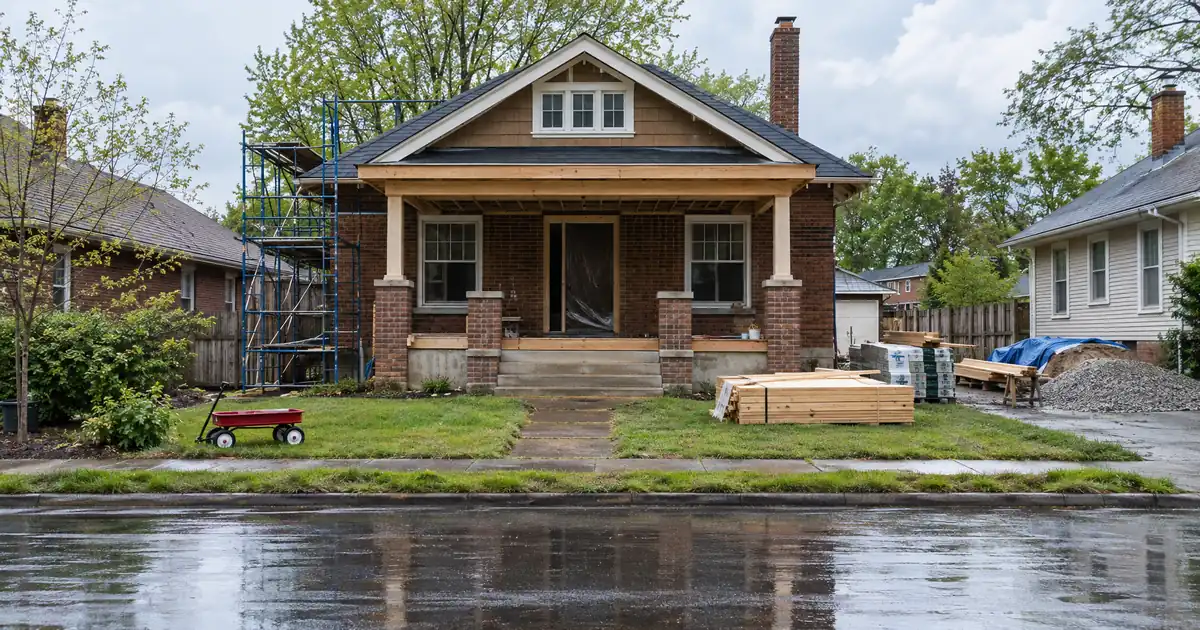
The Quick Read: Usually there is no fixed number of flips a hard money lender will allow, because each lender sets its own ceiling. Most ceilings are an aggregate dollar cap on what you owe that lender, a cap on open loans, or both. Experience, liquidity, and the strength of each deal decide how far you get under the ceiling.
- No federal rule caps the number of hard money loans one investor can hold. Each lender writes its own policy.
- The two common forms are a total-dollar exposure limit and an open-loan count limit.
- Completed projects raise your leverage tier, and on the Lendmire network the top tier requires 5+ completed projects.
- Spreading loans across several lenders does not reset the risk. Lenders can see your other open loans.
- Cash on hand is usually the real ceiling, not the written policy.
What Is a Hard Money Loan Limit?
A hard money loan limit is the most a lender will keep outstanding to one borrower or sponsor. Hard money is private, business-purpose lending. No regulator sets a headcount for it. The limit lives in the lender’s own credit policy.
What this loan actually costs to carry.
Hard money is sized against the project and priced by time. Enter the deal and see how much the program will lend, the cash required at closing, the carry while you hold it, and what is left at the exit.
Leverage tiers on the current program: 85% with fewer than 2, 90% with 2 or more, 93% with 5 or more completed projects — every tier capped at 75% of after-repair value. Loan amounts up to $5,000,000, larger by exception; terms of 6 to 18 months, interest-only, no prepayment penalty. The rehab portion funds in draws against completed work, not at closing.
Program parameters shown update from Lendmire’s centralized guideline source. Rate, points, and months are editable assumptions, not quoted terms.
Cost cap sets the loan · positive spread
Illustrative estimate only — not a quote, Loan Estimate, approval, or commitment to lend. Rate, points, and months are editable assumptions. Hard money is business-purpose financing for real estate investors, not a consumer mortgage. Leverage on the current program tops out at 93% of project cost for investors with a documented track record, capped at 75% of after-repair value, with rehab funding up to 100% of the documented budget released in draws; actual terms vary by lender, borrower experience, property, and exit. Lendmire is a mortgage broker, not a lender.
That policy usually takes one of two shapes. The first is an aggregate dollar cap: the lender totals every balance you owe it and stops when the total reaches a set amount. The second is an open-loan count cap: the lender allows only so many loans at the same time, whether the number is small or larger for proven operators. Some lenders use both.
Here’s the catch for a flipper. Neither limit shows on a rate sheet. You find it by asking, or by hitting it.
Count Versus Exposure: How Lenders Total Your Book
Three different counting methods get mixed up in conversation, and they test different things.
| Method | What it counts | Who uses it |
|---|---|---|
| Loan count | Open loans with one lender | Some private lenders |
| Property count | Financed properties you owe on | Agency mortgages |
| Dollar exposure | Total balances outstanding | Many private lenders |
The agency method is the contrast worth knowing. The Fannie Mae Selling Guide counts financed 1-4 unit properties where the borrower is personally obligated. It counts properties, not mortgages. That is a rule for agency delivery. Hard money and DSCR loans are not agency products, so it does not govern them.
Banks that count loans or properties hit a wall with an active flipper. Private lenders mostly look at dollars at risk and at each deal on its own merits. That is why a flipper turned away by a bank can still run several projects with a private lender, until the dollar total or the lender’s confidence runs out.
How Underwriting Treats Your Open Loans, Step by Step
Each new request is underwritten with your whole open book in view. Here is the sequence on a typical file.
1. The lender starts with its policy ceiling. That ceiling is an exposure limit, an open-loan cap, or both. Borrower experience, deal type, loan size, and leverage all move where it sits.
2. The lender places you in an experience tier. Tiers are built on documented completed projects. Across the Lendmire network, fix-and-flip leverage runs up to 93% of project cost at 5+ completed projects, 90% of project cost at 2+ completed projects, and 85% with fewer than two. Every tier is capped at 75% of after-repair value. These figures vary by lender, property, and experience, and nothing here is a commitment to lend.
3. The lender reviews the subject deal. That means the after-repair value, the scope of work, and the exit.
4. The lender then reviews your open projects. It asks whether your remaining liquidity can cover the next draws, the interest carry, and a stall on any one project.
5. The file lands on a decision. Roughly in order of weight: total exposure against the cap, your tier and ability to finish projects, your liquidity, and the individual deal’s numbers. That ordering comes from how these files tend to read, not from a published rule.
Documents That Move a Multi-Flip File
Clean paper keeps preventable gaps off the file. Lenders reviewing a multi-flip borrower commonly ask for:
- A schedule of real estate owned and every open loan, with balances and maturity dates.
- A personal financial statement with proof of liquidity.
- A track record of completed flips, usually settlement statements.
- Scope of work and contractor quotes for each active project.
- An after-repair value opinion for the subject property.
- The entity documents and guaranty package.
Most programs place a personal guarantee, a personal financial statement, a credit pull, and prior experience near the top of the list. Miss one and the file stalls. The schedule of real estate owned is the quiet killer. Investors build it from memory, leave off a loan, and the lender finds it on the credit report. Now the whole file has a credibility problem.
Credit matters too, though hard money stays asset-based. The Lendmire network’s hard money program uses a 620 minimum score, with additional conditions below 660. First-time investors qualify at the lower leverage tiers, and underwriting still centers on the property, the plan, and the exit.
A Worked Example: Several Flips at Once
Take an investor with four flips. These are modeled assumptions, not market data, and no dollar figures are used so the structure stays clear.
Flip A is nearly done and listed. Flip B is mid-rehab with two draws released. Flip C closed last month, and its rehab has not started. Flip D is under contract.
The lender’s exposure is the sum of the four balances, including funded draws. It is not four separate decisions. Flip D gets underwritten against what is already out the door on A, B, and C.
Now run the stress case. Flip A sits unsold for several extra months. Interest keeps running on it. Draws on B and C still come due. Capacity does not free up, because the payoff that was supposed to retire A’s balance has not arrived. The lender sees the open book stuck at full size and the next request, Flip D, gets harder to approve.
That is the point of the exercise. Count is the wrong frame. How you sequence starts and exits determines how many flips you can run.
Market context shows why a stalled flip costs more now. ATTOM’s report on flipping says 77,991 single-family homes and condos were flipped in the second quarter, 6.2% of home sales, with a typical return of 21.5%. It describes that return as part of a gradual two-year decline. Thinner margins leave less room to absorb extra months of carry.
Reserves and Liquidity: The Practical Ceiling
Cash is usually the real limit. A written cap of several million dollars means little if your liquid funds cannot cover interest-only carry and the unfunded portion of each rehab on every open project.
Two facts shape the math. Hard money terms on the Lendmire network run 6-18 months, interest-only, with no prepayment penalty. And up to 100% of the rehab budget funds in draws against completed work. Because draws are paid only after work is done, you front the work, get reimbursed afterward, and your cash sits exposed between draws. Multiply that by several projects and liquidity gets consumed fast.
Run the stress test before you ask for the next loan. If your slowest project runs long, can your cash still carry every other project? If the answer is no, you are over-extended whatever the policy says.
Entity Setup, Guarantees, and Cross-Default Risk
Most investors close each flip in its own LLC. It keeps one property’s liability apart from the others. That holds on the title side, subject to lender program eligibility.
It does not hold on the credit side. Most lenders still want a personal guarantee, so every loan lands on your personal financial statement as a contingent liability. Six loans in six LLCs is six guarantees stacked on one person.
Read the loan documents for cross-default and cross-collateral language. If one loan with the same lender defaults, does it trigger the others? Many loan documents include that language, so know before you sign, not after one project stalls.
Separate loans closed together are also not a blanket loan. Many “lines” are repeat-loan pre-approvals with each loan underwritten separately, while a true blanket structure ties collateral together under one note. Lenders will not extend what you assume a pre-approval promises, so confirm what is committed and what is not.
Does Using More Than One Lender Help?
Not much. Spreading loans across lenders does not reset the risk picture. Lenders see your open loans on the schedule of real estate owned and on credit. Ten loans spread over three lenders still read as a heavy book.
Multiple lenders do give you more raw capacity if each lender’s cap is the binding limit. The cost is more guarantees, more reporting, and more places for a late draw to hurt you. Disclose every open loan honestly. A lender who finds an unlisted one tends to stop trusting the rest of the file.
Where the General Rule Breaks
The “no fixed number” answer has exceptions. Name them before you plan around it.
- Liquidity exceptions. Proven large liquidity can earn exceptions to a lender’s usual concurrent-deal limit. That is lender-specific, not a right.
- Which deals count toward your tier. Some lenders count only exited deals, meaning sold flips or refinanced rentals. Others also count turnkey rentals. Ask before you assume.
- Partner experience. Adding a partner or co-guarantor with a track record can lift your tier at some lenders. Treat it as lender-specific.
- Second liens. Several loans on one property is a different question from several flips. Few lenders accept second position, and some forbid junior liens outright.
- Resale-side rules. The FHA 90-day flip rule limits your buyer’s financing, not your hard money loan. It gets confused with this topic often.
- Collateral. Eligible collateral is non-owner-occupied residential 1-4 units, with ground-up construction to 10 units. Loan sizes run up to $5,000,000, larger by exception.
The Operational Ceiling
Execution capacity is a limit lenders understand well. A general contractor who fails you on one job can stall three. A lender that wants experience in your target market and a modest number of projects running at once is protecting against that.
Overextension is the common failure, even for experienced operators. Contractor bandwidth, permit timing, and your own attention all cap how many flips you can run. A flip planned for four months that runs eight can let interest carry absorb the profit.
Plan the Exit at Origination
Exposure frees up when loans pay off. So the exit for each flip should be chosen on day one, not when the term is running out.
A sale is the obvious exit. Many investors who keep a property as a rental refinance out of hard money into long-term DSCR financing once it is stabilized, and Lendmire brokers that path. Rent covering the full payment is what that test looks at, and 1.00 is where select programs start, with stronger ratios opening better pricing and leverage. Clearing 1.00 does not mean positive cash flow, since repairs, vacancy, and management sit outside the calculation. The complete DSCR loans guide covers how that refinance is evaluated.
Key Terms Defined
Aggregate exposure: The total dollars you owe one lender across all open loans.
Open-loan cap: A limit on how many loans a lender will hold for you at once.
Experience tier: A leverage and pricing level based on your completed projects.
Schedule of real estate owned: Your list of properties and the loans against them.
Cross-default: A clause where default on one loan can trigger default on others.
Loan-to-cost: The loan as a share of purchase price plus rehab cost.
Questions to Ask a Lender Before You Scale
- Do you cap total dollars, open loans, or both?
- Which of my deals count toward my experience tier?
- Is there a cross-default or cross-collateral clause?
- Is the line committed, or is each loan underwritten separately?
- How are draws handled while several projects are open?
- Does a partner’s track record count toward my tier?
Lenders answer these in a short call. The answers tell you more than any marketing page.
Frequently Asked Questions
Is there a maximum number of hard money loans I can hold?
No universal number exists. Each lender sets a cap, usually on total dollars outstanding, on open loans, or on both. No federal rule limits it for business-purpose loans. Ask each lender directly, because the written policy is rarely published.
Can I have hard money loans with several lenders at once?
Yes, but it does not hide the exposure. Lenders see open loans on your real estate schedule and credit, and a heavy book across several lenders still reads as risk. Disclose everything. The added guarantees and reporting also raise your own workload.
Does completing more flips increase my capacity?
Generally yes. On the Lendmire network, leverage steps up with documented completed projects, topping out at 93% of project cost at 5+ projects, always capped at 75% of after-repair value. Tiers vary by lender, property, and experience, and the top tier is reserved for experienced investors.
What stops a lender from approving my next loan?
Usually exposure against its cap, thin liquidity across your open projects, or doubts about your ability to finish. A strong individual deal does not fix an over-extended book. Weak documentation, such as an incomplete real estate schedule, also stops files.
What happens if one flip stalls?
Interest keeps accruing, draws on other projects still come due, and capacity does not free up. Cross-default language may also put your other loans with the same lender at risk. Run a stress case on your slowest project before adding another.
Next Step
If you are buying, rehabbing or refinancing an investment property on a short timeline and want to see how the numbers work, Lendmire can help you compare hard money options based on the project, the exit plan, leverage, and your goals. Lendmire is a broker arranging financing through select lenders in its wholesale network across 41 markets, including Washington, D.C. Tax treatment varies; consult a qualified professional. Programs change and every file is reviewed individually, subject to lender guidelines.
For the terms that apply to your project, the tier figures above are the starting point; a hard money request through Lendmire is reviewed against your project, experience, and exit plan.
About Lendmire
Lendmire (NMLS# 2371349) is a DSCR-focused mortgage broker that helps arrange investor financing across 41 markets, including Washington, D.C., through wholesale and investor-lending channels. DSCR eligibility is generally reviewed by the lender around the property’s rental income rather than personal income documentation, subject to lender guidelines — which works for self-employed investors, LLC operators, and portfolios above four financed properties. Scotsman Guide named Lendmire a Top Mortgage Workplace in both 2025 and 2026.
Get Started
Ready to find the right loan for you?
In about 30 seconds you can review financing options available for your investment property. No commitment required.
Informational only. Not a Loan Estimate, approval, or commitment to lend. Program availability and eligibility are subject to lender guidelines, credit approval, property review, and underwriting.
References
1. Fannie Mae Selling Guide B2-2-03
2. attomdata.com: Home Flipping Profits Continue Gradual Two Year Decline
This article is part of Lendmire’s hard money loan program — full qualification details, guidelines, and scenarios live on the program page.
Related reading: How to Buy an Occupied House With Hard Money Across Several Flips · Hard Money Bridge Loan Amount Limits for Single Family Homes · Hard Money Maximum Loan Amount Requirements for a Flip
Brandon Miller
Founder & CEO, Mortgage Loan Originator, Lendmire LLC
- Mortgage Loan Originator · NMLS# 1129696 · Verify on NMLS Consumer Access
- North Carolina Real Estate Broker · License# 343312 · Verify on NCREC
- North Carolina Insurance Producer · License# 19053198 · Property, Casualty, Life, Health · Verify on NAIC SBS
- Lendmire LLC · Firm NMLS# 2371349 · Verify firm licensure
Important disclosures. Lendmire (NMLS# 2371349) is a licensed mortgage brokerage. Lendmire is not a direct lender, depository institution, or financial advisor. All loan inquiries are subject to lender underwriting; this article does not constitute a commitment to lend. Rates, terms, and program guidelines are subject to change without notice and vary by borrower profile, property type, and state. Information in this article is general in nature and is not financial, legal, or tax advice. Equal Housing Opportunity. NMLS Consumer Access: nmlsconsumeraccess.org.