
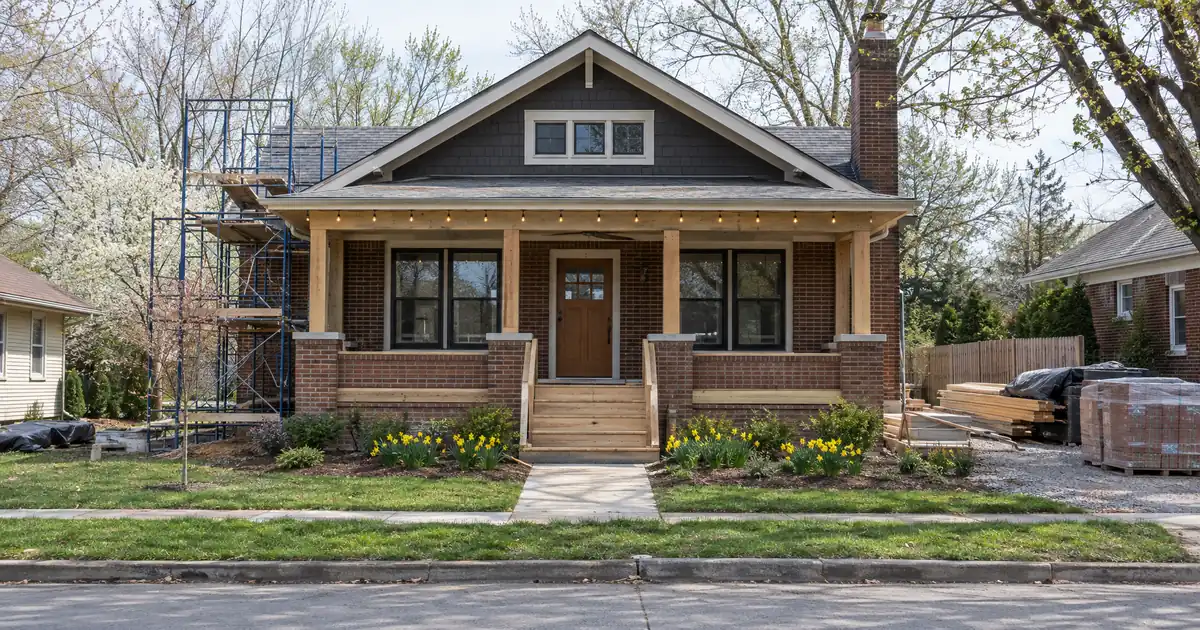
The Quick Read: The loan term is the total time budget for your project, so the rehab, the draw cycles, the lease-up or sale, the appraisal and the payoff all have to finish inside it, because everything still unpaid comes due as a single balloon payment when the loan matures. Across the wholesale network Lendmire works with, hard money terms typically run 6 to 18 months, interest-only. Exact terms vary by lender, property, and experience.
- Terms run 6 to 18 months, interest-only, with no prepayment penalty. There are no multi-year options, so a longer runway means refinancing into long-term rental financing.
- Fix-and-flip loans size on loan-to-cost, tiered by completed projects (85%, 90% or 93% of project cost), and every tier is capped at 75% of after-repair value.
- Up to 100% of the rehab budget funds in draws against completed work, so you front each phase and get reimbursed.
- A DSCR loan is the usual way out. Its cash-out seasoning is about 6 months from title recording, and the property’s rent has to cover the new payment.
Key Terms Defined
Term: the number of months before the lender expects full repayment.
Interest-only: you pay interest during the term and none of the principal.
Balloon: the full unpaid principal due at maturity.
Holdback (or draw): rehab money the lender holds back and releases after work is finished and checked.
Loan-to-cost (LTC): the loan as a share of purchase price plus rehab budget.
After-repair value (ARV): the estimated value once the work is done.
Seasoning: how long you must own the property before a refinance lender will count it at a new value.
Exit (or takeout): the sale or the refinance that pays the hard money loan off.
Extension: extra time the lender may grant for a fee, at its discretion.
DSCR Calculator
Run the numbers in your market
Rate source: Freddie Mac 30-yr average via FRED® — Federal Reserve Bank of St. Louis · effective Oct 22, 2026
Prefilled with starting assumptions — enter your own rent or nightly figures, taxes, insurance, and HOA for a more accurate picture.
Program parameters update from Lendmire’s centralized guideline source. Taxes and insurance are editable estimates.
As of Oct 22, 2026 · General Freddie Mac market benchmark, not a Lendmire loan offer. Rent, nightly rate, occupancy, taxes, and insurance are editable estimates. Short-term rental figures are estimates only and vary significantly by season, property type, management approach, and local short-term-rental rules — confirm local regulations before relying on them. Qualifying income for short-term rentals varies by program — some use appraisal market rent, others use documented STR history or projections — and is confirmed in underwriting. Not a Loan Estimate, approval, or commitment to lend. Program availability and eligibility are subject to lender guidelines, credit approval, property review, and underwriting.
How the Term Sets the Clock
The term is a countdown, and nothing in it stops when your contractor falls behind. A 6-month loan and an 18-month loan can fund the same house, but they fit very different projects.
Hard money is short on purpose. The lender is lending against the property, the plan and the exit, not against a long payment history. That is why payments are interest-only and the whole balance comes due at once. You are not paying the loan down over time. You are renting capital for a window, and the window ends on a fixed date.
Lenders in the network generally make loans on non-owner-occupied 1-4 unit residential property for business purposes. Loan amounts vary by lender and property, and larger balances are handled case by case. The credit minimum is 620, with added conditions below 660. First-time investors can qualify at the lower leverage tiers. All of this varies by lender, property, and experience, and nothing here is a commitment to lend.
The takeaway: pick the term from the scope of work and the exit, not from the lowest-sounding option on the term sheet.
The Runway Timeline
Build the runway backward from maturity. Start with the date the balloon is due, then work out which phases must finish before it, and add a cushion to each.
| Phase | What can slip | Buffer to add |
|---|---|---|
| Acquisition and scope | Bids come in high | A contingency month |
| Rehab | Permits, material delays | Contingency on every trade |
| Draw cycles | Inspection and release gaps | Time for each draw |
| Punch list | Small items drag the condition rating | A pre-appraisal walk |
| Lease-up or listing | Showings, tenant screening | Extra month for vacancy |
| Appraisal and underwriting | Light appraisal, missing documents | Time to appeal or re-cut |
| Payoff | Seasoning window missed | A final cushion before maturity |
Most overruns hide in the middle rows. Contractors rarely run late on the first week. They run late on permits, inspections and the final 10% of finish work.
Light Rehab vs. Heavy Rehab: Two Runways in One Term
A cosmetic rehab usually fits a shorter term, while a permit-dependent rehab needs the long end of the 6-to-18-month range. The two examples below use modeled assumptions, not market data.
Light rehab. Say the scope is paint, flooring, fixtures and a kitchen refresh. A modeled schedule might use one month for scope and contractor start, two months for the work, one month for punch list and draw release, and one to two months of lease-up. That leaves two months for appraisal, underwriting and payoff, plus a cushion. A 12-month term fits that plan with room to spare.
Here is the catch. If the exit is a cash-out DSCR loan, the seasoning clock may be the real constraint. The DSCR loan’s cash-out seasoning is about 6 months of ownership, measured from title recording. A light rehab finishes well before that, so the term has to cover the wait, not only the work.
Heavy rehab. Now say the scope includes structural work, systems and permits. A modeled schedule might use two months for permits, five to six months of construction, one month of punch list, two months of lease-up, and two months for appraisal and underwriting. Add three or four months of cushion and the plan reaches the upper end of an 18-month term. A 12-month loan would leave no room for a single mistake.
On a heavy rehab, seasoning is usually not the problem, because the rehab itself outlasts the 6-month window. The risk is finishing the work with too few months left to lease and refinance.
What Each Extra Month Costs
Every month past plan adds interest, fees and delay, and extensions add their own cost on top. Extension terms vary by lender and are a lender decision, so ask for them in writing before you sign.
A worked comparison from Yieldstack’s fix-and-flip cost explainer shows the pattern. A 12-month hold with one extension costs more in total than a 9-month hold on the same project. The lesson is that late months cost more than early months, because extension fees stack on top of carry.
You can stress-test this before buying. A calculator like the US Finance Calculators hard money tool models a rehab overrun combined with a delayed sale that triggers an extension. Use it as an illustration only. The useful habit is running the bad case before you commit, not after.
Interest accrual is another term to read closely. Some lenders charge interest only on funds already drawn, while others charge on the full balance from closing. Some also apply a minimum interest period. The two structures produce different carry on the same loan, so confirm the method in the term sheet. Compare total financing cost, not one headline term. Origination, draw inspection and extension charges all count.
Tax treatment varies; consult a qualified professional.
How Draws Affect the Schedule
Draws are a source of delay, not just a funding method. Rehab money is usually held back at closing and released in stages after the lender confirms completed work. On the network’s program, up to 100% of the rehab budget funds this way. That is a rehab-budget figure, not a purchase loan-to-value.
The practical effect is a cash gap. Contractors often want a deposit and staged payments, so you fund each phase first and get reimbursed after the inspection. An investor with a track record may negotiate better draw terms, while a newer investor should plan to carry more of each phase.
Each draw also adds a cycle: request, inspection, release. More draws smooth your cash flow but add inspection steps and cost. Fewer draws save on inspections but strain your cash. Many investors settle on a small number of milestone draws per project.
How Leverage Sizing Decides Your Cash at Risk
Your cash at risk depends on two caps working together, and the lower result wins. The first cap is project cost. On the network’s fix-and-flip program, leverage runs 93% of project cost at 5 or more completed projects, 90% of project cost at 2 or more, and 85% with fewer than 2. The second cap is value: every tier is limited to 75% of after-repair value.
Say your total project cost is high relative to the finished value. The loan-to-cost figure might suggest a large loan, but the value cap trims it. You cover the difference with cash. That gap is why a thin deal feels fine on a cost spreadsheet and tight at the closing table.
Other structures differ. Bridge purchases without a rehab run up to 80% of purchase price. Cash-out and rate-and-term refinances on the hard money side run up to 65% of value. Ground-up construction runs up to 90% of cost and 75% of completed value at 3 or more completed projects. There is no true 100% purchase program. The top tier is reserved for experienced investors, and every figure varies by lender, property, and experience.
Two Exits: Sell or Refinance
Every hard money loan ends in one of two ways: you sell, or a long-term loan pays it off. A DSCR loan is the usual refinance path for a rental, and it sizes on the new appraisal and market rent, not on your ARV estimate.
| Factor | Sell | Refinance into a DSCR loan |
|---|---|---|
| Who sets the value | The buyer’s offer | The new appraisal |
| Main risk | Market softens | Light appraisal, thin coverage |
| Key documents | Listing, contract | Lease, rent receipts, rent schedule |
| Timing trigger | Days on market | Seasoning and underwriting |
| Failure point | No buyer by maturity | Payoff exceeds new loan |
A third path combines them: lease the property up, stabilize it, then refinance. Many investors refinance out of hard money into long-term DSCR financing once the property is stabilized, and Lendmire arranges that path through its hard money exit refinance program. The refinance only works if the numbers hold on the new lender’s terms, so test them before you buy.
What the DSCR Loan Needs on the Way Out
Plan the DSCR loan’s requirements before the rehab starts, because they are fixed targets and your bridge has to reach them in time. For a complete overview of how these loans work, see Lendmire’s complete DSCR loans guide.
- Coverage: The DSCR loan compares monthly rent to the full monthly payment (principal, interest, taxes, insurance and any HOA dues). On a DSCR loan, 1.00 is where select programs start, and stronger ratios open better terms. A separate select-lender path takes coverage below 1.00 with leverage and terms adjusted.
- Leverage: The DSCR loan’s cash-out refinance tops out at 75% LTV on an investment property. A DSCR rate-and-term refinance, which returns no cash at closing, can run higher, up to 85% LTV on select programs.
- Credit: The DSCR loan’s floor is 620, though most programs want about 660 and 700 or higher opens the strongest tiers.
- Reserves: On a DSCR loan, reserves commonly run about 6 months of PITIA, and about 9 months on loans above $1,500,000. They vary by lender, leverage and loan size.
- Loan size: DSCR loans run up to $3,000,000 on standard programs, so check that your bridge payoff fits within that ceiling.
- Documents: A signed lease, one or two months of rent receipts, and the appraiser’s rent schedule (Form 1007 for single-family, Form 1025 for small multifamily).
Clearing 1.00 on a DSCR loan is not the same as positive cash flow. The ratio counts rent against the payment only. Repairs, vacancy, management, utilities and capital reserves sit outside it. Also, the DSCR loan’s payment is typically larger than your bridge’s interest-only payment, so the property feels different the month after refinancing.
When the Clocks Collide
Two clocks run at once: your loan’s maturity and the exit lender’s seasoning window. Whichever one ends later is your real deadline.
Seasoning is lender policy, not law, and it usually counts from the recorded deed. Finishing the rehab does not start it. Signing a lease does not start it. For a cash-out DSCR loan, about 6 months of ownership from title recording is the common expectation across the network. For a rate-and-term DSCR refinance, seasoning requirements are often lighter, but they vary by lender, so confirm the start date and length with the exit lender before the bridge closes.
Here is the collision to watch. Suppose you buy, finish a cosmetic rehab, and plan a cash-out DSCR loan. Your bridge matures at month 9 and seasoning clears at month 6. That looks safe, but the lease-up, appraisal and underwriting still need to fit between month 6 and month 9. A thin three-month margin turns into a one-month margin if any step runs long.
Run the same check on every deal: write the maturity date, the seasoning date, and the dates of lease-up, appraisal and underwriting. If they do not fit with a cushion, choose a longer term or a different exit.
If You’re Running Out of Time
When maturity is close and the exit is not ready, you have a handful of options, and each costs something. Make the decision early, not in the final month.
| Option | Upside | Trade-off |
|---|---|---|
| Extension | Keeps the plan intact | Fee, lender’s discretion |
| Modification | May reset terms | Needs lender agreement |
| Refinance now | Ends the clock | May need cash or lower proceeds |
| Price reduction | Gets the sale done | Cuts your profit |
| Bring cash | Closes a payoff gap | Ties up capital |
If the refinance appraisal comes in light, you generally have three moves: bring cash to cover the gap, extend the bridge while you wait, or appeal the appraisal with better comps. Appeals work best when you can show specific comparable sales the appraiser missed.
A written Plan B changes how this goes. Before you sign, decide what you will do at month 9 on a 12-month loan if the exit is not ready. Lenders respond better to a borrower who raised the issue early.
Where the General Rule Breaks
The runway logic above covers most deals, but a few situations bend it.
Experience changes the terms. Leverage rises with completed projects on the network’s program, so a second or fifth flip may carry a different cash requirement than your first. Treat the tiers as something you grow into, not a fixed menu.
Small loans and small properties. Lenders often set minimum loan sizes or adjust terms on smaller balances. Check this early on low-priced properties.
Discounted rent hurts the exit. Some investors set low rent to fill the unit before maturity. That can reduce the coverage ratio on the DSCR loan. Sub-1.00 coverage is available through select lenders in the network, with leverage and terms adjusted, but it is a different structure with a different cost.
Insurance and repair surprises. If insurance rises after the rehab, the DSCR loan’s payment rises with it, and coverage shrinks. Get an updated insurance quote before the file goes to the exit lender.
Collection history. If you cannot document actual rent collected, the exit file can stall even when the property is full. Keep receipts from the first month.
Property type. Hard money covers 1-4 unit residential, with ground-up construction up to 10 units. Commercial, land, hospitality and owner-occupied properties are not on the sheet. DSCR loans in the network are not offered on manufactured homes, log homes or barndominiums.
Across the files Lendmire sees, the exit usually slips on lease-up and documentation, not on the construction itself. Investors who schedule a pre-appraisal walk when the work is about 90% complete tend to catch punch-list items before they lower the condition rating.
Questions to Ask Before You Sign
Ask these questions at the term sheet stage, while you still have room to negotiate.
- What is the exact term, and what does an extension require?
- Is interest charged on drawn funds only, or on the full balance?
- Is there a minimum interest period?
- How many draws are allowed, and how long does inspection and release take?
- What are the inspection, draw and extension fees?
- Is the leverage figure based on cost or on value?
- Is prepayment allowed without penalty if I refinance early?
Readiness Self-Check
- My schedule runs backward from maturity, with a cushion in every phase.
- I know the start date of the exit lender’s seasoning clock.
- I have a rent target that clears the coverage I need on the DSCR loan.
- I can fund each draw phase before reimbursement.
- I have a written Plan B if the exit is not ready by month 9 of a 12-month term.
If you can check all five, the term is probably sized correctly. If you check fewer than three, reconsider the project or the term before you buy.
Frequently Asked Questions
How long is a typical hard money term?
Across the network’s program, 6 to 18 months, interest-only, with no prepayment penalty. There are no multi-year structures. If you need a longer runway, the usual route is refinancing into long-term rental financing, such as a DSCR loan.
Can I pay a hard money loan off early?
Yes. The network’s program carries no prepayment penalty, so you can pay off as soon as your exit is ready. Check each term sheet to confirm, since lender policies vary, and ask whether a minimum interest period applies.
What happens if I reach maturity without a buyer or a refinance?
The full balance comes due. Your options are an extension, a modification, a payoff with extra cash, a price cut, or a refinance on whatever terms you can reach. Each has a cost, and all depend on the lender, so raise the issue well before maturity.
When should I start lining up the DSCR loan?
Before you buy. Choose the exit lender first, then run the timeline backward from maturity. Check the seasoning window, the documents the DSCR loan needs, and whether the expected rent clears the coverage ratio you need. Waiting until the rehab ends leaves too little room for a light appraisal.
How much timeline buffer should I build in?
Enough to absorb one bad surprise in the rehab and one in the exit. Many investors add a contingency month to the rehab and another to lease-up and underwriting, then pick a term that leaves a final cushion. A heavier rehab justifies a larger cushion.
If Your Timeline Is Short
If you are buying, rehabbing or refinancing an investment property on a short timeline and want to see how the numbers work, Lendmire can help you compare hard money options based on the project, the exit plan, leverage, and your goals. Lendmire is a broker arranging financing through select lenders in its wholesale network, covering 41 markets, including Washington, D.C. Programs change and every file is underwritten individually.
The investors who finish a flip on time are rarely the ones with a more affordable term sheet. They are the ones who counted the months before they signed.
About Lendmire
Lendmire (NMLS# 2371349) is a mortgage brokerage focused on DSCR investor financing, helping arrange programs through wholesale and investor-lending channels in 41 markets, including Washington, D.C. DSCR loans are evaluated by the lender on property cash flow rather than personal income, subject to lender guidelines, supporting LLC closings and accommodating investors with four or more financed properties. Scotsman Guide Top Mortgage Workplace in both 2025 and 2026.
Get Started
Ready to find the right loan for you?
In about 30 seconds you can review financing options available for your investment property. No commitment required.
Informational only. Not a Loan Estimate, approval, or commitment to lend. Program availability and eligibility are subject to lender guidelines, credit approval, property review, and underwriting.
References
1. Yieldstack: How Fix-and-Flip Loans Work and What They Cost
2. US Finance Calculators: Hard Money Real Estate Loan Calculator
This article is part of Lendmire’s hard money loan program — full qualification details, guidelines, and scenarios live on the program page.
Related reading: Bridge Loan vs Hard Money for a First-Time Investor: The Exit Plan · How ADU Builders Draw Funds on a Hard Money Construction Loan · How to Stress-Test Your DSCR Exit Before Closing a Hard Money Loan
Brandon Miller
Founder & CEO, Mortgage Loan Originator, Lendmire LLC
- Mortgage Loan Originator · NMLS# 1129696 · Verify on NMLS Consumer Access
- North Carolina Real Estate Broker · License# 343312 · Verify on NCREC
- North Carolina Insurance Producer · License# 19053198 · Property, Casualty, Life, Health · Verify on NAIC SBS
- Lendmire LLC · Firm NMLS# 2371349 · Verify firm licensure
Legal disclosures. Lendmire (NMLS# 2371349) is a state-licensed mortgage brokerage that arranges financing through wholesale lender relationships. Lendmire is not a direct lender, depository institution, or registered financial advisor. The discussion above is general informational content about real estate financing — it is not financial, legal, or tax advice, and readers should consult licensed professionals for guidance on their individual circumstances. Loan inquiries are subject to lender underwriting; this article does not represent a commitment to lend. Loan terms, rates, and qualification standards vary by borrower, property, and state, and are subject to change at any time. Equal Housing Opportunity. NMLS Consumer Access: nmlsconsumeraccess.org.