
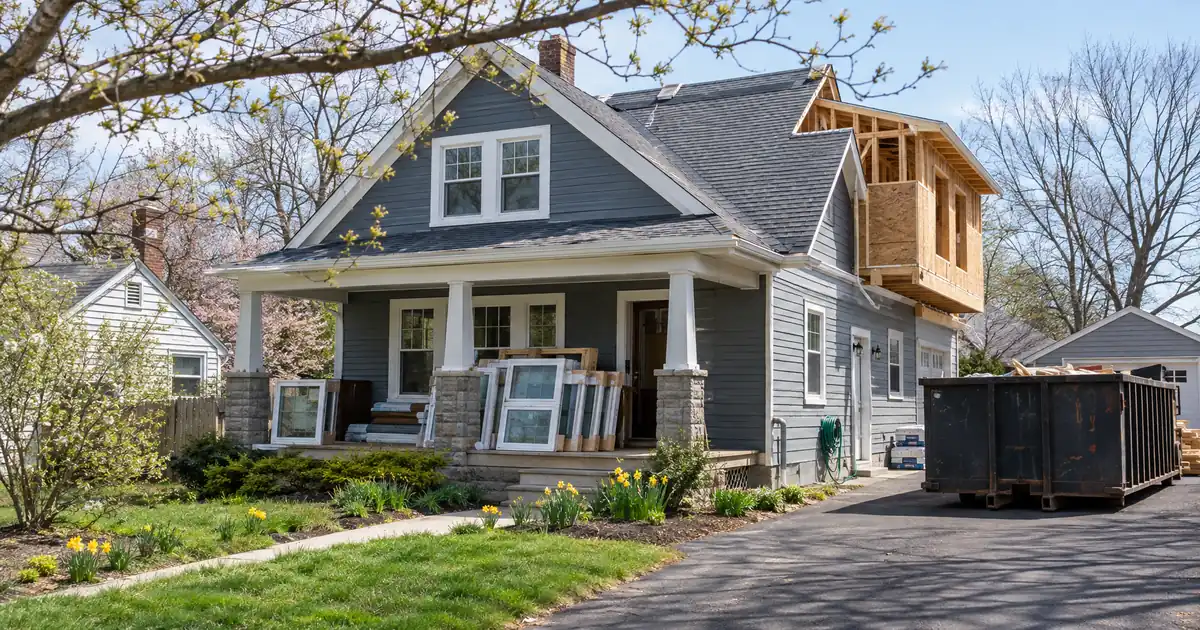
The Quick Read: On a hard money construction loan, the lender holds the building budget back and releases it in stages as work is finished and verified. The builder finishes a milestone, submits a draw package, an inspector confirms the work, and the lender pays against what was confirmed, less any holdback.
- Only the purchase money or an initial advance funds at closing. The construction budget is held back.
- Draws follow milestones such as foundation, framing and final sign-off, not the calendar.
- Lien waivers and a passing inspection are the two things that most often decide whether a draw releases in full.
- Partial credit for partial work is common, and materials sitting on site usually earn nothing.
- Plan cash beyond your down payment, because early work is often paid for before the first reimbursement arrives.
An accessory dwelling unit (ADU) is a small second home on a lot: a detached cottage, a garage conversion, or an attached addition. Builders and investors both ask the same question about the money. When does it actually reach the job site? This article walks through it step by step, from the builder’s side of the table and the investor’s.
What this loan actually costs to carry.
Hard money is sized against the project and priced by time. Enter the deal and see how much the program will lend, the cash required at closing, the carry while you hold it, and what is left at the exit.
Leverage tiers on the current program: 85% with fewer than 2, 90% with 2 or more, 93% with 5 or more completed projects — every tier capped at 75% of after-repair value. Loan amounts up to $5,000,000, larger by exception; terms of 6 to 18 months, interest-only, no prepayment penalty. The rehab portion funds in draws against completed work, not at closing.
Program parameters shown update from Lendmire’s centralized guideline source. Rate, points, and months are editable assumptions, not quoted terms.
Cost cap sets the loan · positive spread
Illustrative estimate only — not a quote, Loan Estimate, approval, or commitment to lend. Rate, points, and months are editable assumptions. Hard money is business-purpose financing for real estate investors, not a consumer mortgage. Leverage on the current program tops out at 93% of project cost for investors with a documented track record, capped at 75% of after-repair value, with rehab funding up to 100% of the documented budget released in draws; actual terms vary by lender, borrower experience, property, and exit. Lendmire is a mortgage broker, not a lender.
What Is a Draw, and Why Do Hard Money Lenders Use Them?
A draw is a payout from the lender’s construction budget, released after a stage of work is complete. A holdback is the portion of the loan the lender keeps until work earns its release. Lenders do this because the collateral is a half-built structure. Paying in stages keeps the lender from getting ahead of the building.
Across the hard money programs Lendmire places files with, the structure follows the same logic. Up to 100% of the rehab budget funds in draws against completed work. That is a rehab-budget figure, not a purchase loan-to-value number. Ground-up construction runs up to 90% of cost and 75% of completed value at 3+ completed projects. Those figures vary by lender, property, and experience, and nothing here is a commitment to lend.
Here is the catch for new builders. “100% financing” is not “no cash needed.” The budget is financed, but you typically pay first and get reimbursed once the work is verified.
The Draw Cycle, Step by Step
No federal rule governs private hard money draws. The terms live in your loan agreement and construction budget. The closest public template is the HUD Section 203(k) draw request form. It shows the logic most draw programs copy: percent complete is reported for each budget line, an inspector certifies the work, and a 10% holdback stays back until all work is done and no liens are on the property. That is an FHA renovation product, not a private hard money loan, so treat it as an illustration only.
Here is how a typical ADU draw cycle runs.
1. Closing and budget. The purchase funds or initial advance go out at closing. The lender holds the construction budget.
2. Draw schedule. Draws attach to milestones. For an ADU these usually run: permit and site work, foundation, framing and roof, rough mechanicals, drywall and finishes, then final inspection and certificate of occupancy.
3. Draw package. The builder submits invoices, an updated budget with cost to date, progress photos, any change orders, and conditional lien waivers.
4. Inspection. A lender-assigned or third-party inspector compares the work to the budget line items and takes photos.
5. Title and lien check. On larger draws, the title company may run a date-down search. This keeps the lender’s collateral position clean, as this draw explainer describes.
6. Release. The lender pays against what it confirmed, less any holdback.
7. Builder pays down the chain. The builder pays subcontractors and suppliers, then collects waivers for the next draw.
8. Final draw and exit. The last draw ties to final inspection, certificate of occupancy, and a final lien waiver. After that comes a sale or a refinance.
Interest on these loans typically accrues on the balance actually drawn, which is why the carrying cost rises as the project advances.
Draw Number Zero: Who Pays for Design and Permits?
Usually you do. The first inspection needs something to inspect, and a plan set, engineering, and permit fees come before any foundation exists. Some lenders fold part of those costs into the initial advance. Many do not. Ask early, in writing, which pre-construction costs the loan covers and which sit on your side.
This matters for ADUs in particular. Every ADU needs a permit, and Build With A Plan’s ADU guide notes that unpermitted units get flagged at sale, refinance, and insurance underwriting. For the lender, permit status is also a gate. Rough-in draws often depend on passed municipal inspections.
What Goes in a Draw Package
A clean package is the difference between a draw that releases in full and one that comes back short. Build a standard folder and reuse it every time.
| Item | What it proves |
|---|---|
| Invoices and cost-to-date | Money spent matches the budget |
| Updated budget | Remaining funds cover remaining work |
| Progress photos | Work exists, especially before cover-up |
| Change orders | Scope changes were approved |
| Conditional lien waivers | Payees will not claim against the property |
| Permit and inspection sign-offs | Work passed local review |
Missing lien waivers are a common reason a draw gets reduced or delayed. Waivers work in two stages. A conditional waiver goes in with the request and becomes effective once payment clears. An unconditional waiver follows after funds arrive. Paying the general contractor does not protect the property by itself. Subs and suppliers can still file claims, so collect waivers from every tier.
Photos matter most for concealed work. Framing, plumbing, and electrical rough-in disappear behind drywall. If the inspector never saw them, your photos are the only evidence.
What the Inspector Does (and Does Not Do)
The lender’s inspector verifies that work exists and matches the budget line. That is not a code inspection. A passing city inspection and a passing lender inspection are two separate events, and one does not replace the other. Some programs accept the building department’s sign-off for certain stages. Others require their own.
Partial credit is common. If a drywall line is half done, many lenders pay about half of that line, capped by the signed contract amount. The HUD form works the same way. Half a fence earns half the fence line. Materials stacked on site are different. HUD’s form excludes them, and many private lenders follow the same logic: only installed work gets paid.
Keeping Cash Flowing Between Draws
This is the builder’s real problem, and few explanations address it. The lender pays after verification. Your subs want to be paid when they finish.
- Mirror the schedules. Set your subcontract payment milestones to match the lender’s draw milestones. A sub paid on a different rhythm becomes your float.
- Make waivers a condition of every payment. No waiver, no check.
- Hold working capital beyond the down payment. Expect to cover a deposit and early phases before the first reimbursement.
- Budget for the lag. Allow for a gap between the inspection request and the money landing. It varies by lender and by how complete the package is.
- Keep a contingency line. If the inspector measures against an outdated scope, the draw comes in short.
Reimbursement is the common pattern. Some lenders advance part of a draw up front, but that is generally reserved for experienced investors. Fewer, larger milestones can also cost less to administer than many small ones, since inspection and wire fees often apply per draw.
Where the General Rule Breaks
Draw terms are not standardized. Here are the edge cases that catch people.
- Advance versus reimbursement. Experienced borrowers may negotiate advances. First-timers should plan on reimbursement.
- Change orders. If scope shifts and the budget is not updated, the inspector measures against the old plan. Document every change and get it approved before the work starts.
- Failed or disputed inspections. When the lender’s inspector and the city disagree, resolve the city item first. Then request a re-inspection. Expect the next draw to wait.
- Loan status. Draws can be withheld if the loan is in default.
- Owner-occupied properties. Hard money here is business-purpose lending on non-owner-occupied property. Consumer renovation products such as FHA 203(k) are built around owner occupancy and are a different category.
- Collateral limits. The program covers 1-4 unit residential, with ground-up construction up to 10 units. Hard money in the network is not available in a few states and cities, so confirm your location early.
The Final Draw and the Exit
The last draw usually requires final inspection, a certificate of occupancy, and a final lien waiver. Slow draws stretch the loan term, and terms typically run 6-18 months, interest-only, with no prepayment penalty. There are no multi-year options on the current program, so the exit plan has to fit that window.
Many investors refinance out of hard money into long-term DSCR financing once the unit is stabilized. Lendmire brokers that path. Qualification relies on rent from a permitted unit, so permits, final sign-offs, lien waivers, and proof of payment are the same file the refinance needs. Appraisal matters here too. Use an appraiser who has detached-ADU comps and a rent schedule, because generalist appraisers can undervalue accessory units. A DSCR loan is a rental loan that qualifies primarily on property-level rental income covering the payment, subject to lender guidelines. For the full picture, see the complete DSCR loans guide.
If you are weighing which financing path fits your build, Lendmire’s comparison of a single-close build loan versus hard money then DSCR for ADU builders lays out the tradeoffs.
Hard Money Draws Versus Other Construction Funding
| Factor | Hard money construction | Bank-style products |
|---|---|---|
| Funding basis | Asset, plan, and exit | Heavier borrower documentation |
| Release | Draws after verified work | Draws or lump sum |
| Term | 6-18 months, interest-only | Varies by product |
| Best fit | Investor with an exit plan | Longer-hold owner projects |
Key Terms Defined
Draw: a payout from the construction budget after a stage of work is verified.
Holdback: the portion of the loan the lender keeps until work earns its release.
Retainage: a percentage withheld from each draw until closeout. The amount varies by loan documents. HUD’s 203(k) form uses 10% as a public example.
Lien waiver: a signed statement that a contractor, sub, or supplier will not claim against the property for the amount paid.
Conditional lien waiver: a waiver that takes effect only once payment clears.
Change order: a documented, approved change to the original scope or budget.
Frequently Asked Questions
Does the lender pay the builder directly?
It depends on the loan documents. Some lenders pay the borrower, who pays the builder. Others pay vendors directly. Either way, lien waivers from every tier of the chain protect the property, and many files require them before release.
Can I draw for materials before they are installed?
Usually not. Lenders generally pay for installed work, and HUD’s draw form excludes materials sitting on site. If a supplier needs a deposit, plan to cover it from your own cash.
What happens if an inspection fails?
The lender holds or reduces that draw until the issue is fixed and re-inspected. Resolve any open city inspection first. Then document the correction with photos and request a new inspection.
Do I need cash beyond the down payment?
Yes, on most files. Reimbursement means early work is often paid for before the first draw arrives. Hard money leverage varies by lender, property, and experience, so ask what the loan funds at closing versus in draws.
Can I refinance after the ADU is finished?
Many investors do, once the unit is permitted, finaled, and leased. Lendmire can arrange long-term DSCR financing for that exit, subject to lender guidelines and property review.
If you are buying, rehabbing or refinancing an investment property on a short timeline and want to see how the numbers work, Lendmire can help you compare hard money options based on the project, the exit plan, leverage, and your goals.
About Lendmire
Lendmire — NMLS# 2371349 — is a DSCR and non-QM mortgage brokerage with investor loan programs in 41 markets, including Washington, D.C. DSCR eligibility is commonly reviewed by the lender around property-level rent rather than personal income documentation, subject to lender guidelines, and the brokerage helps arrange financing for LLC-owned portfolios beyond conventional financed-property limits. Recognized by Scotsman Guide as a Top Mortgage Workplace in 2025 and 2026.
Get Started
Ready to find the right loan for you?
In about 30 seconds you can review financing options available for your investment property. No commitment required.
Informational only. Not a Loan Estimate, approval, or commitment to lend. Program availability and eligibility are subject to lender guidelines, credit approval, property review, and underwriting.
References
1. HUD Form 9746-A Draw Request, Section 203(k)
2. GoBuildYourHouse draw explainer
3. Build With A Plan ADU guide
This article is part of Lendmire’s hard money loan program — full qualification details, guidelines, and scenarios live on the program page.
Related reading: How a Hard Money Lender Uses the Appraisal to Size a Loan · Hard Money Flip Loan vs Private Money for a First-Time Investor · How to Close a Hard Money Bridge Loan as a Self-Employed Investor
Brandon Miller
Founder & CEO, Mortgage Loan Originator, Lendmire LLC
- Mortgage Loan Originator · NMLS# 1129696 · Verify on NMLS Consumer Access
- North Carolina Real Estate Broker · License# 343312 · Verify on NCREC
- North Carolina Insurance Producer · License# 19053198 · Property, Casualty, Life, Health · Verify on NAIC SBS
- Lendmire LLC · Firm NMLS# 2371349 · Verify firm licensure
Disclosure information. Lendmire is a state-licensed mortgage brokerage under NMLS# 2371349. Lendmire is not a depository institution, direct lender, or financial advisor — all loans referenced are placed through wholesale lender partners and are subject to each lender's underwriting standards. This article is provided for general informational purposes and is not a commitment to lend, nor does it constitute financial, legal, or tax advice. Loan programs, terms, rates, and qualification standards change without notice and depend on borrower profile, property type, and the state in which the subject property is located. Equal Housing Opportunity provider. NMLS Consumer Access: nmlsconsumeraccess.org.