
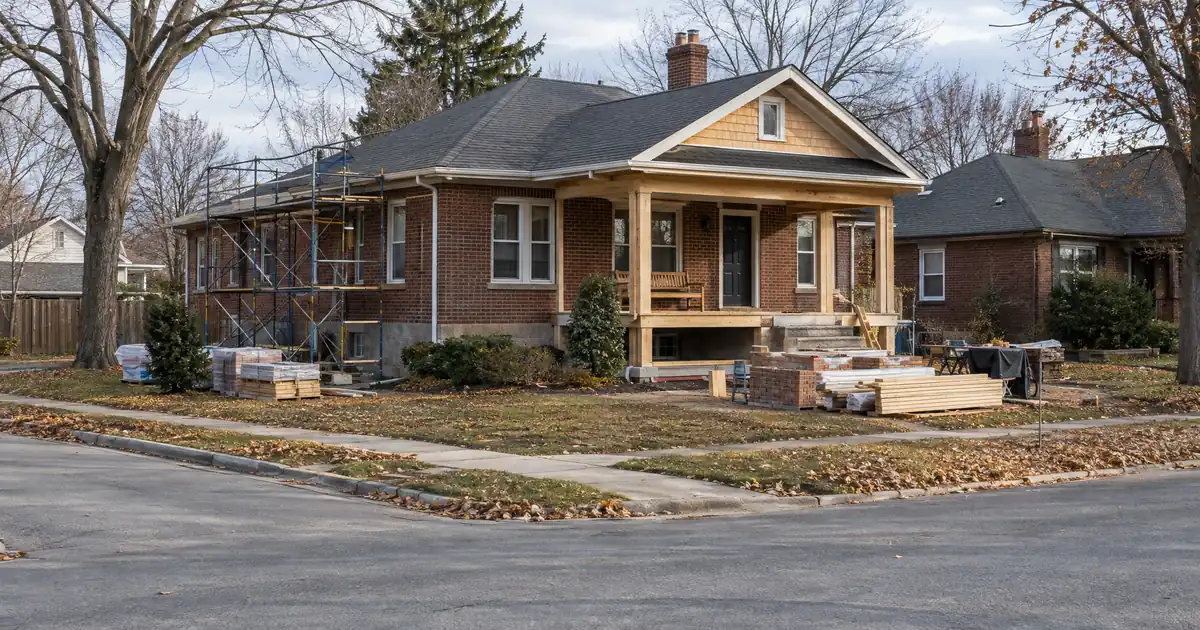
The Quick Read: Pick a single-close build loan when you want the permanent terms fixed before you break ground and you can accept one project-heavy approval; pick hard money followed by a DSCR refinance when you want flexibility during the build and can live with a second approval you do not hold until the unit is finished. A DSCR loan cannot pay for the build itself, because it measures rent from a finished, rentable property.
- Single-close means one approval and one closing, with permanent terms set before construction starts.
- Hard money, then DSCR means two approvals. The second one depends on how the finished ADU appraises and rents.
- DSCR (debt service coverage ratio) compares monthly rent to the full monthly housing payment. It needs a unit that can be rented.
- Entity and occupancy matter on both paths. A DSCR loan is for non-owner-occupied investment property.
Side-by-Side
The table below puts the two paths next to each other. The hard money and DSCR column reflects how select lenders in Lendmire’s wholesale network typically structure these loans. The single-close column shows published industry norms, which vary a lot by program. Every figure varies by lender, property, and experience, and nothing here is a commitment to lend.
What this loan actually costs to carry.
Hard money is sized against the project and priced by time. Enter the deal and see how much the program will lend, the cash required at closing, the carry while you hold it, and what is left at the exit.
Leverage tiers on the current program: 85% with fewer than 2, 90% with 2 or more, 93% with 5 or more completed projects — every tier capped at 75% of after-repair value. Loan amounts up to $5,000,000, larger by exception; terms of 6 to 18 months, interest-only, no prepayment penalty. The rehab portion funds in draws against completed work, not at closing.
Program parameters shown update from Lendmire’s centralized guideline source. Rate, points, and months are editable assumptions, not quoted terms.
Cost cap sets the loan · positive spread
Illustrative estimate only — not a quote, Loan Estimate, approval, or commitment to lend. Rate, points, and months are editable assumptions. Hard money is business-purpose financing for real estate investors, not a consumer mortgage. Leverage on the current program tops out at 93% of project cost for investors with a documented track record, capped at 75% of after-repair value, with rehab funding up to 100% of the documented budget released in draws; actual terms vary by lender, borrower experience, property, and exit. Lendmire is a mortgage broker, not a lender.
| Factor | Single-Close Build Loan | Hard Money, Then DSCR |
|---|---|---|
| Review basis | Project, budget, builder, borrower | Hard money: asset and exit. DSCR: rent vs. payment |
| Number of approvals | One | Two |
| Documentation | Plans, budget, contractor, draw schedule | Scope and budget, then CO, appraisal, insurance, title |
| Property types | Set by the specific program | Hard money 1-4 units; DSCR by program |
| Entity vesting | Often allowed; varies by program | LLC common on both loans; varies |
| Timeline | One continuous process; conversion at completion | Two phases; takeout starts after completion |
| Reserve expectations | Contingency and cash reserves vary | Liquidity weighed; DSCR commonly around 6 months of PITIA |
| Main risk | Terms fixed before costs are known | Takeout appraisal, rent, or maturity falls short |
PITIA is principal, interest, taxes, insurance, and association dues. It is the full monthly obligation that DSCR measures rent against. CO means certificate of occupancy, the sign-off that says the finished unit can legally be lived in.
Nothing in this table compares cost. Pricing lives in the calculator, and the structural differences are what decide most of these files.
How Each Path Works, Step by Step
A single-close loan funds the build and then converts to a permanent mortgage at completion. A hard money loan funds the build on its own, and a separate DSCR loan pays it off later. The first path has one underwriting event. The second has two, with different questions asked each time.
Single-close, in order:
1. You apply once. The lender reviews the plans, the budget, the builder, and you.
2. The loan closes before construction begins.
3. Money is released in draws, which are payments tied to completed work. Verification usually happens before each release.
4. At completion, the loan converts to permanent terms.
The agency world shows the shape of this structure. Fannie Mae’s Selling Guide describes construction and permanent financing closing together, with automatic conversion on completion. It also caps a single construction period at 12 months and the total at 18 months. Treat that as contrast only. Those are agency rules built around owner-occupied homes, and DSCR files do not follow them.
Hard money, then DSCR, in order:
1. A hard money lender funds the project. Underwriting weighs the collateral, the budget, your liquidity and experience, and the exit plan. Rent is not the test.
2. You build, pass inspections, and obtain the CO.
3. The unit is leased, or a market-rent appraisal supports its rent.
4. A DSCR lender runs a fresh file: appraisal, rent figure, credit, assets, and entity documents.
5. The new loan pays off the hard money loan at closing.
That lender’s appraisal sets the value, and your projected after-repair value (ARV) is only a plan.
Can a DSCR Loan Pay for the Build?
No. A DSCR loan is reviewed primarily on property-level rental income covering the payment, subject to lender guidelines. A half-built ADU has no rent to measure, so the test has nothing to work with.
That is why DSCR shows up as the takeout in this comparison. It is the permanent loan at the end of the two-step path.
Some non-QM products combine construction and a rental-style permanent loan. Whether one fits your project depends on the program and the property. Ask for the written guidelines before you assume it, and compare it with the two paths above. The rest of this article treats single-close as a general structure rather than a specific product.
When a Single-Close Build Loan Is the Better Fit
A single-close loan fits builders who value certainty over flexibility. You settle the permanent terms once, before construction starts, and you avoid a second approval at the finish line. That matters most when the plan is to hold the ADU for years and the budget is firm.
It tends to suit these situations:
- A build-to-hold plan with a tight scope. Plans are final, the contractor is chosen, and the budget has a cushion. Fixed terms reward that discipline.
- A borrower who worries about the takeout. Your credit, assets, or income profile could look different in the future. Settling the permanent loan up front removes that unknown.
- A first-time builder who wants one team. One lender manages the draws and the conversion, which means fewer parties to coordinate.
- A project with a realistic schedule. A single close needs a build that finishes close to plan, because the permanent phase rests on assumptions made at the start.
The tradeoffs are real. Terms are fixed before costs are known, so a scope change mid-build can be awkward. Leverage limits and lease-up requirements vary by program, so read them before you apply. You also have fewer lenders to compare, because you choose once.
Occupancy is the other filter. If you will live in the main house on the same lot, an owner-occupied construction-to-permanent loan may be the more natural category. Those loans follow conventional guidelines, not DSCR guidelines.
When Hard Money Then DSCR Is the Better Fit
Hard money followed by DSCR fits investors who want to shop the permanent loan after the unit exists. You trade certainty for flexibility. The build is financed on the strength of the project and your plan, and the long-term loan is chosen when you know the actual appraisal, rent, and completion date.
Across the network, the hard money side looks like this. On ground-up construction, leverage reaches up to 90% of project cost, capped at 75% of completed value, for borrowers with three or more completed projects. That tier is specific to construction. Fix-and-flip loans use their own tiers, which step up to 93% of project cost for the most experienced borrowers. Fewer completed projects mean lower leverage tiers. These are loan-to-cost figures, meaning a share of what the project costs, not a share of what the property is worth today. Terms run 6 to 18 months, interest-only, with no prepayment penalty. The credit floor is 620, with added conditions below 660. First-time investors qualify at the lower leverage tiers. Everything depends on lender, property, and experience.
On the takeout side, most DSCR programs want a score around 660, and 700 or more unlocks the strongest leverage tiers. A 620 floor exists in parts of the network. On a cash-out refinance of a standard rental, leverage tops out around 75% LTV, and about 6 months of seasoning is the common expectation. Seasoning is the waiting period a lender wants between buying or owning a property and refinancing it. Exact terms depend on the lender’s guidelines, property type, leverage, and a full review of the borrower’s file.
Coverage works like this. A coverage ratio of 1.00 is where many select programs start, and a stronger ratio opens better terms and leverage. A separate select-lender path takes coverage below 1.00, with leverage and terms adjusted. Reserves vary by lender, leverage, loan size, and transaction type. About 6 months of PITIA is common.
The two-step path suits you if:
- You are an experienced builder who can document completed projects, which unlocks the higher hard money tiers.
- You want the freedom to compare permanent lenders once the unit is finished.
- Your build may change scope, and you do not want terms locked before costs are clear.
- You plan to hold long term and want a rental loan sized to the finished unit’s rent.
An investor holding a finished ADU often refinances out of hard money into long-term DSCR financing. Lendmire brokers that path. For related detail, see Lendmire’s article Permitted ADU vs. Unpermitted ADU on a Hard Money Loan.
Where the Two-Step Path Breaks
The two-step path fails in predictable places: the appraisal comes in short, the hard money loan matures first, the rent does not cover the new payment, or the lender hesitates over the ADU’s legal status. Each one is manageable if you plan for it before the build starts.
The appraisal. The DSCR lender’s value sets the loan size, not your plan. Picture a modeled scenario where the ARV you used for the build came in higher than the DSCR appraisal. The new loan is a percentage of the lower value. The gap between that and the hard money payoff becomes cash you bring to the table. That is why you size the first loan around the second.
The maturity date. Hard money terms are short and the payoff date is a hard deadline. If construction runs over, the clock does not pause. The usual fallbacks are an extension, a payoff-only refinance, cash to close, or a sale. Seasoning and appraisal timing decide which is realistic. For help bridging leverage between the two loans, see Lendmire’s article Hard Money Leverage vs DSCR Cash-Out LTV: How to Close the Gap When You Refinance.
Payoff-only versus cash-out. A refinance that only pays off the bridge is often treated differently from one that pulls cash. Cash-out generally carries seasoning expectations, and the specifics differ by lender. Ask which category your file falls into before you plan the exit.
The rent test. Rent has to cover the payment on the new loan, not on the hard money loan. An ADU alone can fall short even when the combined property would clear the ratio. Whether the ADU rent can be added to the main house’s rent depends on the program. A modeled ADU might clear around 1.2x on its own, or sit in sub-1.00 territory. In that case a select-lender path below 1.00 may be available, with leverage and terms adjusted.
ADU legal status. Lenders and appraisers may ask whether the ADU was properly permitted and whether it can legally produce the projected income. Pull permits and final sign-off before you plan the takeout.
Appraisal forms. The appraisal will use a form that matches how the program counts units. Fannie Mae’s appraisal form list names Form 1004 for one-unit properties and Form 1007 as the rent schedule. The Form 1025 small income property report covers 2-4 units and includes a rent analysis. Which one applies to your ADU depends on the program’s unit-count treatment, so confirm it with your broker.
One more point deserves a plain statement. Clearing 1.00 is not the same as positive cash flow. DSCR compares rent to PITIA only. Repairs, vacancy, management, utilities, and capital expenses sit outside the calculation.
The Owner-Occupied Lot (Where Both Paths Get Tricky)
An ADU often sits behind a house the owner lives in. That makes the loan purpose the question, not the property type. DSCR loans are designed for non-owner-occupied investment properties. Because they are business-purpose investor loans, they are reviewed differently from a standard owner-occupied mortgage.
Lenders on both paths document purpose carefully. Whether a loan is primarily for a business purpose is decided case by case, so treatment of 1-4 unit rental improvements is not automatic. An LLC borrower fits both paths, subject to lender program eligibility, but the entity alone does not settle the purpose question.
If you plan to live on the lot, talk to a broker before you choose a path. Owner-occupied construction-to-permanent loans use conventional programs instead, and these are separate categories from DSCR.
Some property types are not offered at all in the network. DSCR is not offered on manufactured homes (single- or double-wide), log homes, or barndominiums.
Key Terms Defined
Single-close build loan: One loan and one closing that cover construction and the permanent mortgage, with automatic conversion at completion.
Hard money loan: A short-term, interest-only loan secured by the property, underwritten on the asset, the plan, and the exit rather than on rent.
DSCR: Monthly rent divided by the full monthly housing payment, used to judge whether a rental property supports its own loan.
PITIA: Principal, interest, taxes, insurance, and association dues combined.
Draw: A payment released to the builder after a specific piece of work is completed and verified.
ARV (after-repair value): Your estimate of what the property will be worth once the work is done. The lender’s appraisal decides the real number.
Certificate of occupancy (CO): The local sign-off that a finished building can legally be occupied.
Loan-to-cost: A loan sized as a percentage of what the project costs, not what the property is worth.
Seasoning: The waiting period a lender wants between two events, usually between buying a property and refinancing it.
Payoff-only refinance: A refinance that repays the existing loan and does not pull cash out.
A Balanced Verdict
Neither path is better in general. A single-close loan gives you certainty and one approval, but it locks terms before costs are known. Hard money then DSCR gives you flexibility and a chance to shop the permanent loan, but the second approval is not guaranteed when you break ground.
A simple way to decide:
- Choose single-close if the scope is fixed, the schedule is realistic, and certainty matters more than choice.
- Choose hard money then DSCR if you have experience, expect the plan to change, and can bring cash if the appraisal falls short.
- Choose neither yet if you will live on the same lot. Settle the occupancy question first.
A larger down payment or more equity can help the takeout, but it does not erase leverage caps, credit floors, reserve rules, or property eligibility. The strongest files clear both tests: enough equity and enough rental coverage.
If you are buying, rehabbing or refinancing an investment property on a short timeline and want to see how the numbers work, Lendmire can help you compare hard money options based on the project, the exit plan, leverage, and your goals. Its DSCR and hard money programs cover 41 markets, including Washington, D.C. For the full picture on how the takeout loan works, read the complete DSCR loans guide.
The ADU that pencils out on paper is rarely the one that stalls at the end. It is the one whose builder checked the takeout before pouring the slab.
Frequently Asked Questions
Can a DSCR loan fund the construction of an ADU?
No. A DSCR loan is reviewed on rent from a finished, rentable property, and a unit under construction produces none. DSCR works as the permanent loan after completion. Some non-QM programs combine construction and a rental-style permanent loan, so ask for written guidelines on any product that claims to do both.
Can I refinance hard money into DSCR before the ADU is rented?
It depends on the program. Some DSCR lenders rely on market rent from the appraisal rather than a signed lease, and others want a lease in place. For a cash-out refinance, about 6 months of seasoning is the common expectation across the network. Confirm both points before you commit to a hard money maturity date.
Does ADU rent count toward DSCR?
Sometimes. Whether ADU rent counts alone, or adds to the main house’s rent, depends on the program and on how it treats unit count. Permit status can matter too, because a lender may want proof the ADU can legally produce income.
What happens if the hard money loan matures before the DSCR loan closes?
You typically have four options: an extension, a payoff-only refinance, cash to close, or a sale. Which one works depends on seasoning, appraisal timing, and what the lender will accept. Planning an exit before the build starts keeps the choice from being forced.
What if the DSCR appraisal comes in below my ARV?
The new loan is sized off the lower value, so the gap between the loan and the hard money payoff becomes your cash to bring. A larger down payment or reserve cushion can help, but it does not override leverage caps or other program rules. Run the takeout at a conservative value before you size the first loan.
About Lendmire
Lendmire is a non-QM mortgage brokerage (NMLS# 2371349) arranging DSCR investor loans in 41 markets, including Washington, D.C., through wholesale and investor-lending channels. DSCR loans are evaluated by the lender on rental income rather than personal income, subject to lender guidelines — a fit for LLC-owned portfolios, self-employed investors, and operators scaling beyond conventional loan caps. Recognized as a Scotsman Guide Top Mortgage Workplace in 2025 and 2026.
Get Started
Ready to find the right loan for you?
In about 30 seconds you can review financing options available for your investment property. No commitment required.
Informational only. Not a Loan Estimate, approval, or commitment to lend. Program availability and eligibility are subject to lender guidelines, credit approval, property review, and underwriting.
References
1. Fannie Mae Selling Guide, single-closing construction-to-permanent transactions
2. Fannie Mae Selling Guide B4-1.2-01
3. Realvals, real estate appraisal forms
This article is part of Lendmire’s hard money loan program — full qualification details, guidelines, and scenarios live on the program page.
Related reading: Hard Money Loan Repayment Requirements With a DSCR Refinance · DSCR Loan Sizing Limits for a Rehabber’s First Hard Money Payoff · Hard Money to DSCR Seasoning Rules After a Flip
Brandon Miller
Founder & CEO, Mortgage Loan Originator, Lendmire LLC
- Mortgage Loan Originator · NMLS# 1129696 · Verify on NMLS Consumer Access
- North Carolina Real Estate Broker · License# 343312 · Verify on NCREC
- North Carolina Insurance Producer · License# 19053198 · Property, Casualty, Life, Health · Verify on NAIC SBS
- Lendmire LLC · Firm NMLS# 2371349 · Verify firm licensure
Disclosures. The information presented in this article is general market commentary, not financial, legal, or tax advice. Lendmire is a mortgage brokerage (NMLS# 2371349) — not a direct lender or depository institution — and loan placement is subject to lender underwriting. Nothing in this content represents a commitment to lend. Loan terms, pricing, and program availability vary based on borrower qualifications, property characteristics, and state of subject property, and are subject to change at any time. Lendmire complies with Equal Housing Opportunity requirements. Consumer access: nmlsconsumeraccess.org.