
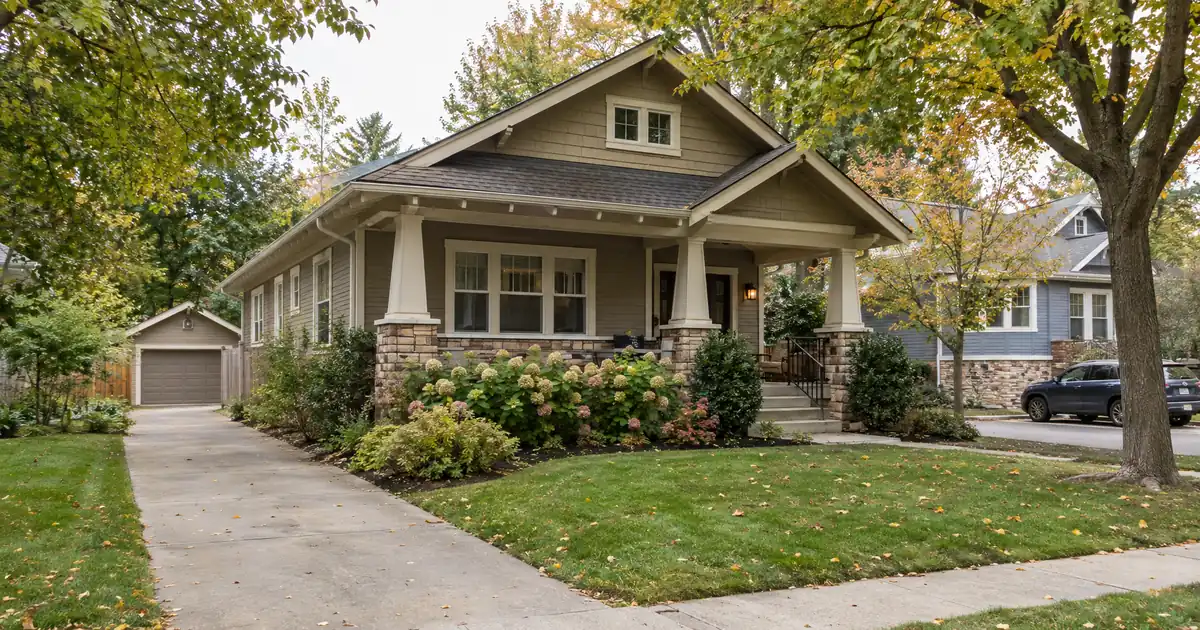
The Quick Read: The appraisal, or the valuation standing in for one, fixes your home’s value. A combined loan-to-value cap then turns that value into a borrowing limit: value times the cap, minus your first mortgage. On a new build, that value can land below your contract price, which shrinks the line before you draw a dollar.
- Value is the denominator. Your line is sized off appraised value, not what you paid and not what you owe.
- New builds carry price padding. Lot premiums, design-center upgrades, and builder incentives often fail to show up in comparable sales.
- Purchases use the lower number. Lenders commonly cap value at the lesser of price or appraised value until some seasoning window passes. That window is lender policy.
- Your traditional employment income is a separate test. The appraisal sets how much equity exists. Income and debt-to-income decide whether you qualify to borrow against it.
- Not every line gets a full appraisal. On the network Lendmire places files with, lines at or below $500,000 ordinarily run an automated valuation instead.
How Does an Appraisal Turn Into HELOC Equity?
Equity is value minus what you owe. A lender then lets you borrow up to a set percentage of value across all liens, and that percentage is the combined loan-to-value ratio, or CLTV. The line is whatever room is left under the cap after your first mortgage.
How large a line the equity supports.
An equity line is sized by combined loan-to-value, occupancy, and credit — not by rental coverage. Switch the occupancy or the credit band and the ceiling moves with it.
Investment-property lines require a 700 minimum credit score; second-home lines start at a 640 minimum and primary-residence lines at 600, and the combined-LTV ceiling steps down as the credit band drops on primary-residence and second-home lines and holds on investment-property lines; the line cap steps down on primary-residence lines and holds at every tier on investment-property and second-home lines.
A debt-to-income ratio above 45% requires 680+ credit. Profiles under 640 are limited to single-family homes. At least 75% of the approved line is drawn at closing. Ceilings, floors, and caps update from Lendmire’s centralized guideline source.
Line estimate
Illustrative estimate only — not a quote, Loan Estimate, approval, or commitment to lend. The rate is an editable assumption; equity-line pricing is variable through both the draw and repayment periods and never converts to fixed. Occupancy and credit drive the ceiling together: an investment property tops out at 70% combined LTV (minimum credit 700, line cap $500,000); a second home tops out at 90% combined LTV (minimum credit 640, line cap $500,000), with the ceiling stepping down as the credit band drops (the cap holds at every tier); a primary residence tops out at 90% combined LTV (minimum credit 600), and its $750,000 maximum line is available only at 75% combined LTV or below with a 700-or-better credit profile (720 on the longer-runway program) and a full appraisal. Lines above $500,000 require a full appraisal. Credit, debt-to-income, property type, and full underwriting review all affect the final line.
The formula is short: (appraised value × CLTV cap) − first-mortgage balance = maximum new line. The CFPB’s HELOC booklet describes the same approach. Many lenders take a percentage of appraised value and subtract the existing mortgage balance. The booklet also notes that lenders weigh your ability to repay, which brings in income, debts, and credit history.
Value does all the heavy lifting here. A small miss in value gets multiplied by the cap, while your mortgage balance stays fixed.
Why Is a New Build Different?
A new build is different because its contract price is set by a builder, not by a market of resale comparables. That price can include a lot premium, upgrades picked at a design center, and incentives such as closing-cost help. Appraisers can only support value with sales that actually closed nearby.
Several things push a new-build appraisal below the sticker price:
- Few comparable sales. A young subdivision has few closings. Appraisers lean on competing new developments and the cost approach, as one appraisal firm’s explainer describes.
- Builder concessions. Incentives embedded in the price have to be identified in the comps and adjusted out to reach true market value. If you got a buydown or free upgrades, the “effective price” is lower than the contract price.
- Premiums that comps do not support. Lot premiums and upgrades often cost more than a buyer in the next phase would pay for them.
- Thin data for automated models. An automated valuation needs recent nearby sales to work. A new subdivision gives it little to chew on.
The reverse can happen too. A new build may appraise at or above price once several phases have closed and the comparable pool deepens. Even then, a lender may limit your value to the purchase price until its seasoning window passes.
What Does the Lender Use: Price or Value?
On a recent purchase, lenders generally use the lesser of the purchase price and the appraised value. For a brief contrast, the agency selling guide for conventional loans uses the same lesser-of rule for CLTV.
Here is the practical result. If you signed high and the appraisal came in low, you are capped at the low number. If the appraisal came in high, a lender may still cap you at price until enough time has passed.
How long that window lasts depends on the lender. An investor forum thread shows one lender holding a line to purchase price for the first 12 months despite a higher later appraisal. That is one borrower’s story, not a rule. Across a wholesale network, policies differ file to file, and your loan officer should ask before you order anything.
A Worked Example: From Price to Line
Run the numbers on a modeled new build. Call the contract price 100 points, so every figure below is a share of price rather than a dollar amount. Assume a primary residence, an 85% CLTV cap, and a first mortgage already closed at 78 points. These are illustrative assumptions, not market data.
| Scenario | Value used | Total debt allowed at 85% | Room for the line |
|---|---|---|---|
| Valuation equals price | 100 | 85.0 | 7.0 |
| Valuation 3% above price, lender uses lesser of the two | 100 | 85.0 | 7.0 |
| Valuation 6% below price | 94 | 79.9 | 1.9 |
The last row is the lesson. A 6% shortfall in value cut the room by about three quarters. The cap multiplies the miss, and the mortgage balance does not move.
Now consider the cap itself. Bankrate reports that most lenders across the broader market require 20% equity to remain in the home, though some allow 15%. On our network, caps depend on occupancy and credit. On a primary residence, a 720 or better profile can reach 90% CLTV on lines up to $500,000. A 700 profile reaches 85% CLTV up to $500,000, and a 640 profile reaches 80%. Second homes run lower tiers. On an investment property, the ceiling is 70% CLTV. Every figure is subject to lender guidelines and full file review.
Will a Full Appraisal Even Be Ordered?
Often it will not. Valuation method is the first thing that changes your answer. Finder explains that lenders choose among full appraisals, drive-bys, desktop reviews, and automated valuations, depending on loan size and policy. “No appraisal” never means no valuation.
| Valuation type | What it is | New-build fit |
|---|---|---|
| Full appraisal | Appraiser visits and inspects | Strongest on thin comps |
| Drive-by | Exterior look only | Fair, if comps exist |
| Desktop | Appraiser works from data | Limited on new subdivisions |
| Automated (AVM) | Model run on recent sales | Weakest where few homes have sold |
On the network, lines at or below $500,000 ordinarily run an automated valuation, though a higher CLTV may trigger a secondary valuation. A full appraisal is required on every line above $500,000. You can also request one in any case. On a new build with few closings, requesting a full appraisal can be worth the fee when you are borrowing near the cap. Availability here covers Lendmire’s 16 full-service states only, narrower than its DSCR footprint.
Can You Reuse the Builder-Closing Appraisal?
Sometimes. If you bought recently, some lenders reuse the purchase appraisal or the purchase price instead of ordering a new valuation. On a new build, that earlier appraisal already carries the comparable-sales problems described above.
Your decision comes down to a few questions:
- How recent is it? An older valuation gives the lender less comfort that value held.
- Did anything change? A finished basement or landscaping after closing may support a higher value, depending on comps and underwriter review.
- Does the lender allow it? Reuse is lender discretion, not an entitlement.
If your purchase appraisal is flattering and the lender will use it, that may be your strongest path. If it was low, a fresh valuation after more nearby closings can help.
What Does the Appraiser Check on a Finished New Home?
On a completed new build, the appraiser looks at what is actually finished and what comps support. Here is the checklist that usually matters:
- Certificate of occupancy and completion of the main structure.
- Finished landscaping, driveway, and grading.
- Open punch-list items or unfinished areas such as a basement or bonus room.
- Upgrades and whether nearby sales reflect them.
- Which comps are used: other new builds, resales, or a mix.
Open items can hold value down. Closing the punch list before the valuation is a cheap fix that many owners skip.
Where Does Your W-2 Income Fit?
The appraisal answers how much equity exists. Your income answers whether you can borrow against it. They are separate tests, and a strong valuation does not rescue weak income.
For a W-2 homeowner, expect to document pay stubs, W-2s, and employment. Across our wholesale network, maximum debt-to-income is 50%, and 45% for credit profiles from 600 to 679. A ratio above 45% requires at least a 680 score. The qualifying payment is calculated on the interest-only amount for the maximum draw, so a bigger line raises the bar even if you never use it all. Credit comes from a single-bureau score keyed to the primary wage earner. The program floor is 600, and an investment line requires at least 700.
A line above $500,000 is primary-residence only. It needs 700 or better (720 on the longer-runway structure), caps at 75% CLTV, and requires a full appraisal. Most new-build owners will not be near that size.
What If the Appraisal Comes in Low?
Start by learning why it came in low. Then pick the option that fits.
1. Request reconsideration. If the appraisal has factual errors or missed relevant comps, submit better sales with the reasons they fit.
2. Wait for comps to deepen. More closings in later phases can support a higher value on a later valuation.
3. Order a full appraisal. If you started with an automated value, a human appraiser may see more.
4. Resize the line. Borrow to the cap the valuation supports.
5. Pause. Sometimes the right call is to wait rather than borrow against a low number.
The same logic applies at purchase. If the appraisal is below contract, the first lender finances only up to appraised value, and that low number then flows through to any later line.
A related risk sits on the other side. Lenders can freeze or reduce a line if value drops or your finances change, which the CFPB brochure notes.
What About a Home Still Under Construction?
An unfinished home is hard to value, because comparables describe finished homes. Most lenders wait for completion and a certificate of occupancy before sizing a line. Borrowing against your current home to fund a new one is a different transaction, with its own valuation.
What Does This Mean If the Money Funds a Rental?
Plenty of W-2 owners use a line as down-payment or reserve capital for a rental. The appraisal sets the size of that pool, so a low new-build valuation directly shrinks your next purchase.
A line adds a second lien and a monthly obligation to your debt-to-income. A DSCR loan then underwrites the rental itself. It compares rent to the full monthly obligation of principal, interest, taxes, insurance, and any HOA dues, and it qualifies primarily on property-level rental income covering the payment, subject to lender guidelines. Clearing 1.00 is where select programs start, but it is not positive cash flow, since repairs, vacancy, and management sit outside the calculation. Reserves and liquidity still matter. Walk through the details in the complete DSCR loans guide.
Sequence the two steps early. If you borrow against the new build and then buy the rental, both files see the other.
Equity pulled through a line is borrowed money, and your home is the collateral.
Key Terms Defined
Appraised value: The estimate of what your home would sell for, based on comparable sales and the home’s features.
CLTV (combined loan-to-value): Your first mortgage plus the new line, divided by the home’s value.
HCLTV: A version of CLTV that counts the full line limit, not just the amount you have drawn.
Seasoning: The waiting period a lender wants after purchase before it will rely on a new value. It is lender policy, not a regulation.
AVM (automated valuation model): A software estimate of value built from recent sales data, with no human visit.
Builder concession: A price break such as closing-cost help or free upgrades that lowers a home’s effective price.
Next Step
If you are considering a home equity line and want to see how the numbers work, Lendmire can help you compare HELOC options based on the property, the equity available, credit profile, combined leverage, and your goals. Reach the team at 828-256-2183 or request a quote.
Frequently Asked Questions
Can a lender use my builder’s closing appraisal instead of ordering a new one?
Some will, especially on a recent purchase, but it is lender discretion. If the purchase appraisal was low, a fresh valuation after more nearby sales may help. If it was high, a lender may still cap value at price until its seasoning window passes.
Does “no appraisal” mean my home is not valued?
No. Some valuation always happens, whether that is an automated model, a prior appraisal, or the purchase appraisal. On our network, lines at or below $500,000 ordinarily use an automated valuation, and you can request a full appraisal instead.
Will my pay stubs change what the appraisal says?
No. The appraiser values the house, not the borrower. Your traditional employment income, debt-to-income, and credit decide eligibility after the value is known.
What if my new build appraises below the price I paid?
The lender uses the lower number for sizing the line. You can challenge errors, wait for comps to deepen, order a full appraisal, or accept a smaller line.
Do second homes and investment properties follow the same caps?
No. The network’s ceilings depend on occupancy. A primary residence reaches 90% CLTV only with a 720 or better profile. A second home also reaches 90% CLTV only at 720 or better. An investment line tops out at 70% CLTV with a 700 minimum. Every figure is subject to lender guidelines.
For current guidelines and terms, see Lendmire’s HELOC programs page.
About Lendmire
Lendmire (NMLS# 2371349) is a mortgage brokerage serving homeowners and real estate investors in its 16 full-service states. Home equity lines of credit are arranged through wholesale lending channels; Lendmire brokers the line and the lender underwrites each application under its occupancy-based guidelines. Scotsman Guide named Lendmire a Top Mortgage Workplace in both 2025 and 2026.
Get Started
Ready to find the right loan for you?
In about 30 seconds you can review financing options available for your home or investment property. No commitment required.
Informational only. Not a Loan Estimate, approval, or commitment to lend. Program availability and eligibility are subject to lender guidelines, credit approval, property review, and underwriting.
References
2. Class Valuation new construction appraisals
3. Fannie Mae Selling Guide, CLTV ratios
4. BiggerPockets forum: HELOC after purchase
5. Bankrate, HELOC requirements
6. Finder, HELOC appraisal explainer
This article is part of Lendmire’s home equity line of credit program — full qualification details, guidelines, and scenarios live on the program page.
Related reading: How to Respond to a Low DSCR Appraisal on a Rehab Exit · How a DSCR Lender Prices the Release of a High-Equity House · DSCR Loan Appraisal and Expense Requirements for a 10-Unit Building
Brandon Miller
Founder & CEO, Mortgage Loan Originator, Lendmire LLC
- Mortgage Loan Originator · NMLS# 1129696 · Verify on NMLS Consumer Access
- North Carolina Real Estate Broker · License# 343312 · Verify on NCREC
- North Carolina Insurance Producer · License# 19053198 · Property, Casualty, Life, Health · Verify on NAIC SBS
- Lendmire LLC · Firm NMLS# 2371349 · Verify firm licensure
Required disclosures. Lendmire (NMLS# 2371349) operates as a licensed mortgage broker, not a direct lender or depository. The discussion in this article is general in nature and should not be relied upon as financial, legal, or tax advice — every investment scenario is unique and should be reviewed by a qualified professional. Any loan inquiry is subject to lender underwriting, and this article is not a commitment to lend or a guarantee of approval. Mortgage rates, loan terms, and program guidelines vary by borrower, property, and state, and may change without notice. Equal Housing Opportunity. Verify licensure at NMLS Consumer Access.