
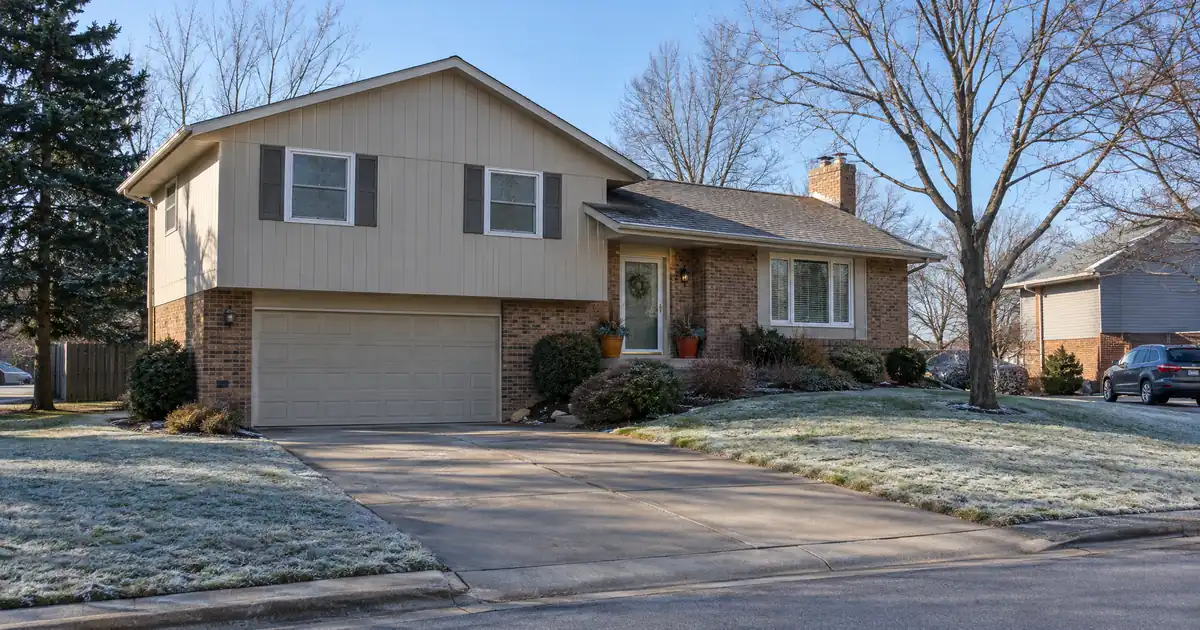
The Quick Read: A falling home value cuts nothing from a line once the draw period is over: the balance you owe and the repayment schedule stay the same. The draw is already closed, so there is no new borrowing left to freeze or limit. What the drop hurts is your room to refinance, sell, or replace the line.
- Freezes and limit cuts target new borrowing. After the draw closes, almost nothing is left for them to touch.
- A lower value does not change what you owe, your repayment schedule, or the lien on the property.
- The real exposure is combined leverage at exit. A thinner equity cushion makes a refinance or sale harder.
- On Lendmire’s network, an investment-property equity line tops out at 70% CLTV, so a thin cushion matters more there.
- A balloon plan is a contract date, not a value-based trigger. Plan the exit before that date arrives.
Does a Value Drop Cut a HELOC Once Draws Are Over?
Usually not. A line of credit has two phases. In the draw period you can borrow, repay, and borrow again. In the repayment period you pay the balance down and borrowing stops.
How large a line the equity supports.
An equity line is sized by combined loan-to-value, occupancy, and credit — not by rental coverage. Switch the occupancy or the credit band and the ceiling moves with it.
Investment-property lines require a 700 minimum credit score; second-home lines start at a 640 minimum and primary-residence lines at 600, and the combined-LTV ceiling steps down as the credit band drops on primary-residence and second-home lines and holds on investment-property lines; the line cap steps down on primary-residence lines and holds at every tier on investment-property and second-home lines.
A debt-to-income ratio above 45% requires 680+ credit. Profiles under 640 are limited to single-family homes. At least 75% of the approved line is drawn at closing. Ceilings, floors, and caps update from Lendmire’s centralized guideline source.
Line estimate
Illustrative estimate only — not a quote, Loan Estimate, approval, or commitment to lend. The rate is an editable assumption; equity-line pricing is variable through both the draw and repayment periods and never converts to fixed. Occupancy and credit drive the ceiling together: an investment property tops out at 70% combined LTV (minimum credit 700, line cap $500,000); a second home tops out at 90% combined LTV (minimum credit 640, line cap $500,000), with the ceiling stepping down as the credit band drops (the cap holds at every tier); a primary residence tops out at 90% combined LTV (minimum credit 600), and its $750,000 maximum line is available only at 75% combined LTV or below with a 700-or-better credit profile (720 on the longer-runway program) and a full appraisal. Lines above $500,000 require a full appraisal. Credit, debt-to-income, property type, and full underwriting review all affect the final line.
A lender’s power to react to a falling value is built around that first phase. The tools are simple: stop new draws, or lower the limit. Both protect the lender from lending more against a shrinking asset. Once the draw has ended, you are not borrowing more. There is nothing to stop and nothing to lower.
Picture an investor in year eight of a line with a fully drawn balance. The local market softens. The lender’s valuation says the property is worth less than at opening. Your payment schedule does not change because of that. Your balance does not change. The lien does not change.
That feels like good news. It is mostly good news. Here’s the catch: the value drop is still sitting there, waiting for the day you need to refinance, sell, or pay off a balloon. That is where it bites.
One honest gap. Federal rules do not spell out a separate repayment-phase freeze for a value decline, and they do not say a lender has no remedy at all. Default and acceleration terms still live in your agreement, so read it.
Key Terms Defined
HELOC: A home equity line of credit, a revolving loan secured by a property that lets you borrow up to a limit.
Draw period: The stretch when you can borrow from the line, usually with interest-only payments.
Repayment period: The stretch after the draw ends, when borrowing stops and the balance gets paid down.
CLTV: Combined loan-to-value, which adds every loan on the property together and divides by its value.
Equity cushion: The gap between what the property is worth and what is owed against it.
Freeze: A lender stopping new draws on the line while leaving the balance and terms in place.
Balloon payment: A large final payment that clears the whole remaining balance at once.
Seasoning: The waiting period a lender wants between buying or refinancing a property and the next financing event.
What Does a Value Drop Change in Each Phase?
It changes a lot in the draw phase and very little in repayment, apart from your exit options. The table lays out the split. Think of repayment as the phase where the lender already has what it needs: a balance, a lien, and a schedule.
| Item | Draw phase | Repayment phase |
|---|---|---|
| New draws | Can be frozen | Already closed |
| Credit limit | Can be lowered | Little left to lower |
| Balance owed | Unchanged | Unchanged |
| Payment | Set by agreement | Set by agreement, may float |
| Exit options | Equity still open | Shrink with the value |
Notice the middle row. A freeze or a reduction never rewrites what you owe. Experian’s explainer on freezes and reductions describes the result as either no draws or a smaller limit to draw from. Your existing debt stays exactly where it was.
When Does a Drop Count as “Significant”?
Federal rules let a lender stop new draws or lower a limit only when the home’s value falls significantly below its appraised value for the plan. The rule does not define “significant,” and a lender cannot freeze a line for an insignificant decline. The CFPB’s home equity rule text and commentary say the contract cannot give the lender that power for a small dip. The same commentary says a lender may take actions short of terminating the plan or calling the balance, such as suspending advances or reducing the limit.
There is one clear yardstick. A lender can treat a decline as significant when it cuts the gap between the line’s original limit and the available equity by half, according to Compliance Alliance’s review of these freezes. Anything short of that is judged case by case.
People misread this constantly. It is not a 50% drop in the home’s price. It is a 50% cut in the cushion. Because cushions are thin, a modest price drop can do it.
Run the numbers this way. These are modeled assumptions, simplified from the safe-harbor test, not market data. Say combined loans on a property equal 70% of its value at opening. The cushion is 30 points of value. A 15% price drop leaves the cushion at 15 points, which is half.
| Combined loans at opening | Drop that halves the cushion | Combined leverage after |
|---|---|---|
| 60% of value | 20% | 75% |
| 70% of value | 15% | about 82% |
| 80% of value | 10% | about 89% |
The thinner your cushion, the smaller the drop that matters. The highest-leverage borrower hits the test with only a 10% price decline. (That is also the borrower with the least room at exit.)
Where the Value Drop Actually Bites: The Exit
The damage shows up when you try to replace the line. A refinance sizes the new loan on the new value. A lower value means smaller proceeds, and that is true even if you owe exactly the same amount.
Back to the 70% example. After a 15% drop, those same loans equal about 82% of the new value. That is above the roughly 75% ceiling most DSCR cash-out refinances use on a standard rental across Lendmire’s network, and above the 70% CLTV ceiling on an investment-property equity line. Either way, you would need to bring cash to the table, change the plan, or wait for recovery. A 10% drop on the same 70% starting point lands near 78%. Closer, still over.
A DSCR cash-out refinance qualifies primarily on property-level rental income covering the payment, subject to lender guidelines. DSCR loans are designed for non-owner-occupied investment properties. Because they are business-purpose investor loans, they are reviewed differently from a standard owner-occupied mortgage. Many files also expect about six months of seasoning on the property. Reserves vary by lender, leverage, and loan size, and commonly run around six months of PITIA (principal, interest, taxes, insurance, and association dues). The complete DSCR loans guide covers the full set of requirements.
Two cautions belong here.
First, clearing 1.00 on the coverage ratio is not the same as positive cash flow. The ratio compares rent to the monthly housing payment only. Repairs, vacancy, management, utilities, and capital expenses sit outside it. Coverage of 1.00 is where select programs start. A separate select-lender path goes below 1.00, with leverage and terms adjusted. Stronger ratios open better pricing and higher leverage.
Second, a DSCR loan on a rental will not retire a HELOC on your own home unless the rental secures that HELOC. The collateral has to match. Plenty of investors discover this the hard way, usually near a balloon date.
Payment Shock Is the Other Half of the Story
Value is one risk. The payment is the other, and the two compound each other.
During the draw, many lines are interest-only. Repayment adds principal. Experian notes that many borrowers see payments more than double compared with the interest-only stage. Rent on a rental does not rise to match. On a rental, that squeezes the cash you actually keep, even though the property’s coverage story looks fine on paper.
Lines are also generally variable, so the payment can keep floating in repayment. The CFPB’s HELOC brochure describes two repayment outcomes. The lender sets a schedule to repay the full amount, often over ten or 15 years. Or the whole balance is due at once as a balloon, and you have to cover it by refinancing, borrowing elsewhere, or other means. For the size of that jump, see Lendmire’s piece How Much a HELOC Payment Jumps When the Draw Period Ends.
The stacked risk looks like this. Payments rise, equity thins, and the refinance you were counting on gets harder. Each problem alone is manageable. Together, they are how people end up scrambling.
Edge Cases Where the General Rule Bends
Balloon plans. A value drop does not trigger a balloon. The date does. But the drop shrinks the equity available to refinance it, which is the real exposure. Refinancing before the balloon date beats waiting for the moment equity is thinnest.
Amortizing plans. The balance pays down on schedule. A lower value does not change the payment. A moving index can, if the plan stays variable.
Calling the whole balance due. A lower value alone is not a listed event. Acceleration generally needs something in the agreement, such as default. A freeze and a call are separate tracks.
Disputed valuations. If a lender acted on an automated estimate, a full appraisal can challenge it. A lender may not know about improvements that raised the value. Lendmire’s piece How Much a Value Drop Cuts a HELOC Limit and What an Appraisal Fixes covers that fight.
Underwater stacks. If combined balances exceed the new value, any replacement loan needs cash-in, a different strategy, or a recovery. Selling also gets harder, because the sale has to pay every lien.
Reinstatement. A frozen line should be restored once the cause ends. That matters mainly during the draw, though, so it rarely helps a borrower in repayment.
Title. On Lendmire’s network, equity lines must be held by an individual or a revocable living trust. A property already deeded to an LLC needs a vesting change or a DSCR cash-out instead. DSCR loans can be made to LLC-titled borrowers, subject to lender program eligibility.
How Equity Lines Work on Lendmire’s Network
Lendmire is a DSCR-focused mortgage broker that arranges equity lines through select wholesale partners. It never lends the money itself. Its DSCR investor loans cover 40 states plus Washington, D.C., but equity lines are narrower, available only in Lendmire’s 16 full-service states. Every figure below is subject to lender guidelines and full file review.
- Investment property: a ceiling of 70% CLTV, up to $500,000, with a 700 credit minimum. Investment lines use a 5-year interest-only draw followed by a 25-year fully amortizing repayment.
- Primary residence and second home: ceilings reach 90% CLTV, but only with a 720 or better credit profile. A line above $500,000 is primary-residence only and needs 700 or better (720 on the 5-year draw / 25-year repayment structure). It also caps at 75% CLTV and needs a full appraisal.
- Draw structures: primary and second-home lines offer a 3-year draw with a 17-year repayment, or the 5-year draw with a 25-year repayment. At least 75% of the line is drawn at closing. Pricing floats through both the draw and repayment periods and never converts to fixed.
- Valuation: lines at or below $500,000 ordinarily use an automated valuation. A borrower can request a full appraisal in any case.
Since the pricing never fixes, repayment-phase payments can keep moving. That is worth knowing before you pick the longer or shorter structure.
Across the wholesale network, files with an approaching balloon often arrive with more balance than the borrower expected and less equity than the original appraisal implied. The stronger files start the exit plan well before the deadline, and they have a current valuation in hand before the lender asks.
What to Do, in Order
1. Read the agreement. Find the draw end date, the repayment term, any balloon clause, the index, and the lender’s reserved freeze rights.
2. Pull the numbers. Get the payoff statement, senior-lien balances, and the original appraisal.
3. Get a current value. An appraisal beats an estimate when the stakes are real.
4. Compute combined leverage. Add every lien and divide by the new value. Compare the result to the ceiling of the product you hope to use.
5. Decide the exit. Refinance, sell, pay down, or ask the lender whether extending or restructuring is on the table. That last one is the lender’s call.
6. Move before the balloon date, not after.
Whether to pay down principal early is a genuine toss-up for some borrowers. Paying down principal early improves the cushion for a refinance, but it drains cash you might need for reserves. There is no universal answer. It depends on how thin the cushion is and how soon the date arrives.
Frequently Asked Questions
Can a lender lower my HELOC limit after the draw period ends?
Generally there is very little left to lower, because the line is closed to new borrowing. The value-decline power in federal rules is aimed at advances and limits. It is not a license to change what you owe. Your agreement still governs default and acceleration, so check those clauses.
How far does my home value have to fall before a freeze is allowed?
There is no single number. The one clear yardstick is a 50% cut in the cushion between the line’s original limit and available equity. A 15% price drop does that when combined loans start near 70% of value. Smaller drops can still count, but the lender has to justify them case by case.
Does a lower value raise my payment in repayment?
Not by itself. Payments rise because principal begins to amortize and because a variable index can move. The value only matters when you try to refinance or sell.
Can a DSCR cash-out refinance pay off my HELOC if the value fell?
Only if the rental secures the HELOC. The new loan is sized on the new value, and cash-out tops out around 75% LTV across most of the network on standard rentals. Seasoning of about six months is the common expectation. If your combined balances sit above that line, you would need to bring cash or wait. Terms vary by lender guidelines, property type, leverage, credit profile, and full file review.
What if I’m underwater when the balloon comes due?
You have three paths: bring cash to close the gap, wait for a recovery if the lender allows it, or ask about extending or restructuring. None is guaranteed. Starting the conversation before the due date gives you more options than starting after.
Next Step
If you are considering a home equity line and want to see how the numbers work, Lendmire can help you compare HELOC options based on the property, the equity available, credit profile, combined leverage, and your goals. Reach the team at 828-256-2183.
About Lendmire
Lendmire (NMLS# 2371349) is a mortgage brokerage serving homeowners and real estate investors in its 16 full-service states. Home equity lines of credit are arranged through wholesale lending channels; Lendmire brokers the line and the lender underwrites each application under its occupancy-based guidelines. Scotsman Guide named Lendmire a Top Mortgage Workplace in both 2025 and 2026.
Get Started
Ready to find the right loan for you?
In about 30 seconds you can review financing options available for your home or investment property. No commitment required.
Informational only. Not a Loan Estimate, approval, or commitment to lend. Program availability and eligibility are subject to lender guidelines, credit approval, property review, and underwriting.
References
1. Experian, what a HELOC freeze or reduction is
2. CFPB, home equity plan rule and commentary
3. Compliance Alliance, review of HELOC freezes
4. Experian, what a draw period is
This article is part of Lendmire’s home equity line of credit program — full qualification details, guidelines, and scenarios live on the program page.
Related reading: Two Airbnb Cabins In vs Out of a Six-House Portfolio Cash-Out · How a High-Volume Flipper Nets Out Hard Money Costs per Deal · DSCR Substitution vs Release and Add for Upgrading a Low-Value House
Brandon Miller
Founder & CEO, Mortgage Loan Originator, Lendmire LLC
- Mortgage Loan Originator · NMLS# 1129696 · Verify on NMLS Consumer Access
- North Carolina Real Estate Broker · License# 343312 · Verify on NCREC
- North Carolina Insurance Producer · License# 19053198 · Property, Casualty, Life, Health · Verify on NAIC SBS
- Lendmire LLC · Firm NMLS# 2371349 · Verify firm licensure
Legal disclosures. Lendmire (NMLS# 2371349) is a state-licensed mortgage brokerage that arranges financing through wholesale lender relationships. Lendmire is not a direct lender, depository institution, or registered financial advisor. The discussion above is general informational content about real estate financing — it is not financial, legal, or tax advice, and readers should consult licensed professionals for guidance on their individual circumstances. Loan inquiries are subject to lender underwriting; this article does not represent a commitment to lend. Loan terms, rates, and qualification standards vary by borrower, property, and state, and are subject to change at any time. Equal Housing Opportunity. NMLS Consumer Access: nmlsconsumeraccess.org.