
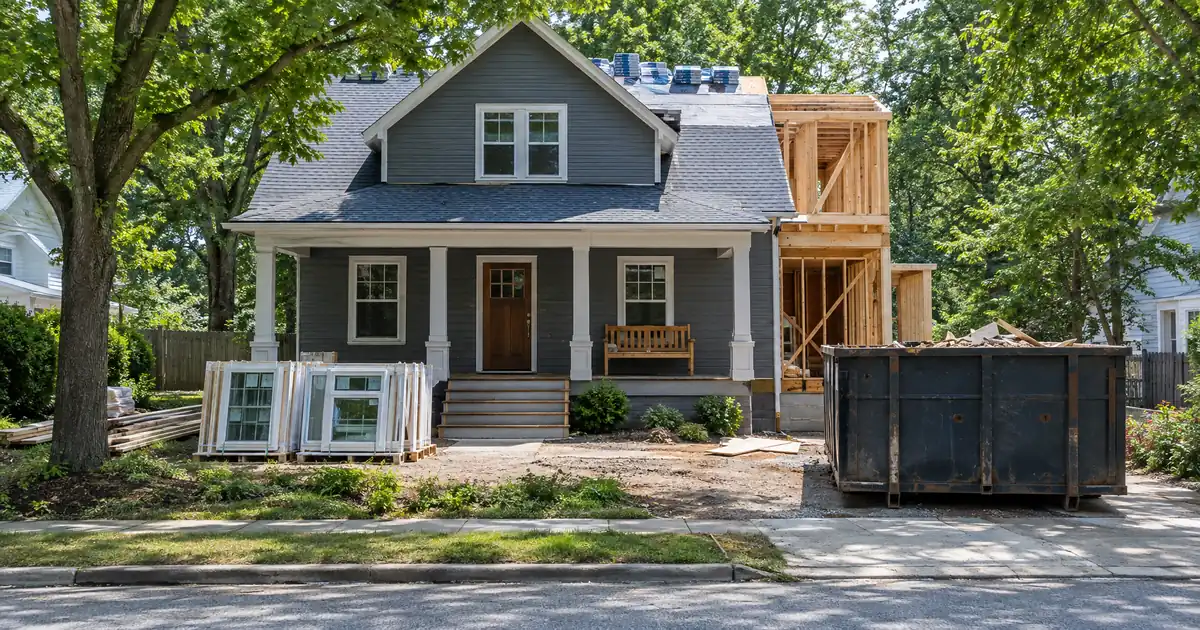
The Quick Read: Pooling a rehab batch means refinancing several finished renovations in different states into one note, where lenders test the combined rent against the combined payment, and every house still needs its own appraisal, rent opinion and condition review before it can go in. The pool works best when the rehabs finish together, the program allows more than one state, and you are comfortable with the houses being tied to each other.
- Pooled coverage is total rent divided by total PITIA (principal, interest, taxes, insurance and association dues) across every house in the pool.
- Strong rentals can offset weaker ones, but only if the pooled coverage, the leverage and the terms all clear lender review.
- A house still under renovation usually gets left out of the pool or finished first.
- Whether one note can span several states depends on the program, so confirm that before you commit to a structure.
- The release terms decide how easily you can sell one house later, so negotiate them before you sign.
What Does “One DSCR Loan” Mean for a Rehab Batch?
In this context, one DSCR loan means one note secured by liens on several rentals. People call it a portfolio DSCR loan, a blanket loan or a cross-collateralized loan. All three names describe the same thing. Nav describes a blanket lien as one that lets multiple properties secure a single loan, and notes that investors often use it to buy or refinance a group of properties.
One wrinkle is worth knowing. Banks use “portfolio loan” in a different sense: a loan the bank keeps on its own books instead of selling. That is not what this article covers. Lendmire works with wholesale non-QM and DSCR lenders, so the pooled structure here is always one note over several rentals.
You will also see batches closed as separate notes on the same day. That is not pooling. Each house keeps its own loan, its own payment and its own exit.
| Factor | One pooled note | Separate notes, same closing |
|---|---|---|
| Payments | One | One per house |
| Coverage test | Pooled rent vs pooled payment | Each house on its own |
| Selling one house | Needs a release | Pay off that loan |
| Default exposure | Reaches every house | Stays with one house |
Across the wholesale network, two pooled structures matter for a rehab batch. The first is the 30-year portfolio DSCR loan. It covers two to twenty properties under one note, with loan sizes of roughly $300,000 to $5,000,000 (larger balances on review). Leverage runs up to 80% of value on a purchase or a rate-and-term refinance. It offers fixed and adjustable structures and an interest-only period.
The second is the rental portfolio term loan. It is built for five or more rental properties or units under one loan, with sizes of roughly $500,000 to $50,000,000. Leverage runs up to 75% of value. Terms are fixed at three, five, seven or ten years with a balloon at maturity, in recourse or non-recourse form. A non-recourse loan looks to the real estate, with recourse limited to carve-outs such as fraud and bankruptcy. All figures are program ceilings, subject to lender guidelines, not quotes.
If you want the basics behind these loans first, Lendmire’s complete DSCR loans guide covers them.
Key Terms Defined
Blanket (pooled) loan: One note secured by liens on several properties, so all of them stand behind the same debt.
Cross-collateralization: The pledge of each property as security for the whole loan, not just its own share.
Allocated amount: The slice of the pooled balance the lender assigns to each house.
Release clause: Contract language that lets one house leave the pool when you pay a set price, usually above its allocated amount.
Seasoning: The ownership time a lender wants before it sizes a loan on appraised value instead of cost.
Pooled coverage: Total rent used for lender review divided by total PITIA across the whole pool.
Which Rehabs Belong in the Pool?
Only finished, insurable houses with a lease or an appraiser-supported market rent belong in the pool. Houses still under renovation usually come out of the batch or get cured first. Sorting the batch by readiness before you pick a lender saves the most rework.
| Status | Usual route |
|---|---|
| Finished and leased | In the pool |
| Finished and vacant | In the pool on market rent |
| Mid-renovation | Out, or finish first |
| Unsuitable condition or type | Out |
A leased house is typically credited at the lower of the lease or the appraiser’s market rent. A lease above market does not lift the ratio. A vacant house is credited at market rent, as long as the rehab is light enough that the house is rent-ready.
Eligible property types in the pools are single-family, two-to-four unit, condo and townhome. Five or more units qualify only inside the rental portfolio term loan. Owner-occupied property, co-ops, mixed-use and commercial property are not eligible.
Manufactured and mobile homes cannot be financed on any of these programs.
How the Lender Sizes the Pooled Loan
The lender runs two tests on the pool and takes the lower result. One test is value or cost, and the other is rent coverage. Walking through them in order shows where a batch usually gets trimmed.
1. Appraise every house. Each property gets its own appraisal and rent opinion. Single-family and condo houses use Form 1007, which Freddie Mac publishes as the appraiser’s market-rent schedule for single-family investment properties. Two-to-four unit properties use Form 1025. Fannie Mae’s appraiser guidance explains what Form 1007 is and when it is used. DSCR files borrow these forms only. The agencies’ loan rules do not govern them.
2. Credit the rent. Leased houses get the lower of lease or market rent. Vacant houses get the appraiser’s market rent.
3. Add it up. Total the rent used for lender review. Total the PITIA. Divide. The 30-year portfolio structure uses a 1.00 floor on the pool. A house below 1.00 on its own can sit in the pool, but underwriting tests the pooled coverage, the leverage and the terms.
4. Apply the value basis. On a rate-and-term refinance, the appraised value sets the leverage test, and the cost-basis cap does not apply. On a cash-out, the first stretch of ownership matters. Inside the first six months the loan is also capped at 90% of total cost (purchase price plus documented improvements), 100% of total cost from six to twelve months, and the leverage ceiling still applies, so the loan is the lower of the two. After twelve months the appraised value alone is the basis. Cash-out never exceeds 75% of pooled value.
5. Check credit and entity. The pooled programs generally set a credit floor of 640, with 680 or 720 on some portfolio structures. Some structures require a special-purpose entity, typically an LLC. Recourse loans carry a personal guarantee.
6. Subtract the payoffs. Bridge or hard-money payoffs and closing costs come out of the proceeds before any cash reaches you. Reserves vary by lender, leverage and loan size, and the term loan holds reserves for taxes, insurance and capital expenditures.
The after-repair value you planned around is only a planning number. Underwriting uses the appraisal, and the cost-basis cap can bind first on a recently bought house.
One more point matters for budgeting. Clearing 1.00 on the pool does not mean the batch produces positive cash flow. Repairs, vacancy, management, utilities and capital expenses sit outside the ratio.
Does Out-of-State Change Anything?
The geography adds little to underwriting. The real question is whether the program allows properties in more than one state under one note. On the rental portfolio term loan, properties in several markets or states may sit under one loan. On the 30-year portfolio structure, multi-state eligibility depends on the program, so confirm it before you plan around it.
| Option | Closings | Exit flexibility | Paperwork |
|---|---|---|---|
| One cross-state note | One | Tied to release terms | Lightest |
| State-level pools | One per state | Pool by pool | Moderate |
| Separate loans | One per house | Fully independent | Heaviest |
The same rent can produce different coverage in different markets, because taxes, insurance and association dues vary by location. A house that looks strong at the rent level can pull the pool down once its full PITIA is counted. Run coverage house by house before you decide who rides on whom.
DSCR loans are designed for non-owner-occupied investment properties. Because they are business-purpose investor loans, they are reviewed differently from a standard owner-occupied mortgage.
Entity, Guaranty and Remote-Investor Logistics
A remote owner has no special underwriting burden, but the paperwork has to line up across locations. The borrowing entity, the leases or market-rent evidence, and the entity papers all get reviewed. Using one entity for the whole pool is cleaner. Cross-collateralizing across several entities can undercut the liability separation you formed them for, and release provisions may cover only one borrower. LLC-titled loans are available subject to lender program eligibility.
A property manager changes none of the payment mechanics. One note means one payment, whoever manages the houses. Management cost simply sits outside the coverage ratio, as noted above.
For a pre-application folder, gather these per property: the entity documents, current leases or evidence of market rent, insurance, and proof of rehab completion and cost. For the pool as a whole, add the payoff statements for the short-term debt you are retiring.
Timing a Staggered Batch
If the rehabs finish at different times, pool only the houses that are ready at the same time. A pool usually needs every property in finished, insurable condition when the file goes to the lender. A late house holds up the whole batch.
You have two workable moves. Refinance the finished houses on individual loans and pool the remaining ones later. Or finish the stragglers first and pool all of them together.
Short-term bridge debt creates a second timing problem. If the first bridge loan matures before the last rehab is done, you may be forced to refinance the ready houses first. Plan the order of payoffs before the bridge maturity dates, not after.
Where the Rule Breaks
Several edge cases change the answer. Each one is common enough to plan around.
- A weak house. A weak property can ride on the pool, but it can also drag the pool down. Incomplete rehab or a condition that blocks insurance can break the package. Splitting the pool is the usual fix.
- A small batch or several entities. With two or three houses, or with houses in separate LLCs, individual loans often fit better. The pooled minimums may not be met, and vesting is cleaner.
- Adding a house later. A release clause lets a house out of the pool. It does not let a new one in. Adding a house is usually a fresh underwriting event.
- Short-term rentals. Form 1007 was not built around nightly rates, and nightly rate times thirty is not market rent. Short-term rental collateral is underwritten under its own rules with its own leverage limits.
- Missing or discretionary release language. Without a release clause, selling one house gets much harder, per Nav’s guidance. Federal due-on-sale law gives you no right to a partial release. The release is contract language, so it exists only if it is written into the note.
- Five-plus unit buildings. These are eligible only inside the rental portfolio term loan, never on the 30-year portfolio structure.
What to Get in Writing on Release Terms
Settle the release terms before closing. Once the note is signed, they are what they are.
- The allocated loan amount for each property.
- The release price, which runs above the property’s allocated balance.
- Whether the remaining pool is retested, since it must still cover its debt service.
- The cross-default language.
- Whether the wording is mandatory (shall release) or discretionary (may release).
- How any prepayment cost stacks with the release price. The term loan uses yield maintenance, a charge that makes the lender whole for lost interest, so ask how it applies to a partial payoff.
Partial releases, substitutions and the sale of one house all follow the loan documents and the lender’s release terms. On the term loan, a one-time purchaser assumption exists on loans above $5,000,000, subject to underwriting and an assumption fee, and below that on an exception basis. If you may sell soon, leave that house out of the pool.
Pool, Split or Go Separate?
| Your situation | Likely fit |
|---|---|
| Four to twenty finished houses, long hold | One pooled note |
| Five or more units, longer fixed term wanted | Rental portfolio term loan |
| Rehabs finish at different times | Split, or individual loans first |
| Two or three houses, or several LLCs | Individual loans |
| One house you may sell soon | Keep it out |
A quick walk-through shows how this plays out. Picture a five-house batch with a mixed status. Two houses are finished and leased. One is finished and vacant on market rent. One is still being renovated. One is finished in a different state from the others. These are hypothetical conditions, not market data.
The renovation house comes out, which leaves four. Four houses fit the 30-year portfolio structure’s two-to-twenty range. If the out-of-state house cannot sit under one note on the chosen program, the other three can pool and the fifth gets its own loan. If pooled coverage lands around 1.15x with one house near 0.95x on its own, that house can ride on the others. Underwriting still tests the pooled coverage, the leverage and the terms. Once the renovation house finishes, it can go on an individual loan, or a later pool can pick it up.
In practice, many investors pool the houses they plan to hold and keep individual loans on the ones they might sell. That is a judgment call, not a rule. The right mix depends on your hold plan and how much release friction you can tolerate.
Common Mistakes With a Rehab Batch
- Assuming every blanket has a release clause. It only exists if the note says so.
- Counting a lease above market rent. The lower figure governs.
- Putting an unfinished house in the pool and stalling the whole file.
- Reading a pooled coverage above 1.00 as positive cash flow.
- Pooling a house you expect to sell and finding the release price in the way.
- Ignoring the cost-basis cap on a recently bought house and expecting full appraised-value proceeds.
- Skipping the multi-state question until the file is already in review.
Tax treatment varies; consult a qualified professional before relying on any deduction.
Frequently Asked Questions
Can I put houses in different states under one note?
It depends on the program. The rental portfolio term loan allows properties in several markets or states under one loan. On the 30-year portfolio structure, multi-state eligibility varies by program, so confirm it first. If one note cannot span your states, state-level pools or individual loans are the fallback.
Can I include a house that is still being renovated?
Usually not. A property under renovation is typically left out of the pool or finished first, because each house needs an appraisal, a rent opinion and a condition review. Finish it, then add it through a later pool or an individual loan.
What happens if I want to sell one house after pooling?
You need a release, and it comes from the loan documents. The release price runs above that house’s allocated balance, and the remaining pool must still cover its debt service. Without release language in the note, selling one house gets much harder.
Does a pooled ratio above 1.00 mean the batch makes money?
No. DSCR compares rent to PITIA only. Repairs, vacancy, management, utilities and capital expenses sit outside the calculation, so a pool can clear the floor and still run thin.
Is one pooled note better than refinancing each house separately?
It is better when the houses are finished, you plan a long hold, and you want one file and one payment. Separate loans win when exits differ, the batch is small, or the houses sit in different entities. Every file is underwritten individually, subject to lender guidelines.
Next Step
If you are buying or refinancing a rental property and want to see how the numbers work, Lendmire can help you compare DSCR loan options based on the property income, credit profile, leverage, and investor goals. Lendmire’s piece Can an Out-of-State Rehabber’s Batch Go on One DSCR Loan? goes deeper on the batch itself. A separate piece Can a Ten-House Rental Pool Go Into One DSCR Loan Without Cash Out? covers the larger-pool version. Call 828-256-2183 to talk through how your batch should be grouped, since the best grouping is usually decided by which rehabs finish together, not by which states they sit in.
About Lendmire
Lendmire (NMLS# 2371349) is a mortgage brokerage focused on DSCR investor financing, helping arrange programs through wholesale and investor-lending channels in 41 markets, including Washington, D.C. DSCR loans are evaluated by the lender on property cash flow rather than personal income, subject to lender guidelines, supporting LLC closings and accommodating investors with four or more financed properties. Scotsman Guide Top Mortgage Workplace in both 2025 and 2026.
Get Started
Ready to find the right loan for you?
In about 30 seconds you can review financing options available for your investment property. No commitment required.
Informational only. Not a Loan Estimate, approval, or commitment to lend. Program availability and eligibility are subject to lender guidelines, credit approval, property review, and underwriting.
References
1. Nav: Cross-Collateralization
2. Freddie Mac: Form 1000 (Form 1007 market-rent schedule)
3. Fannie Mae: Appraiser Update
This article is part of Lendmire’s DSCR loan program — full qualification details, guidelines, and scenarios live on the program page.
Related reading: One DSCR Portfolio Loan vs. a Loan in Each Southeastern State · DSCR Cash-Out Loan Requirements for Refinancing After Upgrades · DSCR Cash-Out Refinance Documents Needed for a Rental Loan File
Brandon Miller
Founder & CEO, Mortgage Loan Originator, Lendmire LLC
- Mortgage Loan Originator · NMLS# 1129696 · Verify on NMLS Consumer Access
- North Carolina Real Estate Broker · License# 343312 · Verify on NCREC
- North Carolina Insurance Producer · License# 19053198 · Property, Casualty, Life, Health · Verify on NAIC SBS
- Lendmire LLC · Firm NMLS# 2371349 · Verify firm licensure
Disclosures. The information presented in this article is general market commentary, not financial, legal, or tax advice. Lendmire is a mortgage brokerage (NMLS# 2371349) — not a direct lender or depository institution — and loan placement is subject to lender underwriting. Nothing in this content represents a commitment to lend. Loan terms, pricing, and program availability vary based on borrower qualifications, property characteristics, and state of subject property, and are subject to change at any time. Lendmire complies with Equal Housing Opportunity requirements. Consumer access: nmlsconsumeraccess.org.