
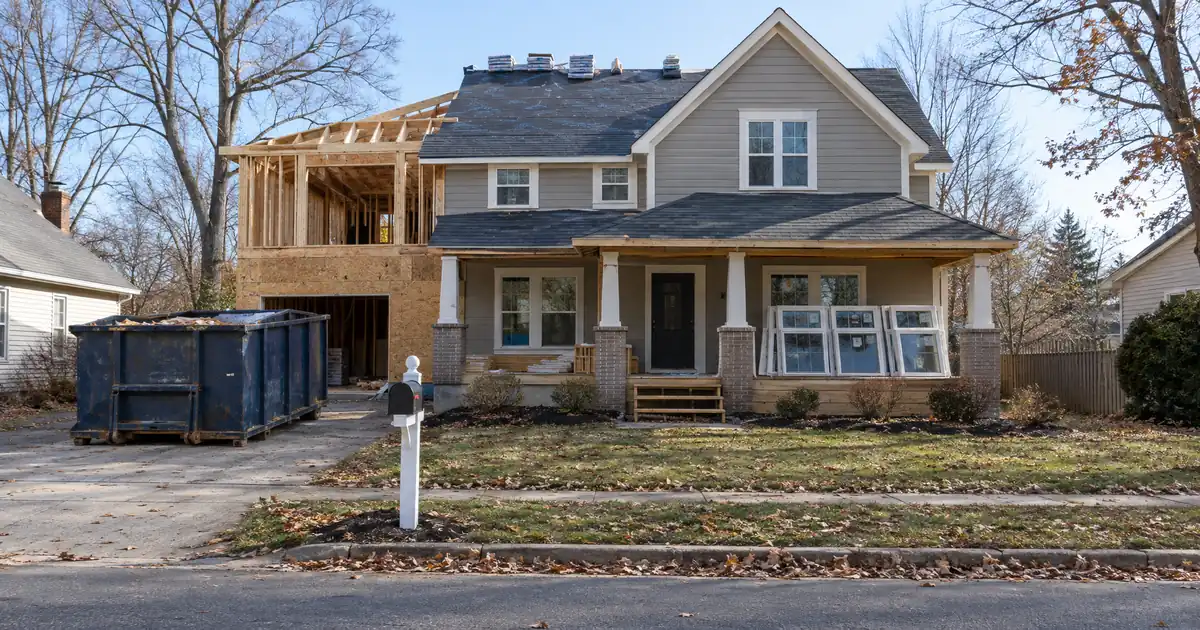
The Quick Read: The down payment on a hard money bridge loan is the gap between what the project costs and what the lender will fund, and the LLC must show where that cash came from. Lenders size the loan against purchase price, rehab budget and after-repair value, then the borrower covers the difference plus fees. The entity changes who holds title and signs, not how the cash requirement is calculated.
- Bridge purchases without rehab typically fund up to 80% of purchase price, though the exact figure varies by lender, property, and experience.
- Fix-and-flip files are sized on loan-to-cost, tiered by completed projects, and capped at 75% of after-repair value.
- Rehab money funds in draws against completed work, so the borrower fronts each phase first.
- Points, fees, interest carry and draw float sit on top of the down payment.
- Funds should be documented and sitting in the LLC’s account before closing.
Most down payment problems on LLC files are not math problems. They are paper problems. The cash exists, but it sits in the wrong account, or it moved in without a record, or the operating agreement does not say who is allowed to contribute. This article walks through how the cash requirement is built, how the LLC should be funded, where the usual rules break, and what a clean package looks like. Everything here is business-purpose investor lending on non-owner-occupied property, and every figure varies by lender, property, and experience.
What this loan actually costs to carry.
Hard money is sized against the project and priced by time. Enter the deal and see how much the program will lend, the cash required at closing, the carry while you hold it, and what is left at the exit.
Leverage tiers on the current program: 85% with fewer than 2, 90% with 2 or more, 93% with 5 or more completed projects — every tier capped at 75% of after-repair value. Loan amounts up to $5,000,000, larger by exception; terms of 6 to 18 months, interest-only, no prepayment penalty. The rehab portion funds in draws against completed work, not at closing.
Program parameters shown update from Lendmire’s centralized guideline source. Rate, points, and months are editable assumptions, not quoted terms.
Cost cap sets the loan · positive spread
Illustrative estimate only — not a quote, Loan Estimate, approval, or commitment to lend. Rate, points, and months are editable assumptions. Hard money is business-purpose financing for real estate investors, not a consumer mortgage. Leverage on the current program tops out at 93% of project cost for investors with a documented track record, capped at 75% of after-repair value, with rehab funding up to 100% of the documented budget released in draws; actual terms vary by lender, borrower experience, property, and exit. Lendmire is a mortgage broker, not a lender.
Key Terms Defined
Down payment: The portion of the purchase price the borrower pays in cash because the lender will not fund it.
Loan-to-cost (LTC): The loan amount as a share of total project cost, meaning purchase price plus rehab budget.
After-repair value (ARV): The estimated value of the property once the planned work is finished.
Draw: A release of rehab funds after the lender confirms a phase of work is complete.
Capital contribution: Money a member puts into the LLC in exchange for ownership, with no repayment obligation.
Member loan: Money a member lends to the LLC with a real repayment obligation, usually documented by a note.
Total cash to close: The down payment plus fees, interest carry, reserves and any rehab float the borrower must cover.
What Is a Hard Money Bridge Loan Down Payment?
It is a sizing outcome, not a fixed number. No rule sets a standard percentage. The lender decides how much it will fund against price, cost and value, and the borrower supplies the rest.
The word “bridge” causes confusion. Consumer lenders use it for a homeowner borrowing against a current home to fund the next purchase. That is not this product. In investor lending, a bridge loan is short-term, interest-only financing secured by the property being bought. Across the wholesale network, hard money terms run 6-18 months, interest-only, with no prepayment penalty. Investors who need longer runway refinance into long-term rental financing.
Two leverage structures matter here. On a bridge purchase with no rehab, the loan can reach up to 80% of purchase price, so the down payment starts around 20% of price before fees. On fix-and-flip files, leverage is measured against cost: 85% of project cost with fewer than two completed projects, 90% at two or more, and 93% at five or more. Every tier is capped at 75% of after-repair value. Up to 100% of the rehab budget funds in draws, but that figure applies to the rehab budget only. It is never a purchase loan-to-value. There is no true 100% purchase program.
How Underwriting Turns Price and Value Into Your Cash Requirement
The lender runs more than one test and funds the lower result. Here is the sequence on a typical flip-style bridge file.
1. Test one: cost. The lender applies the leverage tier to project cost. An experienced borrower with five or more completed projects sits in the top tier. A newer investor sits lower.
2. Test two: value. The lender caps the total loan at 75% of after-repair value. If the rehab plan is light on value lift, this test can bind before the cost test does.
3. Take the lesser. Whichever test produces the smaller loan sets the loan. The gap between that loan and the purchase price is the starting cash requirement.
4. Add the rehab float. Rehab funds are not cash at closing. They sit in escrow and release as work is completed. The borrower starts the work with their own money and is reimbursed after the draw is approved.
5. Add fees and carry. Origination costs, third-party reports, title charges and interest on the drawn balance come on top.
The mistake that shows up most often is reading a leverage figure as the whole cash requirement. A borrower hears a high leverage number and assumes the cash is small. Then the rehab float, points and carry arrive. Total cash to close is the number that matters, and it is always larger than the headline down payment.
Why the LLC Changes the Paperwork, Not the Math
A lender looks through the LLC to the people behind it. The entity holds title and signs the note. The members and guarantors still get reviewed for credit, background and liquidity. Hard money underwriting stays asset-based, meaning the property, the plan and the exit drive the decision, but the guarantor is not ignored. A 620 credit score is the typical floor in the network, with additional conditions below 660. First-time investors qualify at the lower leverage tiers, subject to lender guidelines.
The LLC also keeps the loan in the business-purpose category. DSCR and hard money loans are designed for non-owner-occupied investment properties, and because they are business-purpose investor loans, they are reviewed differently from a standard owner-occupied mortgage.
A personal guarantee is a lender convention, not a legal requirement. Most programs ask for one from members with meaningful ownership. The LLC does not shield the owner from the lender in that case. Some lenders will discuss limited-recourse language, but treat that as a negotiation point, not the norm.
Collateral also matters. Hard money in the network covers non-owner-occupied residential property of 1-4 units, with ground-up construction to 10 units. Commercial, industrial, land, hospitality and owner-occupied property are not offered.
Ways to Fund the Down Payment Inside an LLC
The cash has to reach the LLC in a form the lender can read. These are the structures that come up, and how each looks on a file.
| Funding method | How it is documented | Lender view |
|---|---|---|
| Member capital contribution | Bank transfer, operating agreement | Cleanest and most common |
| Member loan to the LLC | Signed note, repayment terms | Acceptable if the obligation is real |
| Partner or JV equity | Contribution schedule in agreement | Depends on lender and ownership |
| Equity pledged from another property | Cross-collateral documents, title | Lender-specific, adds complexity |
| Seller-side contribution | Settlement statement, contract | Often restricted or disallowed |
Capital contribution. The owner moves personal funds into the LLC’s account and the operating agreement records the contribution. No repayment is owed, so nothing sits against the LLC as debt. This is the structure lenders understand fastest.
Member loan. The member lends to the LLC. It works when there is a genuine repayment obligation and the terms match the operating agreement. A loan with no real terms looks like an undisclosed liability. Lenders also look at whether the loan is secured against the property, which can raise questions about combined leverage.
Partner or joint venture equity. Lender treatment of partner capital varies. The operating agreement should spell out each party’s contribution, ownership share and signing authority. Unequal contributions are fine if the paper says so.
Pledged equity or cross-collateral. Using equity in another property can reduce cash needed at closing, but acceptance is lender-specific. Some lenders require a purchase-price down payment or cross-collateral even where the rehab is fully financed. Expect extra title work, and expect the lender to care about who holds title to the pledged asset.
Borrowed money. Funds borrowed from a third party on an unsecured basis, with no documentation of the obligation, tend to draw questions. Disclose it up front. Hidden secondary financing is the red flag lenders look for.
Multi-Member LLCs: Tracking Who Paid What
Consider an LLC with three members who plan to split ownership. One contributes most of the cash. A second contributes less but manages the rehab. A third is a passive investor. The lender wants to see that the contributions match the ownership schedule, or that the agreement explains why they do not.
Set it up in this order:
1. Draft or amend the operating agreement to show each member’s contribution and percentage before funds move.
2. Have each member wire their share directly into the LLC’s account, from an account in that member’s name.
3. Keep each transfer receipt and the account statement showing the deposit.
4. Identify the guarantor or guarantors. The guarantor’s liquidity and credit are reviewed whether or not that member funded the majority.
5. Tell the lender the plan before the file goes in, not after the statements surface.
The common failure is a contribution that lands from a source nobody mentioned: a relative’s account, a business account, a spouse. Each one needs an explanation. Cleaner is better.
Funds Trail and Documentation
The file needs two groups of documents: entity papers and funds papers. Missing pieces in either group are what stall a package.
Entity documents:
- Articles of organization and proof of good standing
- Operating agreement showing members and signing authority
- EIN letter that matches the name on the application
- Resolution authorizing the loan and the signer
- ID for each guarantor
- Registration in the state where the property sits, if the LLC was formed elsewhere
Funds documents:
- Recent asset statements for the account that holds the cash
- Records of each transfer into the LLC account
- Proof of funds for each party contributing capital
- Notes or agreements for any member loan
Lenders want to trace where the down payment came from. Seasoning requirements vary by lender, and the lender reviewing your file sets the one that applies. Move the cash into the LLC account early, and expect the lender to ask for statements covering the movement.
Common entity defects: a missing operating agreement, a foreign LLC not registered where the property is located, and an EIN that does not match the application. All three are preventable.
Total Cash to Close: A Worked Structure
Run the numbers on a modeled bridge purchase with no rehab. Assume a purchase at 80% of purchase price funded by the lender. The down payment is the remaining 20%. Now add the pieces people forget.
| Line item | What it covers | Often forgotten? |
|---|---|---|
| Down payment | Gap between price and loan | No |
| Lender fees and points | Origination, varies by lender | Sometimes |
| Third-party costs | Title, appraisal, reports | Sometimes |
| Interest carry | Interest-only payments during the term | Often |
| Rehab float | Phase funded before draw release | Very often |
| Reserves | Liquidity the lender may require | Often |
Investors sometimes misread hard money loan-to-value figures, assuming a low leverage figure against appraised value means no down payment. It does not. The lender’s basis, whether cost or after-repair value, plus fees, sets the cash the investor must bring.
The draw float is the biggest underestimated line. If the first phase is demolition or structural work, the investor funds a large share of the budget before the first reimbursement. A tighter plan breaks that work into phases a lender will release against.
Where the General Rule Breaks
Cross-collateral. Some lenders accept equity in another property in place of cash. Others do not. It adds title review and can delay a file if the pledged property is held in a different name than the borrowing LLC.
Experience tiers. The top leverage tier is reserved for experienced investors with documented completed projects. A first-time investor under the same LLC does not get the same loan, even with identical cash.
A borrower-of-record mismatch. If the loan is made to an individual with an LLC as guarantor, the analysis changes. The ABA Banking Journal explains that an LLC guarantor does not by itself exempt a loan made to an individual for consumer purposes. Purpose controls. On investor files, the cleaner path is to have the LLC be the borrower from the start.
Owner occupancy. Business purpose depends on the property being non-owner-occupied. Doss Law summarizes that credit to acquire, improve or maintain rental property is generally treated as business purpose, and notes a 14-day personal-use test for one-to-two unit properties. A borrower who plans to live in the property is outside this product.
Partner capital. Treatment varies. Some lenders want every contributing party on the entity documents. Others focus on the guarantor.
Newly formed LLCs. A new entity is fine, but it has no operating history, so the guarantor’s credit and experience carry more weight.
Structures to Avoid
- Undisclosed secondary financing. A second loan secured against the same property, hidden from the first lender, is the fastest way to lose a file.
- Gifted or borrowed cash with no paper. If the lender cannot see where it came from, it does not count.
- Funds in the wrong account. Cash sitting in a personal account on closing day, with no transfer record into the LLC, creates a documentation gap.
- A member loan with no real terms. It reads as a disguised liability.
- Assuming 100% purchase financing. It does not exist. The 100% figure applies to the rehab budget funded in draws.
The Exit Decides Whether the Bridge Works
A bridge loan is meant to end in a sale or a refinance. Terms are short, so the exit plan is part of the underwriting. Many investors refinance out of hard money into long-term DSCR investor loans once the property is stabilized, and Lendmire brokers that path. On a rental refinance, the lender looks at appraised value, seasoning and rental coverage, and DSCR compares rent to PITIA only. Clearing 1.00 is not the same as positive cash flow, since repairs, vacancy, management and utilities sit outside the calculation.
Titling the bridge acquisition in the LLC from the start avoids a transfer later, since a long-term lender will generally also want the property in an entity, subject to program terms. Documented, traceable cash also helps later when reserves are verified on the refinance. Those details are covered in Lendmire’s complete DSCR loans guide.
Common Misconceptions
“Lending at 75% means I put down 25%.” Only if the lender’s basis is the purchase price. When the basis is cost or after-repair value, fees and the rehab float change the cash. These specifics are subject to lender guidelines and a full review of property, leverage, and credit.
“Rehab is financed, so I need no extra cash.” Draws reimburse completed work. You fund it first.
“The LLC means I am not liable.” A guarantee is common.
“Business purpose means no rules.” The CFPB’s Regulation Z, section 1026.3 carries the exemptions for credit to non-natural persons and for business purpose. Other laws can still apply, and the actual purpose of the loan is what counts.
“Hard money ignores the borrower.” Credit, background, liquidity and experience still get reviewed.
The Decision in Practice
Match the structure to the investor. An investor with liquid personal cash and a single-member LLC should use a capital contribution and keep it simple. A group of partners should settle the operating agreement before any wire moves. An investor holding equity in another property should ask the lender early whether cross-collateral is acceptable, and not assume it. Someone with thin liquidity should size the total cash to close, not just the down payment, before committing to a contract.
Tax treatment varies; consult a qualified professional. Short-term rental rules can vary by city, county, HOA, and property type, so investors should confirm local rules before relying on projected rental income.
If you are buying, rehabbing or refinancing an investment property on a short timeline and want to see how the numbers work, Lendmire can help you compare hard money options based on the project, the exit plan, leverage, and your goals. Call 828-256-2183 or request a quote.
This article is general information, not legal or tax advice. Consult a qualified attorney or CPA about your own entity and situation. Nothing here is a commitment to lend, and all programs are subject to lender guidelines and individual underwriting.
Frequently Asked Questions
Can an LLC use a loan to fund its down payment?
Sometimes, but it needs to be disclosed and documented. A member loan to the LLC with real repayment terms is generally easier to explain than an unsecured loan from a third party. Undisclosed secondary financing is a red flag, and acceptance varies by lender.
Should the down payment go into the LLC’s bank account first?
Yes, in most cases. Moving the cash into the LLC account before closing, with a transfer record and recent statements, gives the lender a clear trail. Cash left in a personal account on closing day creates a documentation gap.
Is there a true 100% financing bridge loan?
No. Up to 100% of the rehab budget can fund in draws against completed work, but that is a rehab figure, not a purchase loan-to-value. Purchase financing is capped by the leverage tiers, and the top tier is reserved for experienced investors.
How much cash does an LLC need beyond the down payment?
Plan for fees, third-party costs, interest carry, the rehab float and any reserves the lender requires. These vary by lender, property, and experience. Total cash to close is always larger than the headline down payment.
Does a newly formed LLC qualify?
Yes, a newly formed LLC can qualify. The lender relies more on the guarantor’s credit and experience since the entity has no history. A 620 score is the typical floor in the network, with additional conditions below 660, and first-time investors qualify at the lower leverage tiers.
About Lendmire
Lendmire (NMLS# 2371349) is a mortgage brokerage focused on DSCR investor financing, helping arrange programs through wholesale and investor-lending channels in 41 markets, including Washington, D.C. DSCR loans are evaluated by the lender on property cash flow rather than personal income, subject to lender guidelines, supporting LLC closings and accommodating investors with four or more financed properties. Scotsman Guide Top Mortgage Workplace in both 2025 and 2026.
Get Started
Ready to find the right loan for you?
In about 30 seconds you can review financing options available for your investment property. No commitment required.
Informational only. Not a Loan Estimate, approval, or commitment to lend. Program availability and eligibility are subject to lender guidelines, credit approval, property review, and underwriting.
References
1. ABA Banking Journal – TILA exemption when the guarantor is an LLC
2. Doss Law – Business purpose exemption simplified
3. CFPB – Regulation Z §1026.3
This article is part of Lendmire’s hard money loan program — full qualification details, guidelines, and scenarios live on the program page.
Related reading: How to Get a Hard Money Loan for a First Flip With No Track Record · Hard Money Bridge vs Private Money Down Payment for an LLC Buyer · How a First-Time Flipper Can Qualify for a Lower Hard Money Down Payment
Brandon Miller
Founder & CEO, Mortgage Loan Originator, Lendmire LLC
- Mortgage Loan Originator · NMLS# 1129696 · Verify on NMLS Consumer Access
- North Carolina Real Estate Broker · License# 343312 · Verify on NCREC
- North Carolina Insurance Producer · License# 19053198 · Property, Casualty, Life, Health · Verify on NAIC SBS
- Lendmire LLC · Firm NMLS# 2371349 · Verify firm licensure
Required disclosures. Lendmire (NMLS# 2371349) operates as a licensed mortgage broker, not a direct lender or depository. The discussion in this article is general in nature and should not be relied upon as financial, legal, or tax advice — every investment scenario is unique and should be reviewed by a qualified professional. Any loan inquiry is subject to lender underwriting, and this article is not a commitment to lend or a guarantee of approval. Mortgage rates, loan terms, and program guidelines vary by borrower, property, and state, and may change without notice. Equal Housing Opportunity. Verify licensure at NMLS Consumer Access.