
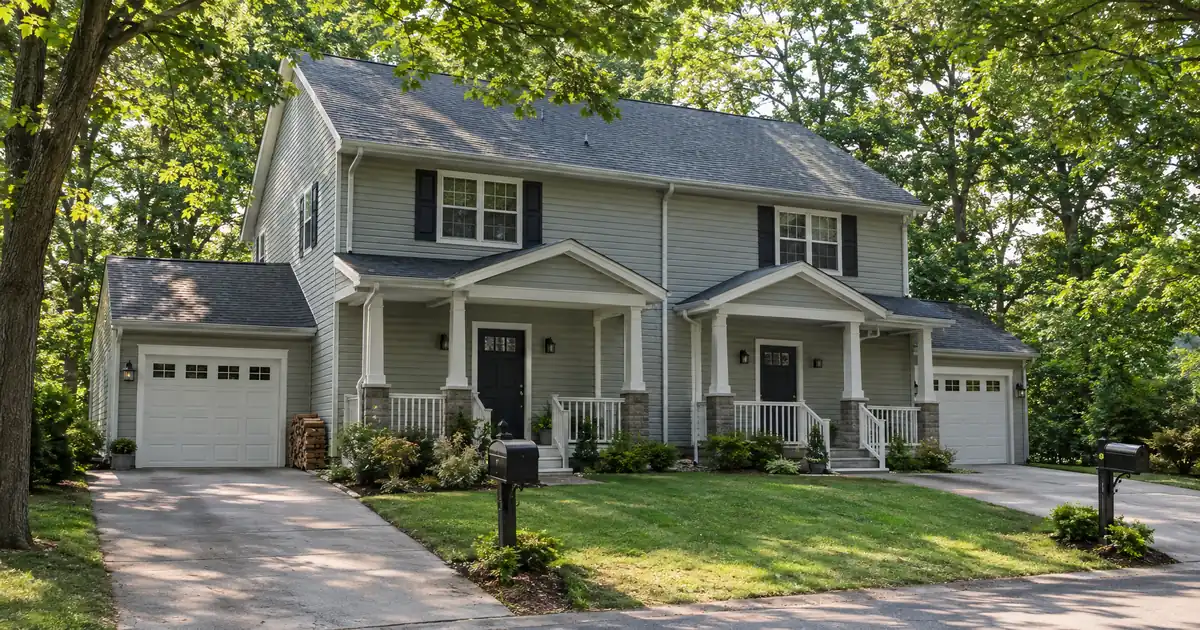
The Quick Read: The loan amount is the lower of two limits: one set against project cost, one set against after-repair value. Your down payment is whatever that loan leaves uncovered. Because the two limits move independently, the down payment is never a flat percentage. This explainer covers non-owner-occupied investor purchases of two- to four-unit properties.
- On a rehab purchase, the network’s leverage runs 85%, 90% or 93% of project cost, depending on completed projects (fewer than 2, 2 or more, 5 or more). Every tier is capped at 75% of after-repair value. All of it varies by lender, property, and experience.
- On a bridge purchase with no rehab, funding typically reaches up to 80% of the purchase price.
- On a cash-out or rate/term refinance, funding typically tops out around 65% of value.
- Up to 100% of the documented rehab budget is funded, but it is released in draws as work is completed.
- A lower appraisal raises your cash requirement, even though the advertised leverage never changed.
Key Terms Defined
Loan-to-cost (LTC): the loan as a share of purchase price plus rehab budget. It measures the lender’s exposure against what you are spending.
After-repair value (ARV): the estimated value of the property once the renovation is finished. On rehab deals, the lender caps the loan against this number.
As-is value: what the property is worth today, before any work.
Holdback: rehab money the lender sets aside at closing and releases later, rather than handing it over up front.
Draw: one release of holdback funds, issued after completed work is inspected.
Down payment: the part of the purchase price the loan does not fund. It is a result of the sizing math, not an input.
Cash to close: the down payment plus fees, reserves, and any rehab costs you front. It is always more than the down payment alone.
What this loan actually costs to carry.
Hard money is sized against the project and priced by time. Enter the deal and see how much the program will lend, the cash required at closing, the carry while you hold it, and what is left at the exit.
Leverage tiers on the current program: 85% with fewer than 2, 90% with 2 or more, 93% with 5 or more completed projects — every tier capped at 75% of after-repair value. Loan amounts up to $5,000,000, larger by exception; terms of 6 to 18 months, interest-only, no prepayment penalty. The rehab portion funds in draws against completed work, not at closing.
Program parameters shown update from Lendmire’s centralized guideline source. Rate, points, and months are editable assumptions, not quoted terms.
Cost cap sets the loan · positive spread
Illustrative estimate only — not a quote, Loan Estimate, approval, or commitment to lend. Rate, points, and months are editable assumptions. Hard money is business-purpose financing for real estate investors, not a consumer mortgage. Leverage on the current program tops out at 93% of project cost for investors with a documented track record, capped at 75% of after-repair value, with rehab funding up to 100% of the documented budget released in draws; actual terms vary by lender, borrower experience, property, and exit. Lendmire is a mortgage broker, not a lender.
Why a 2-4 Unit Is Sized Like Residential Property
A two- to four-unit property is treated as residential collateral, so the network sizes it the same way it sizes a single-family rehab. The hard money program covers non-owner-occupied residential property of one to four units. Commercial property, land, and owner-occupied property are not offered.
That scope line matters because the search results for this topic are full of owner-occupied house-hacking advice. Those are different loans with different rules. Hard money here is a business-purpose, asset-based product. It is built for short-term plans like buying, rehabbing, and then refinancing or selling. The lender looks hardest at the property, the plan, and the exit.
Terms run 6 to 18 months, interest-only, with no prepayment penalty. Loan amounts go up to $5,000,000, larger by exception. Smaller balances vary by lender.
How a Hard Money Lender Sizes the Down Payment, Step by Step
Sizing is a short sequence of tests. The lender runs a cost test and a value test and funds the lower result. Here is the order across the programs we place files with.
1. Set the cost basis. Add the purchase price and the documented rehab budget. That total is the project cost.
2. Set the values. The lender looks at as-is value and, on rehab deals, the after-repair value. For a 2-4 unit, the valuation usually leans on an appraisal. Some lenders use a broker price opinion or an in-house valuation instead.
3. Run the cost test. Apply your leverage tier to the project cost. The tier depends on your completed projects: 85% of project cost with fewer than 2, 90% with 2 or more, and 93% with 5 or more.
4. Run the value test. Cap the loan at 75% of after-repair value. This cap applies to every tier.
5. Take the lower result. Whichever test produces the smaller loan controls the file.
6. Split the loan. The initial advance funds the purchase. The rehab portion is held back and released in draws as inspected work is finished.
7. Total your cash. The down payment is the project cost minus the loan. Fees and reserves come on top.
Read the percentages carefully. Those tier figures are loan-to-cost, never a loan-to-value ceiling. A 93% cost tier is not a 93% LTV. Final terms depend on lender guidelines, property type, leverage, and the borrower’s complete credit picture.
A Worked Example: When the Two Tests Tie, and When They Don’t
Run the numbers on a fourplex. These inputs are modeled assumptions, not market data. Say the purchase price is $400,000, the rehab budget is $100,000, and the projected after-repair value is $600,000. Total project cost is $500,000.
Scenario one: the tests tie. You have two or more completed projects, so the cost test funds 90% of the $500,000 project cost. The value test caps the loan at 75% of the $600,000 after-repair value. Those two limits land on the same loan size. Your down payment is the uncovered 10% of cost, plus fees.
Scenario two: the appraisal comes in light. Suppose the after-repair value appraises at $540,000 instead of $600,000. The value cap now binds, and it sits below the cost test. The loan shrinks, and your uncovered share of project cost rises noticeably. The leverage tier never changed. Only the value test did.
That is the practical lesson. The advertised tier tells you the best case. The appraisal tells you the real one.
Scenario three: a bridge purchase with no rehab. With no renovation, there is no after-repair value to cap against. Funding typically reaches up to 80% of the purchase price, so the down payment is the remaining 20%. Refinances work differently again: cash-out and rate/term refinances typically top out around 65% of value.
Where the General Rule Breaks
The cost-and-value formula covers most files. These edge cases are where it bends.
Lenders define terms differently. Some quote leverage against purchase price, some against as-is value, and some against after-repair value. Always ask which number the percentage applies to. On a discounted purchase, the answer changes your cash requirement a lot.
A deep discount can shrink the down payment. When total project cost sits well below the value cap, the cap stops binding. The cost tier then governs, and the down payment is just the uncovered slice of cost. No program here funds 100% of the purchase, and the top tier is reserved for experienced investors. A loan that looks near-zero-down only works when the deal is so cheap against its finished value that the lender’s own cap never trims it.
Experience moves you between tiers. The same property can need three different down payments for three different borrowers. A first-time investor qualifies at the lower leverage tier, while a borrower with five or more completed projects reaches the top one. Credit matters too: the minimum score is 620, with added conditions below 660. Underwriting stays asset-based, so the property, plan, and exit still carry the file.
Some lenders advance part of the rehab at closing. It happens, but it is the exception rather than the norm. Plan on fronting early rehab costs yourself. Lenders want to see that you have the cash to start the work before the first draw arrives.
Ineligible property types are simply not offered. Owner-occupied properties, commercial buildings, and land are outside this program. A mixed-use building with a storefront is a commercial file, so it belongs elsewhere.
Does the Unit Count Change the Sizing?
Within one to four units, the leverage tiers stay the same. A duplex, a triplex, and a fourplex all run through the same cost and value tests. The unit count shows up in two other places.
The first is valuation. Appraisers value a two- to four-unit property using a form built for small income properties. Fannie Mae’s Selling Guide identifies Form 1025 as the appraisal report for two- to four-unit properties. HUD’s archive notes that the same form carries comparable rent data. That is only the form’s name and structure. Hard money does not follow agency underwriting, and a lender may use a different valuation method.
The second is the exit. A multi-unit has to prove its income when you refinance into long-term financing. The rent data on that appraisal matters more at the takeout than it does at the bridge. Many investors refinance out of hard money into long-term DSCR financing once the property is stabilized, and Lendmire brokers that path. DSCR means debt service coverage ratio, which compares a property’s rent to its full monthly payment. Lendmire’s complete DSCR loans guide covers how that works.
What Moves the Number
| Factor | Effect on your cash | Why |
|---|---|---|
| Completed projects | More experience, less cash | Higher cost tier |
| Lower appraised ARV | More cash | Value cap binds |
| Bigger rehab budget | Often more cash | Raises cost and can hit cap |
| Deep purchase discount | Less cash | Cap stops binding |
| Bridge, no rehab | Fixed share of price | No ARV test |
| Refinance | More equity needed | Funds against value |
Every row here varies by lender, property, and experience. The pattern is what stays consistent.
Down Payment Is Not Cash to Close
Budgeting for the down payment alone is a common mistake we see. Your real cash requirement has several layers:
| Item | Funded by the loan? |
|---|---|
| Down payment | No |
| Lender and closing fees | Usually no |
| Early rehab costs | Fronted by you |
| Reserves the lender requires | No |
| Interest during the hold | Carry cost |
The rehab budget is the piece investors misread. Rehab funding of up to 100% of the documented budget does not mean a check at closing. It means the lender releases money in draws after completed work. Some lenders charge interest only on funds drawn, and others charge it on the full loan balance, so ask which applies. Tax treatment varies; consult a qualified professional before relying on any deduction.
How Hard Money Compares With a Long-Term Rental Loan
A hard money loan is sized on cost and after-repair value for a short plan. A long-term DSCR loan is sized on loan-to-value and on whether rent covers the payment for a hold. They answer different questions. The rent test does not decide hard money sizing the way it decides a DSCR file.
Documenting Your Funds, and What to Do If You Are Short
Expect the lender to ask for proof that you hold the down payment, the fees, and the reserves. Statements showing the money in your own accounts are the cleanest. Borrowed funds and partner capital get more scrutiny, and the rules differ by lender, so raise them early.
If the cash does not stretch, there are three honest levers:
- Pick a property with a deeper purchase discount, so the value cap stops binding.
- Trim the rehab scope so project cost and the value test both shrink.
- Bring in a partner whose capital the lender will accept, or build a longer track record to reach a higher tier.
Each trade has a cost. A smaller scope can limit the finished value, and a partner shares the profit.
Frequently Asked Questions
How much down payment does a 2-4 unit need on a hard money loan?
It depends on which test binds. On a rehab purchase, the network funds 85%, 90% or 93% of project cost depending on completed projects, capped at 75% of after-repair value. On a bridge purchase with no rehab, funding typically reaches up to 80% of the purchase price. Every figure varies by lender, property, and experience.
Is there a hard money purchase program with no down payment at all?
No. No program funds 100% of the purchase price. The 100% figure applies only to the documented rehab budget, and it is released in draws against completed work. A deal can look nearly zero-down when its cost sits far below the value cap, but you still bring cash for the uncovered share and fees.
Does a lower appraisal change my down payment?
Yes. If the after-repair value comes in below your projection, the 75% value cap shrinks the loan. Your cash requirement rises by the shortfall, even though your leverage tier is unchanged. Run a conservative value before you commit.
Can a first-time investor use these programs?
First-time investors qualify at the lower leverage tier, which means a larger down payment. The minimum credit score is 620, with additional conditions below 660. The top tier is reserved for experienced investors. Nothing is a commitment to lend.
Can I use hard money to buy a duplex I plan to live in?
No. This program is for non-owner-occupied investment property of one to four units. Owner-occupied purchases are a different product with different rules.
Next Step
If you are buying, rehabbing or refinancing an investment property on a short timeline and want to see how the numbers work, Lendmire can help you compare hard money options based on the project, the exit plan, leverage, and your goals. Lendmire is a broker arranging financing through select lenders in its wholesale network, across 41 markets including Washington, D.C. Request a quote or call 828-256-2183. Programs change, and every file is underwritten individually.
About Lendmire
A DSCR-focused mortgage broker, Lendmire (NMLS# 2371349) places investor financing across 41 markets — 40 states plus Washington, D.C. — with DSCR eligibility generally reviewed by the lender on property cash flow instead of tax returns, subject to lender guidelines. Scotsman Guide named Lendmire a Top Mortgage Workplace in 2025 and 2026.
Get Started
Ready to find the right loan for you?
In about 30 seconds you can review financing options available for your investment property. No commitment required.
Informational only. Not a Loan Estimate, approval, or commitment to lend. Program availability and eligibility are subject to lender guidelines, credit approval, property review, and underwriting.
References
2. HUD archive: appraisal requirements for one- to four-unit properties
This article is part of Lendmire’s hard money loan program — full qualification details, guidelines, and scenarios live on the program page.
Related reading: Hard Money Bridge vs Private Money Down Payment for an LLC Buyer · 2-4 Unit vs. 5-to-10-Unit Hard Money Loan for a Multi-Project Flipper · Can a Hard Money Lender Secure One Loan Across Multiple Properties?
Brandon Miller
Founder & CEO, Mortgage Loan Originator, Lendmire LLC
- Mortgage Loan Originator · NMLS# 1129696 · Verify on NMLS Consumer Access
- North Carolina Real Estate Broker · License# 343312 · Verify on NCREC
- North Carolina Insurance Producer · License# 19053198 · Property, Casualty, Life, Health · Verify on NAIC SBS
- Lendmire LLC · Firm NMLS# 2371349 · Verify firm licensure
Disclosures. The information presented in this article is general market commentary, not financial, legal, or tax advice. Lendmire is a mortgage brokerage (NMLS# 2371349) — not a direct lender or depository institution — and loan placement is subject to lender underwriting. Nothing in this content represents a commitment to lend. Loan terms, pricing, and program availability vary based on borrower qualifications, property characteristics, and state of subject property, and are subject to change at any time. Lendmire complies with Equal Housing Opportunity requirements. Consumer access: nmlsconsumeraccess.org.