
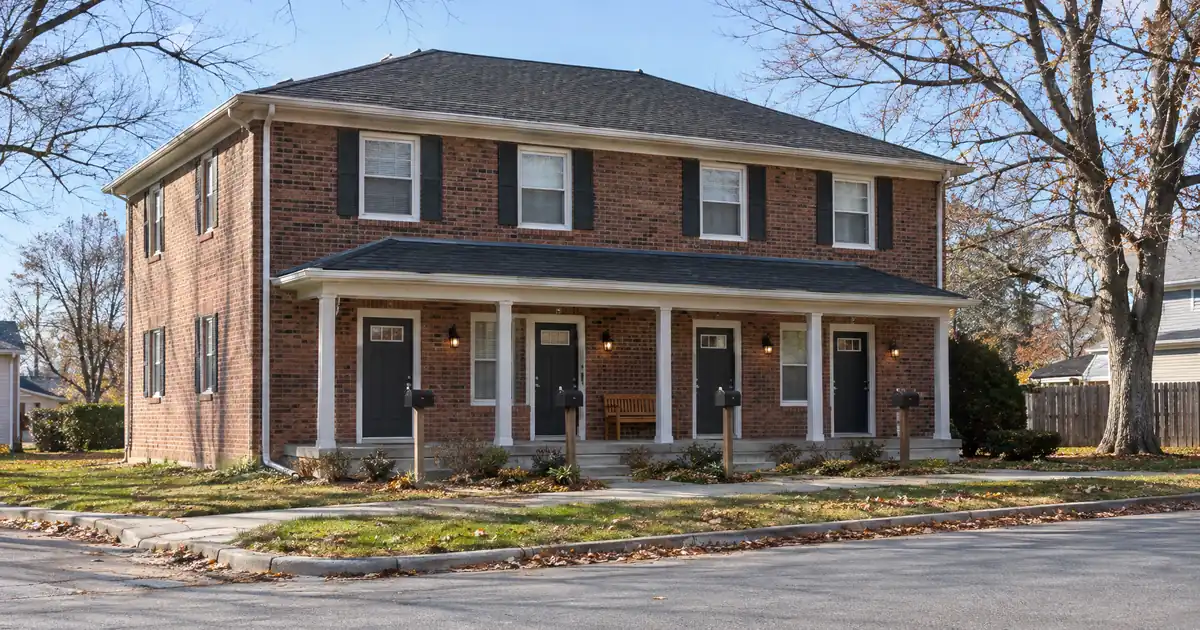
The Quick Read: FHA tends to fit buyers who want the smallest down payment or who have a thinner credit file. Conventional with private mortgage insurance tends to fit buyers with stronger credit and more cash, because the insurance can come off later. Living in one unit of a duplex, triplex or fourplex adds a twist: three- and four-unit FHA purchases face an extra rent test that conventional files do not.
Here is the honest sorting. FHA is built for leverage and flexibility. Conventional is built for buyers who can carry less risk and want a cleaner exit from mortgage insurance. Neither is “better.” The right one depends on your credit, your cash, how many units you are buying, and how long you plan to keep the loan.
Key Takeaways
- FHA lets you buy a 2-4 unit home you live in with as little as 3.5% down, from a 580 decision score, across the wholesale programs Lendmire places FHA loans with.
- Conventional financing on 2-4 units allows less leverage than it does on a one-unit home.
- FHA mortgage insurance has two parts: an upfront premium and an annual one. How long the annual part lasts depends on your starting LTV.
- Conventional PMI is risk-priced and can be cancelled as you build equity.
- Three- and four-unit FHA purchases must pass a property-level rent test. Duplexes do not.
FHA payment estimate
Starting assumptions reflect an example price and the FHA minimum investment. Replace them with your own figures.
Editable benchmark: 7.32% as of October 22, 2026 · Freddie Mac 30-year average via FRED®. A conventional market reference, not an FHA loan quote.
Illustrative starting assumptions: a $350,000 price, the FHA minimum investment as the down payment, a thirty-year term at the current Freddie Mac benchmark, and property taxes and insurance estimated at typical national rates. Every field is editable.
Illustrative estimate only — not a Loan Estimate, approval, quote, or commitment to lend. The rate field carries the weekly Freddie Mac thirty-year conventional benchmark, a market reference and not an FHA loan quote; your rate is set by the lender at lock. FHA mortgage insurance follows HUD’s published schedule for the term, leverage and loan size entered; taxes, insurance and dues are editable estimates; closing costs are not included; county loan limits are not checked here. Licensed in sixteen states for consumer mortgages. Lendmire is not affiliated with or acting on behalf of FHA, HUD, or the federal government.
First, Clear Up the Terminology
People say “FHA PMI,” but the two are different products. PMI is private mortgage insurance. A lender arranges it, and a private insurer issues it. FHA mortgage insurance, often called MIP, is run through the federal program itself. Both protect the lender, not you. Both are built into your monthly cost, and FHA also charges an upfront premium you can finance.
The federal consumer-finance regulator explains that PMI is something you might have to buy on a conventional loan when your down payment is under 20% of the purchase price. That 20% is the point where PMI usually applies. It is not a minimum down payment. Plenty of conventional buyers put down less than 20%.
Side-by-Side
Here is how the two compare for a home with two to four units where you live in one of them. Every figure is a program guideline, subject to lender guidelines and full file review.
| Factor | FHA | Conventional with PMI |
|---|---|---|
| Maximum financing | Up to 96.5% LTV | Lower than on a one-unit home |
| Minimum investment | 3.5% from a 580 score | Varies by lender and unit count |
| Credit floor | 580 through Lendmire’s wholesale programs | Often higher; varies by lender |
| Mortgage insurance | Upfront 1.75% (financed) plus annual | PMI when under 20% equity |
| How long it lasts | 11 years or the full term, set by starting LTV | Can be cancelled as equity builds |
| Occupancy | You live in one unit | You live in one unit |
| Debt ratios | 31/43 base; up to 40/50 with documented factors | Automated findings, risk-based |
| Extra rent test | Yes, on 3-4 units | No FHA-style property test |
| Seller contributions | Up to 6% of price | Capped by LTV; varies |
Leverage is the headline. Across the wholesale programs Lendmire works with, an FHA purchase reaches 96.5% LTV with a 3.5% minimum investment. A decision score of 580 or higher is the starting line there. HUD has a 500-579 tier with a bigger minimum investment, but the programs Lendmire places loans with do not reach below 580. The exact numbers vary by lender and program and follow a full review of property, leverage, and credit.
LTV, short for loan-to-value, is the loan balance divided by the home’s value. Debt ratios, written 31/43, compare your housing cost to income (the first number) and all monthly debts to income (the second). The automated underwriting finding governs most files. Documented compensating factors, like strong reserves or a long job history, can stretch FHA ratios to 40/50 at the top tier.
When FHA Is the Better Fit
FHA is the stronger choice when cash or credit is the constraint. These are the common situations.
You have limited cash. A 3.5% minimum investment on a two-to-four unit home is hard to match. The seller can also contribute up to 6% of the price toward your costs, which helps when cash is tight. A non-occupant co-borrower, such as a parent, is allowed on FHA, and that can help a borderline file.
Your credit has bumps. A 580 decision score opens the door on FHA programs. Credit events carry waiting periods under HUD’s rules: two years from a Chapter 7 discharge and three years from a foreclosure. Those are HUD rules, not a promise from any one lender. Conventional lenders tend to look harder at the same history.
You are a house-hacker with a duplex. Say you buy a duplex, live in one side, and rent the other. For a two-unit home, FHA lets the lender consider rent from the unit you do not occupy. With limited or no rental history, the lender uses 75% of the lesser of the appraiser’s fair market rent or the actual lease rent, then subtracts the full payment. That is per HUD’s guidance on rental income. The 75% haircut means rent helps, but it never counts at full value.
Your price runs high for your area. County loan limits apply to FHA, and they differ by unit count. They change every year. A triplex or fourplex in a pricey county may fit under FHA limits that scale up with unit count. Check your county’s limit before you fall in love with a building.
What FHA Costs You
The trade is mortgage insurance. FHA charges an upfront premium of 1.75% of the base loan, which most buyers finance into the balance. It also charges an annual premium between 0.15% and 0.75% of the balance, depending on term, loan amount and LTV.
How long the annual premium lasts matters most. On a thirty-year loan above 90% LTV, it lasts for the full term. At or below 90% LTV, it ends after eleven years. HUD’s mortgagee letter sets this structure, and it ties duration to your starting LTV. Equity you build later does not shorten it. The standard way off the premium is to refinance into a conventional loan once you have enough equity. Final terms depend on the lender’s guidelines, the property type, and the borrower’s complete credit picture.
HUD also lowered the annual premium for most borrowers in a recent change, as its announcement describes. That helped the monthly math. It did not change the duration rules above.
When Conventional Is the Better Fit
Conventional shines when your file is strong enough that the insurance becomes temporary.
You have strong credit and more cash. PMI is priced on risk. A higher credit score and a bigger down payment can lower the PMI cost. FHA’s annual premium is set by term, amount and LTV, and it does not reward a strong credit score. A buyer with excellent credit and a decent down payment can find PMI costs less than FHA’s annual premium, and conventional drops it later.
You expect to keep the loan a long time. This is where the insurance gap shows. Under the CFPB’s description of federal cancellation rules, you can ask to cancel PMI once your balance is scheduled to reach 80% of the original value. It must end automatically at 78% if you are current. Those rules come from the Homeowners Protection Act, and the CFPB’s supervisory bulletin covers how servicers should handle cancellation. One caution: the federal text covers single-family dwellings, so it may not apply the same way to a 2-4 unit loan. Ask your servicer how cancellation works on your specific property. Also know that lender-paid mortgage insurance cannot be cancelled by the borrower. It is baked into a higher note rate instead.
You want to skip the extra rent test. Three- and four-unit FHA purchases require the property to pass a rent test (more on this below). Conventional underwriting has its own credit and reserve rules, but it does not use the FHA-style property-level test. Some buyers choose conventional on a fourplex for exactly this reason.
You may not stay as an owner. FHA is for owner-occupants only. Conventional can also cover other uses, with lower leverage. If your plans are fuzzy, conventional gives you more room.
What Conventional Costs You
Less leverage is the main trade. For two to four units, conventional allows lower LTV than it does for a single-unit home, so you bring more cash to closing. Credit and reserve expectations tend to run higher too.
The 3-4 Unit Wrinkle: The Self-Sufficiency Test
A duplex follows the usual rental-income rules. A triplex or fourplex adds a test on top: the property has to cover its own payment.
HUD defines net self-sufficiency rental income as rent the property produces over and above the full payment. Its older reference material says net rent on a three- or four-unit property must equal or exceed the projected monthly payment. Net rent starts with the appraiser’s fair-market-rent estimate for all units, including yours. Then it subtracts a vacancy and maintenance factor. That is concept guidance from HUD’s archived reference guide. Confirm the exact current percentages with your lender.
Three points trip people up.
First, the test looks at the property, not at you. A high salary does not fix a failed test.
Second, the payment includes mortgage insurance. A higher premium can tip a borderline building from pass to fail.
Third, the appraiser sets the rent, not you. Your own unit counts in the estimate even though you will not pay yourself rent. Lenders also typically want reserves on three- and four-unit files. For rent-based income, HUD says income from commercial space cannot be included, and there are limits on how accessory dwelling unit rent is used.
Picture a fourplex where the appraiser’s rent estimates are strong but a heavy vacancy factor eats into them. The loan size and insurance push the payment up. The building lands just under the line. A buyer in that spot can look at a larger down payment, a lower price, or a conventional loan that skips the test. FHA is not “easier” on three- and four-unit homes. It is easier on credit and cash, and tougher on the property.
How the Choice Plays Out by Buyer
A few simple profiles show the logic. None includes dollar math, on purpose.
| Your situation | Likely lean |
|---|---|
| Thin cash, fair credit, duplex | FHA |
| Strong credit, 10%+ down, long hold | Conventional |
| Fourplex, tight rent numbers | Conventional, or FHA with more cash down |
| Credit event within the waiting period | FHA, if HUD’s waiting periods are met |
| Unsure you’ll stay as owner | Conventional |
The first-time duplex buyer. Picture a buyer with a 600 decision score and modest savings. FHA lets them buy at 3.5% down and use 75% of the lesser rent toward qualifying. Conventional would likely require more cash, and credit pricing could be heavy. FHA wins. Each figure is subject to lender guidelines and a complete review of property type, leverage, and credit.
The strong-file triplex buyer. Now picture a buyer with excellent credit and a much larger down payment. FHA’s annual premium would run for years, and the triplex must pass the self-sufficiency test. Conventional PMI is priced to their strong risk profile and can come off with equity. Conventional likely wins, though it is close, so compare both files side by side.
The long-haul buyer. The longer you hold, the more the insurance duration matters. A buyer who plans to refinance in a few years may shrug off FHA’s duration. A buyer who plans to sit still may not.
Getting Out of the Insurance
Each loan has a different exit.
On FHA, duration is set at the start by your original LTV. To shed it earlier, you refinance, usually into a conventional loan, once your equity supports it. An FHA Streamline refinances an existing FHA loan with no appraisal and a limited credit review, but it requires a net tangible benefit and the premium continues. So a Streamline lowers cost only in some ways. It does not remove the insurance.
On conventional, you can ask the servicer to cancel when you reach the cancellation point, and it should end automatically at the termination point if you are current. A late payment or a high-risk loan classification can change that. A servicer that fails to cancel on time can leave you paying premiums you do not owe, as the CFPB’s guidance on PMI cancellation warns.
If you later want to pull equity out of a 2-4 unit home you live in, the choices change. Lendmire’s piece FHA vs Conventional Cash-Out When You Live in a 2-4 Unit Primary Home covers the FHA cash-out, which reaches 80% LTV on a home you have owned and occupied for 12 months. For the cost side, see Lendmire’s piece How Much FHA Cash-Out Costs vs Conventional on a 2-4 Unit Primary Home. Leverage, reserves, and pricing vary by lender and program; the final terms follow the full file review.
What the Lender Looks For
Across the wholesale programs Lendmire works with, the same questions come up on nearly every FHA file for a multi-unit home. The practical checklist is short:
- Decision score at or above the program floor.
- Debt ratios that fit the automated finding, or compensating factors that are documented.
- Proof you will occupy one unit as your principal residence.
- An appraisal with a fair-market-rent schedule for the units.
- For three and four units, a passing self-sufficiency result and reserves.
- Verified funds for the minimum investment and closing costs.
Conventional asks for a similar list, with higher expectations on credit, cash and reserves, and without the FHA property test. Every item is subject to lender guidelines and full file review, and none of it is a commitment to lend.
One practitioner tip: ask for both scenarios before you make an offer. Each option’s terms side by side, so you can compare the true monthly cost and cash needed. Do that early, because a failed self-sufficiency test on a three- or four-unit home is far easier to fix before you are under contract.
Key Terms Defined
FHA loan: A mortgage insured by the federal government through HUD, with lower down payment and credit requirements than many conventional loans.
PMI (private mortgage insurance): Insurance on a conventional loan, arranged by the lender and issued by a private insurer, that protects the lender when your down payment is under 20%.
MIP (mortgage insurance premium): FHA’s insurance, with an upfront part and an annual part.
LTV (loan-to-value): Your loan balance divided by the home’s value.
Self-sufficiency test: An FHA check on three- and four-unit homes that asks whether net rent covers the full payment.
Decision score: The credit score a lender uses to qualify the file.
The Balanced Verdict
Choose FHA if cash or credit is your limit, if you are buying a duplex, or if you plan to refinance in a few years. Choose conventional if your credit is strong, you have more to put down, you plan to hold the loan for the long run, or your three- or four-unit building has tight rent numbers.
Honestly, this is close for many buyers with middle-of-the-road files. The cheaper option can flip with your credit score, your down payment and how long you keep the loan. Get both quotes on the same building and compare the full terms.
If you are buying a home and want to see whether an FHA loan fits your file, Lendmire can help you compare the options and what each one asks of the file. Lendmire is a mortgage broker that arranges consumer loans through wholesale lenders in the 16 states where it operates. Call 828-256-2183 or request a quote to start the comparison.
Frequently Asked Questions
Does an FHA loan have PMI?
Not technically. FHA has its own mortgage insurance, called MIP, with an upfront premium and an annual premium. PMI is the private insurance on conventional loans. Lenders and buyers often use the words interchangeably, which causes much of the confusion in this comparison.
Which is cheaper, FHA mortgage insurance or conventional PMI?
It depends on your file. PMI is priced on risk, so strong credit and a larger down payment can make it cost less than FHA’s annual premium. FHA’s annual premium follows term, loan amount and LTV, so credit matters less. Because PMI can cancel and FHA’s premium may last years, the cheaper loan over time can differ from the cheaper loan in month one.
Can I remove FHA mortgage insurance later?
Usually only by refinancing. The annual premium’s length is set by your starting LTV: eleven years at or below 90%, the loan term above 90% on a thirty-year loan. Extra equity you build later does not shorten it. Many owners refinance into a conventional loan once they have enough equity.
Does rent from the other units count toward qualifying?
Yes, in limited ways. On an FHA two-unit purchase with limited rental history, the lender uses 75% of the lesser of the appraiser’s fair market rent or the lease rent. Three- and four-unit homes must also pass the self-sufficiency test. Conventional lenders have their own rent rules, so ask each lender how it treats the units.
Can I buy a fourplex with an FHA loan?
Yes, subject to lender guidelines. FHA allows one to four units when you live in one unit as your primary residence. A fourplex must pass the self-sufficiency test, carry reserves and fit the county loan limit. If the building fails the test, a larger down payment, a different price or a conventional loan may be the better path.
For current guidelines, see FHA loan programs.
For your own numbers, request a scenario review with Lendmire.
About Lendmire
Lendmire (NMLS# 2371349) is a mortgage brokerage serving homeowners and home buyers in 16 states. FHA, VA, conventional and jumbo purchase and refinance loans are arranged through wholesale lending channels; Lendmire brokers the financing and the lender underwrites each application. Scotsman Guide named Lendmire a Top Mortgage Workplace in both 2025 and 2026.
Get Started
Ready to find the right loan for you?
In about 30 seconds you can review financing options available for your home or investment property. No commitment required.
Informational only. Not a Loan Estimate, approval, or commitment to lend. Program availability and eligibility are subject to lender guidelines, credit approval, property review, and underwriting.
References
1. CFPB: What is private mortgage insurance?
2. HUD Mortgagee Letter 2023-17 (rental income for 2-4 units)
3. HUD Mortgagee Letter 2023-05 (annual MIP structure and duration)
4. HUD press release on the annual premium reduction
5. CFPB PMI cancellation and termination bulletin
6. HUD HOC Reference Guide – Rental Income
This article is part of Lendmire’s FHA loan program — full qualification details, guidelines, and scenarios live on the program page.
Related reading: Can a Homeowner With an FHA Loan Do an FHA Cash-Out in Texas? · How Much FHA Cash-Out Costs vs Conventional on a 2-4 Unit Primary Home · How Many Weeks a VA Cash-Out Takes From a Conventional or FHA Loan
Brandon Miller
Founder & CEO, Mortgage Loan Originator, Lendmire LLC
- Mortgage Loan Originator · NMLS# 1129696 · Verify on NMLS Consumer Access
- North Carolina Real Estate Broker · License# 343312 · Verify on NCREC
- North Carolina Insurance Producer · License# 19053198 · Property, Casualty, Life, Health · Verify on NAIC SBS
- Lendmire LLC · Firm NMLS# 2371349 · Verify firm licensure
Compliance and disclosures. Lendmire (NMLS# 2371349) is a licensed mortgage broker and is not a direct lender, depository institution, financial advisor, or tax professional. Content in this article is general market analysis and educational information — not financial, legal, or tax advice for any specific situation. Lendmire does not guarantee loan approval; every transaction is subject to underwriting by the funding lender. Mortgage pricing and loan program guidelines are subject to change at any time without notice and vary by borrower characteristics, property type, and state regulations. Lendmire complies with Equal Housing Opportunity. Licensure verification: NMLS Consumer Access.