
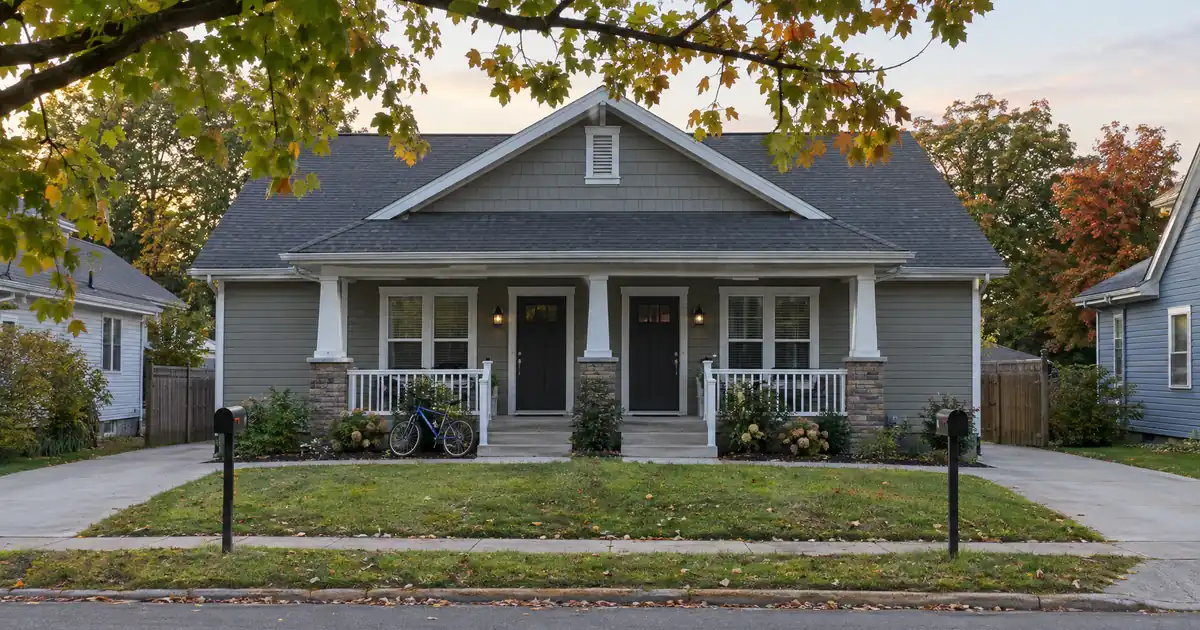
The Quick Read: The 15-year term carries a lower annual mortgage insurance percentage, but it also raises the required payment. On a 2-4 unit, that higher payment is what decides most files. The 15-year fits a buyer with strong income, solid rent and a plan to own for a long time. The 30-year fits most house-hackers who want breathing room, and it can still be paid down early.
Key Takeaways
- Annual mortgage insurance premium (MIP) is lower on the 15-year side at comparable down payments. Unit count does not change the schedule.
- The upfront premium is 1.75% of the base loan on both terms, and it is usually financed.
- A minimum down payment lands in the highest-leverage band on either term. There, the annual premium runs for the life of the loan.
- On a 3-4 unit, a higher payment can also squeeze the rental-income test, not just your debt ratios.
- A 30-year loan with extra principal payments gets you part of the 15-year benefit. It does not change the premium schedule.
What Is Annual MIP, and Why Does Term Matter?
Annual MIP is the ongoing mortgage insurance charge on an FHA loan. You pay it monthly, and it protects the lender, not you. It is separate from the upfront premium, which is 1.75% of the base loan. Most borrowers finance the upfront piece into the loan.
FHA payment estimate
Starting assumptions reflect an example price and the FHA minimum investment. Replace them with your own figures.
Editable benchmark: 7.32% as of October 22, 2026 · Freddie Mac 30-year average via FRED®. A conventional market reference, not an FHA loan quote.
Illustrative starting assumptions: a $350,000 price, the FHA minimum investment as the down payment, a thirty-year term at the current Freddie Mac benchmark, and property taxes and insurance estimated at typical national rates. Every field is editable.
Illustrative estimate only — not a Loan Estimate, approval, quote, or commitment to lend. The rate field carries the weekly Freddie Mac thirty-year conventional benchmark, a market reference and not an FHA loan quote; your rate is set by the lender at lock. FHA mortgage insurance follows HUD’s published schedule for the term, leverage and loan size entered; taxes, insurance and dues are editable estimates; closing costs are not included; county loan limits are not checked here. Licensed in sixteen states for consumer mortgages. Lendmire is not affiliated with or acting on behalf of FHA, HUD, or the federal government.
Three things pick your annual premium: the loan term, the loan-to-value ratio (LTV), and the base loan amount. LTV is the loan divided by the home’s value. Say you put 3.5% down on a fourplex. Your LTV is 96.5%, which is the program maximum, and you land in the top band. The exact numbers vary by lender and program and follow a full review of property, leverage, and credit.
Across the wholesale lenders that Lendmire works with on FHA loan programs, the annual premium runs between 0.15% and 0.75% of the balance. Where you fall depends on term, amount and LTV, and on lender guidelines and full file review. The 15-year schedule sits at the low end.
Here is what surprises people. Unit count does not appear anywhere in the premium table. A duplex and a fourplex with the same term, base loan and LTV get the same premium schedule. The unit count changes whether you qualify, not what the insurance costs.
Side-by-Side
| Factor | 15-Year FHA | 30-Year FHA |
|---|---|---|
| Maximum financing | 96.5% LTV | 96.5% LTV |
| Minimum investment | 3.5% from a 580 score | 3.5% from a 580 score |
| Upfront premium | 1.75% of base loan | 1.75% of base loan |
| Annual premium level | Lower at same LTV | Higher at same LTV |
| How long it lasts | 11 years or loan term, by LTV | 11 years at 90% LTV or below; term above |
| Qualifying pressure | Higher payment strains ratios | Gentler on ratios and rent test |
Occupancy is the same on both. You must live in one unit as your primary home. The property can have one to four units. A non-occupant co-borrower is allowed, and seller or other interested-party contributions can reach 6% of the price.
Documentation is the same too. The base ratio pair is 31/43, meaning housing costs and total debts as a share of gross monthly income. Documented compensating factors can stretch that up to 40/50 at the top tier. The automated finding governs most files.
How the Annual Premium Is Actually Calculated
The premium is not a flat charge on your original loan amount. HUD’s premium calculation method uses the average outstanding balance for each year of the loan. It multiplies that balance by the annual percentage. It then divides by 12 for the monthly charge.
So the monthly premium shrinks every year as your balance falls. A 15-year loan pays down faster, so its premium dollars shrink faster than a 30-year’s. That is a second advantage on top of the lower percentage.
HUD’s own mortgagee letter on annual premiums sets separate tables for terms of 15 years or less and for terms over 15 years. The letter has since been folded into the FHA handbook, where the current schedule lives. The tables also include a base-loan-amount threshold. Larger loans move into higher tiers, which can matter on a 3-4 unit or in a high-cost county.
How Long Do You Pay It?
Duration is where buyers get tripped up. Plenty of old articles say 15-year FHA loans carry no mortgage insurance. That was once true for low-LTV loans. HUD ended that exemption years ago, so those posts are out of date.
Today the rule works like this for most loan sizes:
- At or below 90% LTV, the annual premium ends after eleven years.
- Above 90% LTV, it runs for the mortgage term. Final terms depend on the lender’s guidelines, the property type, and the borrower’s complete credit picture.
On a 30-year loan above 90% LTV, that means thirty years of premium. On a 15-year loan at the same LTV, it means fifteen. A buyer who puts 3.5% down on either term is in the second group. Each figure is subject to lender guidelines and a complete review of property type, leverage, and credit.
Few FHA buyers reach the 11-year tiers. You need at least 10% down. For a 2-4 unit buyer, that is a real cash difference, and it is the biggest lever on total insurance cost. Sometimes a bigger down payment beats picking a shorter term. Leverage, reserves, and pricing vary by lender and program; the final terms follow the full file review.
The 3-4 Unit Wrinkle: A Rent Test That Cares About Your Payment
A duplex is simple. You qualify on your income and ratios, and the appraiser’s rent figure can inform how rental income is treated. A three- or four-unit property adds a second hurdle.
Lenders apply a self-sufficiency test to 3-4 units. The appraiser estimates fair market rent for every unit, including yours. The lender reduces that figure by a vacancy and maintenance allowance. What is left must cover the full monthly housing payment: principal, interest, taxes, insurance and mortgage insurance. HUD’s handbook glossary defines the net rental income this test measures. Reserves are also required on 3-4 units, and your lender confirms the amount.
Now apply the term. A 15-year loan raises principal and interest. A bigger payment leaves less room between net rent and the payment. A fourplex that passes comfortably on a 30-year can fail on a 15-year, even though its annual premium percentage is lower. This is analysis from how the test works, not a published HUD statement.
The premium is part of that payment, but it is rarely the main driver. The term is.
Debt-to-income (DTI) works the same way. DTI is your monthly debt payments divided by gross monthly income. The CFPB notes that 15-year payments are typically higher than 30-year payments, though the loan is paid off sooner and total cost can be lower. Both effects show up in your file.
When the 15-Year Is the Better Fit
The 15-year works when the payment is comfortable, not just approvable. It fits a narrow but real group.
You have strong, stable income. Your ratios clear with room to spare, close to the 31/43 base pair rather than leaning on compensating factors. A job loss or vacancy would hurt but not sink you.
You can put more than the minimum down. If you reach 90% LTV or below, the annual premium ends after eleven years on either term. The lower 15-year percentage then stacks on top of a shorter premium period. Terms vary by lender guidelines, property type, leverage, credit profile, and full file review.
You are buying a duplex. The 2-unit skips the self-sufficiency test, so the higher payment hits only your own DTI. That makes a shorter term easier to carry than on a triplex or fourplex.
You plan to stay. Total cost favors the short term only if you keep the loan for most of it. A 15-year loan on a home you sell in four years mostly buys you a higher payment.
Picture a buyer purchasing a duplex with 10% down and strong income. She lives in one unit and rents the other. Her ratios clear with room left. For her, the 15-year gets a lower annual premium percentage, a premium that ends after eleven years, and a loan that is gone in fifteen. The cost is a tighter monthly budget. If the rental unit sits empty for a few months, she feels it. Exact terms depend on the lender’s guidelines, property type, leverage, and a full review of the borrower’s file.
When the 30-Year Is the Better Fit
The 30-year is the practical choice for most first-time house-hackers. It is not the exciting choice. It is the one that leaves cash in your account when the water heater fails.
You are using the minimum investment. At 3.5% down, you are in the highest LTV band. The premium runs for the term on either schedule. The 30-year’s lower payment keeps your ratios inside 31/43, or inside the stretch toward 40/50 if your file carries documented compensating factors. Every figure here varies by lender and program — guidelines, property type, leverage, and credit profile all apply.
You are buying a three- or four-unit. The lower payment gives the self-sufficiency test more room. A thin margin on a 15-year can disappear after a small change in the appraiser’s rent figure.
Your rent is not locked in. House-hackers deal with turnover and repairs. A 30-year payment is easier to carry through a bad quarter.
You want a path to the same destination. You can pay a 30-year loan down like a 15-year whenever the budget allows. Extra principal shrinks your balance, and with it the premium dollars. The premium schedule itself stays fixed at origination, so duration does not change. Ask how extra principal is applied before you commit to that plan.
Consider a scenario where a buyer puts 3.5% down on a fourplex. Her income is solid but not extraordinary. On a 30-year term, the net rent clears the full payment with some margin. Move to a 15-year, and the same appraiser rent can fall short. She loses the loan option, not because of the insurance, but because of the payment. Final terms depend on lender guidelines, property type, leverage, and the borrower’s complete credit picture.
The tradeoff is real. Thirty years of high-LTV premium costs more in total than fifteen. You are buying flexibility, and flexibility has a price.
Hybrid Plays and Refinancing
Some buyers start on a 30-year and refinance into a shorter term when income grows. That works, but treat it as a new loan. A refinance gets a new case number under the current premium schedule, and the lender must qualify the higher payment on the new file. An FHA streamline of an existing FHA loan follows its own rules, including a net tangible benefit, and the premium continues.
If you expect to tap equity later, Lendmire’s piece How Annual MIP Adds to an FHA Cash-Out on a 2-4 Unit Primary Home explains how the premium builds up in that scenario. If conventional financing is on your list, Lendmire’s piece FHA vs Conventional Cash-Out When You Live in a 2-4 Unit Primary Home walks through the occupancy and leverage differences.
One more caution. The FHA schedule changes over time, and many online premium tables are stale. Confirm the current schedule with your loan officer, and check the mortgage insurance line for your actual file.
Common Mistakes on This Choice
- Comparing only the annual premium percentage. The payment, ratios and rent test matter more.
- Assuming a duplex needs the 3-4 unit test. It does not.
- Trusting outdated “no MIP on 15-year loans” claims. That exemption ended.
- Forgetting that minimum down payment locks you into a long premium period. On the 30-year, that means the full term.
- Counting projected rent as a sure thing. Lenders use the appraiser’s figure, not your estimate.
The Verdict
Neither term wins outright. The 15-year gives you a lower annual premium percentage, faster payoff and a premium that ends sooner. The 30-year gives you a payment that your ratios and your rent test can survive.
For a duplex buyer with strong income, the 15-year deserves a serious look. For a three- or four-unit buyer at minimum down, the 30-year is usually the safer fit, with extra principal as your own acceleration plan. The stronger play depends on your cash cushion more than on the premium table.
If you are buying a home and want to see whether an FHA loan fits your file, Lendmire can help you compare the options and what each one asks of the file. Program figures here are subject to lender guidelines and full file review, and nothing here is a commitment to lend.
Frequently Asked Questions
Does a 15-year FHA loan have lower annual MIP than a 30-year?
Yes, at comparable LTVs the 15-year schedule carries a lower annual premium percentage. At the minimum down payment, both terms fall in the highest-LTV band, and the premium runs for the loan term on both. You pay it for fifteen years instead of thirty on the shorter loan. Your lender confirms the exact tier for your loan size and LTV.
Does the upfront premium change with the term?
No. The upfront premium is 1.75% of the base loan on both terms. Most borrowers finance it, so it adds to the loan balance rather than coming out of pocket at closing. The term only changes the annual premium.
Do I need to pass the rental-income test on a duplex?
No. The self-sufficiency test applies to three- and four-unit properties. On a duplex, your income and ratios carry the file, and the appraiser’s rent schedule informs how rental income is treated. Confirm the details with your lender, because treatment of rental income depends on program guidelines.
Can I stop paying MIP early?
Sometimes. At or below 90% LTV, the annual premium ends after eleven years on the current schedule. Above 90%, it runs for the mortgage term. A refinance replaces the loan and its premium schedule. Older loans written under earlier rules can follow different cancellation terms. These specifics are subject to lender guidelines and a full review of property, leverage, and credit.
Can I take a 30-year and pay it off like a 15-year?
You can make extra principal payments to shorten the payoff. That lowers your balance and the premium dollars, but the premium schedule stays fixed at origination. You also keep the lower required payment as a safety net. Ask your lender how extra payments are applied to principal.
For your own numbers, request a scenario review with Lendmire.
About Lendmire
Lendmire — NMLS# 2371349 — is a mortgage broker that arranges FHA, VA, conventional and jumbo home purchase and refinance financing in 16 states through wholesale lenders. Every option is subject to the lender’s guidelines and full underwriting. Scotsman Guide named Lendmire a Top Mortgage Workplace in both 2025 and 2026.
Get Started
Ready to find the right loan for you?
In about 30 seconds you can review financing options available for your home or investment property. No commitment required.
Informational only. Not a Loan Estimate, approval, or commitment to lend. Program availability and eligibility are subject to lender guidelines, credit approval, property review, and underwriting.
References
1. HUD monthly mortgage insurance premium calculation
2. HUD mortgagee letter on annual mortgage insurance premiums
3. HUD mortgagee letter on the 15-year premium exemption, hosted by FHFA
4. HUD Handbook 4000.1 glossary
5. CFPB, Shopping for a Mortgage
This article is part of Lendmire’s FHA loan program — full qualification details, guidelines, and scenarios live on the program page.
Related reading: Does a Late Payment on Your FHA Loan Block an FHA Cash-Out? · Can an FHA Cash-Out Fund a Renovation on a 2-4 Unit Primary Home? · Can a Homeowner With an FHA Loan Do an FHA Cash-Out in Texas?
Brandon Miller
Founder & CEO, Mortgage Loan Originator, Lendmire LLC
- Mortgage Loan Originator · NMLS# 1129696 · Verify on NMLS Consumer Access
- North Carolina Real Estate Broker · License# 343312 · Verify on NCREC
- North Carolina Insurance Producer · License# 19053198 · Property, Casualty, Life, Health · Verify on NAIC SBS
- Lendmire LLC · Firm NMLS# 2371349 · Verify firm licensure
Disclosures. The information presented in this article is general market commentary, not financial, legal, or tax advice. Lendmire is a mortgage brokerage (NMLS# 2371349) — not a direct lender or depository institution — and loan placement is subject to lender underwriting. Nothing in this content represents a commitment to lend. Loan terms, pricing, and program availability vary based on borrower qualifications, property characteristics, and state of subject property, and are subject to change at any time. Lendmire complies with Equal Housing Opportunity requirements. Consumer access: nmlsconsumeraccess.org.