
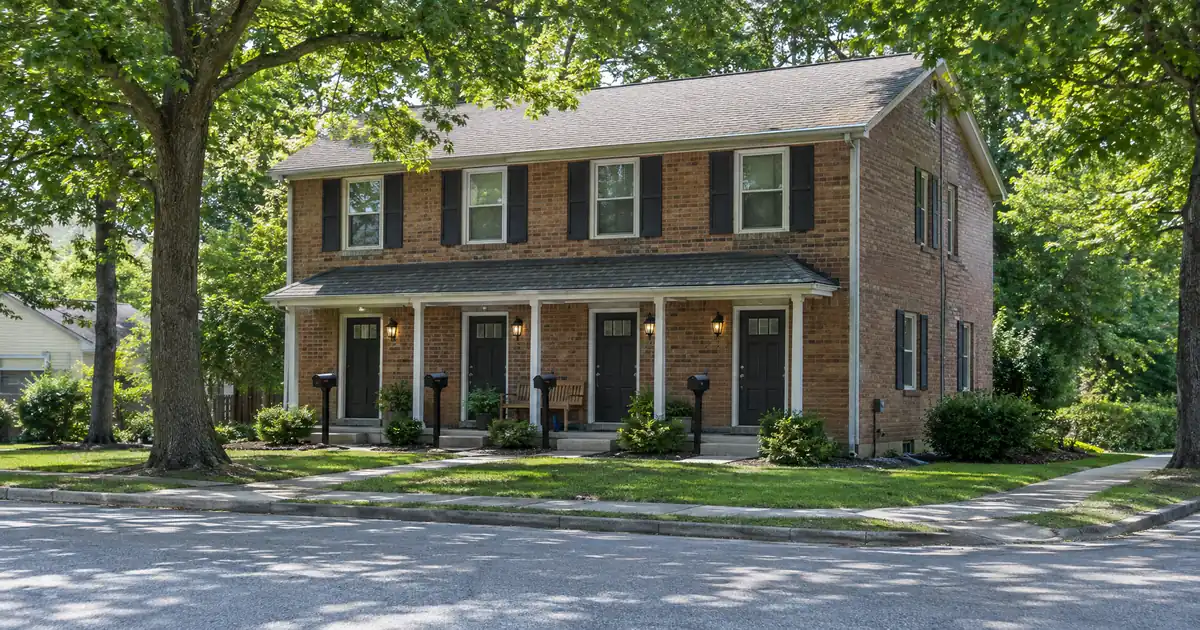
The Quick Read: An FHA Streamline is built for homeowners who already have an FHA loan, are current on it, and want a lighter refinance with no appraisal. A conventional refinance is built for owners with solid equity, strong credit, and a goal of leaving FHA mortgage insurance behind. On a duplex, triplex, or fourplex you live in, the gap widens. The streamline skips the appraisal. Conventional leans hard on value, equity, and the number of units. Everything here is subject to lender guidelines and full file review, and none of it is a commitment to lend.
Who Each Option Is Really For
The streamline is the low-friction path. It suits you if your FHA loan is current, your equity is thin or unknown, and the refinance produces a real benefit, such as a shorter term or a lower overall cost. The catch: you stay in FHA, so the mortgage insurance premium continues.
Refinance savings and break-even estimate
The starting figures are an example value with a balance in proportion and a placeholder for costs. Replace them with yours, and enter the current rate from your statement.
Editable benchmark: 7.32% as of October 22, 2026 · Freddie Mac 30-year average via FRED®. A conventional market reference, not a refinance quote.
Illustrative starting assumptions: a $350,000 home value, a $245,000 current balance, a current rate you enter and a remaining term seeded at twenty-five years, closing costs seeded at $5,000 as an editable placeholder (not a fee quote) and rolled into the new loan, a thirty-year term at the current Freddie Mac benchmark, and property taxes and insurance estimated at typical national rates. Every field is editable.
Illustrative estimate only — not a Loan Estimate, approval, quote, or commitment to lend. The new rate field carries the weekly Freddie Mac thirty-year conventional benchmark, a market reference and not a refinance quote; a refinance is priced by the lender at lock, and the current rate, the remaining term and the closing costs are figures you enter. The current payment is estimated from the balance, the current rate and the remaining term; the break-even divides the closing costs by the monthly saving and ignores the interest effect of a longer term. On the VA IRRRL the funding fee is added to the loan unless the veteran is exempt. Taxes and insurance are editable estimates. Licensed in sixteen states for consumer mortgages; Lendmire is a broker, never the lender.
Conventional is the exit path. It suits you if your home has appreciated, your credit is healthy, and you can meet the equity and reserve standards that multi-unit owner-occupied homes face. The catch: more paperwork, an appraisal in most cases, and tighter leverage limits the more cash you take out.
Neither wins on every file. A fair way to think about it: the streamline protects you from the property's value, and conventional rewards you for it.
Side-by-Side
| Factor | FHA Streamline | Conventional Refinance |
|---|---|---|
| Existing loan | Must be FHA-insured and current | Any loan type |
| Appraisal | Not required | Usually required |
| Documentation | Limited, depending on track | Full income, asset, credit review |
| Cash out | Not allowed | Limited cash-out or cash-out |
| Leverage on 2-4 units | Not tied to appraised value | Capped by units and purpose |
| Mortgage insurance | FHA premium continues | May end with enough equity |
| Closing costs | Cannot be rolled into the new loan | Structure varies by loan |
| Occupancy | You must live there | Primary residence rules apply |
| Best for | Thin equity, FHA holders | Strong equity, FHA exit |
What an FHA Streamline Actually Requires
A streamline is not "no paperwork." HUD says the loan being refinanced must already be FHA-insured and current. The refinance must also deliver a "net tangible benefit," which HUD ties to the rate, the term, or both on the new loan. The exact test depends on whether the old and new loans are fixed or adjustable, and HUD has revised it over time, so ask your lender how it applies to your file.
There are two tracks. On the credit-qualifying track, the lender reviews your credit and capacity. On the non-credit-qualifying track, there is no credit or capacity analysis. Neither track requires an appraisal. HUD's Mortgagee Letter 2025-09 amended parts of the handbook's streamline section, including residency rules and documentation for non-credit-qualifying files. It also states that streamlines are manually underwritten.
Some situations push you onto the credit-qualifying track. The FDIC's program summary notes that removing a borrower from the loan must follow credit-qualifying procedures. Think divorce, or a co-borrower leaving the title.
Seasoning applies too. Seasoning is the waiting period between your original loan and the refinance. It requires a minimum number of payments made and a minimum time since closing. These requirements can change, so confirm the current numbers with your lender.
One more honest limit: a streamline cannot pull cash out. It is a no-cash-out refinance of an FHA loan. HUD also says closing costs cannot be added to the new loan on a streamline. Some lenders advertise a "no cost" refinance. That usually means the costs are built into a higher rate, not erased.
How Conventional Works on a 2-4 Unit Home
A conventional refinance on a multi-unit home is not the same as one on a single-family house. Fannie Mae's eligibility matrix sets leverage ceilings by number of units and by transaction type. Cash-out on a 2-4 unit principal residence is capped well below the single-unit cash-out limit. Limited cash-out, where you pay off the existing first mortgage and take little or no cash, allows more leverage. Even then, limits for 2-4 units vary by product and by the current matrix, so your lender has to check the live version.
Underwriting is also fuller. Across the wholesale programs Lendmire places files with, a conventional refinance on a multi-unit home means documented income, assets, credit, and a property review. Reserves, occupancy, and property eligibility all get a look. Whether an appraisal is required depends on the lender and the loan. Fannie Mae's own value acceptance option lets some files skip one, but a lender can still order an appraisal if it believes one is warranted.
One ownership rule matters if you recently changed the title. Fannie Mae requires that at least one borrower on a limited cash-out refinance be a current owner of the property.
When the FHA Streamline Is the Better Fit
Choose the streamline when these describe you:
- Your equity is thin or you are unsure of your value. With no appraisal, a soft local market cannot sink the deal.
- You are staying put and mostly want a lower cost or a better term. The net tangible benefit test keeps the refinance honest.
- Your credit has slipped since you bought. The non-credit-qualifying track skips the credit and capacity analysis, subject to current HUD rules and lender overlays.
- You want the process to stay light. Less documentation means fewer moving parts.
Picture an owner of a fourplex who bought with 3.5% down and has made on-time payments since. Prices in the neighborhood have drifted sideways, so equity is slim. A conventional lender would probably want an appraisal and leave little room on leverage. The streamline sidesteps both issues. The trade-off is that FHA mortgage insurance keeps running. Terms vary by lender and program and follow a full review of property, leverage, and credit.
That insurance is worth understanding. Across the FHA programs we place, the premium has two parts: an upfront premium of 1.75% of the base loan, which is financed, and an annual premium that depends on term, loan amount, and LTV. LTV, or loan-to-value, is your loan balance as a percentage of the home's value. On a thirty-year loan above 90% LTV, the annual premium lasts for the term of the loan. At 90% or below, it ends after eleven years. Those are program facts, not prices, and your Loan Estimate shows how they apply to you. A HUD change that reduced annual premiums applied to loans endorsed on or after a set date in 2023, and it excluded streamlines of FHA loans endorsed on or before May 31, 2009. Check where your loan falls. Final terms depend on the lender's guidelines, the property type, and the borrower's complete credit picture.
When Conventional Is the Better Fit
Choose conventional when:
- You have meaningful equity. Growth in value is what makes conventional work, especially on 2-4 units where leverage limits tighten.
- FHA mortgage insurance is the main cost you want gone. Conventional mortgage insurance can end when equity builds, though terms depend on the loan.
- Your credit and income are strong and well documented. Full underwriting rewards a clean file.
- You want cash out or a different structure. A streamline cannot do this. A conventional cash-out can, at a lower leverage cap on multi-unit homes. Lendmire's piece FHA vs Conventional Cash-Out When You Live in a 2-4 Unit Primary Home walks through that trade-off.
Say you own a triplex and live in one unit. Values have climbed, your credit is strong, and your FHA premium is the line item you most resent. A conventional refinance, with an appraisal and full documentation, may let you leave FHA behind. You then need to meet the reserve and property standards for a multi-unit home. Lendmire's piece FHA Loan vs. Conventional PMI on a 2-4 Unit Primary Home covers the insurance side in more depth.
How Units and Rental Income Change the Picture
On FHA, three- and four-unit homes face an extra hurdle at purchase: a self-sufficiency test, where net rental income from all units must cover the housing payment. HUD's older guide also ties 3-4 unit properties to reserves. Whether and how that applies to a streamline today is something to confirm with your lender against the current handbook. Do not assume it either way.
Rental income also plays a different role by track. On a conventional loan or a credit-qualifying streamline, documented rent can matter to the file. On a non-credit-qualifying streamline, the credit and capacity review is skipped.
Occupancy matters most of all. This article is about a home you live in. If you have moved out and the building has become a rental, the rules change, and an FHA streamline on a property that is no longer owner-occupied faces added limits. In that case, occupancy decides your leverage. Talk to your loan officer before you apply.
The Break-Even Question
A refinance only pays if you keep the home long enough to recover the cost. Break-even is simple: divide your total closing costs by your monthly savings. The result is the number of months until the refinance pays for itself.
Two cautions apply here. On a streamline, closing costs cannot be rolled into the new loan, so you either pay them at closing or accept a structure where they are built into the rate. And a lower payment from a longer term can cost more over time even when the monthly number drops. Your Loan Estimate and, later, your Closing Disclosure are the neutral tools. The CFPB explains that you receive the Loan Estimate within three business days of applying and the Closing Disclosure at least three business days before closing. Compare the two line by line.
The Two-Step: Streamline Now, Conventional Later
Some owners do both. A streamline now can fix the payment or the term without needing an appraisal. As equity builds from payments and appreciation, a conventional refinance later can remove FHA insurance. It is a sensible bridge when your equity is not there yet.
The cost is that you pay closing costs twice. Run the break-even on each step separately. If you plan to sell within a few years, the second step may never pay off.
Common Mistakes
- Assuming "streamline" means "no requirements." The loan must be current, seasoned, and show a net tangible benefit.
- Expecting cash out from a streamline. It does not exist on this product.
- Treating a duplex like a single-family home. Conventional leverage limits differ by unit count.
- Ignoring the premium timeline. Whether FHA insurance lasts for the term depends on your LTV and term, not on how long you have owned.
- Skipping the Loan Estimate comparison. Compare, then decide.
Key Terms Defined
Net tangible benefit: A real, measurable gain from the refinance, such as a shorter term or a more stable loan structure, that HUD requires on an FHA Streamline.
Seasoning: The waiting period between your original loan and a refinance.
LTV (loan-to-value): Your loan balance as a percentage of the home's value.
Limited cash-out refinance: A conventional refinance that pays off your existing first mortgage and gives you little or no cash.
Self-sufficiency test: An FHA check on three- and four-unit homes that looks at whether net rent covers the housing payment.
The Balanced Verdict
If equity is thin and you want a light-touch refinance that stays within FHA, the streamline usually fits. If equity is strong and getting rid of FHA insurance is the goal, conventional usually fits. The 2-4 unit property pushes both choices: conventional gets pickier, and FHA adds rules around units and occupancy. Which one is right depends on your equity, credit, plans, and break-even.
If you are weighing a refinance and want the break-even run on your own numbers, Lendmire can help you compare the programs on the same home. You can start with its FHA loan programs page and talk through your options at 828-256-2183.
Frequently Asked Questions
Can I take cash out with an FHA Streamline?
No. A streamline is a no-cash-out refinance of an existing FHA loan. If you want cash, you would look at an FHA cash-out refinance, which has its own leverage cap and occupancy history requirement, or a conventional cash-out. On a 2-4 unit home, conventional cash-out is capped lower than on a single-family house.
Do I need an appraisal for an FHA Streamline on a duplex?
No, neither streamline track requires one. That is the main advantage if your equity is uncertain. A conventional refinance usually uses an appraisal to set value and LTV, though some files may qualify for a waiver at the lender's discretion.
Can I get rid of FHA mortgage insurance with a streamline?
No. A streamline keeps you in FHA, so mortgage insurance continues. Leaving FHA for a conventional loan is the usual way to end it, provided you meet conventional equity, credit, and reserve standards. Whether FHA insurance would have ended on its own depends on your loan term and LTV.
What if I moved out of one of the units?
Occupancy rules matter on both paths. A streamline on a property that is no longer your primary home faces added limits, and conventional primary-residence pricing and leverage assume you live there. Tell your loan officer the current situation before applying so the right program is matched.
Is a streamline always cheaper than conventional?
Not necessarily. It skips the appraisal and limits documentation, but closing costs cannot be rolled into the loan, and the FHA premium continues. Compare the Loan Estimates side by side and run the break-even for each.
For your own numbers, request a scenario review with Lendmire.
About Lendmire
Lendmire, NMLS# 2371349, is a mortgage brokerage with consumer lending licenses in 16 states. FHA, VA, conventional and jumbo purchase and refinance loans are arranged through wholesale lending partners, and each application is reviewed individually by the lender. Scotsman Guide named Lendmire a Top Mortgage Workplace in both 2025 and 2026.
Get Started
Ready to find the right loan for you?
In about 30 seconds you can review financing options available for your home or investment property. No commitment required.
Informational only. Not a Loan Estimate, approval, or commitment to lend. Program availability and eligibility are subject to lender guidelines, credit approval, property review, and underwriting.
References
1. HUD: Streamline Refinance Your Mortgage
2. HUD Mortgagee Letter 2025-09
3. FDIC: FHA Streamline Refinance summary
4. Fannie Mae Eligibility Matrix
5. CFPB: What documents should I receive before closing
This article is part of Lendmire’s FHA loan program — full qualification details, guidelines, and scenarios live on the program page.
Related reading: Can a 2-4 Unit Primary Home Get an FHA Streamline Without an Appraisal? · Should a Borrower With Equity Choose an FHA Streamline Refinance? · FHA Non-Occupant Co-Borrower Rules on a 2-4 Unit Home
Brandon Miller
Founder & CEO, Mortgage Loan Originator, Lendmire LLC
- Mortgage Loan Originator · NMLS# 1129696 · Verify on NMLS Consumer Access
- North Carolina Real Estate Broker · License# 343312 · Verify on NCREC
- North Carolina Insurance Producer · License# 19053198 · Property, Casualty, Life, Health · Verify on NAIC SBS
- Lendmire LLC · Firm NMLS# 2371349 · Verify firm licensure
Important disclosures. Lendmire (NMLS# 2371349) is a licensed mortgage brokerage. Lendmire is not a direct lender, depository institution, or financial advisor. All loan inquiries are subject to lender underwriting; this article does not constitute a commitment to lend. Rates, terms, and program guidelines are subject to change without notice and vary by borrower profile, property type, and state. Information in this article is general in nature and is not financial, legal, or tax advice. Equal Housing Opportunity. NMLS Consumer Access: nmlsconsumeraccess.org.