
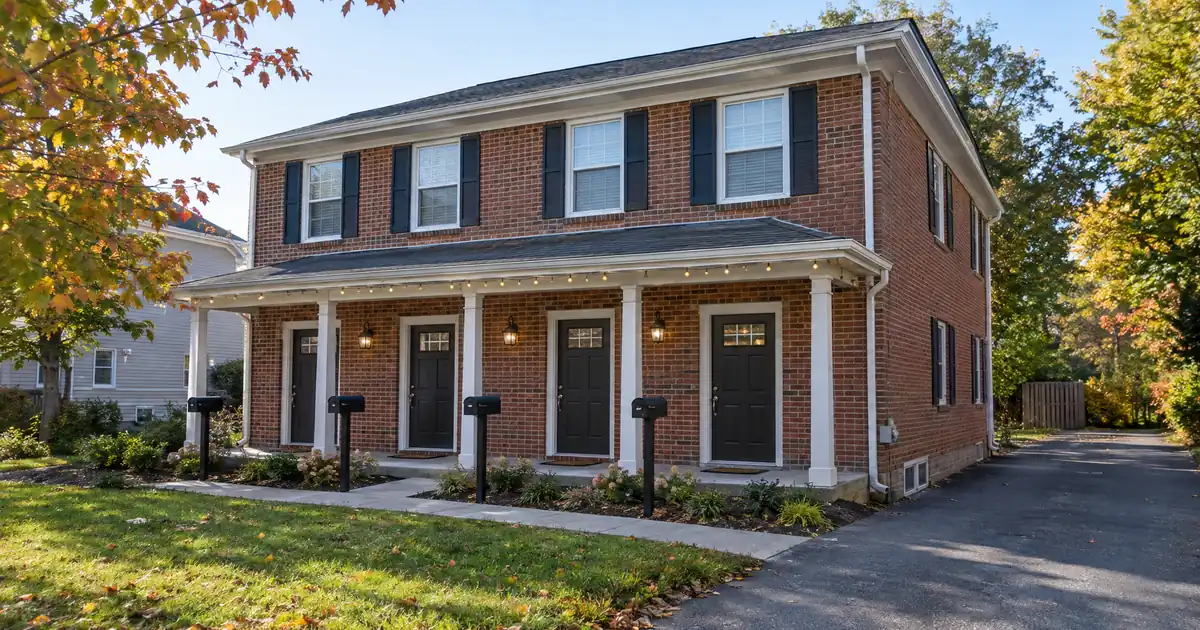
The Quick Read: A fourplex cash-out refinance replaces your current loan with a larger one and pays you the difference. The lender sizes it by the tighter of two tests: how much equity the roughly 75% cash-out leverage cap leaves available, and whether the building’s combined rent still covers the new, bigger payment. Both tests have to clear, and the second one surprises most first-timers. Exact terms depend on the lender’s guidelines, property type, leverage, and a full review of the borrower’s file.
- A fourplex is a 2–4 unit residential property, so it follows residential investor underwriting, not commercial multifamily rules.
- On a standard rental, cash-out tops out around 75% LTV across most of the network, with about 6 months of ownership expected.
- Coverage is the property’s rent divided by PITIA, and taking more cash lowers it.
- Your net check is smaller than your equity once payoff, costs, and reserves come out.
- Living in one of the four units changes the whole file and takes it out of the DSCR lane. Every figure here varies by lender and program — guidelines, property type, leverage, and credit profile all apply.
Key Terms Defined
Cash-out refinance: a new, larger first-lien loan that pays off the old one and sends you the remainder.
LTV (loan-to-value): the new loan balance as a percentage of the appraised value.
DSCR (debt service coverage ratio): gross monthly rent divided by the full monthly housing payment. Above 1.00, the rent covers the payment.
PITIA: principal, interest, taxes, insurance, and association dues. It is the payment the rent has to cover.
Seasoning: the waiting period after you take title before a lender will cash you out against appraised value.
Reserves: liquid assets you keep after closing, usually counted in months of PITIA.
Prepayment penalty: a one-time fee for paying a loan off early, usually on a stepped schedule.
Net proceeds: the cash that actually reaches you after payoff, costs, and required reserves.
DSCR Cash-Out Calculator
Run the cash-out numbers in your market
Rate source: Freddie Mac 30-yr average via FRED® — Federal Reserve Bank of St. Louis · effective Oct 22, 2026
Prefilled with starting assumptions — enter your property’s value, balance, taxes, and insurance for a more accurate picture.
Program parameters update from Lendmire’s centralized guideline source. Taxes and insurance are editable estimates.
As of Oct 22, 2026 · General Freddie Mac market benchmark, not a Lendmire loan offer. Property value, balance, taxes, and insurance are editable estimates. Maximum loan-to-value varies by lender, program, property type, and seasoning. Not a Loan Estimate, approval, or commitment to lend. Program availability and eligibility are subject to lender guidelines, credit approval, property review, and underwriting.
Is Pulling Cash Out of Your Fourplex the Right Move?
Pull cash out when the money has a job that earns more than the added payment costs. That usually means a down payment on the next rental or a renovation that lifts rents. The loan is a tool, not a windfall.
Four units give you something a single-family rental does not. One vacant apartment leaves three paying, so the building keeps producing. That cushion is why lenders like small multifamily, and it is why investors use fourplexes to scale.
The cost is a bigger payment and a reset loan clock. Run that trade before you apply, not after. If you are weighing whether to cash out or simply refinance a building you own free and clear, Lendmire’s piece Fourplex DSCR Refinance vs Cash-Out on a Paid-Off Rental covers that fork directly.
First Fork: Do You Live in a Unit?
This is the first question any lender asks. If you occupy one unit, the loan is a standard owner-occupied mortgage, and DSCR programs do not apply. If all four units are rented to tenants, the DSCR path opens.
| Factor | You live in a unit | All four units rented |
|---|---|---|
| Loan type | Owner-occupied mortgage | Investor DSCR loan |
| Reviewed on | Your personal income | Property rent vs PITIA |
| Role of rent | Often partial credit | The core test |
| Fits this article | No | Yes |
Everything below assumes a pure investor fourplex. If you occupy a unit, the process, documents, and sizing all change.
What Has to Be True Before You Apply
Run this self-test before you contact anyone. These are typical ranges from the select lenders in Lendmire’s wholesale network, subject to lender guidelines.
- Property type. A fourplex, including a condo or PUD fourplex in many cases. Manufactured homes, log homes, and barndominiums are not offered through the network’s DSCR programs.
- Seasoning. About 6 months of ownership, measured from the date title was recorded. Below that mark, some lenders size the loan from what you paid plus documented improvements rather than appraised value.
- Equity. The 75% cash-out ceiling on a standard rental means the old loan has to sit well under that line for any cash to remain.
- Coverage. 1.00 is where many select programs start. A separate select-lender path takes coverage below 1.00 with leverage and terms adjusted. Stronger ratios open better pricing and leverage.
- Credit. A 620 floor exists in parts of the network. Most programs want around 660, and 700 and up unlocks the strongest leverage tiers.
- Reserves. Commonly about 6 months of PITIA, stepping up to about 9 months on loans above $1,500,000. Requirements vary by lender, leverage, and loan size.
- Loan size. Up to $3,000,000 on standard programs. Smaller balances route through select lenders in the network.
- Title and entity. If you hold the building in an LLC, closing in that entity may be possible, subject to lender program eligibility.
Step by Step: From Decision to Funded
1. Sort the deal. Decide whether you want cash back or just better loan terms. Cash back makes it a cash-out file. A refinance that returns no cash is a rate-and-term refinance, which on an investment property can reach about 85% LTV.
2. Pull your payoff. Get the current balance, any second liens, and whether a prepayment penalty applies.
3. Build the rent picture. Gather leases and a unit-by-unit rent roll.
4. Estimate your cash. Appraised value times the maximum LTV, minus payoff, costs, prepaid items, and reserves.
5. Test coverage. Divide total rent by the new PITIA. Shrink the loan until the number clears the program’s floor.
6. Submit the file. Credit, asset statements, insurance, entity documents, leases, and the payoff statement.
7. Appraisal. The appraiser values the building and gives an opinion of market rent on each unit.
8. Clear conditions. Underwriting asks for missing papers or explanations. Answer completely the first time.
9. Sign and fund. The old lien is paid off, and what remains goes to you. Final terms depend on lender guidelines, property type, leverage, and the borrower’s complete credit picture.
Lendmire’s role in this sequence is broker. It compares options across the lenders in its network and structures the file. Lenders review and approve. For the wider program picture, see the complete DSCR loans guide.
How the Numbers Work
Two formulas drive everything. Max new loan equals appraised value times the cash-out LTV cap. Coverage equals gross monthly rent divided by PITIA. Whichever produces the smaller loan wins.
Here is a modeled example. These are assumptions for illustration, not market data. Say the building appraises at 100% of value and the existing loan sits at 45% of that value. The rent roll supports roughly 1.5x coverage on the current payment.
| Item | Full cash-out | Take-less variant |
|---|---|---|
| New loan (cash-out, standard rental) | 75% LTV | 65% LTV |
| Existing payoff | 45% of value | 45% of value |
| Gap before costs | 30 points of value | 20 points of value |
| Modeled coverage after | just over 1.0x | about 1.15x |
Taxes and insurance do not shrink when you borrow less, so coverage does not move in a straight line. The full cash-out version barely clears 1.00x. The take-less version gives up a third of the cash and buys a real cushion.
Then costs come out of the gap. Closing costs, prepaid taxes and insurance, and any reserve you must show all reduce the check. Ask early whether proceeds can count toward reserves, since programs differ. Available equity is never the same as cash in hand.
One more caution. Coverage compares rent to PITIA only. It leaves out repairs, vacancy, management, utilities, and capital expenses. A building can clear 1.00x and still run thin in real life. (Lenders know this. Your budget has to be stricter than their test.)
How Fourplex Rent Gets Counted
All four units combine into one rent figure, and that total is tested against the new payment, not your old one. The appraisal supports it. The small residential income appraisal form for 2–4 units has a rent schedule, comparable rental data, and an income section. The appraiser reconciles market rent for each unit.
Unit-level support matters on four doors. Many programs use the lower of the lease rent or the appraiser’s market rent. Condition affects the result.
| Unit situation | Typical treatment | What to do |
|---|---|---|
| Leased, in place | Lease supports rent | Have the signed lease ready |
| Month-to-month | Often market rent from appraisal | Offer a short written lease if the tenant agrees |
| Vacant | Market rent, if rent-ready | Finish repairs before the appraiser visits |
A vacant or half-renovated unit is the most common way a fourplex file loses coverage. Fix it before you order the appraisal, not after.
What Documents to Expect
Income documentation is lighter, but the file is not empty. DSCR qualifies primarily on property-level rental income covering the payment, subject to lender guidelines. Everything else still gets verified.
| Every borrower | Investor-style files add |
|---|---|
| Credit authorization | Leases or rent roll |
| Asset statements | Entity documents if in an LLC |
| Insurance declaration | Business-purpose certification |
| Payoff statement | Prepayment terms on old loan |
Structures and Variations
The spine of the network is the 30-year fixed. Select lenders add extended terms, including 40-year schedules, and interest-only periods. Interest-only lowers the payment during the interest-only window, which can lift coverage. ARM structures exist for investors who want them. Each choice trades something, usually pricing or leverage, so compare the full terms rather than one number.
Prepayment terms matter on both ends. Many DSCR loans carry a stepped penalty, such as 5-4-3-2-1, where the fee is a percentage of the balance and drops each year. It is a one-time fee triggered at payoff, not a yearly charge. If your current loan has one, it comes out of your proceeds. Choosing a penalty structure on the new loan also shapes your next refinance.
Short-term rental fourplexes sit in a different box. Cash-out on short-term-rental collateral tops out around 70% LTV, while a standard rental reaches 75%. Expect a 640+ score and about 12 months of hosting history. Short-term rental rules can vary by city, county, HOA, and property type, so investors should confirm local rules before relying on projected rental income. These specifics are subject to lender guidelines and a full review of property, leverage, and credit.
Where the General Rule Breaks
DSCR loans are designed for non-owner-occupied investment properties. Because they are business-purpose investor loans, they are reviewed differently from a standard owner-occupied mortgage. FDIC examination material treats credit to acquire or improve non-owner-occupied rental property as business-purpose credit, and the consumer-mortgage disclosure rules do not apply to these loans. Expect a business-purpose certification in your closing package.
That is the general rule. Here is where it breaks.
- Owner-occupied fourplex. If you live in a unit, the business-purpose treatment weakens. Compliance Alliance explains that for owner-occupied rentals, buying qualifies as business-purpose above 2 units, but improving or maintaining qualifies only above 4. A fourplex falls short on that second test. The file leaves the DSCR lane.
- Personal use of proceeds. Lenders probe where the cash goes. If you plan to spend it on personal expenses, tell them. Misclassifying the purpose creates problems for everyone.
- Thin equity. A recently renovated fourplex with little equity can pass coverage and still produce a small check. A smaller cash-out may not justify a higher payment and a reset loan clock. Run the math before paying for an appraisal.
- Existing penalty loan. Paying off a loan inside its penalty window can eat the proceeds. Compare the penalty to the benefit before committing.
- Condo or PUD fourplex. Often workable, but association dues sit inside PITIA and can pull coverage down.
- Five or more units. That building leaves 2–4 unit residential underwriting and is a different lane with different rules.
Honestly, the thin-equity case is the one that trips up the most investors. They see a big appraisal and forget the cap, the payoff, and the costs all come off the top.
What the Decision Looks Like in Practice
Start with the use of proceeds. If the cash funds the next acquisition, ask whether that building covers its own payment on its own rent. Chaining two tight deals is how investors get squeezed when a unit sits empty.
Then pick your cash level, not just your maximum. The full-cash version in the example clears the floor by a hair. The take-less version leaves room for a vacancy, a roof, or a slow month. This one is a genuine judgment call. Investors chasing growth pull the max, while those running tighter operations often take less.
A larger down payment on a purchase lowers the payment and can lift coverage. A cash-out works the other way. Neither erases leverage caps, credit floors, reserve rules, or property eligibility. The strongest files clear both tests: enough equity and enough rental coverage.
Common Misreads
- No paperwork. Income documents are lighter, but credit, assets, insurance, entity papers, the appraisal, and the payoff all remain.
- Equity equals cash. Caps, payoff, costs, and reserves cut it down.
- Strong coverage means a strong deal. Coverage leaves out operating costs.
- Agency seasoning rules apply. DSCR lenders set their own, and about 6 months of ownership is the common expectation in this network.
Frequently Asked Questions
Can I cash out a fourplex if I live in one unit?
Not through a DSCR program. Owner-occupied fourplexes go through standard owner-occupied mortgage channels, where your personal income carries the file. The DSCR path is built for buildings where all four units are rented to tenants.
How long do I need to own the building first?
About 6 months from the date title was recorded is the common expectation across most of the network. Programs differ, and sizing before that point often relies on cost basis instead of appraised value. Confirm the seasoning rule before ordering an appraisal.
What happens if one unit is vacant?
The file can still work, but expect scrutiny. Many programs count market rent from the appraisal for a vacant unit if it is rent-ready. A unit under renovation can drag coverage down, so finish the work first.
Can the loan close in my LLC?
Often yes, subject to lender program eligibility. Expect entity documents, and lenders may ask for personal guarantees. Sort out title and vesting before you apply so the payoff and new loan match.
How much cash should I actually take?
Take enough to fund the next move and leave a coverage cushion. Pulling the full amount can leave coverage near the floor. Pulling less usually buys breathing room for vacancy and repairs.
Next Step
If you are buying or refinancing a rental property and want to see how the numbers work, Lendmire can help you compare DSCR loan options based on the property income, credit profile, leverage, and investor goals. The brokerage arranges financing through select lenders in its wholesale network across 41 markets, including Washington, D.C. Qualification is subject to lender guidelines and is not a commitment to lend. Call 828-256-2183 or request a quote.
For the mechanics of pulling equity out of a rental property, see Lendmire’s guide to cash-out refinance on an investment property.
About Lendmire
Lendmire (NMLS# 2371349) is a mortgage brokerage built around DSCR investor lending, with programs available in 41 markets, including Washington, D.C. DSCR lenders commonly evaluate rental-income coverage instead of personal income paperwork — a practical fit for LLC-owned and multi-property investors. Terms vary by lender, property, leverage, and program. Scotsman Guide named Lendmire a Top Mortgage Workplace in both 2025 and 2026.
Get Started
Ready to find the right loan for you?
In about two minutes you can review financing options available for your investment property. No commitment required.
Informational only. Not a Loan Estimate, approval, or commitment to lend. Program availability and eligibility are subject to lender guidelines, credit approval, property review, and underwriting.
References
1. Fannie Mae Form 1025 / Freddie Mac Form 72
2. FDIC TILA examination material
3. Compliance Alliance: Regulation Z and Investment Properties
This article is part of Lendmire’s investment property cash-out refinance program — full qualification details, guidelines, and scenarios live on the program page.
Related reading: Do You Have to Wait Before Cash-Out Refinancing a New Rental? · How Much a Cash-Out Refinance Holds Back on LLC-Held Rentals · How a Lender Counts Closing Costs in a Rental Cash-Out Refinance
Brandon Miller
Founder & CEO, Mortgage Loan Originator, Lendmire LLC
- Mortgage Loan Originator · NMLS# 1129696 · Verify on NMLS Consumer Access
- North Carolina Real Estate Broker · License# 343312 · Verify on NCREC
- North Carolina Insurance Producer · License# 19053198 · Property, Casualty, Life, Health · Verify on NAIC SBS
- Lendmire LLC · Firm NMLS# 2371349 · Verify firm licensure
Legal disclosures. Lendmire (NMLS# 2371349) is a state-licensed mortgage brokerage that arranges financing through wholesale lender relationships. Lendmire is not a direct lender, depository institution, or registered financial advisor. The discussion above is general informational content about real estate financing — it is not financial, legal, or tax advice, and readers should consult licensed professionals for guidance on their individual circumstances. Loan inquiries are subject to lender underwriting; this article does not represent a commitment to lend. Loan terms, rates, and qualification standards vary by borrower, property, and state, and are subject to change at any time. Equal Housing Opportunity. NMLS Consumer Access: nmlsconsumeraccess.org.