
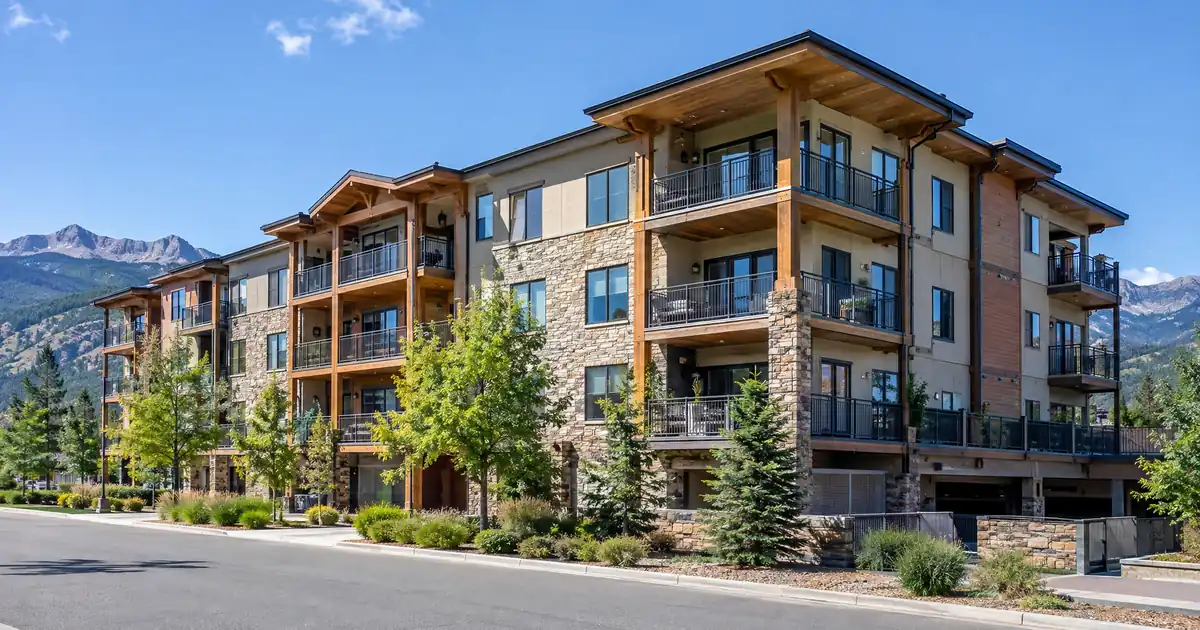
The Quick Read: A HELOC fits a borrower with strong personal credit and a first mortgage worth keeping, while a cash-out refinance fits a rental that must be sized on its own income, and with limited equity the winner is whichever leaves more room under the combined leverage ceiling. Neither product is built to squeeze cash out of a thin equity position. Colorado works here as an example property, and the guidelines carry no Colorado-specific overlay that changes the comparison.
- On an investment property, the network’s HELOC ceiling is 70% CLTV. A DSCR cash-out refinance on a rental tops out around 75% LTV across most of the network.
- A HELOC is underwritten on you: credit, debt-to-income, and title held in your name. A DSCR cash-out is underwritten on the property’s rent against its full payment.
- LLC-held rentals generally cannot take a HELOC. They are candidates for a DSCR cash-out, subject to program eligibility.
- Thin equity can leave little or no usable cash after costs on either path. Run the combined-leverage math before you apply.
This comparison covers how each option behaves when equity is the limiting factor. It leaves pricing out on purpose. The calculator handles that side.
How large a line the equity supports in Colorado.
An equity line is sized by combined loan-to-value, occupancy, and credit — not by rental coverage. Switch the occupancy or the credit band and the ceiling moves with it.
Investment-property lines require a 700 minimum credit score; second-home lines start at a 640 minimum and primary-residence lines at 600, and the combined-LTV ceiling steps down as the credit band drops on primary-residence and second-home lines and holds on investment-property lines; the line cap steps down on primary-residence lines and holds at every tier on investment-property and second-home lines.
A debt-to-income ratio above 45% requires 680+ credit. Profiles under 640 are limited to single-family homes. At least 75% of the approved line is drawn at closing. Ceilings, floors, and caps update from Lendmire’s centralized guideline source.
Line estimate
Illustrative estimate only — not a quote, Loan Estimate, approval, or commitment to lend. The rate is an editable assumption; equity-line pricing is variable through both the draw and repayment periods and never converts to fixed. Occupancy and credit drive the ceiling together: an investment property tops out at 70% combined LTV (minimum credit 700, line cap $500,000); a second home tops out at 90% combined LTV (minimum credit 640, line cap $500,000), with the ceiling stepping down as the credit band drops (the cap holds at every tier); a primary residence tops out at 90% combined LTV (minimum credit 600), and its $750,000 maximum line is available only at 75% combined LTV or below with a 700-or-better credit profile (720 on the longer-runway program) and a full appraisal. Lines above $500,000 require a full appraisal. Credit, debt-to-income, property type, and full underwriting review all affect the final line.
Side-by-Side
The table shows how the two products differ on structure and documentation. The HELOC column reflects select wholesale-network guidelines. The cash-out column describes a DSCR cash-out on a rental. Every file is reviewed individually, and figures are subject to lender guidelines.
| Factor | HELOC | DSCR Cash-Out Refinance |
|---|---|---|
| Review basis | Borrower credit and DTI (50% max) | Rent coverage of the full payment |
| Documentation | Credit, income, assets, title, valuation | Lease or rent schedule, appraisal, entity papers, guarantor file |
| Property types | SFR, 2-4 units, PUD, townhome, condo | Rental property types per program |
| Entity vesting | Individual or revocable trust only | LLC possible, per program eligibility |
| Lien position | Standalone line, first or second lien | New first lien replaces the old one |
| Leverage ceiling | 70% CLTV on investment property | Around 75% LTV on standard rentals |
| Valuation | Often automated up to $500,000 | Full appraisal with rent schedule |
| Reserves | Set per lender and file | Commonly about 6 months of PITIA |
| Seasoning | Set per lender | About 6 months is the common expectation |
Manufactured homes, log homes and barndominiums are not offered on the DSCR side. Co-ops, condotels, commercial, mixed-use and agricultural zoning are not offered on the HELOC side.
What Limited Equity Does to Each Option
Limited equity hurts a HELOC first because a line is sized from a percentage of value minus what you already owe. A cash-out refinance also sizes on a percentage of value, but it replaces the first lien, so the ceiling applies to one loan rather than two stacked together. Either way, the cushion shrinks fast.
Picture an owner who owes 65% of an investment property’s value. An investment-property HELOC on this network caps at 70% CLTV. That leaves five points of value as headroom. On a modest-priced home, five points can fall below the $25,000 minimum line size. Add the requirement that at least 75% of the line is drawn at closing, and the product stops working as a standby reserve.
Now run the same owner through a DSCR cash-out refinance on a standard rental at around 75% LTV. The ceiling leaves ten points of headroom before costs. The new, larger payment must also clear the coverage test, and a bigger loan lowers the ratio. Equity and coverage both have to pass. Where one passes and the other fails, the loan gets sized to the lower of the two. Terms vary by lender guidelines, property type, leverage, credit profile, and full file review.
Occupancy changes the HELOC math a lot. On a primary residence, the 90% CLTV ceiling exists only at a 720-or-better credit profile, and it applies to lines up to $500,000. At 700 and above the primary-residence ceiling is 85% CLTV up to $500,000, and at 640 and above it drops to 80%. A second home runs from 75% CLTV at 640 up to 90% at 720. An investment property does not step up at all. Market surveys differ. NerdWallet reports a maximum LTV of 80% on investment-property lines, though many lenders set thresholds below 70%. On this network the investment ceiling is 70% CLTV. Exact terms depend on lender and investor guidelines, credit profile, reserves, and property review.
DSCR loans are designed for non-owner-occupied investment properties. Because they are business-purpose investor loans, they are reviewed differently from a standard owner-occupied mortgage. A homeowner living in the property compares the HELOC against an owner-occupied cash-out refinance instead, and that product has its own leverage limits that vary by lender.
How the Two Products Are Built
A HELOC is an open-end line. The CFPB explains that you can borrow against your equity repeatedly during a draw period, and equity means the home’s value minus what you owe on your mortgage. On this network the line can sit in first or second lien position. Primary residences and second homes have two draw structures: a 3-year interest-only draw with a 17-year amortizing repayment, or a 5-year draw with a 25-year repayment. Tennessee shortens both. Investment lines run the 5-year draw and 25-year repayment structure only. The line’s pricing floats through the draw and repayment periods and does not convert to fixed.
A cash-out refinance is a single new loan. It pays off the existing first mortgage and gives you the difference as one lump sum. The spine of DSCR structures is the 30-year fixed. Extended 40-year terms and interest-only periods are available through select lenders in the network, and ARM structures exist for investors who want them. Above $2,500,000 the network generally holds to 30-year fixed structures. Loans reach up to $3,000,000 on standard programs, with smaller balances available through select lenders.
The HELOC changes less in your existing finances, because the first mortgage stays in place. The cash-out reprices the entire balance. That matters when your current first mortgage has terms you want to keep.
When a HELOC Is the Better Fit
A HELOC is the better fit when you own the property personally, your credit and income are strong, and you want to keep your first mortgage as it is. It also fits borrowers who want staged access to cash instead of one lump sum.
Strong personal file, owner-occupied or second home. The HELOC is underwritten on you. The maximum DTI is 50%, with 45% for credit profiles from 600 to 679, and a ratio above 45% requires a 680 minimum. Qualification runs on the interest-only payment calculated on the maximum draw. On a primary residence at 720 or better, the ceiling reaches 90% CLTV, and that is where thin equity has the most room to work.
Staged spending. After closing, later draws start at $1,000 in most states, and Texas sets the minimum at $4,000. A borrower funding renovations in phases pays for what has been drawn. The draw period is interest-only, then repayment amortizes.
An investment property with 30% or more equity and strong credit. The investment-property line runs up to $500,000 at 70% CLTV, with a 700 credit minimum. It is a narrow lane, but a workable one when the numbers fit.
Title and exposure limits fit. Title must sit with the individual borrower or a revocable living trust. A borrower is limited to three lines, and a borrower with more than 15 financed properties is not eligible.
The HELOC has its own risks. A lender can generally freeze or reduce a line if the home’s value falls or your finances worsen. The home secures the debt, so falling behind puts it at risk. NerdWallet notes that a HELOC on an investment property is not offered by all lenders and has strict qualification requirements. Lendmire’s piece HELOC vs. Home Equity Loan vs. Cash-Out Refinance Requirements lays out those requirements in more detail.
When a Cash-Out Refinance Is the Better Fit
A cash-out refinance, in its DSCR form, is the better fit when the property is the borrower and the personal file is not. That covers LLC-held rentals, portfolios with many properties, and investors whose tax-return income does not tell the story.
LLC title. The HELOC guidelines do not allow LLCs, corporations, partnerships, or irrevocable, blind or land trusts to hold title. A property already deeded to an LLC needs a vesting change for a HELOC, or a DSCR cash-out instead. Some investors move title into their own name just to qualify, then move it back. That route can raise due-on-sale and seasoning questions, so check it with the lender and an attorney first. DSCR loans often close in an LLC with an individual guarantor, subject to lender program eligibility.
Property-level qualification. A DSCR loan is reviewed primarily on property-level rental income covering the payment, subject to lender guidelines. Many programs start at 1.00 coverage, and stronger ratios open better leverage and pricing. A separate select-lender path takes coverage below 1.00, with leverage and terms adjusted. Credit floors vary: 620 exists in parts of the network, most programs want around 660, and 700 or better unlocks the strongest leverage tiers.
Bigger, more flexible sizing. On a standard rental the cash-out tops out around 75% LTV across most of the network, with about 6 months of seasoning as the common expectation. Reserves commonly run around 6 months of PITIA. Conservative rate-and-term files at modest leverage under $1,500,000 can see reserves waived. Loans above that size typically step up to about 9 months. Reserve rules vary by lender, leverage, loan size and transaction type.
A cash-out is not a free lunch. Clearing 1.00 is not the same as positive cash flow. DSCR compares rent to PITIA only, so repairs, vacancy, management and utilities sit outside the ratio. A larger loan lowers coverage. With thin equity, a bigger cash-out can fail the coverage test even when the value test passes. Some programs also size on cost basis during the seasoning window, which can leave little or no cash.
When Neither Leaves Meaningful Cash
Sometimes the honest answer is that thin equity leaves too little cash for either option to be worth the cost. The headroom has to cover the new loan costs, the minimum line size or loan size, and the coverage test.
Three alternatives help in that case. Borrowing less can keep a cash-out inside the coverage test. Paying the first mortgage down builds the cushion for later. Waiting for the value to move can open a larger window.
Order matters, too. Money.com notes that a cash-out refinance that leaves very little equity can make you a poor HELOC candidate afterward. Taking one option eliminates the other.
Valuation can change the picture. Lines at or below $500,000 ordinarily run automated valuation with no traditional appraisal, though a higher CLTV may require a secondary valuation, and a borrower may request a full appraisal in any case. A DSCR cash-out uses a full appraisal with a rent schedule. A low value shrinks headroom on both paths, and a documented appraisal reconsideration packet with recent nearby sales can recover some of it.
Where Colorado Fits
Colorado is one of the 16 states where the HELOC is offered through the network. The DSCR programs run across 40 states plus Washington, D.C. The guidelines carry no Colorado-specific LTV overlay, so the standard tiers apply. Property-listing restrictions apply in some other states but not in Colorado.
The most useful checks for a Colorado owner are the same as anywhere. Confirm the title vesting, estimate the combined leverage, and pull the rent schedule. See Lendmire’s complete DSCR loans guide for the full program picture.
Key Terms Defined
CLTV: Combined loan-to-value, which adds every loan on the property, including a new line, and divides by the property’s value.
Open-end line: A line of credit you can draw on, repay and draw on again within its draw period.
DSCR: Debt service coverage ratio, which divides a rental’s monthly rent by its full monthly payment.
PITIA: The full monthly obligation of principal, interest, taxes, insurance and any HOA dues.
Seasoning: The minimum time a borrower has owned the property before certain cash-out options become available.
Vesting: The legal name or entity that holds title to the property.
The Verdict
Choose the HELOC if you hold title personally, have strong credit, want to keep your first mortgage, and the combined leverage ceiling leaves room for a line of at least $25,000. Choose the DSCR cash-out refinance if the property sits in an LLC, the personal file is hard to document, or rent coverage is the stronger story. Choose neither if the headroom disappears after costs.
Both options use the home as collateral, and both shrink equity afterward. The better path is the one that clears both tests: enough equity and enough coverage. Every file is underwritten individually, and the figures here are guidelines from select wholesale lenders and are not a commitment to lend.
If you are weighing a home equity line against a cash-out refinance and want to see how the numbers work, Lendmire can help you compare HELOC options based on the property, the equity available, credit profile, combined leverage, and your goals. Reach the team at 828-256-2183.
Frequently Asked Questions
Can an LLC-owned rental get a HELOC?
Generally not. The HELOC guidelines require title to sit with an individual borrower or a revocable living trust. An LLC-held rental is usually a candidate for a DSCR cash-out refinance instead, subject to lender program eligibility.
Does a DSCR above 1.00 mean the rental cash flows?
No. DSCR compares rent to PITIA only. Repairs, vacancy, management, utilities and capital expenses sit outside the ratio, so a 1.00 or better coverage figure does not guarantee positive cash flow.
What if the appraisal comes in low?
Both options shrink. A lower value reduces the headroom under the CLTV or LTV ceiling. A documented reconsideration packet with recent comparable sales may recover some of it, though the outcome depends on comps and underwriter review.
Can I refinance the first mortgage if I already have a HELOC?
It depends on the lender. The existing line is either paid off at closing or the new lender must accept its lien position. Either way, the line’s balance counts against the combined leverage ceiling.
How many HELOCs or properties can one borrower carry?
A borrower is limited to three lines on this network. A borrower who owns more than 15 financed properties is not eligible.
Investors weighing their equity options can start with Lendmire’s guide to cash-out refinance on an investment property.
About Lendmire
Lendmire is a mortgage brokerage (NMLS# 2371349) arranging home equity lines of credit — primary-residence, second-home and investment-property lines — through a wholesale lending network in its 16 full-service states. Eligibility is determined by the lender on each file. Scotsman Guide named Lendmire a Top Mortgage Workplace in both 2025 and 2026.
Get Started
Ready to find the right loan for you?
In about two minutes you can review financing options available for your home or investment property. No commitment required.
Informational only. Not a Loan Estimate, approval, or commitment to lend. Program availability and eligibility are subject to lender guidelines, credit approval, property review, and underwriting.
References
1. NerdWallet – HELOC on investment property
2. CFPB: What Is a Home Equity Line of Credit HELOC
3. Money.com – HELOC vs. cash-out refinance
This article is part of Lendmire’s HELOC & home equity loan program — full qualification details, guidelines, and scenarios live on the program page.
Related reading: Can You Get a HELOC or Home Equity Loan on a Second Home? · Credit Requirements for a Home Equity Investment vs. a HELOC · HELOC Requirements on a Vacation Home With Limited Equity
Brandon Miller
Founder & CEO, Mortgage Loan Originator, Lendmire LLC
- Mortgage Loan Originator · NMLS# 1129696 · Verify on NMLS Consumer Access
- North Carolina Real Estate Broker · License# 343312 · Verify on NCREC
- North Carolina Insurance Producer · License# 19053198 · Property, Casualty, Life, Health · Verify on NAIC SBS
- Lendmire LLC · Firm NMLS# 2371349 · Verify firm licensure
Compliance and disclosures. Lendmire (NMLS# 2371349) is a licensed mortgage broker and is not a direct lender, depository institution, financial advisor, or tax professional. Content in this article is general market analysis and educational information — not financial, legal, or tax advice for any specific situation. Lendmire does not guarantee loan approval; every transaction is subject to underwriting by the funding lender. Mortgage pricing and loan program guidelines are subject to change at any time without notice and vary by borrower characteristics, property type, and state regulations. Lendmire complies with Equal Housing Opportunity. Licensure verification: NMLS Consumer Access.