
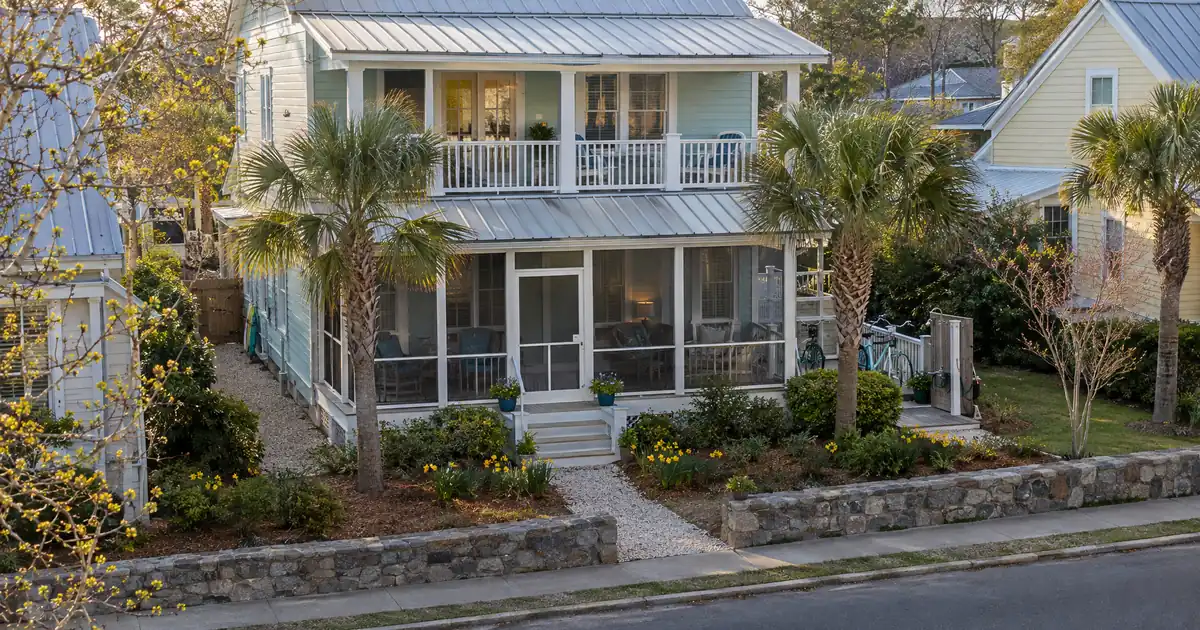
The Quick Read: Yes, a business owner can get a DSCR loan on a seasonal beach house when the house is run as a rental, nobody in the owner’s household treats it as a getaway, and the annual rent covers the full monthly payment, subject to lender guidelines. Your job title is not the test. The property’s use and its income are.
- DSCR (debt service coverage ratio) compares the property’s rent to its payment. Your personal income is not the yardstick.
- Seasonal income is usually averaged over twelve months, so a strong summer helps but does not carry the file alone.
- Family use of the house is the main thing that breaks this. A house you vacation in is a second home, not a DSCR property.
- On most files, purchases land at 75%-80% LTV on an investment property, with credit typically around 660 or higher.
- Clearing the coverage test does not mean the house makes money. Repairs, vacancy, and management sit outside the ratio.
Why Being a Business Owner Isn’t the Test
Owning a business neither qualifies you nor blocks you. A DSCR loan qualifies primarily on property-level rental income covering the payment, subject to lender guidelines. The lender looks at the house, not your tax return.
DSCR Calculator
Run the numbers in your market
Rate source: Freddie Mac 30-yr average via FRED® — Federal Reserve Bank of St. Louis · effective Oct 22, 2026
Prefilled with starting assumptions — enter your own rent or nightly figures, taxes, insurance, and HOA for a more accurate picture.
Program parameters update from Lendmire’s centralized guideline source. Taxes and insurance are editable estimates.
As of Oct 22, 2026 · General Freddie Mac market benchmark, not a Lendmire loan offer. Rent, nightly rate, occupancy, taxes, and insurance are editable estimates. Short-term rental figures are estimates only and vary significantly by season, property type, management approach, and local short-term-rental rules — confirm local regulations before relying on them. Qualifying income for short-term rentals varies by program — some use appraisal market rent, others use documented STR history or projections — and is confirmed in underwriting. Not a Loan Estimate, approval, or commitment to lend. Program availability and eligibility are subject to lender guidelines, credit approval, property review, and underwriting.
That is why business owners like the product. Say you run a landscaping company and your return shows modest taxable income after legitimate business expenses. A bank that underwrites your personal income may see a thin borrower. A DSCR lender sees a rental and asks whether it pays for itself.
Here’s the catch. The same feature that helps you also narrows the product. Because the loan rests on the property, the property has to behave like a rental business. It has to be marketed, booked, and documented that way. The loan does not care how successful you are elsewhere.
Does Personal Use Break It?
Personal use can keep a seasonal beach house from fitting a DSCR loan. These loans are built for non-owner-occupied investment property. You sign a certification that you and your family will not occupy the house as a residence or vacation home.
Most owners ask the same question: what about a few weekends of my own? The honest answer is that it depends on the lender and on what you certify. Across the wholesale network, the safe working assumption is that the certification means what it says. If you plan real family use, say so up front and pick a different product.
Misstating your intent is the worst option. You would be certifying one use at application and living another after closing. That creates misrepresentation risk for you, and it can put the loan itself in jeopardy.
| How you’ll use the house | Likely loan path |
|---|---|
| Rented all season, managed by a third party | DSCR loan, subject to lender guidelines |
| Rented, with a few owner stays | Depends on program; read the certification |
| Your family’s summer home, rented some weeks | Second-home or owner-occupied path |
| Full-time personal vacation house | Owner-occupied path, not DSCR |
If the middle two rows describe you, ask the lender how its occupancy certification reads before you apply. Don’t guess.
How Does a Lender Count Seasonal Income?
Lenders count seasonal income by averaging it across twelve months, not by judging the best season. A beach house that earns most of its revenue in summer is measured on its full-year figure. The ratio is that annual income against the full monthly obligation: principal, interest, taxes, insurance, and any HOA dues.
The income itself can come from a few places. On an existing rental, a lender may look at trailing twelve-month history from platform statements, property-manager reports, or bank deposits. On a purchase, it may rely on the appraiser’s rent analysis. The appraiser’s long-term rent schedule is called Form 1007 for single-family homes. Form 1025 covers two-to-four-unit properties. Some lenders also accept a third-party short-term projection. Others accept only the appraisal figure.
That difference matters. The same beach house can pass under one method and miss under another. Ask each lender which method it uses before you pick a house, not after.
A worked example, in ratios only
Here is a modeled illustration, not market data. Assume a beach house whose coverage looks like this by season.
| Season | Months | Monthly coverage |
|---|---|---|
| Peak summer | 3 | about 2.2x |
| Shoulder months | 4 | about 1.0x |
| Off-season | 5 | about 0.4x |
Judged on peak alone, the house looks like a 2.2x deal. Averaged across the year, it lands near 1.05x. That clears a 1.00 floor, but barely.
Now stress it. Say a weak summer drops peak coverage to about 1.8x. The annual figure slides to roughly 0.95x. Same house, same loan, different answer.
Two lessons follow. First, the annual number is the one that counts, so judge your own house on the weakest summer you can imagine. Second, a thin margin on a seasonal asset is a real risk. (Coastal insurance and HOA dues land in the payment too, which squeezes the ratio further.)
Some lenders also trim short-term rental income by an expense factor before running the ratio. How much varies by program, so ask.
What Does the Beach Add?
A beach house adds four questions an inland rental doesn’t. Each one touches either the payment or the rent, which means each one touches the ratio.
Flood and insurance. A house in a coastal flood zone can carry heavier insurance, and insurance is part of the payment in the coverage math. Get real quotes before you build your numbers. Budget for taxes and insurance, which vary by county and by exact location.
HOA and local rules. Short-term rental rules can vary by city, county, HOA, and property type, so investors should confirm local rules before relying on projected rental income. A house you can’t legally rent short-term may only earn long-term rent, and that changes everything.
Condo versus house. A resort condo brings different questions than a detached house, including HOA restrictions and project eligibility.
Year-round habitability. A house that can’t be rented in the off-season is a different asset than one that can. Heating, winterization, and reliable access all shape how many months can earn income. Property type matters too. Manufactured homes, log homes, and barndominiums are not offered in the network’s DSCR programs.
If you’re weighing a beach house against a mountain cabin, the seasonal pattern changes the math.
Purchase vs. Refinance on a Seasonal House
On a purchase, most programs in the network lend at 75%-80% LTV (20%-25% down). LTV is the loan balance divided by the property’s value. Select high-leverage programs reach 85% LTV (15% down) with roughly a 700 or higher score.
Credit follows a ladder. A 620 floor exists in parts of the network. Most programs want around 660. A score of 700 or more unlocks the strongest leverage tiers. Standard loan sizes run up to $3,000,000, and above $2,500,000 the network generally holds to 30-year fixed structures.
On a refinance, the ceiling drops. Cash-out refinances top out around 75% LTV on standard rentals, and about 70% on short-term-rental collateral. Lenders commonly expect about six months of seasoning, which is the waiting period between buying and refinancing.
If the house is underwritten as a short-term rental, the program is tighter in other ways. Purchase leverage goes up to 75% LTV, and refinances sit around 70%. Expect a credit score of 640 or higher and about twelve months of hosting history. Coverage starts at 1.00 for both purchases and refinances. Final terms depend on the lender’s guidelines, the property type, and the borrower’s complete credit picture.
Reserves are cash set aside after closing, usually counted in months of the full payment. They vary by lender, leverage, loan size, and transaction type. About six months is common. Conservative rate-and-term files at modest leverage under $1,500,000 can see reserves waived, while larger loans typically step up to about nine months. These are typical ranges from select lenders and not promises, and every file is underwritten individually.
Here is something that surprises many buyers. A bigger down payment can lift your ratio by shrinking the payment. But it never erases a credit floor, a reserve rule, or a property restriction. The strongest files pass both tests: enough equity and enough rental coverage.
Setting It Up: LLC, Guarantor, and Your Operating Company
Most business owners hold a rental in a separate LLC, subject to lender program eligibility. You typically sign a personal guaranty. Keep the beach house out of your operating company. Mixing a rental property with a business that has its own creditors and contracts invites trouble you don’t need.
An LLC alone doesn’t make the deal eligible, though. Use and occupancy still have to be true as stated.
DSCR loans are designed for non-owner-occupied investment properties. Because they are business-purpose investor loans, they are reviewed differently from a standard owner-occupied mortgage. The label “investment” doesn’t settle it on its own. The CFPB’s exam procedures treat credit for acquiring rental property that isn’t owner-occupied as business-purpose credit. Compliance Alliance stresses that the analysis turns on owner-occupancy, loan purpose, and unit count, not the word investment.
Tax treatment can depend on how the funds are used and how the property is held; investors should keep clear records and speak with a qualified tax professional before relying on any deduction.
DSCR vs. conventional financing
There are two common ways to finance an investment property, and they qualify you differently — here’s how investors weigh them.
Why investors choose it
- Qualifies on the property’s rental income — no personal tax returns, W-2s, or pay stubs needed to document income.
- No personal debt-to-income ceiling to clear, so existing mortgages and obligations don’t cap your borrowing the same way.
- Can be closed in an LLC, keeping the property inside a business entity.
- Built for scaling — not held to the limit on number of financed properties that conventional financing applies.
- Underwriting centers on the deal: generally qualifies when the rent covers the payment, a 1.00x coverage ratio being a common baseline (confirmed in underwriting).
- Designed specifically for investment property, including long-term and, where the program allows, short-term rentals.
Where it’s strong
- Often the lowest ongoing financing cost for a buyer who fully qualifies on personal income — a fit for a first property or a cost-first purchase.
Trade-offs for investors
- Requires full personal income documentation and must fit within a debt-to-income limit — salary, existing debts, and other mortgages all count.
- Typically held in your personal name rather than a business entity.
- Caps how many financed properties you can carry, which can become a ceiling as a portfolio grows.
- Evaluates you as a borrower as much as the property, which usually means more paperwork.
How investors usually choose: a first or single property often optimizes for the lowest financing cost; portfolio builders often optimize for leverage, vesting in an LLC, and scaling past conventional caps. The right answer depends on your goals, the property, and current guidelines — both paths run through select lenders in Lendmire’s wholesale network, with eligibility and terms confirmed in underwriting.
When DSCR Doesn’t Fit
If your family will use the house most summers, DSCR is the wrong tool. Other loans fit that picture. Here is how they compare for a business owner.
| Factor | DSCR loan | Personal-income alternatives |
|---|---|---|
| What’s qualified | The property’s rent | Your income and finances |
| Personal use of the house | Not intended | Allowed, with limits |
| Rental income needed | Yes, must cover payment | Not the main test |
| Best for | Rental-first beach house | Family vacation home |
Honestly, the call is close for some owners. If you’ll use the house a few weeks and rent it the rest, the right answer may be a second-home product, even though DSCR sounds simpler. This one’s a genuine toss-up that depends on how much personal use you truly expect. A broker can walk you through both before you commit.
What If the Ratio Falls Short?
A ratio under 1.00 is not a dead end. It is a signal to adjust the structure. These are the options a lender would review, and none is guaranteed.
- Put more down. A larger down payment shrinks the payment and can lift coverage.
- Try a sub-1.00 path. 1.00 is where many select programs start. A separate select-lender path takes coverage below 1.00, with leverage and terms adjusted.
- Change the structure. Extended terms such as 40-year and interest-only periods are available through select lenders in the network. ARM structures exist for investors who want them.
- Use a stronger income method. If a short-term analysis supports the rent better than the appraisal does, ask which lenders accept it.
- Look at a different house. Sometimes the cleanest fix is a property that carries its own rent through more of the year.
No-ratio structures are available only through select lenders, generally for borrowers who already own a primary residence.
Before You Apply: A Checklist
1. Written confirmation of how the house will be used, and an honest answer on family stays.
2. Rental history, or an appraiser’s rent analysis if you’re buying.
3. Insurance quotes that reflect the flood zone.
4. HOA documents and local rental confirmation.
5. Your LLC documents, if you’re using one.
6. Your credit profile and the cash for the down payment and reserves.
Key Terms Defined
DSCR: Debt service coverage ratio. It is the property’s rent used for lender review divided by its monthly obligation.
PITIA: Principal, interest, taxes, insurance, and association dues. It is the full monthly obligation used in the coverage math.
Business-purpose loan: A loan made to buy or hold a property as a rental business, not as a home.
Seasoning: The waiting period a lender wants between buying a property and refinancing it.
Reserves: Cash you keep after closing, counted in months of the monthly obligation.
Trailing twelve-month income: The property’s actual rent over the past year, shown with statements and deposits.
Frequently Asked Questions
Can I use the beach house myself if I rent it most of the year?
Usually not on a DSCR loan. The loan is built for non-owner-occupied property, and you certify that you won’t occupy it. Programs differ on how they read that certification, so ask before you apply. Heavy family use points to a second-home loan.
Does a weak winter hurt my approval?
Not on its own. Lenders generally average income over twelve months. What hurts is a full-year number that falls below the lender’s coverage floor. Test your numbers on a weak summer, not just a good one.
Do I need an LLC?
Most business owners use one, subject to program terms. It protects your other assets and keeps the rental separate from your operating company. It doesn’t change the occupancy rules. The property still has to be a rental.
Does clearing 1.00 mean the house is profitable?
No. DSCR compares rent to the full monthly payment only. Repairs, vacancy, management, utilities, and capital costs sit outside the calculation. A house can clear the ratio and still lose money.
What if short-term rentals are banned where the house sits?
Then the rent has to come from long-term leases, which usually changes the ratio.
Your Next Step
If you are buying or refinancing a rental property and want to see how the numbers work, Lendmire can help you compare DSCR loan options based on the property income, credit profile, leverage, and investor goals. Lendmire is a mortgage broker that arranges DSCR financing through select lenders in its wholesale network, spanning 41 markets, including Washington, D.C. Call 828-256-2183. For the full picture of how the product works, read the complete DSCR loans guide.
About Lendmire
Lendmire (NMLS# 2371349) is a mortgage brokerage focused on DSCR investor financing, helping arrange programs through wholesale and investor-lending channels in 41 markets, including Washington, D.C. DSCR loans are evaluated by the lender on property cash flow rather than personal income, subject to lender guidelines, supporting LLC closings and accommodating investors with four or more financed properties. Scotsman Guide Top Mortgage Workplace in both 2025 and 2026.
Get Started
Ready to find the right loan for you?
See your offer in seconds. No credit pull, no obligation.
Informational only. Not a Loan Estimate, approval, or commitment to lend. Program availability and eligibility are subject to lender guidelines, credit approval, property review, and underwriting.
References
1. CFPB Truth in Lending exam procedures
2. Compliance Alliance on investment properties and business purpose
This article is part of Lendmire’s DSCR loan program — full qualification details, guidelines, and scenarios live on the program page.
Related reading: DSCR Loan Requirements When Your Rental Has a 1.25 DSCR · How Much a DSCR Loan Lends on a Rental Purchase · PUD With a Pool and Gate vs. a House Without Dues on DSCR
Brandon Miller
Founder & CEO, Mortgage Loan Originator, Lendmire LLC
- Mortgage Loan Originator · NMLS# 1129696 · Verify on NMLS Consumer Access
- North Carolina Real Estate Broker · License# 343312 · Verify on NCREC
- North Carolina Insurance Producer · License# 19053198 · Property, Casualty, Life, Health · Verify on NAIC SBS
- Lendmire LLC · Firm NMLS# 2371349 · Verify firm licensure
Disclosure information. Lendmire is a state-licensed mortgage brokerage under NMLS# 2371349. Lendmire is not a depository institution, direct lender, or financial advisor — all loans referenced are placed through wholesale lender partners and are subject to each lender's underwriting standards. This article is provided for general informational purposes and is not a commitment to lend, nor does it constitute financial, legal, or tax advice. Loan programs, terms, rates, and qualification standards change without notice and depend on borrower profile, property type, and the state in which the subject property is located. Equal Housing Opportunity provider. NMLS Consumer Access: nmlsconsumeraccess.org.