
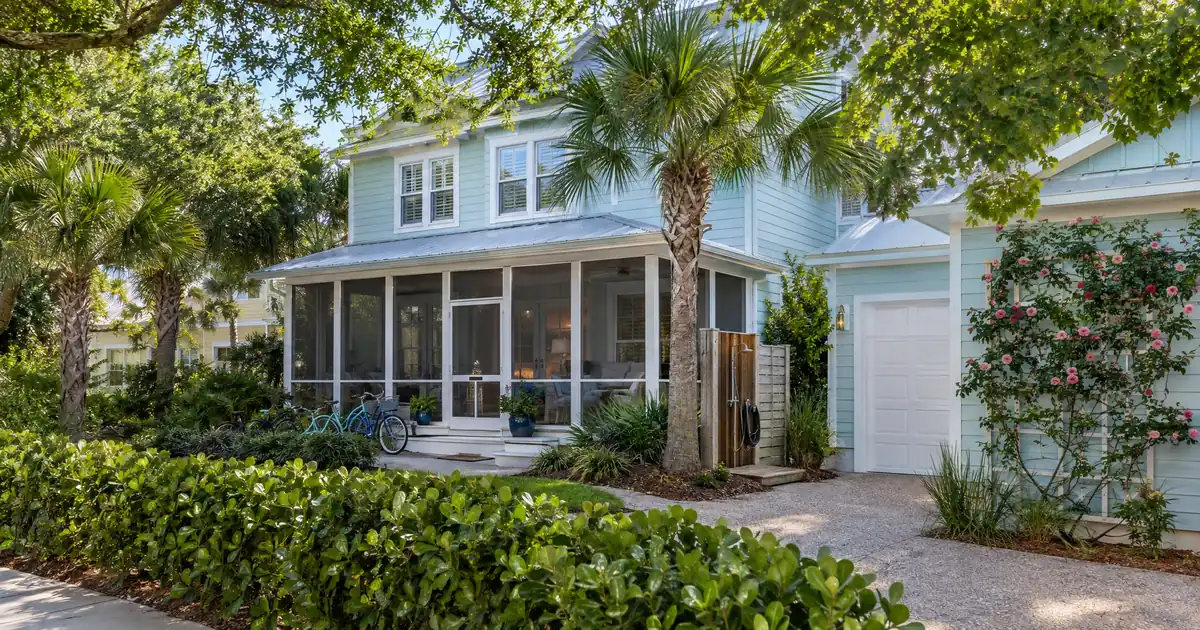
The Quick Read: Only when you have owned the rental for at least six months, it has a lease in place, and it avoids the excluded property types, because the program qualifies primarily on property-level rental income from a lease or an appraiser’s monthly market rent rather than nightly Airbnb income, subject to lender guidelines.
- Age under a year is not the blocker. Six months of ownership and no purchase or refinance inside the last six months are the seasoning tests.
- A lease in place is required, so a property run purely on nightly bookings is a hard fit.
- The coverage test is a minimum of 1.10x, run on the whole credit line.
- Condotels and rural-designated property are outside this program.
- A DSCR purchase or cash-out loan is often the better route for a young short-term rental.
What Is a DSCR HELOC, Really?
A DSCR HELOC is a revolving line of credit on a rental you own, qualified on the property’s rent instead of your personal income. DSCR stands for debt service coverage ratio: the property’s monthly rent divided by its monthly debt payment. HELOC means home equity line of credit.
The label is a market nickname, not a standard product. A DSCR loan is normally a closed-end first mortgage. A typical HELOC is underwritten on the borrower’s credit, income and equity.
Through its wholesale network, Lendmire, a DSCR-focused mortgage broker, places a version that blends the two. It is a standalone second lien behind the first mortgage you keep, or a standalone first lien on a rental with no mortgage. Rent qualifies it, and your tax returns, pay stubs and debt-to-income ratio never enter the file. An LLC can stay on title, with the members signing as guarantors.
Programs change, and every file is underwritten individually. Nothing here is a commitment to lend.
Why Does “Under a Year Old” Trip People Up?
Investors expect a new Airbnb to fail on history. On this program, history is not the test. Seasoning and the lease are.
Seasoning is the waiting period a lender requires after you buy or refinance. Here, a rental bought or refinanced inside the last six months is not eligible, and six months of ownership are required. An Airbnb that is seven months old can pass that test. A four-month-old one cannot, however well it books.
The harder question is income. This program takes rent as the lesser of the appraiser’s market rent or the lease. A lease in place is required. A two-to-four-unit property can have at most one vacant unit.
A property operated purely on nightly stays has no lease to show. A rental leased long-term, or converted back to long-term, fits cleanly. Dependable booking data does not change the rent figure the program reads.
Most standard bank HELOCs lean on personal income and documented rental history. Yahoo Finance notes that investment-property HELOCs are less common and harder to get than primary-residence lines, with lenders weighing both the borrower’s credit and the property’s financials. A months-old Airbnb has a thin income story for that kind of file.
How Is the Rent Measured on a Short-Term Rental?
The appraiser’s rent schedule, Form 1007, measures long-term monthly rent. McKissock, an appraisal education provider, explains that the form documents monthly rent for single-family homes, not nightly rent or business income. That is why a young Airbnb gets read as a long-term rental on this program, even when booking projections look strong.
One brief contrast: Fannie Mae’s appraiser update says the same thing about the form, that it cannot estimate a short-term rental’s nightly fee. DSCR lending does not follow agency rules. The point is only that the form measures monthly rent.
Short-term income does matter on other paths. AirDNA says lenders scrutinize coverage more closely on short-term rentals because the income varies. Across our network, most DSCR programs on the short-term path expect about 12 months of hosting history. Some review a projection or the long-term market rent where history is short. That is a different loan from this line.
Is This the Right Product for You? A Side-by-Side
| Factor | DSCR HELOC (this program) | Bank HELOC on personal income | DSCR cash-out refinance |
|---|---|---|---|
| Structure | Second lien or first lien line | Revolving second lien | Replaces the first mortgage |
| Reviewed on | Rent, 1.10x minimum | Personal income and credit | Rent, program-specific |
| LLC on title | Allowed | Often not allowed | Often allowed, per program |
| Short history | Seasoning and a lease | Rental history usually asked | Hosting history or projection, per program |
| Best fit | Keep the first mortgage | Owner-occupied or strong W-2 file | New first mortgage plus cash out |
Under network guidance, a bank HELOC generally has to be titled to an individual or a revocable trust, which rules out most LLC-held Airbnbs.
What Does Each Stage of “Under a Year” Look Like?
Here is how common situations sort out on this program.
| Situation | Usual outcome |
|---|---|
| Owned under 6 months | Not eligible yet |
| Owned 6+ months, leased long-term | Can be reviewed |
| Owned 6+ months, nightly bookings only | Lease requirement is the hurdle |
| Converted from long-term to nightly | Depends on lease and file |
| Listed for sale in the last 2 months | Not eligible |
Two other exclusions matter for short-term rentals. Condotels are outside the program, and so is rural-designated property. Many resort-area units fall into one of those groups before income is even discussed.
How Does the Coverage Test Work?
The line must show at least 1.10x coverage. That means rent covers the qualifying payment by 10% or more. The qualifying payment is a fully amortizing payment on the entire credit limit at a stressed rate, not just the amount you draw. Whether the first-mortgage payment joins the calculation on a second lien is the lender’s call, and the lender’s own coverage calculation governs. Treat any worked example as illustrative.
Say a rental’s lease-supported rent runs around 1.25x against the stress payment on a requested line. It clears 1.10x with room to spare. Request a bigger line against the same rent, and coverage can slip toward 1.05x and fail. The fix is usually a smaller line, though the program minimum is $50,000.
Short-term rental income swings by season, so coverage drawn from a high-season stretch can overstate a typical month. Check the lease-supported number, not the best booking month.
What Are the Leverage Tiers?
On a second lien behind your first mortgage, combined loan-to-value (CLTV) runs up to 70% through select programs. CLTV means the first mortgage balance plus the new line, divided by the property’s value. The tier requires a 720 credit score or better, and lines run from $50,000 to $500,000. Below 720 there is no second-lien option. These specifics are subject to lender guidelines and a full review of property, leverage, and credit.
On a first lien, for a rental with no mortgage, loan-to-value (LTV) tops out at 75% at a 740 score or better on lines up to $500,000. It is 70% at 700 to 739. Lines above $500,000, up to $1,000,000, carry a 65% LTV ceiling at 720 or better. All figures are ceilings, subject to underwriting, and a declining-market flag lowers them by 5 points. Terms depend on the lender’s guidelines, the property type, the leverage, and a full review of the credit profile.
For comparison, market surveys report that investment-property HELOCs commonly want about 20% equity and a debt-to-income ratio at or below 50%, per Yahoo Finance. Those are lenders’ standards. Our network’s line sets neither a reserve nor a debt-to-income test.
How Do Draws and Repayment Work?
This line is less flexible than a bank HELOC. Experian describes the general HELOC pattern of a draw phase followed by repayment. This program’s version has a 5-year interest-only draw period on the drawn balance, then a 25-year fully amortizing repayment period, for a 30-year maturity. The rate is variable.
At least 80% of the line, and never less than $50,000, is drawn at closing. Later draws are at least $5,000. You are not parking an unused line for emergencies. You are borrowing most of it on day one.
What Does the File Need?
Expect these pieces:
- A rental that is non-owner-occupied, one to four units.
- A lease in place and a rent figure from the appraiser’s market-rent schedule.
- A credit report meeting the tier, with no 30-day mortgage late in the last 12 months, and 48 months clear of bankruptcy, foreclosure, short sale or deed-in-lieu.
- A valuation: an automated valuation with a property inspection report on lines up to $400,000, or a full interior appraisal. Larger lines take a full interior appraisal. Appraisal waivers are not accepted.
- Hazard insurance covering both liens, plus flood coverage where required.
Borrowers must be U.S. citizens, permanent residents or non-permanent residents with a Social Security number. Foreign nationals and ITIN borrowers are not eligible. A borrower can hold at most 5 loans or $2,500,000 with the program.
The program is offered in 15 of Lendmire’s 16 licensed states, every licensed state except Tennessee: Alabama, California, Colorado, Florida, Georgia, Indiana, Michigan, Montana, New Mexico, North Carolina, Ohio, Pennsylvania, Texas, Virginia and Washington.
Short-term rental rules can vary by city, county, HOA, and property type, so investors should confirm local rules before relying on projected rental income.
What Should You Do if the Line Doesn’t Fit?
If the property fails on seasoning, the lease or the property type, the realistic options are these:
1. Wait and build the record. Keep platform statements and payout reports from the first booking. They become the evidence for a later refinance.
2. Use a DSCR purchase or cash-out loan. If you are still buying, a DSCR purchase is usually the easier path for a new Airbnb.
3. Look at lower-coverage programs. Select lenders in the network offer programs below 1.00 coverage, but leverage and terms adjust.
4. Fund the down payment elsewhere. Some investors use a line on their own home, a different product on owner-occupied property that this line is never offered on.
For the complete framework, see Lendmire’s complete DSCR loans guide.
Where Do Files Usually Stall?
Most stalls trace to the same few causes:
- The seasoning clock was never checked, and the purchase date is inside six months.
- Eligibility for a condotel or rural-designated property was assumed without confirming it, though many lenders restrict or exclude these property types.
- There is no lease, because the unit runs on nightly bookings.
- The line was sized too large, and coverage failed on the whole limit.
- The property was listed for sale in the prior two months.
Checking these five before an appraisal is ordered saves money and time. A broker who sees many lenders’ guidelines can usually spot them in one conversation.
Key Terms Defined
DSCR: the property’s monthly rent divided by the monthly debt payment, used to show the rent covers the loan.
HELOC: a revolving credit line secured by property, drawn in stages instead of paid out as one lump sum.
Second lien: a loan that sits behind your first mortgage and is repaid after it if the property is sold.
CLTV: combined loan-to-value, meaning the first mortgage balance plus the new line, divided by the property’s value.
Seasoning: the waiting period a lender requires after you buy or refinance a property.
Form 1007: the appraiser’s rent schedule, which estimates long-term monthly market rent.
Frequently Asked Questions
Do I need a full year of Airbnb history for a DSCR HELOC?
No. This program does not read nightly booking history as the income test. It requires six months of ownership, no purchase or refinance in the last six months, and a lease in place, with rent taken as the lesser of the lease or the appraiser’s market rent. Other DSCR loan paths, like a cash-out refinance, often want about 12 months of hosting history.
Can an LLC-owned Airbnb get this line?
Yes, on this program, subject to program terms. The members sign as guarantors, and the property must be an investment property. A bank HELOC, by contrast, generally has to be titled to an individual or a revocable trust, so an LLC-held rental often cannot use one.
How soon after buying can I open the line?
After six months of ownership, counted from settlement to note date. Separately, a property bought or refinanced inside the last six months is not eligible. A purchase, by itself, never closes together with this line.
Will my projected Airbnb income count?
Not on this program. The appraiser’s rent schedule measures long-term monthly rent, as McKissock explains. Projections matter more on other DSCR paths, where lenders may trim them and review them more closely.
Does tax treatment change if I use the funds on another rental?
It can, because tax treatment can depend on how the funds are used and how the property is held. Borrowers should keep clear records and speak with a qualified tax professional before relying on any deduction.
If you are considering a home equity line on a rental property and want to see how the numbers work, Lendmire can help you compare DSCR HELOC options based on the property, the rent, the equity available, credit profile, combined leverage, and your goals. Reach the team at 828-256-2183.
About Lendmire
Lendmire (NMLS# 2371349) is a mortgage brokerage serving homeowners and real estate investors in its 16 full-service states. Home equity lines of credit are arranged through wholesale lending channels; Lendmire brokers the line and the lender underwrites each application under its occupancy-based guidelines. Scotsman Guide named Lendmire a Top Mortgage Workplace in both 2025 and 2026.
Get Started
Ready to find the right loan for you?
See your offer in seconds. No credit pull, no obligation.
Informational only. Not a Loan Estimate, approval, or commitment to lend. Program availability and eligibility are subject to lender guidelines, credit approval, property review, and underwriting.
References
1. Yahoo Finance: HELOC on an investment property
2. McKissock: Form 1007 and short-term rental appraisals
3. Fannie Mae appraiser update on Form 1007
4. AirDNA: debt service coverage ratio in real estate
5. Experian: can you get a HELOC on an investment property
This article is part of Lendmire’s DSCR HELOC program — full qualification details, guidelines, and scenarios live on the program page.
Related reading: How to Qualify for a DSCR HELOC to Fund Business Equipment · DSCR HELOC vs DSCR Cash-Out Refinance After a Down Year or Income Spike · Can You Get a DSCR HELOC for Adding a Cosigner or Co-Borrower?
Brandon Miller
Founder & CEO, Mortgage Loan Originator, Lendmire LLC
- Mortgage Loan Originator · NMLS# 1129696 · Verify on NMLS Consumer Access
- North Carolina Real Estate Broker · License# 343312 · Verify on NCREC
- North Carolina Insurance Producer · License# 19053198 · Property, Casualty, Life, Health · Verify on NAIC SBS
- Lendmire LLC · Firm NMLS# 2371349 · Verify firm licensure
Required disclosures. Lendmire (NMLS# 2371349) operates as a licensed mortgage broker, not a direct lender or depository. The discussion in this article is general in nature and should not be relied upon as financial, legal, or tax advice — every investment scenario is unique and should be reviewed by a qualified professional. Any loan inquiry is subject to lender underwriting, and this article is not a commitment to lend or a guarantee of approval. Mortgage rates, loan terms, and program guidelines vary by borrower, property, and state, and may change without notice. Equal Housing Opportunity. Verify licensure at NMLS Consumer Access.