
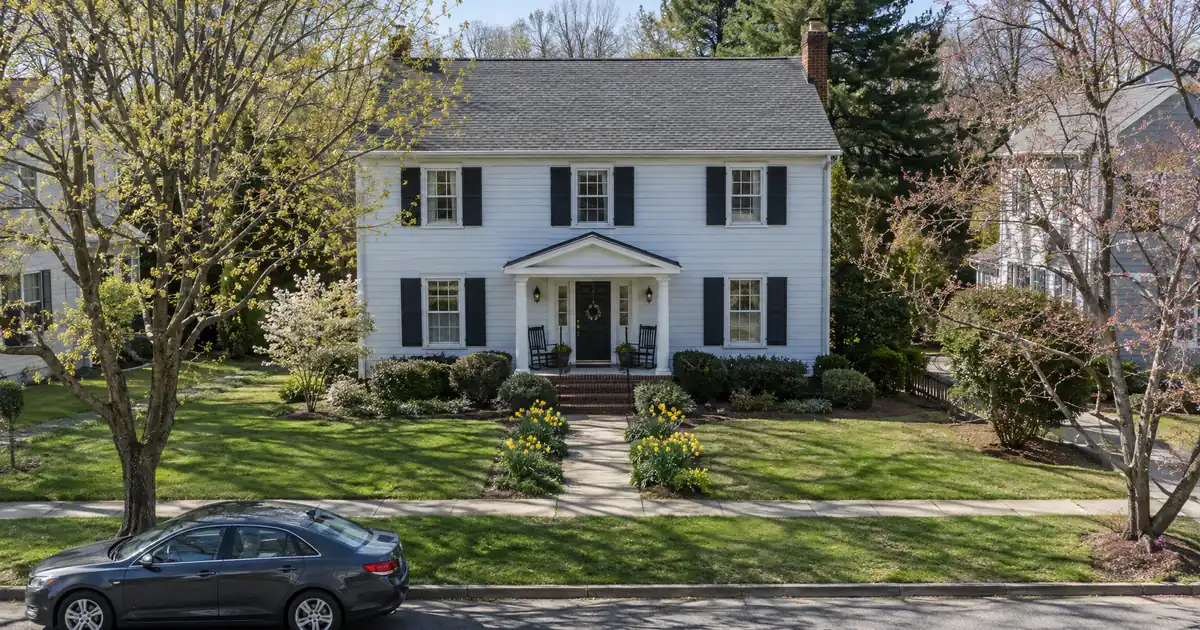
The Quick Read: The rental’s income carries the file, not your tax history. The lender checks that gross rent covers a stress payment on the whole credit line at least 1.10 times. Your credit, the lease, the property and the valuation are still reviewed in full, subject to underwriting.
- The line is a standalone second lien behind the first mortgage you keep, or a standalone first lien on a rental with no mortgage.
- Through select programs, a second lien tops out at 70% combined loan-to-value (CLTV) at a 720 score or better. A first lien reaches 75% loan-to-value (LTV) at 740 or better.
- Lines run from $50,000 up to $500,000, or up to $1,000,000 on a first lien, where the ceiling drops to 65% LTV above $500,000.
- You need a lease in place and six months of ownership. No reserves are required, and the LLC can stay on title, subject to program terms.
- This program is not built for unlimited scaling. Exposure is capped at 5 loans or $2,500,000 per borrower with the program. The exact numbers vary by lender and program and follow a full review of property, leverage, and credit.
What Is a DSCR HELOC, Really?
Most people searching this term want one thing: a way to pull cash out of a rental without refinancing the first mortgage and without handing over personal income files. The label is loose, though. Different lenders use it for different products.
Here is how the three structures split.
| Structure | How funds arrive | Your first mortgage |
|---|---|---|
| DSCR HELOC | Revolving line, draw as needed | Stays in place |
| Closed-end DSCR second | One lump sum, no redraw | Stays in place |
| DSCR cash-out refinance | One lump sum, new first loan | Replaced |
The program covered here is the first row. It is a revolving line of credit on a non-owner-occupied one-to-four-unit rental. It is written as a standalone second lien behind the first mortgage you keep. It can also be a standalone first lien on a rental you own free and clear.
It is never closed together with a purchase. It is never a third lien. It is never a line on your own home. Those are different products.
Why does this matter? Each structure is tested differently. A conventional-style line on a rental is judged on your personal income. Not every lender offers one, and NerdWallet notes that qualification on an investment property is strict. A DSCR line is judged on the property. The full picture of how rent-based lending works sits in Lendmire’s complete DSCR loans guide.
Key Terms Defined
DSCR (debt service coverage ratio): Gross monthly rent divided by the qualifying payment. A result of 1.10 means rent is 110% of that payment.
Second lien: A loan recorded behind your first mortgage. If the property is sold or foreclosed, the first lender is paid first.
CLTV (combined loan-to-value): Your first mortgage balance plus the new line, divided by the property’s value.
Draw period: The stretch when you can borrow from the line and pay only interest on what you have drawn.
Stress payment: A fully amortizing payment, meaning one that pays the balance to zero, calculated on the entire credit limit at the start rate plus 2 percentage points. It is a test number, not what you actually pay.
Seasoning: How long you must have owned the rental before the line is allowed.
Guarantor: A person who signs personally to back a loan taken in an LLC’s name.
Why Two Years of Tax Returns Don’t Drive This File
Conventional lenders ask for two years of returns because they are calculating your income. They average it, subtract your debts and compute a debt-to-income ratio. That works fine for a W-2 employee. It punishes the self-employed investor whose write-offs shrink taxable income, and it shuts out anyone with a short history.
A DSCR line skips that calculation. The question is not what you earn. The question is whether the property pays for the debt on itself. The file qualifies primarily on property-level rental income covering the payment, subject to lender guidelines.
Rental income is reviewed instead of personal-income documentation, so there are no pay stubs and no debt-to-income ratio. That is a real difference. It is not the same as an empty file, which the sections below make clear.
How Does Underwriting Actually Work, Step by Step?
The lender works through six checks, roughly in this order. Across the wholesale network Lendmire places files with, the same six show up again and again.
1. Position and title. Is this a second lien behind a mortgage you keep, or a first lien on a paid-off rental? Is the owner you or your LLC? Vesting in the LLC is allowed on investment property. The members sign as guarantors. A title holder who is not a borrower signs a non-borrowing owner acknowledgment.
2. Eligibility and seasoning. The property type must fit, and you must have owned it six months. More on both below.
3. Rent. The lender uses the lesser of two numbers: the appraiser’s market rent (the Form 1007 rent schedule) or your lease. A lease in place is required. A lease above market counts only with three months of receipts proving it. On a two-to-four-unit building, at most one unit can sit vacant.
4. Coverage. Rent divided by the stress payment must reach 1.10x or better.
5. Credit. You need a 720 score on a second lien or 700 on a first lien. No 30-day mortgage late in the last 12 months. No bankruptcy, foreclosure, short sale or deed-in-lieu in the last 48 months.
6. Leverage and valuation. Combined leverage must fit the tier for your score, and the value must be supported.
Step 4 is worth slowing down on.
The coverage test, in plain numbers
The stress payment is calculated on the entire credit limit, not on what you plan to draw. That one detail changes how you size the line.
Picture two rentals. Rental A has rent that covers the stress payment about 1.25x, so it clears. Rental B has rent that falls short of covering the stress payment at the limit originally requested, so it misses. The owner of Rental B asks for a smaller limit.
The catch: the line starts at $50,000, and at least 80% of it is drawn at closing. You can only shrink so far. Whether the first mortgage payment joins the qualifying payment on a second lien depends on the lender’s coverage calculation, and that calculation governs. Illustrative math is a guide, never a quote.
What about a property that falls short? Programs below 1.00 coverage are available through select lenders in the network on other DSCR products, but leverage and terms adjust. This line is set at 1.10x.
What Leverage Can You Reach?
Leverage depends on lien position, credit score and line size. These figures are ceilings on a non-owner-occupied rental, available through select programs and subject to underwriting.
| Position | Score | Ceiling | Line size |
|---|---|---|---|
| Second lien | 720+ | 70% CLTV | $50,000 to $500,000 |
| First lien | 740+ | 75% LTV | Up to $500,000 |
| First lien | 700 to 739 | 70% LTV | Up to $500,000 |
| First lien | 720+ | 65% LTV | $500,000 to $1,000,000 |
Below a 720 score there is no second-lien option. Below 700 there is no first-lien option either. Two more points matter. A declining-market flag on the property lowers the ceiling by 5 points. And remember that on a second lien the first mortgage eats into the ceiling before you borrow a dollar.
Run the numbers on a rental where the first mortgage balance equals 55% of value. At a 70% CLTV ceiling, the new line can add up to 15% of value. If that slice falls short of the $50,000 minimum line, no line exists for that property. Strong equity on paper does not always leave room for a second lien.
Valuation and the draw rules
Lines up to $400,000 use an automated valuation with a confidence score of 85 or better, paired with a property inspection report. A full interior appraisal also works. Lines above $400,000 need the full interior appraisal. Appraisal waivers are not accepted.
After closing, you have a 5-year interest-only draw period on the drawn balance. Then comes a 25-year fully amortizing repayment period and a 30-year maturity. The rate is variable. Later draws must be at least $5,000 each. The rate and pricing terms come with the lender’s HELOC disclosures.
Why This Is Allowed: The Business-Purpose Frame
DSCR loans are designed for non-owner-occupied investment properties. Because they are business-purpose investor loans, they are reviewed differently from a standard owner-occupied mortgage. The CFPB’s Truth in Lending exam manual describes the business-purpose and non-natural-person exemptions, and the Federal Register rule treats investment-purpose loans as business purpose. Lenders still underwrite every file.
What Do You Still Have to Hand Over?
“No tax returns” is not “no file.” The rent, the lease, the credit report and the valuation are all documented. Here is the split.
| Not part of the file | Still in the file |
|---|---|
| Tax returns | Credit report and mortgage history |
| W-2s and pay stubs | Signed lease and rent proof |
| Debt-to-income ratio | Valuation report |
| Reserves | Title and vesting papers |
Expect to show how the rent is actually paid, such as deposit records. Lease above market? That is where the three months of receipts come in. LLC borrowers add entity documents.
The borrowers must be US citizens, permanent residents, or non-permanent residents with a Social Security number. Foreign nationals and ITIN borrowers are not eligible on this program. Exposure is capped at 5 loans or $2,500,000 per borrower with the program, so this line suits an owner topping up a few rentals, not a borrower stacking an unlimited portfolio.
Where the Rule Breaks
The general rule is that rent qualifies the line. Here are the named exceptions.
The lease is above market. The lesser-of rule bites. The appraiser’s market number caps your rent unless you can prove three months of receipts at the higher figure.
No lease, or no lease in place. A lease in place is required. Month-to-month arrangements and vacant units are the file’s weak spot. Sign a lease first, then apply.
Short-term rentals. Form 1007 is built on monthly-lease comparables, so a projection from nightly bookings does not set the rent. Short-term rental rules can vary by city, county, HOA, and property type, so investors should confirm local rules before relying on projected rental income.
You bought or refinanced recently. A rental bought or refinanced inside the last 6 months is not eligible, measured note date to note date. You also need 6 months of ownership, settlement to note date. Plan around it.
The property type is outside the lane. Not eligible: rural-designated property, row homes, condotels, commercial or agricultural property, leaseholds, land trusts, age-restricted communities, hobby farms, modular and log homes, land contracts, mixed-use, a property listed for sale in the prior 2 months, and a property with a solar lien. Warrantable and non-warrantable condominiums are eligible property types, and the leverage tiers above govern them like any other property.
The title is the wrong shape for a competing product. An investment-property HELOC qualified on personal income typically wants the property held personally or in a revocable trust. That program asks LLC owners to change title. This one does not. Retitling out of an LLC just to fit a product can create liability and due-on-sale questions, so think hard before doing it.
Your income is the strong point, not the rent. If the rent is thin but your deposits are strong, a bank statement HELOC is reviewed on documented income under the applicable program, subject to lender guidelines. Lendmire’s piece Can You Get a Bank Statement HELOC Without Two Years of Tax Returns? walks through that path.
Which Route Fits You?
The right structure depends on what you already own and what you want the money to do.
| Your situation | Likely fit |
|---|---|
| Low first mortgage you want to keep, flexible draws | DSCR HELOC, second lien |
| Rental owned free and clear, want a line | DSCR HELOC, first lien |
| Want one lump sum, keep the first | Closed-end DSCR second |
| First mortgage no longer worth keeping | DSCR cash-out refinance |
| Rent is thin, deposits are strong | Bank statement HELOC |
| Bought inside six months | Wait out seasoning |
Even when one of these options looks like a match, the trade-offs are real.
The Tradeoffs Nobody Puts on the Landing Page
This one’s a genuine toss-up for many investors. The line keeps your first mortgage intact, which is a real win. But the numbers carry risk.
The rate is variable. At least 80% of the line is drawn at closing, so you carry a large balance from day one. And when the 5-year draw period ends, the payment steps up while the rent usually does not. A property that covers comfortably at 1.10x on paper can feel tight once principal joins the payment.
Investors often assume their lease is the rent. The underwriter uses the lower of the lease and the appraiser’s market conclusion, and that number is an opinion you do not control. Running that check before you apply saves the surprise.
Honestly, the strongest use cases are improvements, reserves for a portfolio, or bridging a purchase elsewhere. Tax treatment can depend on how the funds are used and how the property is held; borrowers should keep clear records and speak with a qualified tax professional before relying on any deduction.
Frequently Asked Questions
Do I need to send in any tax returns at all?
Not for this line. Qualification runs on the rent, the lease, your credit and the valuation, with no traditional personal-income documentation, W-2s, pay stubs or debt-to-income ratio. Underwriting is still done individually, and programs change, so every file stands on its own review.
Can my LLC-owned rental qualify?
Yes, vesting in your LLC is allowed on investment property, subject to program terms. The members sign as guarantors. If a title holder is not a borrower, that person signs a non-borrowing owner acknowledgment and the security instrument. The borrowers on the line need not match the borrowers on the first mortgage.
What if the rent doesn’t cover the payment?
You have options. Ask for a smaller credit limit, since the stress payment is calculated on the whole limit. Or compare a DSCR cash-out refinance, where programs below 1.00 coverage are available through select lenders in the network, though leverage and terms adjust. This line itself requires 1.10x.
Can I get a line on a rental I just bought?
Not yet. Six months of ownership are required, measured settlement to note date. A rental bought or refinanced inside the last six months is not eligible, so the clock matters.
Is this available in every state?
No. The program is offered in 15 of Lendmire’s 16 licensed states, every licensed state except Tennessee, and availability can change. Confirm eligibility for your property’s state before relying on it. Lendmire is a broker and arranges the line through a wholesale lender, so availability follows the program, not the broker.
Next Step
If you are considering a home equity line on a rental property and want to see how the numbers work, Lendmire can help you compare DSCR HELOC options based on the property, the rent, the equity available, credit profile, combined leverage, and your goals. Call 828-256-2183, or request a quote.
For current guidelines and terms, see Lendmire’s DSCR HELOC programs page.
About Lendmire
As a mortgage broker (NMLS# 2371349), Lendmire helps homeowners and real estate investors in its 16 full-service states open home equity lines of credit arranged through wholesale lenders. Lendmire is never the lender; line amounts, ceilings and terms are set by the lender under its guidelines. Scotsman Guide named Lendmire a Top Mortgage Workplace in both 2025 and 2026.
Get Started
Ready to find the right loan for you?
See your offer in seconds. No credit pull, no obligation.
Informational only. Not a Loan Estimate, approval, or commitment to lend. Program availability and eligibility are subject to lender guidelines, credit approval, property review, and underwriting.
References
1. NerdWallet, HELOC on an investment property
2. CFPB, Truth in Lending exam manual
3. Federal Register, Ability-to-Repay and Qualified Mortgage final rule
This article is part of Lendmire’s DSCR HELOC program — full qualification details, guidelines, and scenarios live on the program page.
Related reading: How to Qualify for a DSCR HELOC After Delisting and Keep a Low First Mortgage · DSCR HELOC vs DSCR Cash-Out Refinance After a Denial Over Losses on Tax Returns · How to Qualify for a DSCR HELOC After Owning the Rental for 6 Months
Brandon Miller
Founder & CEO, Mortgage Loan Originator, Lendmire LLC
- Mortgage Loan Originator · NMLS# 1129696 · Verify on NMLS Consumer Access
- North Carolina Real Estate Broker · License# 343312 · Verify on NCREC
- North Carolina Insurance Producer · License# 19053198 · Property, Casualty, Life, Health · Verify on NAIC SBS
- Lendmire LLC · Firm NMLS# 2371349 · Verify firm licensure
Disclosure information. Lendmire is a state-licensed mortgage brokerage under NMLS# 2371349. Lendmire is not a depository institution, direct lender, or financial advisor — all loans referenced are placed through wholesale lender partners and are subject to each lender's underwriting standards. This article is provided for general informational purposes and is not a commitment to lend, nor does it constitute financial, legal, or tax advice. Loan programs, terms, rates, and qualification standards change without notice and depend on borrower profile, property type, and the state in which the subject property is located. Equal Housing Opportunity provider. NMLS Consumer Access: nmlsconsumeraccess.org.